Start here
A few places to begin, from the aircraft’s story to the people who fly it.
Aircraft and simulator background
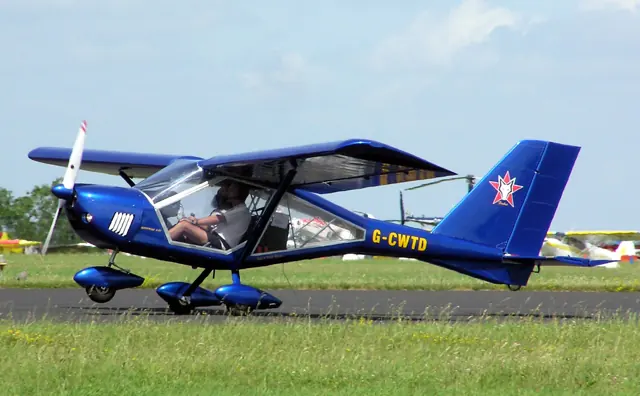
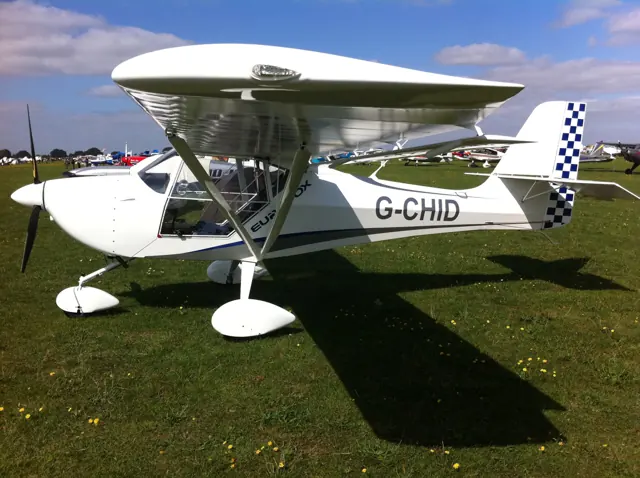
The J160 is a strut-braced high-wing aircraft with fixed tricycle landing gear and two seats, intended for training and recreation. Its Jabiru 2200 four-cylinder engine accompanies electrically operated flaps.
Jabiru J160
IRIS Simulations / Orbx · Read more ↗Central stick and spring trim
The manual describes Teleflex push-pull primary controls operated from a common central stick. Cable-operated elevator trim loads springs against a friction lock; nose-up trim raises the elevator. The electric flaps have their own actuation, separate from the manual primary controls.
Jabiru J160
IRIS Simulations / Orbx · Read more ↗J160 and J170 package context
Wing and weight distinguish the J160 and J170. Option A and Option B denote avionics choices. The archived AFM identifies v2.0.0, while the product page lists 1.5.6; those are retained as separate document and product versions.
Jabiru J160
IRIS Simulations / Orbx · Read more ↗Meet Jabiru J160
The J160 is a strut-braced high-wing aircraft with fixed tricycle landing gear and two seats, intended for training and recreation. Its Jabiru 2200 four-cylinder engine accompanies electrically operated flaps.
IRIS's shared J160/J170 manual describes a common central stick and Teleflex push-pull primary controls. The J160 and J170 differ in wing and weight; the package offers Option A and Option B avionics arrangements.
Jabiru J160
Aircraft type designators
No type designator selected for this reference.
History & design
An Australian aircraft and engine programme
Jabiru was founded in Bundaberg in 1988 to develop a light composite aircraft. When the original engine supplier stopped aircraft-engine production, the company developed its own powerplant. Its later 2200 engine and airframe programmes grew together, establishing the background to the J160 family.
Jabiru Aircraft · Our journey ↗Manufacturer history; early company and engine development
The J160C milestone
The manufacturer records J160C type certification in December 2005 during a period of expanding international approvals and production. This is a specific milestone for the J160C, rather than a statement that every later kit or light-sport model carries the same approval.
Jabiru Aircraft · Our journey ↗Manufacturer timeline; December 2005 J160C
Systems & details
Central stick and spring trim
The manual describes Teleflex push-pull primary controls operated from a common central stick. Cable-operated elevator trim loads springs against a friction lock; nose-up trim raises the elevator. The electric flaps have their own actuation, separate from the manual primary controls.
J160 and J170 package context
Wing and weight distinguish the J160 and J170. Option A and Option B denote avionics choices. The archived AFM identifies v2.0.0, while the product page lists 1.5.6; those are retained as separate document and product versions.
In your simulator
Systems, equipment and documentation for each developer’s aircraft.
MSFS 2020IRIS Simulations Jabiru J160
IRIS Simulations · Released
IRIS Simulations Jabiru J160
IRIS Simulations · Released
Manuals & resources
Find your next read
Choose a topic for a short introduction and a link to the original source. Simulator references identify the developer and edition they cover.
Developer manual
Jabiru J160 — IRIS Simulations / Orbx referenceJabiru J160
PDF1,11-14,21,32-33
IRIS Simulations / Orbx · Read the source ↗Developer documentation
Jabiru J160 — IRIS Simulations referenceJabiru J160
Aircraft-specific product description and compatibility requirements
IRIS Simulations · Read the source ↗Read the original documentation from the people who created it. Manuals open on their publisher’s website.
Developer manual
Jabiru J160 — IRIS Simulations / Orbx referenceIRIS Simulations / Orbx · PDF1,11-14,21,32-33Developer documentation
Jabiru J160 — IRIS Simulations referenceIRIS Simulations · Aircraft-specific product description and compatibility requirementsAircraft reference
Our journeyJabiru Aircraft · Reviewed public summary; original privately archived 2026-10-12Built-in force-feedback profiles
Read the documentary basis, editable starting settings and remaining questions for the aircraft you fly. Each explanation refers to the exact profile revision shown.
Catalogue programme-20261011-v3 · 2 profile choices
IRIS Simulations Jabiru J160
IRIS Simulations · Free and Pro · Revision 2 · Inherited starting point
MSFS 2020
A two-seat high-wing light aircraft with a central stick and push-pull controls.
Jabiru J160
Free and Pro · Revision 1 · Partial review
MSFS 2020 · MSFS 2024 · X-Plane 12
A two-seat high-wing light aircraft with a central stick and push-pull controls.
Discuss this aircraft (0)
Questions, observations and useful sources from the community.
No published discussions yet. Bring a question or share a useful source.
Open aircraft discussions →Content expanded · What’s new
Something missing or a source that needs attention?
Suggest a correction ↗