
Meet Nieuport 24 / 24bis
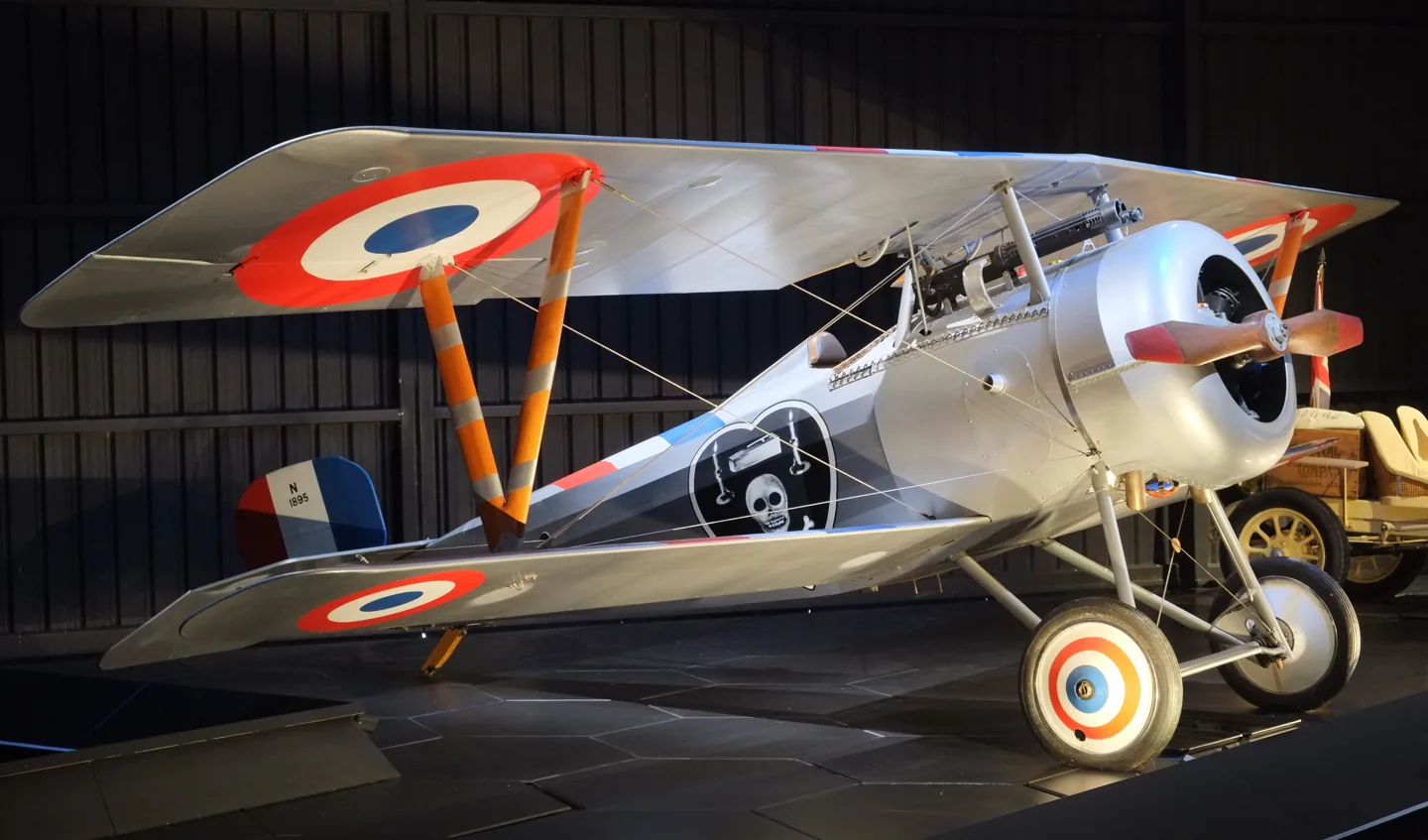
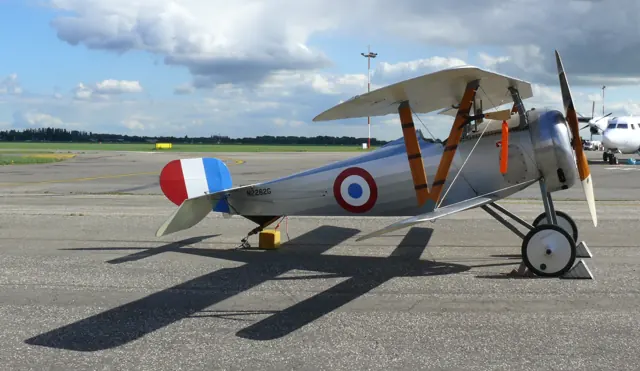
The Nieuport 24 developed the light French scout tradition with a revised fuselage and tail. Its small lower wing and V-shaped interplane struts retained the family’s characteristic sesquiplane layout. The 24bis used an earlier-style tail arrangement.
The type served as a fighter and advanced trainer during the First World War. Modern reproductions preserve its appearance but may use different engines and materials. The pilot account and gallery identify reproductions explicitly.
Nieuport 24 / 24bis
History & design
An evolving scout
The Nieuport 24 appeared as faster fighters such as the SPAD VII were taking a larger role. It continued in frontline use and training alongside related Nieuport types. Distinguishing the 24, 24bis and 27 matters when reading period descriptions and photographs.
Wikipedia contributors · Nieuport 24 / 24bis background ↗Real-aircraft family history
Systems & details
Reading the pilot evidence
The selected first-hand account describes a modern reproduction. Further original or clearly identified reproduction accounts are still being sought; related Nieuport types are not substituted for the 24.
Pilot accounts
A replica that needs continuous attention
Record describes completing a Nieuport 24 replica that had been acquired as an unfinished project. Preparation was thorough enough that its first flight passed without the dramatic problems a reader might imagine. His attention was on checking that the aircraft behaved as expected, leaving little opportunity simply to enjoy the occasion.
His handling description is more demanding than that quiet first flight might suggest. He found that the replica needed to be actively flown, with limited stability in pitch and yaw and little tolerance for diverting attention to navigation. Record explicitly distinguishes its modern engine from the rotary engines of wartime Nieuports. His observations illuminate one reproduction’s character; they are not a direct flight test of an original 1917 aircraft.
Nieuport 24 reproduction with a modern engine. Interview by Phil Scott, Air & Space, April–May 2016.
Read the full account · Smithsonian Air & Space ↗In your simulator
Systems, equipment and documentation for each developer’s aircraft.
Compare simulator versions →MSFS 2020 · MSFS 2024Nieuport 24 — original MSFS release
Flysimware · Released
Nieuport 24 — original MSFS release
Flysimware · Released
MSFS 2024Nieuport 24 — native MSFS 2024
Flysimware · Released
Nieuport 24 — native MSFS 2024
Flysimware · Released
Aircraft specifications
Published figures for the named real-aircraft variant. Simulator equipment and performance can differ.
| Specification | Published value |
|---|---|
| Upper wingspan | 8.21 m Historical Nieuport 24 C.1; reproductions may differ |
| Length | 5.87 m Historical Nieuport 24 C.1; reproductions may differ |
| Crew | 1 Historical Nieuport 24 C.1; reproductions may differ |
| Engine options | Le Rhône 9Ja / 9Jb rotary Historical Nieuport 24 C.1; reproductions may differ |
Manuals & resources
Read the original documentation from the people who created it. Manuals open on their publisher’s website.
Manual
Nieuport 24 2020 manualFlysimware · Separate 2020 product manual Nieuport 24 2024 manual v1.2Flysimware · Separate 2024 product manualAircraft background
Nieuport 24 / 24bis backgroundWikipedia contributors · Family background; article retrieved 13 September 2026Product page
Nieuport 24 — original MSFS releaseFlysimware · Official product page; checked 13 September 2026 Nieuport 24 — native MSFS 2024Flysimware · Official product page; checked 13 September 2026Discuss this aircraft (0)
Questions, observations and useful sources from the community.
No published discussions yet. Bring a question or share a useful source.
Open aircraft discussions →Content expanded · What’s new
Something missing or a source that needs attention?
Suggest a correction ↗



