

Start here
A few places to begin, from the aircraft’s story to the people who fly it.
Meet the aircraft
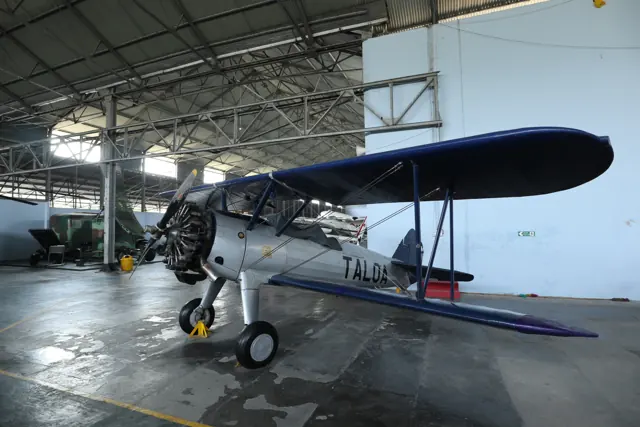
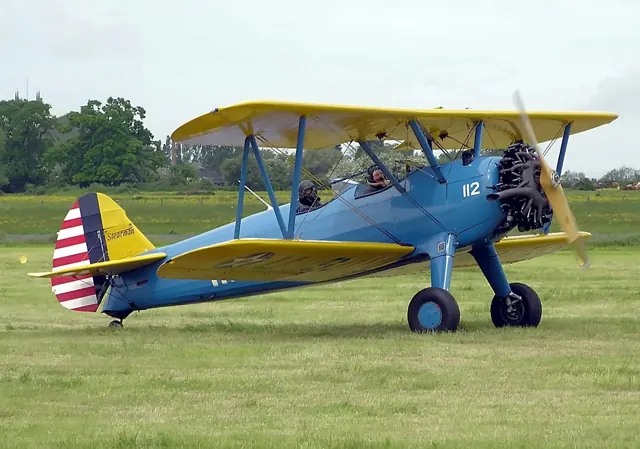
The Model 75 served military training organizations in the United States and Canada during the Second World War. Stearman became part of Boeing in 1934, accounting for the aircraft's two familiar manufacturer names. Surplus examples later became agricultural aircraft, sport aircraft and airshow performers, giving the trainer a civilian life well beyond its original role.
Aircraft background
Wikipedia contributors · Read more ↗A childhood fascination finally reaches the cockpit
Murdock had admired biplanes since childhood, but his first Stearman lesson almost ended before it began. The intended aircraft would not start, and a replacement developed a brake problem. After a long wait and lunch at the hangar, the original aircraft finally came to life and everyone’s disappointment turned to relief. Flying it was more physical than he expected.
AOPA Pilot · November 2002. First Stearman lesson with instructor Bob Kraemer near St. Charles, Missouri; Continental-powered PT-17.
AOPA Pilot · Read more ↗Into the cockpit
 YouTube
GreatFlyer · 7 min ·
Boeing Stearman Biplane - Airshow Display Flight - AFW2014 - Takeoff, Aerobatics & Landing
A Stearman airshow sequence covering takeoff, aerobatics and landing.
Real aircraft · Boeing-Stearman Model 75
Watch on YouTube ↗Preview images are served by AirframeDB. Videos open on YouTube only when you choose to watch.
Meet Boeing-Stearman Model 75
The Model 75 served military training organizations in the United States and Canada during the Second World War. Stearman became part of Boeing in 1934, accounting for the aircraft's two familiar manufacturer names. Surplus examples later became agricultural aircraft, sport aircraft and airshow performers, giving the trainer a civilian life well beyond its original role.
Boeing-Stearman Model 75
Stearman → · Explore the family →
Boeing-Stearman Model 75
Wikipedia contributors · Boeing-Stearman Model 75 ↗Aircraft type designators
Use the code for the model you are flying. The linked authority lists the applicable aircraft.
History & design
The first aircraft for generations of military pilots
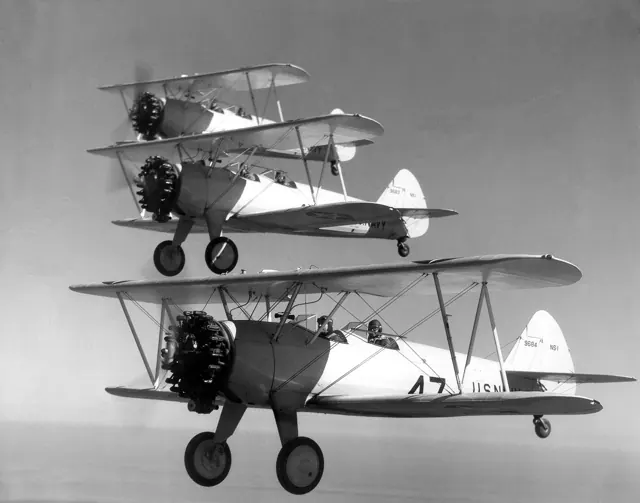
The Kaydet served the United States and Allied nations as a primary trainer from the late 1930s through the Second World War. Cadets learned their first flying skills in the biplane before progressing to more advanced aircraft. Its place in that early stage of training helps explain the personal attachment expressed by many former military pilots.
National Museum of the United States Air Force · Stearman PT-13D Kaydet ↗National Museum of the U.S. Air Force · Kaydet training role
Similar outlines, different engines and designations
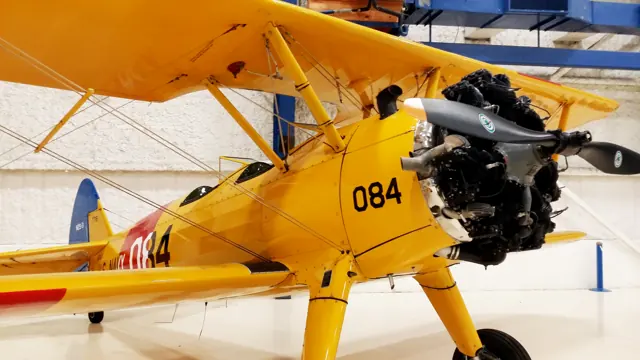
The museum distinguishes the Lycoming-powered PT-13, Continental-powered PT-17 and Jacobs-powered PT-18. These designations describe related versions rather than entirely different basic aircraft. Restored civilian examples may have later engines and other modifications, so the configuration named in each pilot account matters.
National Museum of the United States Air Force · Stearman PT-13D Kaydet ↗National Museum of the U.S. Air Force · engine distinctions; restoration context also illustrated by the attributed accounts
Pilot accounts
A childhood fascination finally reaches the cockpit
Murdock had admired biplanes since childhood, but his first Stearman lesson almost ended before it began. The intended aircraft would not start, and a replacement developed a brake problem. After a long wait and lunch at the hangar, the original aircraft finally came to life and everyone’s disappointment turned to relief.
Flying it was more physical than he expected. He loved the open view, the engine sound and the sensation of turning above the Mississippi, while the rudder work and repeated manoeuvres left him tired. On the ground, the restricted forward view and tendency to change direction demanded attention. Watching his wife and instructor take their turns afterward, he was exhausted but envious. The day left him determined to learn the aircraft properly and, eventually, own a Stearman himself.
AOPA Pilot · November 2002. First Stearman lesson with instructor Bob Kraemer near St. Charles, Missouri; Continental-powered PT-17.
Read the full account · AOPA Pilot ↗Returning to the aircraft of his teenage years
As a teenager, Haenlein cycled to his uncle’s flying school, brought Stearmans out of the hangar and warmed their engines for the day’s lessons. He earned his pilot certificate in one, then followed a varied career that eventually brought him back to aviation. Years later, he kept searching for a Stearman despite considering other attractive vintage aircraft.
Sophie finally became his in 2014, just before Christmas. The cold delivery flight reminded him how exposed an open cockpit could be. He subsequently improved the seats and intercom while retaining the aircraft’s older character. Flying it still returned him to those early days on Long Island. He made time for people who wanted to ask about it and took veterans flying, valuing their connection to its history as much as the quiet pleasure it gave him on a calm morning.
Jill W. Tallman’s AOPA Pilot interview · September 2018. Ownership of Sophie, a restored 1941 Stearman fitted with a later Lycoming engine.
Read the full account · AOPA Pilot ↗A thank-you flight across generations
McVicker originally loaned his Stearman to a museum during the colder months, when its open cockpit was less inviting. A deployment extended the arrangement, and volunteers continued caring for the aircraft and explaining its history to visitors. After returning, he took eight of them flying to thank them for their help.
The first passenger was Maynard Nelson, who recalled learning to fly a Stearman seventy-two years earlier before serving as a wartime B-24 pilot. Nelson had also owned a Stearman himself and remembered the many people he had taken for rides. He appreciated receiving that experience in return, saying photographs could never fully communicate it.
Jessica B. Nelson’s U.S. Air Force report · October 2015. Joint interview following museum-volunteer flights at McClellan Airfield on 30 September 2015; exact Stearman variant not established by the article.
Read the full account · U.S. Air Force / Air Combat Command ↗In your simulator
Systems, equipment and documentation for each developer’s aircraft.
Compare simulator versions →MSFS 2020 · MSFS 2024PT-17 Stearman
DC Designs · Released
PT-17 Stearman
DC Designs · Released
MSFS 2020Stearman Model 75
Golden Age Simulations · Released
Stearman Model 75
Golden Age Simulations · Released
Aircraft specifications
Published figures for the named real-aircraft variant. Simulator equipment and performance can differ.
| Specification | Published value |
|---|---|
| Length | 24 ft 9 in (7.54 m) |
| Wingspan | 32 ft 2 in (9.80 m) |
| Height | 9 ft 8 in (2.95 m) |
| Wing area | 298 sq ft (27.7 m² ) |
| Empty weight | 1,931 lb (876 kg) |
| Max takeoff weight | 2,635 lb (1,195 kg) |
| Powerplant | 1 × Continental R-670-5 7-cylinder air-cooled radial piston engine, 220 hp (160 kW) |
| Propellers | 2-bladed fixed-pitch propeller |
| Maximum speed | 124 mph (200 km/h, 108 kn) |
| Cruise speed | 96 mph (154 km/h, 83 kn) |
| Service ceiling | 13,200 ft (4,000 m) |
Manuals & resources
Find your next read
Choose a topic for a short introduction and a link to the original source. Simulator references identify the developer and edition they cover.
Pilot account
A childhood fascination finally reaches the cockpitAOPA Pilot · November 2002. First Stearman lesson with instructor Bob Kraemer near St. Charles, Missouri; Continental-powered PT-17.
Murdock had admired biplanes since childhood, but his first Stearman lesson almost ended before it began. The intended aircraft would not start, and a replacement developed a brake problem. After a long wait and lunch at the hangar, the original aircraft finally came to life and everyone’s disappointment turned to relief. Flying it was more physical than he expected.
Larry L. Murdock
AOPA Pilot · Read the source ↗Returning to the aircraft of his teenage yearsJill W. Tallman’s AOPA Pilot interview · September 2018. Ownership of Sophie, a restored 1941 Stearman fitted with a later Lycoming engine.
As a teenager, Haenlein cycled to his uncle’s flying school, brought Stearmans out of the hangar and warmed their engines for the day’s lessons. He earned his pilot certificate in one, then followed a varied career that eventually brought him back to aviation. Years later, he kept searching for a Stearman despite considering other attractive vintage aircraft. Sophie finally became his in 2014, just before Christmas. The cold delivery flight reminded him how exposed an open cockpit could be.
Ken Haenlein
AOPA Pilot · Read the source ↗Developer documentation
PT-17 Stearman — product listingPT-17 Stearman · MSFS 2020 · MSFS 2024
Product listing captured 2026-09-24; edition scope from the reviewed catalogue
DC Designs · Read the source ↗Stearman Model 75 — product listingStearman Model 75 · MSFS 2020
Product listing captured 2026-09-24; edition scope from the reviewed catalogue
Golden Age Simulations · Read the source ↗Read the original documentation from the people who created it. Manuals open on their publisher’s website.
Aircraft background
Boeing-Stearman Model 75Wikipedia contributors · Research background · retrieved 2026-09-12 Stearman PT-13D KaydetNational Museum of the United States Air Force · Museum fact sheet · primary-training role and engine variantsProduct
PT-17 StearmanKhamsin · Official developer / designated store catalogue · checked 2026-09-12 PT-17 Stearman exact product reviewDC Designs · Product listing captured 2026-09-24; edition scope from the reviewed catalogue Stearman Model 75Golden Age Simulations · Product listing captured 2026-09-24; edition scope from the reviewed catalogueType designator
ICAO Doc 8643 — aircraft type designatorsInternational Civil Aviation Organization · Public search data retrieved 2026-09-14; authority update 2026-09-03Built-in force-feedback profiles
Read the documentary basis, editable starting settings and remaining questions for the aircraft you fly. Each explanation refers to the exact profile revision shown.
Catalogue programme-20261022-v1 · 6 profile choices
DC Designs PT-17 Stearman
DC Designs · Free and Pro · Revision 3 · Inherited starting point
MSFS 2020 · MSFS 2024
DC Designs PT-17 Stearman: The biplane's nominal reversible-control loading is separate from engine power and airshow configuration; a 450-hp conversion does not set a yoke-force multiplier.
Golden Age Simulations IB75A Super Stearman tandem
Golden Age Simulations · Free and Pro · Revision 3 · Inherited starting point
MSFS 2020 · MSFS 2024
Golden Age Simulations IB75A Super Stearman tandem: The biplane's nominal reversible-control loading is separate from engine power and airshow configuration; a 450-hp conversion does not set a yoke-force multiplier.
Golden Age Simulations IB75A Super Stearman racer
Golden Age Simulations · Free and Pro · Revision 3 · Inherited starting point
MSFS 2020 · MSFS 2024
Golden Age Simulations IB75A Super Stearman racer: The biplane's nominal reversible-control loading is separate from engine power and airshow configuration; a 450-hp conversion does not set a yoke-force multiplier.
Golden Age Simulations IB75A Super Stearman wingwalker
Golden Age Simulations · Free and Pro · Revision 3 · Inherited starting point
MSFS 2020 · MSFS 2024
Golden Age Simulations IB75A Super Stearman wingwalker: The biplane's nominal reversible-control loading is separate from engine power and airshow configuration; a 450-hp conversion does not set a yoke-force multiplier.
Golden Age Simulations Boeing-Stearman Model 75
Golden Age Simulations · Free and Pro · Revision 3 · Inherited starting point
MSFS 2020
Golden Age Simulations Boeing-Stearman Model 75: The biplane's nominal reversible-control loading is separate from engine power and airshow configuration; a 450-hp conversion does not set a yoke-force multiplier.
Boeing-Stearman Model 75
Free and Pro · Revision 1 · Partial review
Aircraft reference · Manual starting point
Boeing-Stearman Model 75: The biplane's nominal reversible-control loading is separate from engine power and airshow configuration; a 450-hp conversion does not set a yoke-force multiplier.
Discuss this aircraft (0)
Questions, observations and useful sources from the community.
No published discussions yet. Bring a question or share a useful source.
Open aircraft discussions →Content expanded · What’s new
Something missing or a source that needs attention?
Suggest a correction ↗