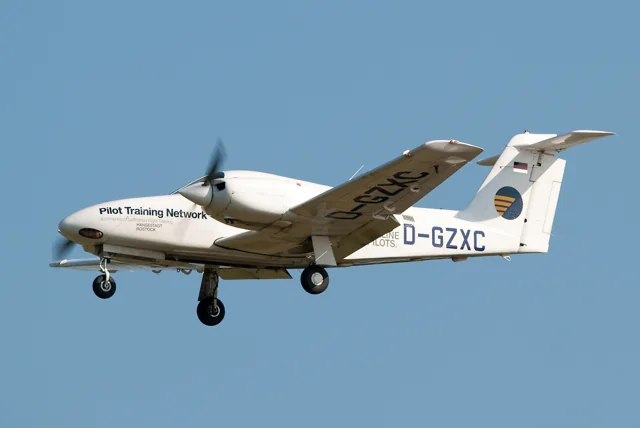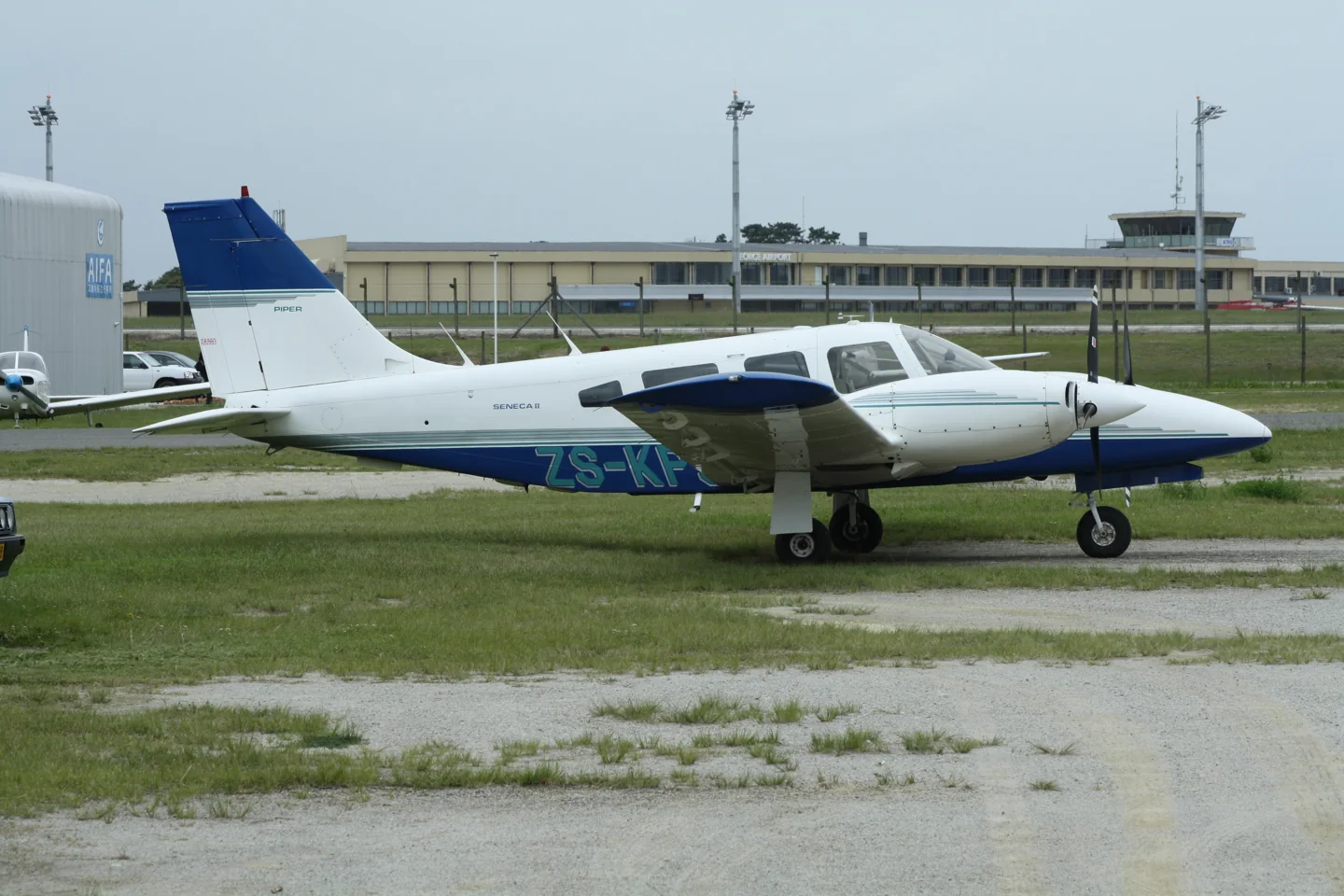


Start here
A few places to begin, from the aircraft’s story to the people who fly it.
Meet the aircraft
AOPA traces the Seneca from the original Lycoming-powered aircraft through the turbocharged Seneca II and later versions. Its 1994 pilot report describes the II's longer ailerons, rudder anti-servo tab and removal of the aileron-rudder interconnect. These handling changes distinguish the Seneca II from its predecessor.
Aircraft background
AOPA Pilot · Read more ↗Into the cockpit
 YouTube
Freefly
PA34 200T Piper Seneca II Cockpit view Engine start up takeoff and Landing
A cockpit view from engine start through takeoff and landing.
Real PA-34-200T Seneca II
Watch on YouTube ↗ YouTube
UK Wings and More · 23 min ·
(HD) Piper PA34 Seneca - Multi-engine aircraft cockpit tour
A concise Seneca cockpit tour introduces the twin's instrument layout.
Real aircraft · Piper PA-34 Seneca
Watch on YouTube ↗Preview images are served by AirframeDB. Videos open on YouTube only when you choose to watch.
Meet Piper PA-34 Seneca
AOPA traces the Seneca from the original Lycoming-powered aircraft through the turbocharged Seneca II and later versions. Its 1994 pilot report describes the II's longer ailerons, rudder anti-servo tab and removal of the aileron-rudder interconnect. These handling changes distinguish the Seneca II from its predecessor.
History & design
The changes were more than extra power
The first Seneca reached buyers as a 1972 model with counterrotating 200 hp Lycomings. For the 1975 Seneca II, Piper changed to turbocharged Continental engines and increased gross weight. AOPA's development account also records longer ailerons, a rudder anti-servo tab and removal of the aileron-rudder interconnect.
Those control changes improved low-speed and crosswind handling in the report. Later Senecas continued to evolve: the IV introduced revised nacelle inlets and cabin changes in the early 1990s. A Seneca II and a later V can share an aircraft-family page while still needing separate systems and handling scope.
AOPA Pilot · Piper Seneca IV: flight report and family history ↗AOPA Seneca IV flight report, March 1994, development sections.
Systems & details
Control feel changes across the family
The Seneca II's larger ailerons and revised rudder arrangement changed the feel that the pilot received, not just the numbers in a performance table. AOPA contrasts these with the original aircraft's weaker lateral stability. This is a reason to retain aircraft-generation context when discussing roll response and yaw coordination.
In your simulator
Systems, equipment and documentation for each developer’s aircraft.
Compare simulator versions →MSFS 2020PA34T V
Carenado · Released
PA34T V
Carenado · Released
X-Plane 12PA-34 Seneca II
JetStream / CIS · Released
PA-34 Seneca II
JetStream / CIS · Released
Manuals & resources
Find your next read
Choose a topic for a short introduction and a link to the original source. Simulator references identify the developer and edition they cover.
Developer documentation
PA34T V — product listingPA34T V · MSFS 2020
Product listing captured 2026-09-23; edition scope from the reviewed catalogue
www.carenado.com · Read the source ↗PA-34 Seneca II — product listingPA-34 Seneca II · X-Plane 12
Product listing captured 2026-09-30; edition scope from the reviewed catalogue
www.jetstreamfs.com · Read the source ↗Read the original documentation from the people who created it. Manuals open on their publisher’s website.
Aircraft background
Piper Seneca IV: flight report and family historyAOPA Pilot · Aircraft background; checked 2026-09-14Product
PA34T V MSFS2020 – Carenadowww.carenado.com · Product listing captured 2026-09-23; edition scope from the reviewed catalogue Seneca II - JetStream FSwww.jetstreamfs.com · Product listing captured 2026-09-30; edition scope from the reviewed catalogueBuilt-in force-feedback profiles
Read the documentary basis, editable starting settings and remaining questions for the aircraft you fly. Each explanation refers to the exact profile revision shown.
Catalogue programme-20261022-v1 · 4 profile choices
Carenado PA34 Seneca V (X-Plane)
Carenado · Free and Pro · Revision 1 · Partial review
X-Plane 11
Carenado PA34 Seneca V (X-Plane): The selected response supplies the twin’s yoke resistance.
Carenado PA34T Seneca V (MSFS)
Carenado · Free and Pro · Revision 3 · Inherited starting point
MSFS 2020
Carenado PA34T Seneca V (MSFS): The selected response supplies the twin’s yoke resistance.
JetStream / CIS Seneca II
JetStream / CIS · Free and Pro · Revision 3 · Inherited starting point
X-Plane 12
JetStream / CIS Seneca II: The selected response supplies the twin’s yoke resistance.
Piper PA-34 Seneca
Free and Pro · Revision 1 · Partial review
Aircraft reference · Manual starting point
Piper PA-34 Seneca: The selected response supplies the twin’s yoke resistance.
Discuss this aircraft (0)
Questions, observations and useful sources from the community.
No published discussions yet. Bring a question or share a useful source.
Open aircraft discussions →Content expanded · What’s new
Something missing or a source that needs attention?
Suggest a correction ↗