



Start here
A few places to begin, from the aircraft’s story to the people who fly it.
Meet the aircraft
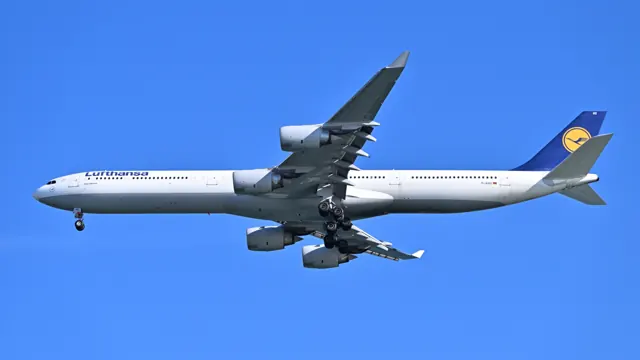
The A340 shared substantial programme work with the A330 but used four engines for long-haul operations. The initial -200 and -300 were followed by the much larger -500 and -600 developments, which brought different engines and significant airframe changes. The A340-600 has its own dimensions, fuel system and equipment.
Aircraft background
Wikipedia contributors · Read more ↗Finding a runway in a white landscape
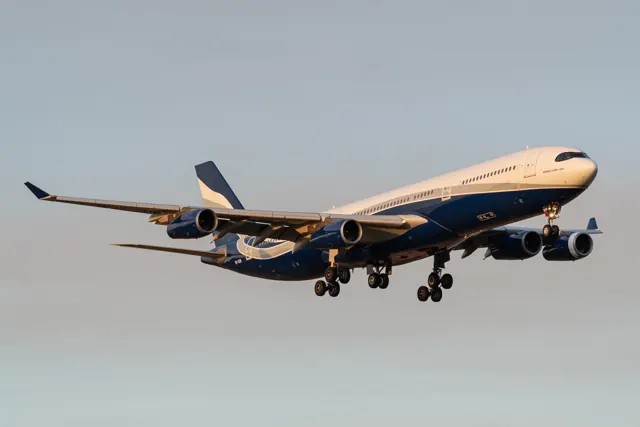
Mirpuri's log follows the 2 November 2021 flight of A340-313HGW 9H-SOL from Cape Town to Wolf's Fang. Preparation had taken months, including an advance visit by another captain. Much of the equipment needed to establish the season's operation travelled in the aircraft's own hold. During the flight, updated weather and runway-friction reports helped the crew confirm that conditions remained suitable.
Hi Fly, 22 November 2021. Firsthand captain’s log of 2 November 2021; A340-313HGW Antarctic operation. Airline promotional context retained.
Hi Fly · Read more ↗Control-law changes are tracked by release
The A340 change history distinguishes normal-law Alpha Floor, alternate-law high-speed stability and later yaw-control corrections. It also separates X-Plane 11-specific fixes from other changes. The reviewed August 2026 release is v1.6.1 build 1696.
A340-600 · ToLiss · X-Plane 11 · X-Plane 12
ToLiss · Read more ↗Into the cockpit
 YouTube
Just Planes · 96 min ·
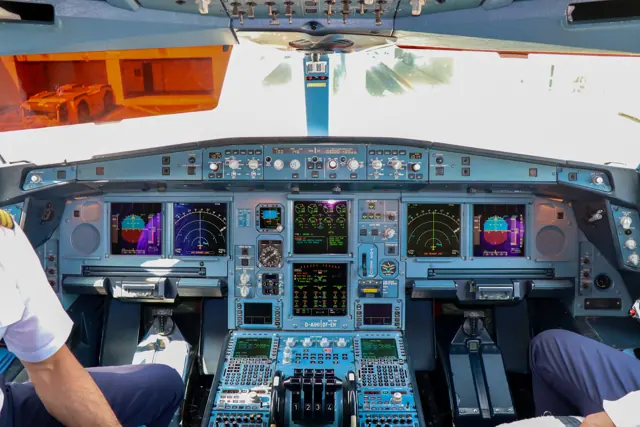
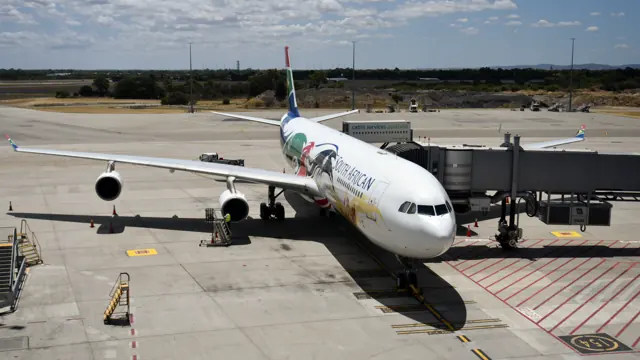
Airbus A340 Indian Ocean crossing Jo'burg to Perth | Full Cockpit Flight
A South African Airways A340 flight across the Indian Ocean, filmed from the cockpit.
Real aircraft · Airbus A340
Watch on YouTube ↗Preview images are served by AirframeDB. Videos open on YouTube only when you choose to watch.
Meet Airbus A340
The A340 shared substantial programme work with the A330 but used four engines for long-haul operations. The initial -200 and -300 were followed by the much larger -500 and -600 developments, which brought different engines and significant airframe changes.
The A340-600 has its own dimensions, fuel system and equipment. ToLiss's simulator documentation describes the specific flight-control and hydraulic modelling of its implementation.
Airbus A340-600
Airbus → · Explore the family →
Airbus A340-600
Wikipedia contributors · Airbus A340 ↗ToLiss · X-Plane 11 · X-Plane 12 →A340-300 Passenger
iniBuilds · Simbrief Profiles - A340 Airliner - FAQs - iniBuilds Forum ↗iniBuilds · MSFS 2024 →A340-300 Preighter
iniBuilds · Simbrief Profiles - A340 Airliner - FAQs - iniBuilds Forum ↗iniBuilds · MSFS 2024 →A340-300 VIP
iniBuilds · Simbrief Profiles - A340 Airliner - FAQs - iniBuilds Forum ↗iniBuilds · MSFS 2024 →Aircraft type designators
Use the code for the model you are flying. The linked authority lists the applicable aircraft.
History & design
Development milestones
First flight: 25 October 1991 ( 1991-10-25 )
Developed from: Airbus A300
Wikipedia contributors · Airbus A340 ↗Airbus A340 · family/variant named by the source · Wikipedia revision 1373352164
Pilot accounts
Finding a runway in a white landscape
Mirpuri's log follows the 2 November 2021 flight of A340-313HGW 9H-SOL from Cape Town to Wolf's Fang. Preparation had taken months, including an advance visit by another captain. Much of the equipment needed to establish the season's operation travelled in the aircraft's own hold. During the flight, updated weather and runway-friction reports helped the crew confirm that conditions remained suitable.
The final approach presented a distinctive visual problem: the ice runway blended into the surrounding white landscape, making height judgement difficult. Mirpuri describes the intense reflection, the importance of the monitoring pilot's calls and the satisfaction of a landing that matched the plan. Applause from the cabin followed as the aircraft slowed. The crew then inspected the setting on foot before an uneventful return. This airline-published account attributes the result to preparation, ground support and crew coordination as well as the aircraft.
Hi Fly, 22 November 2021. Firsthand captain’s log of 2 November 2021; A340-313HGW Antarctic operation. Airline promotional context retained.
Read the full account · Hi Fly ↗Teaching the next crew, and learning from them
In their conversation for Iberia, Ordovás recalls moving through the 727 and A320 before travelling to Miami for A340 training. By the time of the interview, he was an instructor and examiner on the A330 and A340. Menéndez, his friend and former colleague, had taught successive generations of pilots and continued instructing after his airline retirement. Their families' flying careers had crossed repeatedly.
They discuss how instruction had developed beyond technical drills to include judgement, attitudes and cooperation. Ordovás valued the humility needed to identify weaknesses and improve them, while Menéndez felt that teaching gave him energy in return. Both describe professional simulators as convincing enough to produce the physical reactions of a real flight. The joint interview concerns the careers and training work of instructors associated with the A340.
Iberia Ronda, November 2017, pages 91–94. Joint conversation with A330/A340 instructors; career and professional-training context, rather than a particular A340 flight.
Read the full account · Iberia Ronda ↗Long-haul flying, changing technology and life between countries
Lindegren describes a career that eventually brought him to the A330 and A340 after the DC-9, MD-11 and A320. In Remo Müller's SWISS profile, he reflects on the continuing need to adapt as paper manuals gave way to tablets and younger colleagues arrived fluent in the new tools. Long-haul flying had captivated him during what was meant to be a temporary assignment to Swissair, and he stayed.
The appeal came with costs. Maintaining a working life in Switzerland while his family lived in Sweden meant missing ordinary time together, as well as visiting distant cities. Near retirement from permanent employment, he was preparing a final rostered trip with friends as his crew and arranging to continue part-time flying. This is a personal account of an A330/A340 captain's working life; the interview does not identify every recalled journey with one specific aircraft variant.
SWISS Magazine, 15 May 2026. Airline-published career interview with an A330/A340 captain; mixed-fleet context is explicit, not an A340 handling evaluation.
Read the full account · SWISS Magazine ↗In your simulator
Systems, equipment and documentation for each developer’s aircraft.
Compare simulator versions →X-Plane 11 · X-Plane 12A340-600
ToLiss · Released
A340-600
ToLiss · Released
MSFS 2024A340 Airliner
iniBuilds · Released
A340 Airliner
iniBuilds · Released
X-Plane 12A340
JARDesign · Released
A340
JARDesign · Released
MSFS 2020 · MSFS 2024A340-600 Pro
ToLiss / Aerosoft · Released
A340-600 Pro
ToLiss / Aerosoft · Released
Manuals & resources
Find your next read
Choose a topic for a short introduction and a link to the original source. Simulator references identify the developer and edition they cover.
Simulator documentation
Control-law changes are tracked by releaseA340-600 · ToLiss · X-Plane 11 · X-Plane 12
The A340 change history distinguishes normal-law Alpha Floor, alternate-law high-speed stability and later yaw-control corrections. It also separates X-Plane 11-specific fixes from other changes. The reviewed August 2026 release is v1.6.1 build 1696.
A340-600 v1.6.1 · v1.4.2, v1.5, v1.6.1
ToLiss · Read the source ↗Hydraulic failures change what surfaces can doA340-600 · ToLiss · X-Plane 11 · X-Plane 12
ToLiss describes hydraulic-actuator flow, hinge moments and control surfaces that can float after failures. The A340 also models reversion between fly-by-wire laws. Surface response changes with the simulated hydraulic and control-law state.
A340-600 product specification · Accurate systems
ToLiss via authorized store · Read the source ↗Released product and variantsA340 Airliner · iniBuilds · MSFS 2024
The released A340-300 package includes Passenger, Preighter and VIP configurations. Both EIS1 CRT and EIS2 LCD cockpit displays are represented. The developer supplies a separate SimBrief profile for each cabin configuration.
Official developer / designated-store reference · checked 2026-09-14
iniBuilds · Read the source ↗Pilot account
Finding a runway in a white landscapeHi Fly, 22 November 2021. Firsthand captain’s log of 2 November 2021; A340-313HGW Antarctic operation. Airline promotional context retained.
Mirpuri's log follows the 2 November 2021 flight of A340-313HGW 9H-SOL from Cape Town to Wolf's Fang. Preparation had taken months, including an advance visit by another captain. Much of the equipment needed to establish the season's operation travelled in the aircraft's own hold. During the flight, updated weather and runway-friction reports helped the crew confirm that conditions remained suitable.
Carlos Mirpuri
Hi Fly · Read the source ↗Teaching the next crew, and learning from themIberia Ronda, November 2017, pages 91–94. Joint conversation with A330/A340 instructors; career and professional-training context, rather than a particular A340 flight.
In their conversation for Iberia, Ordovás recalls moving through the 727 and A320 before travelling to Miami for A340 training. By the time of the interview, he was an instructor and examiner on the A330 and A340. Menéndez, his friend and former colleague, had taught successive generations of pilots and continued instructing after his airline retirement. Their families' flying careers had crossed repeatedly.
José María Ordovás and Ventura Menéndez
Iberia Ronda · Read the source ↗Developer documentation
A340 — product listingA340 · X-Plane 12
Product listing captured 2026-09-30; edition scope from the reviewed catalogue
store.x-plane.org · Read the source ↗A340-600 Pro — product listingA340-600 Pro · MSFS 2020 · MSFS 2024
Product listing captured 2026-09-30; edition scope from the reviewed catalogue
Contrail · Read the source ↗Read the original documentation from the people who created it. Manuals open on their publisher’s website.
Manual
X-Plane aircraft and avionics manualsLaminar ResearchAircraft background
Airbus A340Wikipedia contributors · Research background · Wikipedia revision 1373352164 · retrieved 2026-09-12Resource
A340-600 productToLiss ToLiss A340-600 change logToLiss ToLiss A340-600 published specificationToLiss via authorized storeProduct
A340 Airliner for MSFS-2024iniBuilds · Official developer / designated store catalogue · checked 2026-09-12 JARDesign 340-500 Airliner-JARDesign-JD340store.x-plane.org · Product listing captured 2026-09-30; edition scope from the reviewed catalogue A340-600 Pro MSFS20/24 by Aerosoft / ToLiss | Contrail ShopContrail · Product listing captured 2026-09-30; edition scope from the reviewed catalogueDeveloper documentation
Simbrief Profiles - A340 Airliner - FAQs - iniBuilds ForuminiBuilds · Official developer / designated-store reference · checked 2026-09-14Type designator
ICAO Doc 8643 — aircraft type designatorsInternational Civil Aviation Organization · Public search data retrieved 2026-09-14; authority update 2026-09-03Built-in force-feedback profiles
Read the documentary basis, editable starting settings and remaining questions for the aircraft you fly. Each explanation refers to the exact profile revision shown.
Catalogue programme-20261022-v1 · 7 profile choices
Aerosoft / ToLiss A340-600 Pro
ToLiss / Aerosoft · Free and Pro · Revision 2 · Inherited starting point
MSFS 2020 · MSFS 2024
Aerosoft / ToLiss A340-600 Pro: The selected fixed spring approximates passive sidestick resistance; actuator hinge moments are not passed through as direct hand forces.
iniBuilds A340-300
iniBuilds · Free and Pro · Revision 4 · Inherited starting point
MSFS 2024
iniBuilds A340-300: The selected fixed spring approximates passive sidestick resistance; actuator hinge moments are not passed through as direct hand forces.
JARDesign Airbus A340-500
JARDesign · Free and Pro · Revision 3 · Inherited starting point
X-Plane 12
JARDesign Airbus A340-500: The selected fixed spring approximates passive sidestick resistance; actuator hinge moments are not passed through as direct hand forces.
ToLiss A340-600
ToLiss · Free and Pro · Revision 3 · Inherited starting point
X-Plane 12
ToLiss A340-600: The selected fixed spring approximates passive sidestick resistance; actuator hinge moments are not passed through as direct hand forces.
Airbus A340-300
Free and Pro · Revision 4 · Partial review
MSFS 2024 · X-Plane 11 · X-Plane 12
Airbus A340-300: The selected fixed spring approximates passive sidestick resistance; actuator hinge moments are not passed through as direct hand forces.
Airbus A340-600
Free and Pro · Revision 2 · Inherited starting point
MSFS 2024 · X-Plane 11 · X-Plane 12
Airbus A340-600: The selected fixed spring approximates passive sidestick resistance; actuator hinge moments are not passed through as direct hand forces.
Airbus A340-500
Free and Pro · Revision 1 · Partial review
MSFS 2020 · MSFS 2024 · X-Plane 12
A four-engine Airbus wide-body developed in parallel with the A330.
JARDesign Airbus A340-500
JARDesign Airbus A340-500: The selected fixed spring approximates passive sidestick resistance; actuator hinge moments are not passed through as direct hand forces.
Aircraft and simulator scope
- JARDesign Airbus A340-500 · JARDesign · X-Plane 12 · Add-on starting point
The simulator model and controls
The A340 shared substantial programme work with the A330 but used four engines for long-haul operations. The initial -200 and -300 were followed by the much larger -500 and -600 developments, which brought different engines and significant airframe changes.
This profile selects JARDesign Airbus A340-500 for X-Plane 12.
How this profile feels
The spring stays independent of airspeed. Directed aerodynamic loading is omitted.
Pitch-trim relief is off. Autopilot following is off.
Controls and trim
Airbus's A340 uses passive sidesticks within its fly-by-wire cockpit philosophy. iniBuilds documents an A340-300 with custom rotation and flare behavior, while ToLiss and Aerosoft's A340-600 products have their own hydraulic, actuator and control-law modeling. A modeled actuator can float or jam without producing a corresponding movement of a passive sidestick. The -300 and -600 retain distinct airframe and engine scope.
The selected implementation
JARDesign's XP12 generation has custom control/hydraulic/electrical/autoflight systems and stated simplifications. Its XP11 downloads remain separate.
About the values
The gains are normalized profile settings. They describe the chosen effect balance; hand force depends on the device and its output limits. IAS references are tuning values rather than operating limits. Physical acceptance of this revision remains pending.
Documentary review and sources
These decisions describe the documentary basis and remaining gaps for this revision. Aircraft documentation and a starting setting describe different kinds of evidence.
Aircraft and variant
InheritedThis profile selects JARDesign Airbus A340-500 for X-Plane 12.
Flight controls
InheritedAirbus's A340 uses passive sidesticks within its fly-by-wire cockpit philosophy. iniBuilds documents an A340-300 with custom rotation and flare behavior, while ToLiss and Aerosoft's A340-600 products have their own hydraulic, actuator and control-law modeling. A modeled actuator can float or jam without producing a corresponding movement of a passive sidestick. The -300 and -600 retain distinct airframe and engine scope.
Trim
InheritedNormal-law automatic trim changes the aircraft's stabilizer state independently of the fixed hardware centre. Pitch relief is off, with stored authority 0; roll authority is 0.
Autopilot and stability
InheritedAutopilot following is off; the configured spring and load retain the hardware feel. Separate neutral hold is on at strength 0.28, when a supported autopilot state admits it.
Equipment
InheritedJARDesign's XP12 generation has custom control/hydraulic/electrical/autoflight systems and stated simplifications. Its XP11 downloads remain separate.
Speeds and limits
InheritedThe indicated-speed references set the profile response scale; they are separate from aircraft operating limits.
Simulator integration
InheritedThe profile targets xplane12. Add-on-specific controls use only the supported references configured by this profile.
Force-feedback settings
InheritedThe settings define the profile’s effect balance. Device output limits affect physical hand force.
Starting settings and their rationale
These configured values are starting estimates. The explanations describe what each setting controls; physical validation appears separately below.
| Setting | Starting value | What it controls and why |
|---|---|---|
| Spring strength | Starting value0.55 | What it controls and whyThe selected fixed spring approximates passive sidestick resistance; actuator hinge moments are not passed through as direct hand forces. The baseline spring is 0.55. Low-speed spring blending is off. |
| Master force gain | Starting value0.85 | What it controls and whyScales overall profile strength while preserving effect balance, subject to device and output limits. |
| Profile force gain | Starting value0 | What it controls and whyThe stored 0 aerodynamic-load gain is inactive under the fixed-centre control law. |
| Force tuning speed/reference | Starting value250 kt | What it controls and whySets the IAS reference for aerodynamic loading. It is an estimate, not published cruise TAS or a flight limit. |
| Spring response reference speed | Starting value65 kt | What it controls and whySets the IAS where the low-speed blend reaches baseline strength; high-speed stiffening also uses it. |
| Aileron force scale | Starting value1 | What it controls and whyRoll and pitch aerodynamic scales are 1 and 1, respectively. These stored weights do not create directed aerodynamic loading while that term is inactive. The pitch spring-travel curve reaches output 1 at input 1. The roll spring-travel curve reaches output 0.3 at input 1. Spring-travel response contributes separately to axis balance. |
| Elevator force scale | Starting value1 | What it controls and whyScales pitch aerodynamic loading; pitch spring travel and trim responses are separate settings. |
| Trim feel | Starting valueDisabled | What it controls and whyRetained for compatibility and group membership. Trim relief, rather than this flag, controls centre movement. |
| Trim relief | Starting valueDisabled | What it controls and whyAllows trim relief with supported control law and valid telemetry. Axis authorities set its amount. |
| Autopilot follow | Starting valueDisabled | What it controls and whyAutopilot following is off; the configured spring and load retain the hardware feel. Separate neutral hold is on at strength 0.28, when a supported autopilot state admits it. |
| Autopilot neutral hold | Starting valueEnabled | What it controls and whyPermits centering hold during a supported AP state, separate from following a moving target. |
| Output force limit | Starting value0.55 | What it controls and whyCaps directed-force output. Native spring effects and device limits remain separate. |
All 49 starting settings and their rationale
The settings define the profile’s effect balance. Device output limits affect physical hand force.
| Setting | Starting value | What it controls and why |
|---|---|---|
| Spring strength | Starting value0.55 | What it controls and whyThe selected fixed spring approximates passive sidestick resistance; actuator hinge moments are not passed through as direct hand forces. The baseline spring is 0.55. Low-speed spring blending is off. |
| Spring deadband | Starting value0.01 | What it controls and whySets travel around the centre before the baseline spring resists. Smaller values engage it sooner. |
| Starting centering force | Starting value0.03 | What it controls and whyThe centre preload is 0.03. It ramps outside the 0.01 deadband across 0.05 travel, shaping the passive centre independently of aircraft autotrim. |
| Center Starting Force Transition | Starting value0.05 | What it controls and whySets the travel used to ramp in centre preload. Wider intervals make its onset more gradual. |
| Profile force gain | Starting value0 | What it controls and whyThe stored 0 aerodynamic-load gain is inactive under the fixed-centre control law. |
| Master force gain | Starting value0.85 | What it controls and whyScales overall profile strength while preserving effect balance, subject to device and output limits. |
| QBlend Enabled | Starting valueDisabled | What it controls and whyAllows baseline spring strength to rise with indicated airspeed where the control law permits it. |
| QSpring Minimum Factor | Starting value0.55 | What it controls and whySets low-speed spring strength as a fraction of baseline when blending is enabled. One keeps full strength. |
| QSpring Start Knots | Starting value8 kt | What it controls and whySets the IAS where the low-speed spring blend starts rising. This is a feel threshold, not a flight limit. |
| Spring response reference speed | Starting value65 kt | What it controls and whySets the IAS where the low-speed blend reaches baseline strength; high-speed stiffening also uses it. |
| Force tuning speed/reference | Starting value250 kt | What it controls and whySets the IAS reference for aerodynamic loading. It is an estimate, not published cruise TAS or a flight limit. |
| Airspeed spring stiffening gain | Starting value0 | What it controls and whyAdds permitted spring resistance above the full-blend speed. Zero removes this high-speed increase. |
| Airspeed spring stiffening limit | Starting value2 | What it controls and whyLimits the squared airspeed ratio used for high-speed spring stiffening; it is not a device-force cap. |
| Aileron force scale | Starting value1 | What it controls and whyRoll and pitch aerodynamic scales are 1 and 1, respectively. These stored weights do not create directed aerodynamic loading while that term is inactive. The pitch spring-travel curve reaches output 1 at input 1. The roll spring-travel curve reaches output 0.3 at input 1. Spring-travel response contributes separately to axis balance. |
| Elevator force scale | Starting value1 | What it controls and whyScales pitch aerodynamic loading; pitch spring travel and trim responses are separate settings. |
| Output force limit | Starting value0.55 | What it controls and whyCaps directed-force output. Native spring effects and device limits remain separate. |
| Travel Enabled | Starting valueEnabled | What it controls and whyApplies the configured pitch and roll spring travel curves. |
| Output | Starting value1 | What it controls and whySets response at the second pitch-curve point; it is an endpoint only if its input position is full travel. |
| Output | Starting value0.3 | What it controls and whySets response at the second roll-curve point; its input position and other points determine the travel law. |
| Trim feel | Starting valueDisabled | What it controls and whyRetained for compatibility and group membership. Trim relief, rather than this flag, controls centre movement. |
| Trim relief | Starting valueDisabled | What it controls and whyAllows trim relief with supported control law and valid telemetry. Axis authorities set its amount. |
| Elevator Authority | Starting value0 | What it controls and whyNormal-law automatic trim changes the aircraft's stabilizer state independently of the fixed hardware centre. Pitch relief is off, with stored authority 0; roll authority is 0. |
| Aileron Authority | Starting value0 | What it controls and whyScales supported roll-trim relief and permitted centre movement. Zero removes roll response. |
| Force Trim Enabled | Starting valueDisabled | What it controls and whyEnables local force trim, separate from aircraft-owned trim and add-on integration qualification. |
| GLoad Enabled | Starting valueDisabled | What it controls and whyAllows load-factor changes to modify permitted spring laws. Passive fly-by-wire feel can suppress it. |
| Rate Damping Enabled | Starting valueDisabled | What it controls and whyEnables rate damping with the configured coefficients and control law. |
| Autopilot follow | Starting valueDisabled | What it controls and whyAutopilot following is off; the configured spring and load retain the hardware feel. Separate neutral hold is on at strength 0.28, when a supported autopilot state admits it. |
| Autopilot follow authority | Starting value0.1 | What it controls and whySets admitted AP-follow gain, not a percentage of travel. Runtime ownership and input limits still apply. |
| Autopilot neutral hold | Starting valueEnabled | What it controls and whyPermits centering hold during a supported AP state, separate from following a moving target. |
| Autopilot neutral hold strength | Starting value0.28 | What it controls and whySets admitted AP neutral-hold strength; inactive while neutral hold is disabled. |
| Enabled | Starting valueEnabled | What it controls and whyEnables aerodynamic cues; each still needs nonzero strength and its simulator conditions. |
| Gain | Starting value0.06 | What it controls and whySets stall-buffet strength. Zero removes the cue without changing simulator stalls or warnings. |
| Gain | Starting value0.06 | What it controls and whySets high-Mach buffet strength; onset and full-strength thresholds are separate. |
| Gain | Starting value0 | What it controls and whySets flap buffet at the configured position and speed gates. Flap movement texture is separate. |
| Maximum flap index | Starting value3 | What it controls and whySets the final flap index for detent normalization. UP plus three detents uses maximum index3. |
| Minimum flap index | Starting value2 | What it controls and whySets the first flap detent that admits buffet; this is a handle index, not degrees. |
| Gain | Starting value0 | What it controls and whySets gear aerodynamic buffet; movement and ground-contact cues are separate. |
| Shaker Enabled | Starting valueDisabled | What it controls and whyPermits shaker at supported warning conditions; the switch does not establish aircraft equipment. |
| Stick shaker amplitude | Starting value0.5 | What it controls and whySets triggered shaker strength; inactive while the shaker feature is disabled. |
| Enabled | Starting valueDisabled | What it controls and whyEnables ground effects; each still needs its own strength and contact or motion telemetry. |
| Gain | Starting value0 | What it controls and whySets rolling texture strength, modified by speed, surface and undercarriage configuration. |
| Gain | Starting value0 | What it controls and whySets gear-bump texture during ground motion, separate from touchdown impact. |
| Gain | Starting value0 | What it controls and whySets landing-impact strength; landing telemetry and response shape determine the pulse. |
| Gain | Starting value0 | What it controls and whySets reverse-thrust vibration with valid reverser and engine conditions. Zero removes the cue. |
| Enabled | Starting valueDisabled | What it controls and whyEnables engine cues with nonzero settings and valid running-engine telemetry. |
| Gain | Starting value0 | What it controls and whySets estimated engine vibration using configured telemetry and response, not measured cockpit vibration. |
| Enabled | Starting valueEnabled | What it controls and whyEnables accessory cues with configured strengths and observed accessory movement. |
| Gain | Starting value0 | What it controls and whySets texture from observed flap movement; a command without movement does not establish the cue. |
| Gain | Starting value0 | What it controls and whySets texture from observed gear movement, separate from aerodynamic and touchdown effects. |
Limits and open questions
- Passive Airbus sidestick baseline with fixed elastic feel. Surface motion, q and G do not backdrive the pilot inceptor; law/protection changes remain within the add-on.
- Automatic stabilizer trim is not sidestick-neutral trim. Pitch/roll relief, local FTR and hydraulic centering are disabled.
- The passive sidestick does not motor-follow AP surface commands; AP follow disabled; neutral hold holds the sidestick at neutral while the autopilot is engaged.
- No guessed JAR plugin datarefs, protection forces or hydraulic failure loads. Standard position telemetry only; XP11 excluded.
- 250 KIAS is an estimated control-feel reference, not cruise TAS, V-speeds or an operating limit.
- Spring 0.55, lateral scale 1, trim relief 0/0; editable estimates, not measured hand forces.
- Physical and installed-aircraft checks are deferred. Save this profile as the aircraft default if telemetry omits its developer or configuration.
- Only actual accessory-position changes drive movement textures. No pressure-dependent failures, guessed servo outputs or input compensation.
- 2026-10-01, Airbus passive sidestick law (docs/poh/a320neo-feel-spec.md, SAE 861801, BEA AF447 3.2): pitch spring 0.55 at master gain 0.85, constant with airspeed, G and trim; roll at 30 % of pitch (published pitch:roll 3-4:1, 10 daN at 16 deg pitch, 2-3.5 daN at 20 deg roll); a 0.03 centre starting force over a 0.01 deadband for the 0.5 daN breakout (5 % of full pitch force); autopilot neutral hold 0.28 for the 5 daN override of the neutral lock; weak stall and Mach buffet (0.06), which the BEA describes as weakly transmitted to the sidestick; no turbulence, overspeed, spoiler, flap, gear, ground, engine, mechanical or drag cues.
Physical validation
No physical force validation is recorded in this public catalogue for this revision. Documentary review and software checks do not establish how a particular device feels.
Discuss this aircraft (0)
Questions, observations and useful sources from the community.
No published discussions yet. Bring a question or share a useful source.
Open aircraft discussions →Content expanded · What’s new
Something missing or a source that needs attention?
Suggest a correction ↗