
Start here
A few places to begin, from the aircraft’s story to the people who fly it.
Meet the aircraft
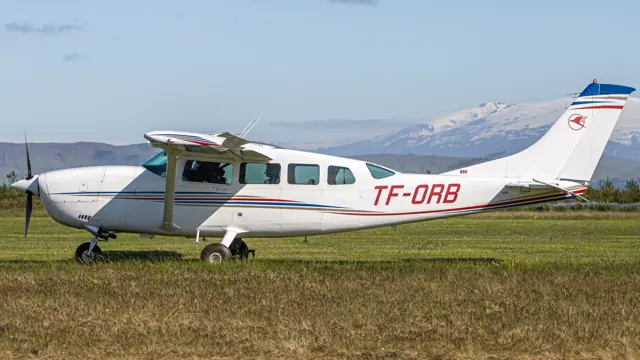
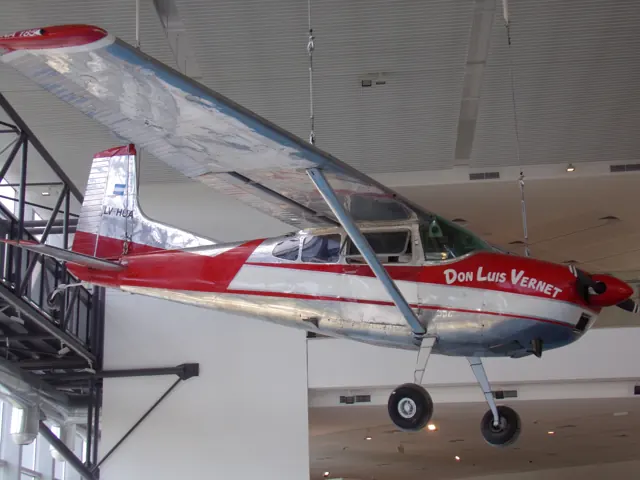
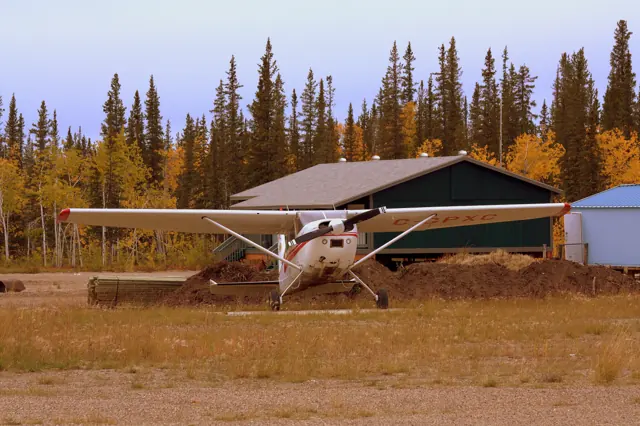
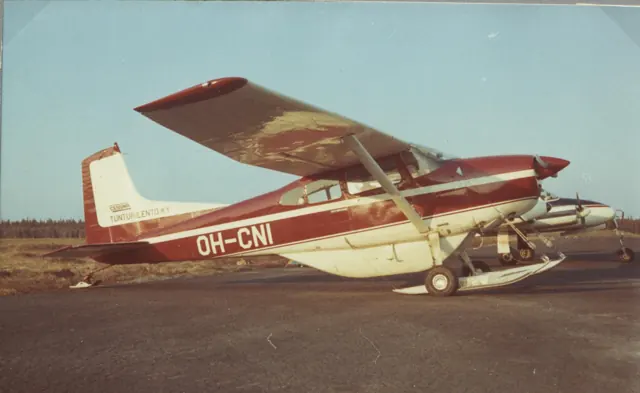
The Skywagon is a six-seat member of Cessna's utility-aircraft line. Its fixed conventional undercarriage distinguishes it from the tricycle-gear Stationair family. The prototype flew in 1960, with production aircraft following in 1961. Floats and skis expanded the uses of an aircraft already suited to carrying people and supplies.
Aircraft background
Wikipedia contributors · Read more ↗A working partnership across the western states
Hirschman spent several days travelling with photographer Mike Fizer and their equipment through the northern plains, mountains and desert Southwest. Snow and heat gave the trip very different settings, while the Skywagon kept asking for firm, timely control inputs. He describes an aircraft with considerable physical presence: its weight and large controls made it feel like a machine intended to work.
AOPA Pilot · June 2015. Cross-country flying with photographer Mike Fizer; observations concern the 185 family, with the flown variant not specified.
AOPA Pilot · Read more ↗The Skywagon’s Marketplace release
Microsoft’s Famous Flyer 11 announcement identifies the Cessna 185F for both Microsoft Flight Simulator and Microsoft Flight Simulator 2024. At that announcement, it was offered free to MSFS 2024 owners and sold separately in the earlier simulator’s Marketplace. Entitlement and installation are shown in the in-sim Marketplace.
Cessna 185F · Microsoft Flight Simulator · MSFS 2024
Microsoft · Read more ↗Into the cockpit
 YouTube
Backcountry182 · 19 min ·
Cessna 185 a plane a Spy would love, Instrument panel review, Its Amazing.
A closer look at one Cessna 185's instrument panel and equipment choices.
Family reference · Cessna 185; exact subvariant not identified
Watch on YouTube ↗Preview images are served by AirframeDB. Videos open on YouTube only when you choose to watch.
Meet Cessna 185F
The Skywagon is a six-seat member of Cessna's utility-aircraft line. Its fixed conventional undercarriage distinguishes it from the tricycle-gear Stationair family. The prototype flew in 1960, with production aircraft following in 1961.
Floats and skis expanded the uses of an aircraft already suited to carrying people and supplies. The 185F in the catalogue is a particular development of the design; its developer's package determines which undercarriages, avionics and other options are available in the simulator.
Cessna 185F
Aircraft type designators
Use the code for the model you are flying. The linked authority lists the applicable aircraft.
History & design
Part of Cessna’s tailwheel utility line
The 185 belongs to the succession of Cessna utility taildraggers that includes the 170 and 180. Its identity became closely tied to hauling people and equipment into the backcountry, with owners fitting wheels, skis or floats to suit the work. Individual aircraft often reflect decades of modification and care.
AOPA Pilot · Cessna 185 Skywagon: Brawny, backcountry workhorse ↗AOPA Pilot · June 2015 · family background
Pilot accounts
A working partnership across the western states
Hirschman spent several days travelling with photographer Mike Fizer and their equipment through the northern plains, mountains and desert Southwest. Snow and heat gave the trip very different settings, while the Skywagon kept asking for firm, timely control inputs. He describes an aircraft with considerable physical presence: its weight and large controls made it feel like a machine intended to work.
That initial impression became more comfortable in cruise. Once trimmed, it held its heading and altitude without demanding continuous effort, and turbulence did little to disturb its equilibrium. Landings remained a more active part of the relationship, with Hirschman personally preferring three-point arrivals. His account combines respect for the attention the aircraft requires with the satisfaction of using it for a long trip carrying people and photographic equipment.
AOPA Pilot · June 2015. Cross-country flying with photographer Mike Fizer; observations concern the 185 family, with the flown variant not specified.
Read the full account · AOPA Pilot ↗A Skywagon for the ranch and the family
Rose’s connection with aviation began around his family’s cotton farm and the crop-dusting aircraft working nearby. Years and many aircraft later, he chose a Skywagon to serve his Texas ranch and family travel. Maintaining a twin had begun taking more of his time than flying it, and trading his Scout and Twin Comanche for the A185F brought those needs into one aircraft.
Ownership still involved considerable hands-on work. He describes correcting older repairs, improving the panel and interior, and choosing tyres that suited the asphalt he actually used. Tail handles made moving it on the ground more practical. Even with extensive tailwheel experience, Rose acknowledges that wind can make the Skywagon demanding. His affection for it comes with the work of maintaining an older aeroplane and adapting it to everyday use.
Cessna Owner Organization interview · January 2025. Rose’s 1974 A185F, N185SS, bought in 2015 and subsequently modified.
Read the full account · Cessna Owner Organization ↗Making room for a growing family
Wright wanted an aircraft that could carry his growing family and their camping equipment while still making longer trips practical. His earlier Super Cub and PA-12 experiences had given him a taste for that kind of flying, but a third child changed the space he needed. The Skywagon occupied a useful place between those smaller taildraggers and the twin he used for business.
Restoring N60EC became part of making it their own, with a modern panel, refreshed interior and changes suited to the places he hoped to visit. He also sought instruction to understand how the heavier aircraft behaved, especially when loaded. His account looks ahead as much as back: he hoped his children would eventually learn to fly the Skywagon themselves. The project joined a practical transport choice to a longer family ambition.
Cessna Owner Organization · November 2023. Wright’s restored 1979 A185F, N60EC.
Read the full account · Cessna Owner Organization ↗In your simulator
Systems, equipment and documentation for each developer’s aircraft.
Compare simulator versions →MSFS 2024Cessna 185F
Microsoft Flight Simulator · Released
Cessna 185F
Microsoft Flight Simulator · Released
MSFS 2020185F Skywagon
Microsoft Flight Simulator · Released
185F Skywagon
Microsoft Flight Simulator · Released
Manuals & resources
Find your next read
Choose a topic for a short introduction and a link to the original source. Simulator references identify the developer and edition they cover.
Simulator documentation
The Skywagon’s Marketplace releaseCessna 185F · Microsoft Flight Simulator · MSFS 2024
Microsoft’s Famous Flyer 11 announcement identifies the Cessna 185F for both Microsoft Flight Simulator and Microsoft Flight Simulator 2024. At that announcement, it was offered free to MSFS 2024 owners and sold separately in the earlier simulator’s Marketplace. Entitlement and installation are shown in the in-sim Marketplace.
Official Famous Flyer 11 announcement · gathered 10 September 2026; historical offer
Microsoft · Read the source ↗The original MSFS 2020 release185F Skywagon · Microsoft Flight Simulator · MSFS 2020
Microsoft explicitly offers the 185F in both simulator generations. The March 2025 release distinguishes a paid MSFS 2020 Marketplace aircraft from the free aircraft offered to MSFS 2024 owners.
2025-03-25 · release and package scope
Microsoft Flight Simulator Team · Read the source ↗Pilot account
A working partnership across the western statesAOPA Pilot · June 2015. Cross-country flying with photographer Mike Fizer; observations concern the 185 family, with the flown variant not specified.
Hirschman spent several days travelling with photographer Mike Fizer and their equipment through the northern plains, mountains and desert Southwest. Snow and heat gave the trip very different settings, while the Skywagon kept asking for firm, timely control inputs. He describes an aircraft with considerable physical presence: its weight and large controls made it feel like a machine intended to work. That initial impression became more comfortable in cruise.
Dave Hirschman
AOPA Pilot · Read the source ↗A Skywagon for the ranch and the familyCessna Owner Organization interview · January 2025. Rose’s 1974 A185F, N185SS, bought in 2015 and subsequently modified.
Rose’s connection with aviation began around his family’s cotton farm and the crop-dusting aircraft working nearby. Years and many aircraft later, he chose a Skywagon to serve his Texas ranch and family travel. Maintaining a twin had begun taking more of his time than flying it, and trading his Scout and Twin Comanche for the A185F brought those needs into one aircraft. Ownership still involved considerable hands-on work.
Bryan Rose
Cessna Owner Organization · Read the source ↗Read the original documentation from the people who created it. Manuals open on their publisher’s website.
Manual
Microsoft Flight Simulator aircraft manualsMicrosoft / aircraft developersAircraft background
Cessna 185 SkywagonWikipedia contributors · Research background · Wikipedia revision 762488707 · retrieved 2026-09-12Resource
C185F availabilityMicrosoftType designator
ICAO Doc 8643 — aircraft type designatorsInternational Civil Aviation Organization · Public search data retrieved 2026-09-14; authority update 2026-09-03Built-in force-feedback profiles
Read the documentary basis, editable starting settings and remaining questions for the aircraft you fly. Each explanation refers to the exact profile revision shown.
Catalogue programme-20261022-v1 · 1 profile choice
Cessna 185F
Free and Pro · Revision 2 · Partial review
MSFS 2024 · MSFS 2020
Cessna 185F: The selected mechanical yoke response remains nominal for the named Skywagon equipment; a float or ski kit does not calibrate hand force.
Cessna 185F
Cessna 185F: The selected mechanical yoke response remains nominal for the named Skywagon equipment; a float or ski kit does not calibrate hand force.
Aircraft and simulator scope
- Cessna 185F · MSFS 2024 · family starting point
- Cessna 185F · MSFS 2020 · family starting point
Microsoft Famous Flyer C185F announcement; wheel, float and ski configurations remain distinct. · Selected choice: Cessna 185F. Documentary scope does not establish every variant, add-on revision or simulator binding.
The simulator model and controls
The Skywagon is a six-seat member of Cessna's utility-aircraft line. Its fixed conventional undercarriage distinguishes it from the tricycle-gear Stationair family. The prototype flew in 1960, with production aircraft following in 1961.
This starting point selects Cessna 185F. Its aircraft-level settings do not select a particular developer’s custom systems.
How this profile feels
Spring resistance builds with the selected airspeed response. A separate aerodynamic term adds speed-dependent control load.
Valid trim provides the configured pressure relief. Autopilot following is off.
Controls and trim
Microsoft's 185F package announcement describes an IO-520-D, a three-blade constant-speed propeller and optional float or ski kits. The wheeled Skywagon retains its fixed conventional gear. Underlying airframe identity does not make wheel, float and ski contact interchangeable, and a cruise speed published in mph is not the profile's indicated-speed force reference.
About the values
The gains are normalized profile settings. They describe the chosen effect balance; hand force depends on the device and its output limits. IAS references are tuning values rather than operating limits. Physical acceptance of this revision remains pending.
What the documentation establishes
The announcement identifies the 185F Skywagon and package surface-kit options for MSFS2020/2024.
The IO-520-D engine and constant-speed three-blade propeller are described, with optional floats/skis.
The stated cruise is in mph, not a source-derived indicated-speed force reference.
Documentary review and sources
These decisions describe the documentary basis and remaining gaps for this revision. Aircraft documentation and a starting setting describe different kinds of evidence.
Aircraft and variant
ReviewedThis starting point selects Cessna 185F. Its aircraft-level settings do not select a particular developer’s custom systems.
Flight controls
Not yet reviewedMicrosoft's 185F package announcement describes an IO-520-D, a three-blade constant-speed propeller and optional float or ski kits. The wheeled Skywagon retains its fixed conventional gear. Underlying airframe identity does not make wheel, float and ski contact interchangeable, and a cruise speed published in mph is not the profile's indicated-speed force reference.
Trim
Not yet reviewedPitch relief is a selected software approximation, with no exact trim-driven force authority supplied by the package announcement. Pitch authority 0.3 provides load relief and permitted centre movement; roll authority is 0.
Autopilot and stability
Not yet reviewedAutopilot following is off; the configured spring and load retain the hardware feel.
Equipment
ReviewedGear, flap and ground cues follow the selected settings and available simulator-reported states.
Speeds and limits
ReviewedThe indicated-speed references set the profile response scale; they are separate from aircraft operating limits.
Simulator integration
Not yet reviewedThe profile targets msfs2024, msfs2020. Add-on-specific controls use only the supported references configured by this profile.
Force-feedback settings
Not yet reviewedThe settings define the profile’s effect balance. Device output limits affect physical hand force.
Starting settings and their rationale
These configured values are starting estimates. The explanations describe what each setting controls; physical validation appears separately below.
| Setting | Starting value | What it controls and why |
|---|---|---|
| Spring strength | Starting value0.74 | What it controls and whyThe selected mechanical yoke response remains nominal for the named Skywagon equipment; a float or ski kit does not calibrate hand force. The baseline spring is 0.74. Its low-speed blend reaches baseline strength at 65 KIAS. |
| Master force gain | Starting value0.85 | What it controls and whyScales overall profile strength while preserving effect balance, subject to device and output limits. |
| Profile force gain | Starting value0.8 | What it controls and whyThe aerodynamic-load gain is 0.8 with an indicated-speed reference of 130 KIAS. This supplies speed-dependent loading alongside the spring. |
| Force tuning speed/reference | Starting value130.0 kt | What it controls and whySets the IAS reference for aerodynamic loading. It is an estimate, not published cruise TAS or a flight limit. |
| Spring response reference speed | Starting value65.0 kt | What it controls and whySets the IAS where the low-speed blend reaches baseline strength; high-speed stiffening also uses it. |
| Aileron force scale | Starting value0.72 | What it controls and whyRoll and pitch aerodynamic scales are 0.72 and 1, respectively. They set the aerodynamic axis balance. No custom spring-travel curve is enabled. |
| Elevator force scale | Starting value1.0 | What it controls and whyScales pitch aerodynamic loading; pitch spring travel and trim responses are separate settings. |
| Trim feel | Starting valueEnabled | What it controls and whyRetained for compatibility and group membership. Trim relief, rather than this flag, controls centre movement. |
| Trim relief | Starting valueEnabled | What it controls and whyAllows trim relief with supported control law and valid telemetry. Axis authorities set its amount. |
| Autopilot follow | Starting valueDisabled | What it controls and whyAutopilot following is off; the configured spring and load retain the hardware feel. |
| Autopilot neutral hold | Starting valueDisabled | What it controls and whyPermits centering hold during a supported AP state, separate from following a moving target. |
| Output force limit | Starting value0.55 | What it controls and whyCaps directed-force output. Native spring effects and device limits remain separate. |
All 44 starting settings and their rationale
The settings define the profile’s effect balance. Device output limits affect physical hand force.
| Setting | Starting value | What it controls and why |
|---|---|---|
| Spring strength | Starting value0.74 | What it controls and whyThe selected mechanical yoke response remains nominal for the named Skywagon equipment; a float or ski kit does not calibrate hand force. The baseline spring is 0.74. Its low-speed blend reaches baseline strength at 65 KIAS. |
| Spring deadband | Starting value0.045 | What it controls and whySets travel around the centre before the baseline spring resists. Smaller values engage it sooner. |
| Profile force gain | Starting value0.8 | What it controls and whyThe aerodynamic-load gain is 0.8 with an indicated-speed reference of 130 KIAS. This supplies speed-dependent loading alongside the spring. |
| Master force gain | Starting value0.85 | What it controls and whyScales overall profile strength while preserving effect balance, subject to device and output limits. |
| QBlend Enabled | Starting valueEnabled | What it controls and whyAllows baseline spring strength to rise with indicated airspeed where the control law permits it. |
| QSpring Minimum Factor | Starting value0.5 | What it controls and whySets low-speed spring strength as a fraction of baseline when blending is enabled. One keeps full strength. |
| QSpring Start Knots | Starting value18.2 kt | What it controls and whySets the IAS where the low-speed spring blend starts rising. This is a feel threshold, not a flight limit. |
| Spring response reference speed | Starting value65.0 kt | What it controls and whySets the IAS where the low-speed blend reaches baseline strength; high-speed stiffening also uses it. |
| Force tuning speed/reference | Starting value130.0 kt | What it controls and whySets the IAS reference for aerodynamic loading. It is an estimate, not published cruise TAS or a flight limit. |
| Airspeed spring stiffening gain | Starting value0.15 | What it controls and whyThe high-speed spring-stiffening gain is 0.15. It strengthens the permitted spring response above 65 KIAS, with the squared-speed ratio capped at 5. |
| Airspeed spring stiffening limit | Starting value5 | What it controls and whyLimits the squared airspeed ratio used for high-speed spring stiffening; it is not a device-force cap. |
| Aileron force scale | Starting value0.72 | What it controls and whyRoll and pitch aerodynamic scales are 0.72 and 1, respectively. They set the aerodynamic axis balance. No custom spring-travel curve is enabled. |
| Elevator force scale | Starting value1.0 | What it controls and whyScales pitch aerodynamic loading; pitch spring travel and trim responses are separate settings. |
| Output force limit | Starting value0.55 | What it controls and whyCaps directed-force output. Native spring effects and device limits remain separate. |
| Trim feel | Starting valueEnabled | What it controls and whyRetained for compatibility and group membership. Trim relief, rather than this flag, controls centre movement. |
| Trim relief | Starting valueEnabled | What it controls and whyAllows trim relief with supported control law and valid telemetry. Axis authorities set its amount. |
| Elevator Authority | Starting value0.3 | What it controls and whyPitch relief is a selected software approximation, with no exact trim-driven force authority supplied by the package announcement. Pitch authority 0.3 provides load relief and permitted centre movement; roll authority is 0. |
| Aileron Authority | Starting value0 | What it controls and whyScales supported roll-trim relief and permitted centre movement. Zero removes roll response. |
| Force Trim Enabled | Starting valueDisabled | What it controls and whyEnables local force trim, separate from aircraft-owned trim and add-on integration qualification. |
| GLoad Enabled | Starting valueEnabled | What it controls and whyAllows load-factor changes to modify permitted spring laws. Passive fly-by-wire feel can suppress it. |
| Rate Damping Enabled | Starting valueEnabled | What it controls and whyEnables rate damping with the configured coefficients and control law. |
| Autopilot follow | Starting valueDisabled | What it controls and whyAutopilot following is off; the configured spring and load retain the hardware feel. |
| Autopilot follow authority | Starting value0.1 | What it controls and whySets admitted AP-follow gain, not a percentage of travel. Runtime ownership and input limits still apply. |
| Autopilot neutral hold | Starting valueDisabled | What it controls and whyPermits centering hold during a supported AP state, separate from following a moving target. |
| Autopilot neutral hold strength | Starting value0.6 | What it controls and whySets admitted AP neutral-hold strength; inactive while neutral hold is disabled. |
| Enabled | Starting valueEnabled | What it controls and whyEnables aerodynamic cues; each still needs nonzero strength and its simulator conditions. |
| Gain | Starting value0.35 | What it controls and whySets stall-buffet strength. Zero removes the cue without changing simulator stalls or warnings. |
| Gain | Starting value0 | What it controls and whySets high-Mach buffet strength; onset and full-strength thresholds are separate. |
| Gain | Starting value0.14 | What it controls and whySets flap buffet at the configured position and speed gates. Flap movement texture is separate. |
| Maximum flap index | Starting value4 | What it controls and whySets the final flap index for detent normalization. UP plus three detents uses maximum index3. |
| Minimum flap index | Starting value2 | What it controls and whySets the first flap detent that admits buffet; this is a handle index, not degrees. |
| Gain | Starting value0 | What it controls and whySets gear aerodynamic buffet; movement and ground-contact cues are separate. |
| Shaker Enabled | Starting valueDisabled | What it controls and whyPermits shaker at supported warning conditions; the switch does not establish aircraft equipment. |
| Stick shaker amplitude | Starting value0.5 | What it controls and whySets triggered shaker strength; inactive while the shaker feature is disabled. |
| Enabled | Starting valueEnabled | What it controls and whyEnables ground effects; each still needs its own strength and contact or motion telemetry. |
| Gain | Starting value0.4 | What it controls and whySets rolling texture strength, modified by speed, surface and undercarriage configuration. |
| Gain | Starting value0.25 | What it controls and whySets gear-bump texture during ground motion, separate from touchdown impact. |
| Gain | Starting value0.65 | What it controls and whySets landing-impact strength; landing telemetry and response shape determine the pulse. |
| Gain | Starting value0 | What it controls and whySets reverse-thrust vibration with valid reverser and engine conditions. Zero removes the cue. |
| Enabled | Starting valueEnabled | What it controls and whyEnables engine cues with nonzero settings and valid running-engine telemetry. |
| Gain | Starting value0.12 | What it controls and whySets estimated engine vibration using configured telemetry and response, not measured cockpit vibration. |
| Enabled | Starting valueEnabled | What it controls and whyEnables accessory cues with configured strengths and observed accessory movement. |
| Gain | Starting value0.12 | What it controls and whySets texture from observed flap movement; a command without movement does not establish the cue. |
| Gain | Starting value0 | What it controls and whySets texture from observed gear movement, separate from aerodynamic and touchdown effects. |
Limits and open questions
- The announcement does not establish Skywagon control linkage or cockpit force gradients.
- No C185F trim mechanism, travel or sign is described in this source.
- No autopilot installation or external servo-following interface is documented by the announcement.
- Simulator-edition availability does not establish trim ownership or force-output telemetry.
- Engine identity and surface kits do not quantify stick effort, propwash or vibration amplitude.
Physical validation
No physical force validation is recorded in this public catalogue for this revision. Documentary review and software checks do not establish how a particular device feels.
Discuss this aircraft (0)
Questions, observations and useful sources from the community.
No published discussions yet. Bring a question or share a useful source.
Open aircraft discussions →Content expanded · What’s new
Something missing or a source that needs attention?
Suggest a correction ↗