
Start here
A few places to begin, from the aircraft’s story to the people who fly it.
Meet the aircraft
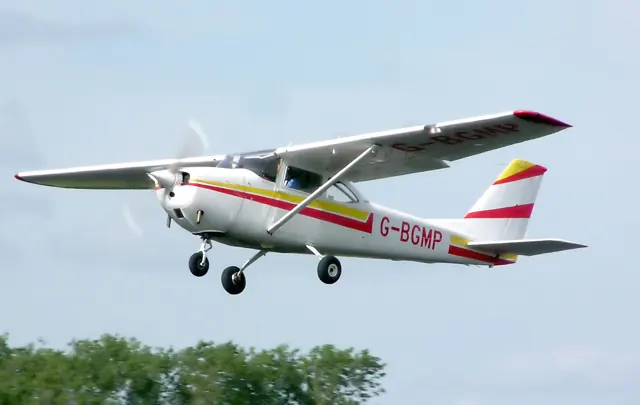
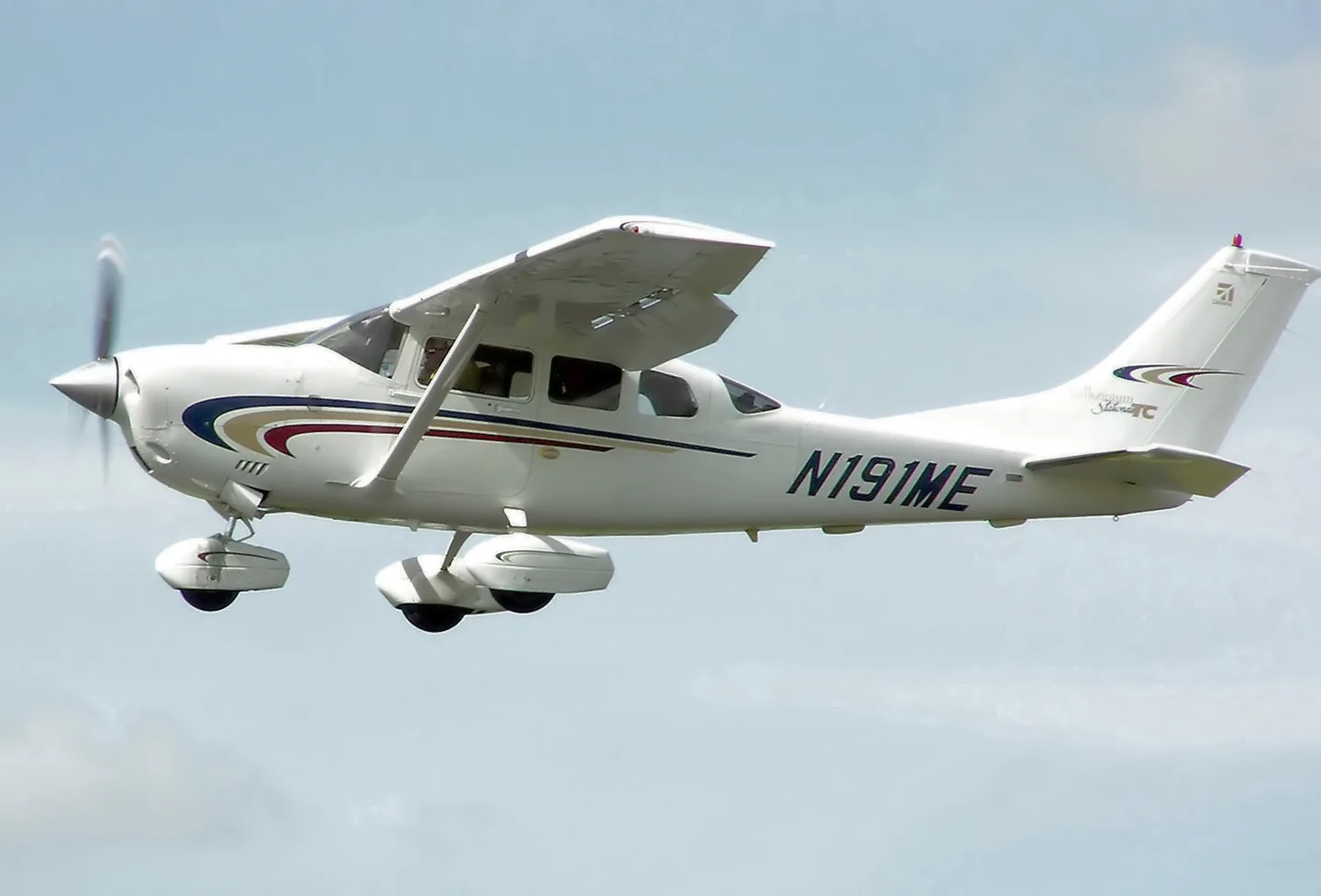
The 205, 206 and 207 family developed from Cessna's retractable-gear 210. Fixed landing gear and a utility role distinguish these aircraft from that ancestor. They have been used for commercial transport and private flying. The simulator entries represent the 206, with specification tables labelled for the Stationair version they describe.
Aircraft background
Wikipedia contributors · Read more ↗Trying the new turbocharged Stationair
Bedell took the T206H flying with three adults and equipment aboard, then added fuel for another departure close to its maximum weight. He was impressed by the climb and the speed available at altitude, particularly from a fixed-gear utility single. Heavy rain the previous day kept this demonstration on pavement; the article does not describe a backcountry trial.
AOPA Pilot · June 2000. Demonstration of the then-new Lycoming-powered T206H, including near-maximum-weight takeoffs on paved runways.
AOPA Pilot · Read more ↗Build a panel around the way you fly
Thranda’s DGS package lets instruments move around the three-dimensional panel, with presets that can be saved and shared. Many instruments also open as separate windows for other monitors. The listing includes Aspen equipment and support for optional RealityXP units; the exact navigation choices depend on the selected setup.
Cessna 206 Stationair · Thranda · X-Plane 11 · X-Plane 12
Thranda · Read more ↗Into the cockpit
 YouTube
Cessna · 5 min ·
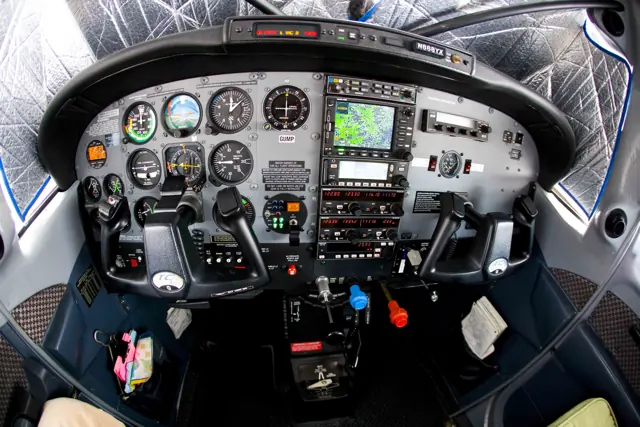
Cessna Turbo Stationair HD 206 Demonstration – Interior & Cockpit
Cessna demonstrates the interior and cockpit of the Turbo Stationair HD.
Real aircraft · Cessna 206 Stationair
Watch on YouTube ↗Preview images are served by AirframeDB. Videos open on YouTube only when you choose to watch.
Meet Cessna 206 Stationair
The 205, 206 and 207 family developed from Cessna's retractable-gear 210. Fixed landing gear and a utility role distinguish these aircraft from that ancestor. They have been used for commercial transport and private flying. The simulator entries represent the 206, with specification tables labelled for the Stationair version they describe.
Cessna 206 Stationair
Cessna → · Explore the family →
Cessna 206 Stationair
Wikipedia contributors · Cessna 206 ↗Thranda · X-Plane 11 · X-Plane 12 →Aircraft type designators
Use the code for the model you are flying. The linked authority lists the applicable aircraft.
Normally aspirated Cessna 206 / U206
ICAO Doc 8643 — aircraft type designators ↗Checked 2026-09-14History & design
A family hauler with a working-aircraft layout
The Stationair’s six-seat cabin and separate rear loading doors have made it useful for family transport as well as hauling work. Cox’s owner interview illustrates the appeal: access to the children’s seats and space for their luggage mattered as much as cruise speed. Payload still depended on fuel and installed equipment.
Plane & Pilot · 170-Knot SUV ↗Plane & Pilot · October 2009 · aircraft role and one owner’s selection
Development milestones
Developed from: Cessna 210
Wikipedia contributors · Cessna 206 ↗Cessna 206 · family/variant named by the source · Wikipedia revision 1373146920
Pilot accounts
Trying the new turbocharged Stationair
Bedell took the T206H flying with three adults and equipment aboard, then added fuel for another departure close to its maximum weight. He was impressed by the climb and the speed available at altitude, particularly from a fixed-gear utility single. Heavy rain the previous day kept this demonstration on pavement; the article does not describe a backcountry trial.
The controls felt substantial, with less tidy yaw behaviour at low speed and useful relief from the rudder trim. On the return to Frederick, the large flaps made a steep approach possible, though keeping enough power in remained part of the job. Bedell also found that the prominent new cowling had less effect on his forward view than he expected. His enthusiasm centres on the aircraft’s ability to carry a load and still make useful cross-country progress.
AOPA Pilot · June 2000. Demonstration of the then-new Lycoming-powered T206H, including near-maximum-weight takeoffs on paved runways.
Read the full account · AOPA Pilot ↗Taking a family aircraft across the Atlantic
Cope wanted seats for his wife and four children, useful luggage space and an aircraft suited to travel from his island home. He bought a Turbo Stationair in the United States and hired Cox to bring it across the Atlantic. Their aircraft had TKS equipment and an extra ferry tank, giving this delivery flight a configuration beyond a standard family trip.
Weather still shaped the journey. The planned Greenland stop changed when conditions at Narsarsuaq were poor, and the flight continued through Iceland and Scotland with another detour for business in Copenhagen. Cox recalls mostly clear conditions, some ice over the Denmark Strait and reassuringly steady instrument flying into Reykjavik. His account follows a working ferry mission with its owner aboard, connecting the aircraft’s family purpose with the practical decisions required to get it home.
Plane & Pilot · October 2009. Delivery of Chris Cope’s near-new Turbo Stationair from St. Louis to the Isle of Man, with Cope aboard and an additional 50-gallon ferry tank.
Read the full account · Plane & Pilot ↗Photography first, then getting comfortable
Bloom began by adjusting his seat to see comfortably over the deep instrument panel. The photo session then made him work: flying in formation with a Yak-52 required attention to the Stationair’s momentum, sight lines and changing power. Getting useful photographs was a more demanding introduction than simply settling into cruise.
Afterwards, he could appreciate the roomy cabin and the steadier work of ordinary cross-country flying. Ortega demonstrated the avionics while Bloom explored the controls, which felt consistently moderate once he became accustomed to the aircraft. His circuit work also included a candid mistake: fumbling the flap handling during a touch-and-go brought an early liftoff followed by contact with the runway again. The account conveys both the pleasure of flying a capable utility aircraft and the awkward moments that can accompany an unfamiliar cockpit.
Cessna Flyer · July 2012. T206H demonstration with Cessna chief piston pilot Kirby Ortega; the account describes a 2009 aircraft.
Read the full account · Cessna Flyer ↗In your simulator
Systems, equipment and documentation for each developer’s aircraft.
X-Plane 11 · X-Plane 12Cessna 206 Stationair
Thranda · Released
Cessna 206 Stationair
Thranda · Released
Aircraft specifications
Published figures for the named real-aircraft variant. Simulator equipment and performance can differ.
| Specification | Published value |
|---|---|
| Length | 28 ft 3 in (8.61 m) |
| Wingspan | 36 ft 0 in (10.97 m) |
| Height | 9 ft 3 + 1 ⁄ 2 in (2.832 m) |
| Wing area | 175.5 sq ft (16.30 m² ) |
| Empty weight | 2,176 lb (987 kg) |
| Max takeoff weight | 3,600 lb (1,633 kg) |
| Powerplant | 1 × Lycoming IO-540-AC1A naturally aspirated air-cooled flat-six engine , 300 hp (220 kW) |
| Propellers | 3-bladed McCauley metal constant-speed propeller |
| Maximum speed | 174 mph (280 km/h, 151 kn) at sea level |
| Cruise speed | 163 mph (262 km/h, 142 kn) at 6,200 ft (1,900 m) (75% power) |
| Stall speed | 63 mph (101 km/h, 55 kn) (flaps down) |
| Range | 840 mi (1,350 km, 730 nmi) at 6,500 ft (2,000 m) (max fuel, 45 min reserves) |
| Service ceiling | 15,700 ft (4,800 m) |
| Rate of climb | 988 ft/min (5.02 m/s) |
Manuals & resources
Find your next read
Choose a topic for a short introduction and a link to the original source. Simulator references identify the developer and edition they cover.
Simulator documentation
Build a panel around the way you flyCessna 206 Stationair · Thranda · X-Plane 11 · X-Plane 12
Thranda’s DGS package lets instruments move around the three-dimensional panel, with presets that can be saved and shared. Many instruments also open as separate windows for other monitors. The listing includes Aspen equipment and support for optional RealityXP units; the exact navigation choices depend on the selected setup.
Designated X-Plane.org store · gathered 12 September 2026
Thranda · Read the source ↗Passenger, cargo, float and ski configurationsCessna 206 Stationair · Thranda · X-Plane 11 · X-Plane 12
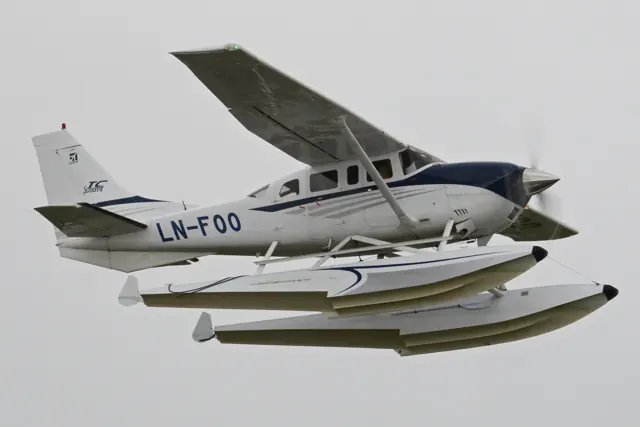
Seats can be repositioned or hidden, with cargo appearing when weight is added to the cleared space. The menu provides individual loading, a centre-of-gravity display and an optional cargo pod. Version 1.1 added plain and amphibious floats plus skis for the landplane; the gathered listing records version 1.2 and X-Plane 11/12 support.
Designated store · v1.1 November 2022; v1.2 February 2023
Thranda · Read the source ↗Pilot account
Trying the new turbocharged StationairAOPA Pilot · June 2000. Demonstration of the then-new Lycoming-powered T206H, including near-maximum-weight takeoffs on paved runways.
Bedell took the T206H flying with three adults and equipment aboard, then added fuel for another departure close to its maximum weight. He was impressed by the climb and the speed available at altitude, particularly from a fixed-gear utility single. Heavy rain the previous day kept this demonstration on pavement; the article does not describe a backcountry trial. The controls felt substantial, with less tidy yaw behaviour at low speed and useful relief from the rudder trim.
Peter A. Bedell
AOPA Pilot · Read the source ↗Taking a family aircraft across the AtlanticPlane & Pilot · October 2009. Delivery of Chris Cope’s near-new Turbo Stationair from St. Louis to the Isle of Man, with Cope aboard and an additional 50-gallon ferry tank.
Cope wanted seats for his wife and four children, useful luggage space and an aircraft suited to travel from his island home. He bought a Turbo Stationair in the United States and hired Cox to bring it across the Atlantic. Their aircraft had TKS equipment and an extra ferry tank, giving this delivery flight a configuration beyond a standard family trip. Weather still shaped the journey.
Bill Cox
Plane & Pilot · Read the source ↗Read the original documentation from the people who created it. Manuals open on their publisher’s website.
Aircraft background
Cessna 206Wikipedia contributors · Research background · retrieved 2026-09-12Product
Cessna U206G Stationair DGS series XP12 / 11Thranda · Official developer / designated store catalogue · checked 2026-09-12Type designator
ICAO Doc 8643 — aircraft type designatorsInternational Civil Aviation Organization · Public search data retrieved 2026-09-14; authority update 2026-09-03Built-in force-feedback profiles
Read the documentary basis, editable starting settings and remaining questions for the aircraft you fly. Each explanation refers to the exact profile revision shown.
Catalogue programme-20261022-v1 · 10 profile choices
Carenado CT206H Stationair (GNS / G1000)
Carenado · Free and Pro · Revision 3 · Partial review
X-Plane 11
Carenado CT206H Stationair (GNS / G1000): Nominal manual yoke loading accompanies the selected Stationair.
sal1800 T206H
sal1800 · Free and Pro · Revision 3 · Inherited starting point
MSFS 2020
sal1800 T206H: Nominal manual yoke loading accompanies the selected Stationair.
Thranda U206G Stationair
Thranda · Free and Pro · Revision 3 · Inherited starting point
X-Plane 12
Thranda U206G Stationair: Nominal manual yoke loading accompanies the selected Stationair.
Thranda U206G Stationair Amphibian Water Operations
Thranda · Free and Pro · Revision 2 · Inherited starting point
X-Plane 12
Thranda U206G Stationair Amphibian Water Operations: Nominal manual yoke loading accompanies the selected Stationair.
Thranda U206G Stationair Straight Floats
Thranda · Free and Pro · Revision 2 · Inherited starting point
X-Plane 12
Thranda U206G Stationair Straight Floats: Nominal manual yoke loading accompanies the selected Stationair.
Thranda U206G Stationair Skis
Thranda · Free and Pro · Revision 2 · Inherited starting point
X-Plane 12
Thranda U206G Stationair Skis: Nominal manual yoke loading accompanies the selected Stationair.
Cessna 206 Stationair
Free and Pro · Revision 2 · Partial review
X-Plane 12 · X-Plane 11
Cessna 206 Stationair: Nominal manual yoke loading accompanies the selected Stationair.
Cessna U206G Stationair Amphibian
Free and Pro · Revision 1 · Partial review
MSFS 2020 · MSFS 2024 · X-Plane 12
The Stationair utility family, combining a high wing with fixed landing gear.
Cessna U206G Stationair Skis
Free and Pro · Revision 1 · Partial review
MSFS 2020 · MSFS 2024 · X-Plane 12
The Stationair utility family, combining a high wing with fixed landing gear.
Cessna U206G Stationair Straight Floats
Free and Pro · Revision 1 · Partial review
MSFS 2020 · MSFS 2024 · X-Plane 12
The Stationair utility family, combining a high wing with fixed landing gear.
Discuss this aircraft (0)
Questions, observations and useful sources from the community.
No published discussions yet. Bring a question or share a useful source.
Open aircraft discussions →Content expanded · What’s new
Something missing or a source that needs attention?
Suggest a correction ↗