

Start here
A few places to begin, from the aircraft’s story to the people who fly it.
Meet the aircraft
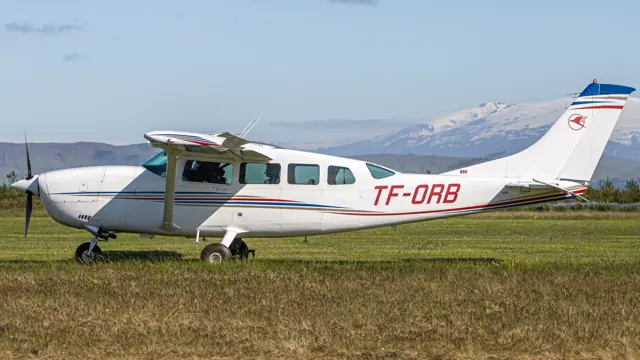
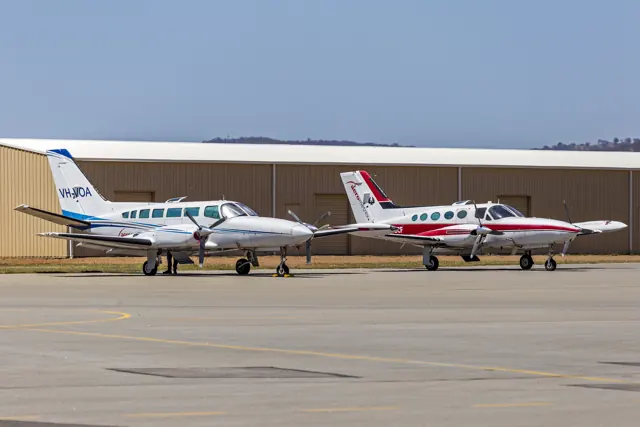
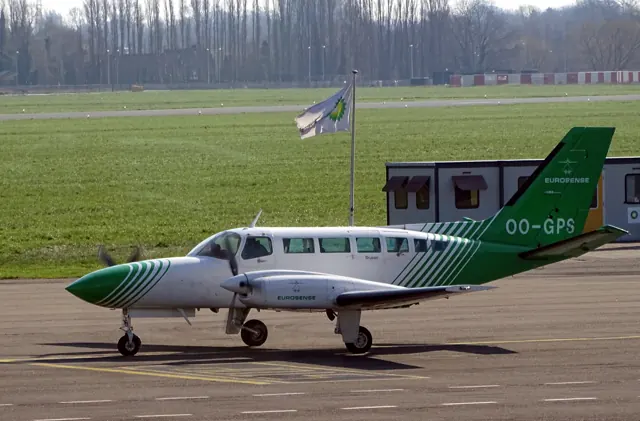
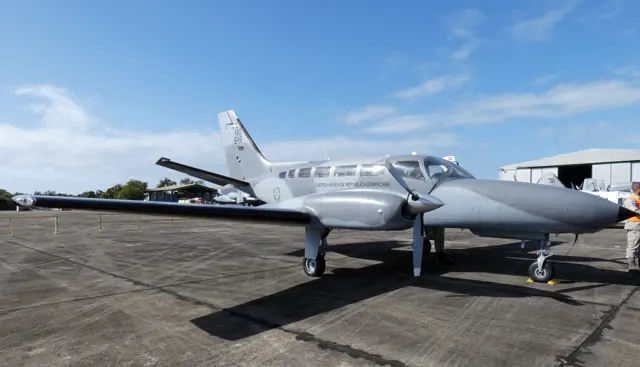
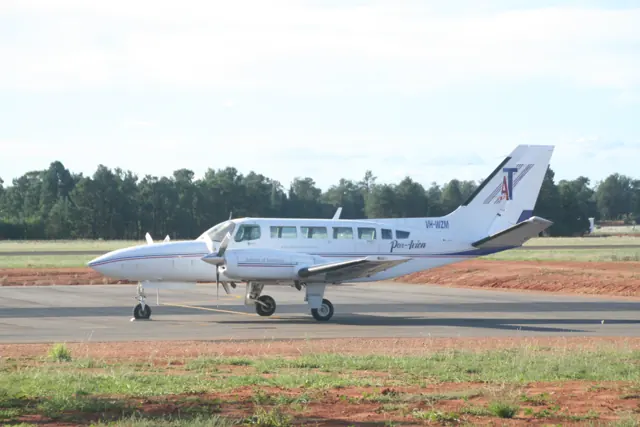
The Titan sits at the larger end of Cessna's piston-twin range. Its low wing carries two engines, while a substantial cabin supports passenger and freight configurations. It was developed during the 1970s and also appeared in military service under different designations. The 404 offers a different reference point from both a small private twin and a pressurised business turboprop.
Aircraft background
Wikipedia contributors · Read more ↗A working twin also carries the family on holiday
Caruso’s enthusiasm for the 404 came from years spent around the aircraft as a maintainer, seller and operator. His family business owned two, and its work gave him repeated opportunities to introduce buyers to the type. He compared its handling with a heavy 402C and emphasised the small throttle movements involved in managing the geared engines. The aircraft also had a place in family life.
Cessna Flyer interview · May 2016. Founder of Maine Aviation Sales, a business maintaining, selling and operating 404s; his commercial interest is part of the context.
Cessna Flyer · Read more ↗Into the cockpit
 YouTube
KFEAvia · 36 min ·
TRANSATLANTIC MISSION:Cessna 404 Flight from Germany to Florida,USA. Part I of II, Germany-Greenland
The first leg of a Cessna 404 ferry trip from Germany towards Florida, via Greenland.
Real aircraft · Cessna 404 Titan
Watch on YouTube ↗Preview images are served by AirframeDB. Videos open on YouTube only when you choose to watch.
Meet Cessna 404 Titan
The Titan sits at the larger end of Cessna's piston-twin range. Its low wing carries two engines, while a substantial cabin supports passenger and freight configurations. It was developed during the 1970s and also appeared in military service under different designations.
Its passenger and freight roles shaped the cabin. The simulator product identifies the represented cabin and cockpit configuration.
Cessna 404 Titan
Cessna → · Explore the family →
Cessna 404 Titan
Wikipedia contributors · Cessna 404 Titan ↗Microsoft Flight Simulator · MSFS 2024 →Aircraft type designators
Use the code for the model you are flying. The linked authority lists the applicable aircraft.
History & design
A cabin-class twin intended to carry more
Cessna Flyer traces the 404 programme to discussions in 1973 about carrying more than the 402. Its unpressurised cabin was offered for passenger, mixed-use and freight work, reflected in the Ambassador, Courier and Freighter versions.
Cessna Flyer · Nothing Else Quite Like It: The Cessna 404 ↗Historical model overview published in May 2016
Development milestones
First flight: February 26, 1975
Developed from: Cessna 402
Wikipedia contributors · Cessna 404 Titan ↗Cessna 404 Titan · family/variant named by the source · Wikipedia revision 1371192825
Pilot accounts
A working twin also carries the family on holiday
Caruso’s enthusiasm for the 404 came from years spent around the aircraft as a maintainer, seller and operator. His family business owned two, and its work gave him repeated opportunities to introduce buyers to the type. He compared its handling with a heavy 402C and emphasised the small throttle movements involved in managing the geared engines.
The aircraft also had a place in family life. Caruso recalled flying his family nonstop from Portland, Maine, to Key West, a trip that illustrated why he valued its combination of cabin space and carrying ability. His praise belongs to someone with a business interest in the aircraft, but the family journey gives that professional preference a personal setting.
Cessna Flyer interview · May 2016. Founder of Maine Aviation Sales, a business maintaining, selling and operating 404s; his commercial interest is part of the context.
Read the full account · Cessna Flyer ↗An unexpected return ends with an instructor’s congratulations
Landreville remembers a winter evening when the regular service stopped at Roberval to collect more passengers. Shortly after the aircraft lifted off, the nose baggage door swung open. The crew returned through snow for an instrument approach, with Landreville worried about what might happen if the door broke away.
Back on the ground, they found no damage, secured the compartment and prepared to continue. One passenger made the relief particularly memorable: the head of the flight school where Landreville had trained was sitting behind him. His former instructor leaned forward to congratulate him, leaving the pilot grinning. The memoir preserves that personal ending while the account of the incident remains Landreville’s own recollection.
Personal memoir, chapter on an open baggage door during Cessna 404 service between Alma, Roberval and Montreal. Michael Karp is an editor and host, not the pilot narrator.
Read the full account · Richard Landreville; hosted by Michael Karp ↗Gusty night conditions draw attention away from a familiar check
The commander was alone on a positioning flight and had substantial experience in the 404. Approaching at night in gusty conditions, he asked the controller for updated wind information twice. Only during the flare, as the aircraft contacted the runway, did he realise that the landing gear had not been lowered.
He was uninjured, but the aircraft was damaged. In the account submitted to the AAIB, he considered that attention to the gusty nighttime arrival had distracted him from the checklist and final gear check. The explanation is the pilot’s assessment of his own flight.
AAIB Bulletin 4/2019 · N97AQ at Terrance B. Lettsome International Airport, 28 December 2018. The short report explicitly draws on the pilot’s submitted account.
Read the full account · UK Air Accidents Investigation Branch ↗In your simulator
Systems, equipment and documentation for each developer’s aircraft.
Compare simulator versions →MSFS 2024404 Titan
Microsoft Flight Simulator · Released
404 Titan
Microsoft Flight Simulator · Released
X-Plane 12Cessna 404 Titan
X-Hangar · Released
Cessna 404 Titan
X-Hangar · Released
Aircraft specifications
Published figures for the named real-aircraft variant. Simulator equipment and performance can differ.
| Specification | Published value |
|---|---|
| Length | 39 ft 6 + 1 ⁄ 4 in (12.046 m) |
| Wingspan | 46 ft 8 + 1 ⁄ 4 in (14.230 m) |
| Height | 13 ft 3 in (4.04 m) |
| Wing area | 242.0 sq ft (22.48 m² ) |
| Empty weight | 4,816 lb (2,185 kg) |
| Max takeoff weight | 8,400 lb (3,810 kg) |
| Maximum speed | 267 mph (430 km/h, 232 kn) at 16,000 ft (4,900 m) |
| Cruise speed | 188 mph (302 km/h, 163 kn) (econ cruise) at 20,000 ft (6,100 m) |
| Stall speed | 81 mph (130 km/h, 70 kn) flaps down, power off |
| Range | 2,120 mi (3,410 km, 1,840 nmi) |
| Service ceiling | 26,000 ft (7,900 m) |
| Rate of climb | 1,575 ft/min (8.00 m/s) |
Manuals & resources
Find your next read
Choose a topic for a short introduction and a link to the original source. Simulator references identify the developer and edition they cover.
Pilot account
A working twin also carries the family on holidayCessna Flyer interview · May 2016. Founder of Maine Aviation Sales, a business maintaining, selling and operating 404s; his commercial interest is part of the context.
Caruso’s enthusiasm for the 404 came from years spent around the aircraft as a maintainer, seller and operator. His family business owned two, and its work gave him repeated opportunities to introduce buyers to the type. He compared its handling with a heavy 402C and emphasised the small throttle movements involved in managing the geared engines. The aircraft also had a place in family life.
Ron Caruso
Cessna Flyer · Read the source ↗An unexpected return ends with an instructor’s congratulationsPersonal memoir, chapter on an open baggage door during Cessna 404 service between Alma, Roberval and Montreal. Michael Karp is an editor and host, not the pilot narrator.
Landreville remembers a winter evening when the regular service stopped at Roberval to collect more passengers. Shortly after the aircraft lifted off, the nose baggage door swung open. The crew returned through snow for an instrument approach, with Landreville worried about what might happen if the door broke away. Back on the ground, they found no damage, secured the compartment and prepared to continue.
Richard Landreville
Richard Landreville; hosted by Michael Karp · Read the source ↗Developer documentation
Cessna 404 Titan — product listingCessna 404 Titan · X-Plane 12
Product listing captured 2026-09-23; edition scope from the reviewed catalogue
store.x-plane.org · Read the source ↗Read the original documentation from the people who created it. Manuals open on their publisher’s website.
Manual
Microsoft Flight Simulator aircraft manualsMicrosoft / aircraft developersAircraft background
Cessna 404 TitanWikipedia contributors · Research background · Wikipedia revision 1371192825 · retrieved 2026-09-12Resource
MSFS 2024 FAQ and edition aircraft inventoryMicrosoftType designator
ICAO Doc 8643 — aircraft type designatorsInternational Civil Aviation Organization · Public search data retrieved 2026-09-14; authority update 2026-09-03Product
Cessna 404 Titan for XP12 and XP11-xhangar-c404titanstore.x-plane.org · Product listing captured 2026-09-23; edition scope from the reviewed catalogueBuilt-in force-feedback profiles
Read the documentary basis, editable starting settings and remaining questions for the aircraft you fly. Each explanation refers to the exact profile revision shown.
Catalogue programme-20261022-v1 · 2 profile choices
X-Hangar Cessna 404 Titan
X-Hangar · Free and Pro · Revision 3 · Inherited starting point
X-Plane 12
X-Hangar Cessna 404 Titan: The nominal yoke response remains independent of electrically controlled hydraulic gear and of piston-engine count.
Cessna 404 Titan
Free and Pro · Revision 2 · Partial review
MSFS 2024
Cessna 404 Titan: The nominal yoke response remains independent of electrically controlled hydraulic gear and of piston-engine count.
X-Hangar Cessna 404 Titan
X-Hangar Cessna 404 Titan: The nominal yoke response remains independent of electrically controlled hydraulic gear and of piston-engine count.
Aircraft and simulator scope
- X-Hangar Cessna 404 Titan · X-Hangar · X-Plane 12 · Add-on starting point
The simulator model and controls
The Titan sits at the larger end of Cessna's piston-twin range. Its low wing carries two engines, while a substantial cabin supports passenger and freight configurations. It was developed during the 1970s and also appeared in military service under different designations.
This profile selects X-Hangar Cessna 404 Titan for X-Plane 12.
How this profile feels
Spring resistance builds with the selected airspeed response. A separate aerodynamic term adds speed-dependent control load.
Pitch-trim relief is off. Autopilot following is off.
Controls and trim
The preserved C404 material describes retractable tricycle gear that is electrically controlled and hydraulically actuated. X-Hangar's Titan is a cabin-class piston twin with its own current manual, weather radar and audio revisions. These features identify configuration and product scope without establishing hydraulic primary controls or a multiple-engine hand-force scaling rule.
The selected implementation
X-Hangar C404v2.15 adds XP12 weather radar/FMOD/revised documentation. Its change log does not define control/trim-target interfaces.
About the values
The gains are normalized profile settings. They describe the chosen effect balance; hand force depends on the device and its output limits. IAS references are tuning values rather than operating limits. Physical acceptance of this revision remains pending.
Documentary review and sources
These decisions describe the documentary basis and remaining gaps for this revision. Aircraft documentation and a starting setting describe different kinds of evidence.
Aircraft and variant
InheritedThis profile selects X-Hangar Cessna 404 Titan for X-Plane 12.
Flight controls
InheritedThe preserved C404 material describes retractable tricycle gear that is electrically controlled and hydraulically actuated. X-Hangar's Titan is a cabin-class piston twin with its own current manual, weather radar and audio revisions. These features identify configuration and product scope without establishing hydraulic primary controls or a multiple-engine hand-force scaling rule.
Trim
InheritedPitch relief is a chosen software approximation; the gear description and developer change log do not quantify trim-to-yoke force. Pitch relief is off, with stored authority 0; roll authority is 0.
Autopilot and stability
InheritedAutopilot following is off; the configured spring and load retain the hardware feel.
Equipment
InheritedX-Hangar C404v2.15 adds XP12 weather radar/FMOD/revised documentation. Its change log does not define control/trim-target interfaces.
Speeds and limits
InheritedThe indicated-speed references set the profile response scale; they are separate from aircraft operating limits.
Simulator integration
InheritedThe profile targets xplane12. Add-on-specific controls use only the supported references configured by this profile.
Force-feedback settings
InheritedThe settings define the profile’s effect balance. Device output limits affect physical hand force.
Starting settings and their rationale
These configured values are starting estimates. The explanations describe what each setting controls; physical validation appears separately below.
| Setting | Starting value | What it controls and why |
|---|---|---|
| Spring strength | Starting value0.74 | What it controls and whyThe nominal yoke response remains independent of electrically controlled hydraulic gear and of piston-engine count. The baseline spring is 0.74. Its low-speed blend reaches baseline strength at 65 KIAS. |
| Master force gain | Starting value0.85 | What it controls and whyScales overall profile strength while preserving effect balance, subject to device and output limits. |
| Profile force gain | Starting value0.8 | What it controls and whyThe aerodynamic-load gain is 0.8 with an indicated-speed reference of 160 KIAS. This supplies speed-dependent loading alongside the spring. |
| Force tuning speed/reference | Starting value160.0 kt | What it controls and whySets the IAS reference for aerodynamic loading. It is an estimate, not published cruise TAS or a flight limit. |
| Spring response reference speed | Starting value65 kt | What it controls and whySets the IAS where the low-speed blend reaches baseline strength; high-speed stiffening also uses it. |
| Aileron force scale | Starting value0.72 | What it controls and whyRoll and pitch aerodynamic scales are 0.72 and 1, respectively. They set the aerodynamic axis balance. No custom spring-travel curve is enabled. |
| Elevator force scale | Starting value1 | What it controls and whyScales pitch aerodynamic loading; pitch spring travel and trim responses are separate settings. |
| Trim feel | Starting valueDisabled | What it controls and whyRetained for compatibility and group membership. Trim relief, rather than this flag, controls centre movement. |
| Trim relief | Starting valueDisabled | What it controls and whyAllows trim relief with supported control law and valid telemetry. Axis authorities set its amount. |
| Autopilot follow | Starting valueDisabled | What it controls and whyAutopilot following is off; the configured spring and load retain the hardware feel. |
| Autopilot neutral hold | Starting valueDisabled | What it controls and whyPermits centering hold during a supported AP state, separate from following a moving target. |
| Output force limit | Starting value0.55 | What it controls and whyCaps directed-force output. Native spring effects and device limits remain separate. |
All 44 starting settings and their rationale
The settings define the profile’s effect balance. Device output limits affect physical hand force.
| Setting | Starting value | What it controls and why |
|---|---|---|
| Spring strength | Starting value0.74 | What it controls and whyThe nominal yoke response remains independent of electrically controlled hydraulic gear and of piston-engine count. The baseline spring is 0.74. Its low-speed blend reaches baseline strength at 65 KIAS. |
| Spring deadband | Starting value0.04 | What it controls and whySets travel around the centre before the baseline spring resists. Smaller values engage it sooner. |
| Profile force gain | Starting value0.8 | What it controls and whyThe aerodynamic-load gain is 0.8 with an indicated-speed reference of 160 KIAS. This supplies speed-dependent loading alongside the spring. |
| Master force gain | Starting value0.85 | What it controls and whyScales overall profile strength while preserving effect balance, subject to device and output limits. |
| QBlend Enabled | Starting valueEnabled | What it controls and whyAllows baseline spring strength to rise with indicated airspeed where the control law permits it. |
| QSpring Minimum Factor | Starting value0.55 | What it controls and whySets low-speed spring strength as a fraction of baseline when blending is enabled. One keeps full strength. |
| QSpring Start Knots | Starting value8 kt | What it controls and whySets the IAS where the low-speed spring blend starts rising. This is a feel threshold, not a flight limit. |
| Spring response reference speed | Starting value65 kt | What it controls and whySets the IAS where the low-speed blend reaches baseline strength; high-speed stiffening also uses it. |
| Force tuning speed/reference | Starting value160.0 kt | What it controls and whySets the IAS reference for aerodynamic loading. It is an estimate, not published cruise TAS or a flight limit. |
| Airspeed spring stiffening gain | Starting value0.15 | What it controls and whyThe high-speed spring-stiffening gain is 0.15. It strengthens the permitted spring response above 65 KIAS, with the squared-speed ratio capped at 5. |
| Airspeed spring stiffening limit | Starting value5 | What it controls and whyLimits the squared airspeed ratio used for high-speed spring stiffening; it is not a device-force cap. |
| Aileron force scale | Starting value0.72 | What it controls and whyRoll and pitch aerodynamic scales are 0.72 and 1, respectively. They set the aerodynamic axis balance. No custom spring-travel curve is enabled. |
| Elevator force scale | Starting value1 | What it controls and whyScales pitch aerodynamic loading; pitch spring travel and trim responses are separate settings. |
| Output force limit | Starting value0.55 | What it controls and whyCaps directed-force output. Native spring effects and device limits remain separate. |
| Trim feel | Starting valueDisabled | What it controls and whyRetained for compatibility and group membership. Trim relief, rather than this flag, controls centre movement. |
| Trim relief | Starting valueDisabled | What it controls and whyAllows trim relief with supported control law and valid telemetry. Axis authorities set its amount. |
| Elevator Authority | Starting value0 | What it controls and whyPitch relief is a chosen software approximation; the gear description and developer change log do not quantify trim-to-yoke force. Pitch relief is off, with stored authority 0; roll authority is 0. |
| Aileron Authority | Starting value0 | What it controls and whyScales supported roll-trim relief and permitted centre movement. Zero removes roll response. |
| Force Trim Enabled | Starting valueDisabled | What it controls and whyEnables local force trim, separate from aircraft-owned trim and add-on integration qualification. |
| GLoad Enabled | Starting valueEnabled | What it controls and whyAllows load-factor changes to modify permitted spring laws. Passive fly-by-wire feel can suppress it. |
| Rate Damping Enabled | Starting valueEnabled | What it controls and whyEnables rate damping with the configured coefficients and control law. |
| Autopilot follow | Starting valueDisabled | What it controls and whyAutopilot following is off; the configured spring and load retain the hardware feel. |
| Autopilot follow authority | Starting value0.1 | What it controls and whySets admitted AP-follow gain, not a percentage of travel. Runtime ownership and input limits still apply. |
| Autopilot neutral hold | Starting valueDisabled | What it controls and whyPermits centering hold during a supported AP state, separate from following a moving target. |
| Autopilot neutral hold strength | Starting value0.6 | What it controls and whySets admitted AP neutral-hold strength; inactive while neutral hold is disabled. |
| Enabled | Starting valueEnabled | What it controls and whyEnables aerodynamic cues; each still needs nonzero strength and its simulator conditions. |
| Gain | Starting value0.35 | What it controls and whySets stall-buffet strength. Zero removes the cue without changing simulator stalls or warnings. |
| Gain | Starting value0 | What it controls and whySets high-Mach buffet strength; onset and full-strength thresholds are separate. |
| Gain | Starting value0 | What it controls and whySets flap buffet at the configured position and speed gates. Flap movement texture is separate. |
| Maximum flap index | Starting value3 | What it controls and whySets the final flap index for detent normalization. UP plus three detents uses maximum index3. |
| Minimum flap index | Starting value2 | What it controls and whySets the first flap detent that admits buffet; this is a handle index, not degrees. |
| Gain | Starting value0 | What it controls and whySets gear aerodynamic buffet; movement and ground-contact cues are separate. |
| Shaker Enabled | Starting valueDisabled | What it controls and whyPermits shaker at supported warning conditions; the switch does not establish aircraft equipment. |
| Stick shaker amplitude | Starting value0.5 | What it controls and whySets triggered shaker strength; inactive while the shaker feature is disabled. |
| Enabled | Starting valueEnabled | What it controls and whyEnables ground effects; each still needs its own strength and contact or motion telemetry. |
| Gain | Starting value0.4 | What it controls and whySets rolling texture strength, modified by speed, surface and undercarriage configuration. |
| Gain | Starting value0.25 | What it controls and whySets gear-bump texture during ground motion, separate from touchdown impact. |
| Gain | Starting value0.65 | What it controls and whySets landing-impact strength; landing telemetry and response shape determine the pulse. |
| Gain | Starting value0 | What it controls and whySets reverse-thrust vibration with valid reverser and engine conditions. Zero removes the cue. |
| Enabled | Starting valueEnabled | What it controls and whyEnables engine cues with nonzero settings and valid running-engine telemetry. |
| Gain | Starting value0.12 | What it controls and whySets estimated engine vibration using configured telemetry and response, not measured cockpit vibration. |
| Enabled | Starting valueEnabled | What it controls and whyEnables accessory cues with configured strengths and observed accessory movement. |
| Gain | Starting value0.12 | What it controls and whySets texture from observed flap movement; a command without movement does not establish the cue. |
| Gain | Starting value0.12 | What it controls and whySets texture from observed gear movement, separate from aerodynamic and touchdown effects. |
Limits and open questions
- Conventional manual control approximation for this aircraft, with modest aerodynamic loading. Accessory hydraulics and avionics do not establish powered primary controls.
- Exact trim-to-inceptor relationship is not established by the available product source; automatic neutral shift remains disabled, with no inherited trim coefficient.
- Published AP equipment does not supply a calibrated servo or inceptor target. Follow and neutral hold remain disabled; no interface copied from another developer.
- Read-only native simulator channels; position input preserved. Actual accessory motion only. Custom systems, engine failures and historical operating procedures do not create unqualified force commands. Installed title/version and hardware travel remain acceptance limits.
- 160.0 KIAS is an estimated control-feel reference, not cruise TAS, V-speeds or an operating limit.
- Spring 0.74, lateral scale 0.72, trim relief 0/0; editable estimates, not measured hand forces.
- Physical and installed-aircraft checks are deferred. Save this profile as the aircraft default if telemetry omits its developer or configuration.
- Only actual accessory-position changes drive movement textures. No pressure-dependent failures, guessed servo outputs or input compensation.
- Earlier family-derived force values are superseded by this explicit review. Source limitations are not installed qualification.
Physical validation
No physical force validation is recorded in this public catalogue for this revision. Documentary review and software checks do not establish how a particular device feels.
Discuss this aircraft (0)
Questions, observations and useful sources from the community.
No published discussions yet. Bring a question or share a useful source.
Open aircraft discussions →Content expanded · What’s new
Something missing or a source that needs attention?
Suggest a correction ↗