
Start here
A few places to begin, from the aircraft’s story to the people who fly it.
Meet the aircraft
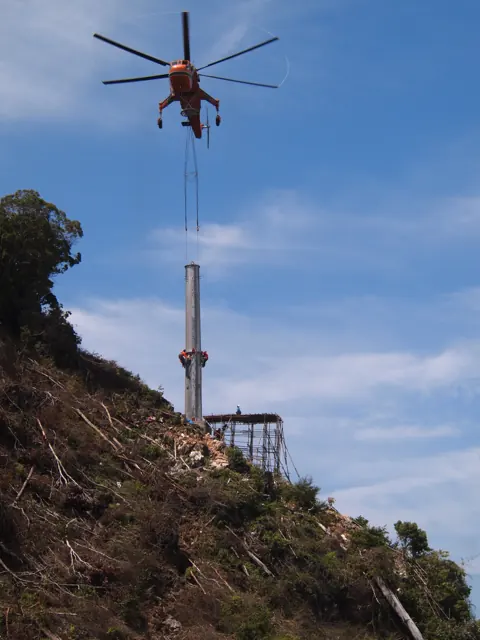
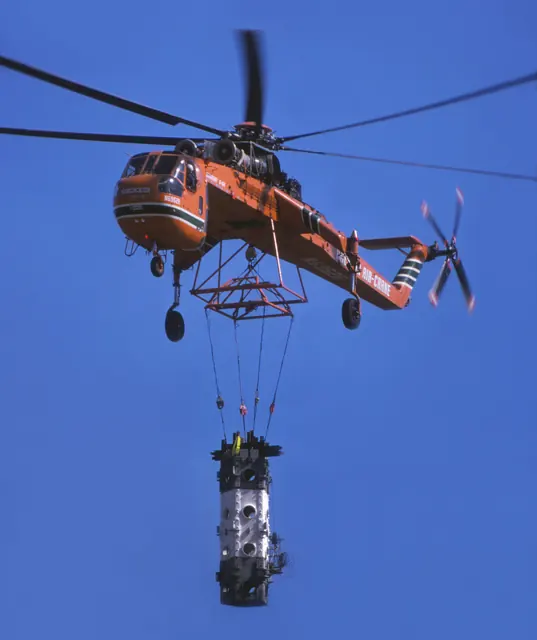
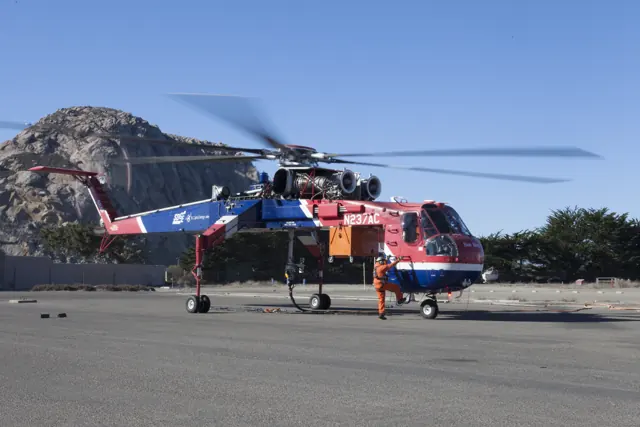
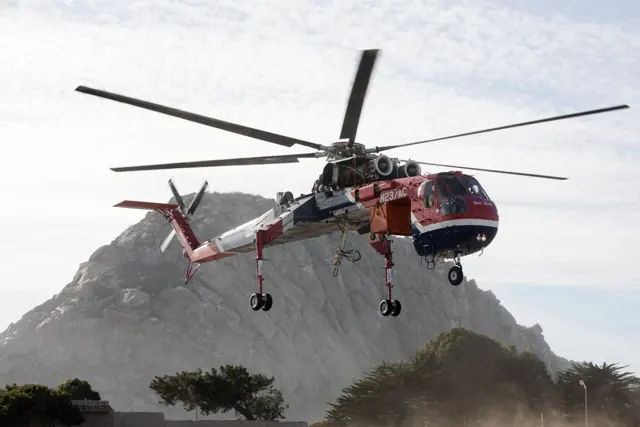
The S-64 is the civilian relative of the military CH-54 Tarhe. Its narrow fuselage and tall undercarriage leave space below for a suspended load, making the lifting role visible in the airframe itself. Two turbine engines power the large main rotor. Erickson's Air-Crane developments have become associated with construction, logging and firefighting.
Aircraft background
Wikipedia contributors · Read more ↗Learning to be gentle with Lucille
Charles first approached Lucille as an imposing collection of exposed machinery. After ground school, he climbed into the cockpit with Bob Hawthorne and asked the instructor to make the first departure from a confined parking area. Taking the controls brought an adjustment to the long cyclic, followed by an appreciation of the aircraft’s substantial, steady feel.
AOPA Pilot · January 2010. S-64 demonstration at Medford with Canadian Air-Crane chief pilot Bob Hawthorne; no external load was carried and the aircraft was well below maximum weight.
AOPA Pilot · Read more ↗Into the cockpit
 YouTube
DrBear Aviation · 13 min ·
Erickson S-64F AirCrane Scramble in Response to Wildfire - N163AC 'Bubba'
An S-64F crew prepares, starts and departs on a firefighting call near Melbourne.
Real aircraft · Erickson S-64F Aircrane
Watch on YouTube ↗Preview images are served by AirframeDB. Videos open on YouTube only when you choose to watch.
Meet Erickson S-64F Aircrane
The S-64 is the civilian relative of the military CH-54 Tarhe. Its narrow fuselage and tall undercarriage leave space below for a suspended load, making the lifting role visible in the airframe itself. Two turbine engines power the large main rotor.
Erickson's Air-Crane developments have become associated with construction, logging and firefighting. A tank-equipped firefighting aircraft and a crane carrying an external load use the same basic idea in different ways. The simulator includes mission equipment for its represented roles.
Erickson S-64F Aircrane
Erickson → · Explore the family →
Erickson S-64F Aircrane
Wikipedia contributors · Sikorsky S-64 Skycrane ↗Microsoft Flight Simulator · MSFS 2024 →Aircraft type designators
Use the code for the model you are flying. The linked authority lists the applicable aircraft.
History & design
Keeping a specialised aircraft supported
Erickson manufacturing manager Sam Foster described sustaining the S-64 as work spread across engineering, parts, maintenance and planning. His 2022 interview extract identifies composite rotor blades as one response to ageing equipment and future support needs.
Erickson · Interview with Erickson’s Sam Foster ↗Manufacturer-published interview; programme context, not a claim about every airframe
Development milestones
First flight: 9 May 1962
Developed from: Sikorsky CH-54 Tarhe
Wikipedia contributors · Sikorsky S-64 Skycrane ↗Sikorsky S-64 Skycrane · family/variant named by the source · Wikipedia revision 1374378711
Pilot accounts
Learning to be gentle with Lucille
Charles first approached Lucille as an imposing collection of exposed machinery. After ground school, he climbed into the cockpit with Bob Hawthorne and asked the instructor to make the first departure from a confined parking area. Taking the controls brought an adjustment to the long cyclic, followed by an appreciation of the aircraft’s substantial, steady feel.
Hawthorne encouraged smooth handling as they explored turns, climbs and approaches around Medford. A simulated engine failure was part of the organised demonstration, rather than an emergency. Charles wanted to try putting the helicopter to work, but there was nothing on the hook that day. Returning to the parking area, the space seemed less intimidating. His introduction ended with affection for the machine and curiosity about the work still beyond that first flight.
AOPA Pilot · January 2010. S-64 demonstration at Medford with Canadian Air-Crane chief pilot Bob Hawthorne; no external load was carried and the aircraft was well below maximum weight.
Read the full account · AOPA Pilot ↗The favourite aircraft comes with lessons from other people
Chapman named the S-64 as his favourite firefighting aircraft, connecting its capabilities with the considerable experience he had gained in it. Asked about memorable people, he immediately recalled colleagues who had patiently taught him when he was new. That appreciation gives his answers a personal thread running through a long and varied flying career.
He placed strong value on communication with firefighters on the ground and on pilots taking time to understand one another’s jobs. He also wished he had learned earlier how to use standby time well. These are small working-life details beside the more visible act of making a water drop. The interview presents an experienced pilot’s priorities, including his insistence that completing a fire assignment never justified losing a life.
Fire Aviation interview · January 2013. Erickson senior S-64 firefighting pilot reflecting on a career that also included several other aircraft types.
Read the full account · Fire Aviation / Wildfire Today ↗Keeping a heavy-lift skill alive
Douglass described the Skycrane as a helicopter that continued to hold his attention, even after long experience. Its power came with substantial fuel use and a ride quite different from the company’s S-61s. Construction work relied on crew coordination, with a rear-facing pilot taking the final precision placement while the front crew remained involved.
Finding the next generation of pilots concerned him as much as the aircraft itself. Logging had taught many older pilots the skills Siller needed, but that route into the work was becoming less common. Douglass wanted good judgement, adaptability and a willingness to travel. Fire assignments also brought personal satisfaction: challenging flying, unfamiliar parts of the country and the chance to help communities.
Vertical interview · June 2014. Chief pilot at Siller Helicopters, discussing its S-64E/CH-54A work and a fleet that also included S-61s.
Read the full account · Vertical ↗In your simulator
Systems, equipment and documentation for each developer’s aircraft.
MSFS 2024S-64F Aircrane
Microsoft Flight Simulator · Released
S-64F Aircrane
Microsoft Flight Simulator · Released
Aircraft specifications
Published figures for the named real-aircraft variant. Simulator equipment and performance can differ.
| Specification | Published value |
|---|---|
| Length | 70 ft 3 in (21.41 m) |
| Height | 18 ft 7 in (5.66 m) |
| Empty weight | 19,234 lb (8,724 kg) |
| Max takeoff weight | 42,000 lb (19,051 kg) |
| Powerplant | 2 × Pratt & Whitney JFTD12-4A (T73-P-1) turboshaft engines, 4,500 shp (3,400 kW) each |
| Main rotor diameter | 72 ft 0 in (21.95 m) |
| Main rotor area | 4,070 sq ft (378 m² ) |
| Maximum speed | 115 kn (132 mph, 213 km/h) |
| Cruise speed | 115 kn (132 mph, 213 km/h) |
| Range | 200 nmi (230 mi, 370 km) max fuel and reserves |
| Rate of climb | 1,330 ft/min (6.8 m/s) |
Manuals & resources
Find your next read
Choose a topic for a short introduction and a link to the original source. Simulator references identify the developer and edition they cover.
Pilot account
Learning to be gentle with LucilleAOPA Pilot · January 2010. S-64 demonstration at Medford with Canadian Air-Crane chief pilot Bob Hawthorne; no external load was carried and the aircraft was well below maximum weight.
Charles first approached Lucille as an imposing collection of exposed machinery. After ground school, he climbed into the cockpit with Bob Hawthorne and asked the instructor to make the first departure from a confined parking area. Taking the controls brought an adjustment to the long cyclic, followed by an appreciation of the aircraft’s substantial, steady feel. Hawthorne encouraged smooth handling as they explored turns, climbs and approaches around Medford.
Michael Maya Charles
AOPA Pilot · Read the source ↗The favourite aircraft comes with lessons from other peopleFire Aviation interview · January 2013. Erickson senior S-64 firefighting pilot reflecting on a career that also included several other aircraft types.
Chapman named the S-64 as his favourite firefighting aircraft, connecting its capabilities with the considerable experience he had gained in it. Asked about memorable people, he immediately recalled colleagues who had patiently taught him when he was new. That appreciation gives his answers a personal thread running through a long and varied flying career. He placed strong value on communication with firefighters on the ground and on pilots taking time to understand one another’s jobs.
Kenny Chapman
Fire Aviation / Wildfire Today · Read the source ↗Read the original documentation from the people who created it. Manuals open on their publisher’s website.
Manual
Microsoft Flight Simulator aircraft manualsMicrosoft / aircraft developersAircraft background
Sikorsky S-64 SkycraneWikipedia contributors · Research background · Wikipedia revision 1374378711 · retrieved 2026-09-12 Interview with Erickson’s Sam FosterErickson · Manufacturing manager interview extract · 30 September 2022Resource
MSFS 2024 FAQ and edition aircraft inventoryMicrosoftType designator
ICAO Doc 8643 — aircraft type designatorsInternational Civil Aviation Organization · Public search data retrieved 2026-09-14; authority update 2026-09-03Built-in force-feedback profiles
Read the documentary basis, editable starting settings and remaining questions for the aircraft you fly. Each explanation refers to the exact profile revision shown.
Catalogue programme-20261022-v1 · 1 profile choice
Erickson S-64F Aircrane
Free and Pro · Revision 1 · Partial review
MSFS 2024
Erickson S-64F Aircrane: The cyclic’s selected centre and damping accompany the heavy-lift rendition.
Discuss this aircraft (0)
Questions, observations and useful sources from the community.
No published discussions yet. Bring a question or share a useful source.
Open aircraft discussions →Content expanded · What’s new
Something missing or a source that needs attention?
Suggest a correction ↗