Start here
A few places to begin, from the aircraft’s story to the people who fly it.
Meet the aircraft
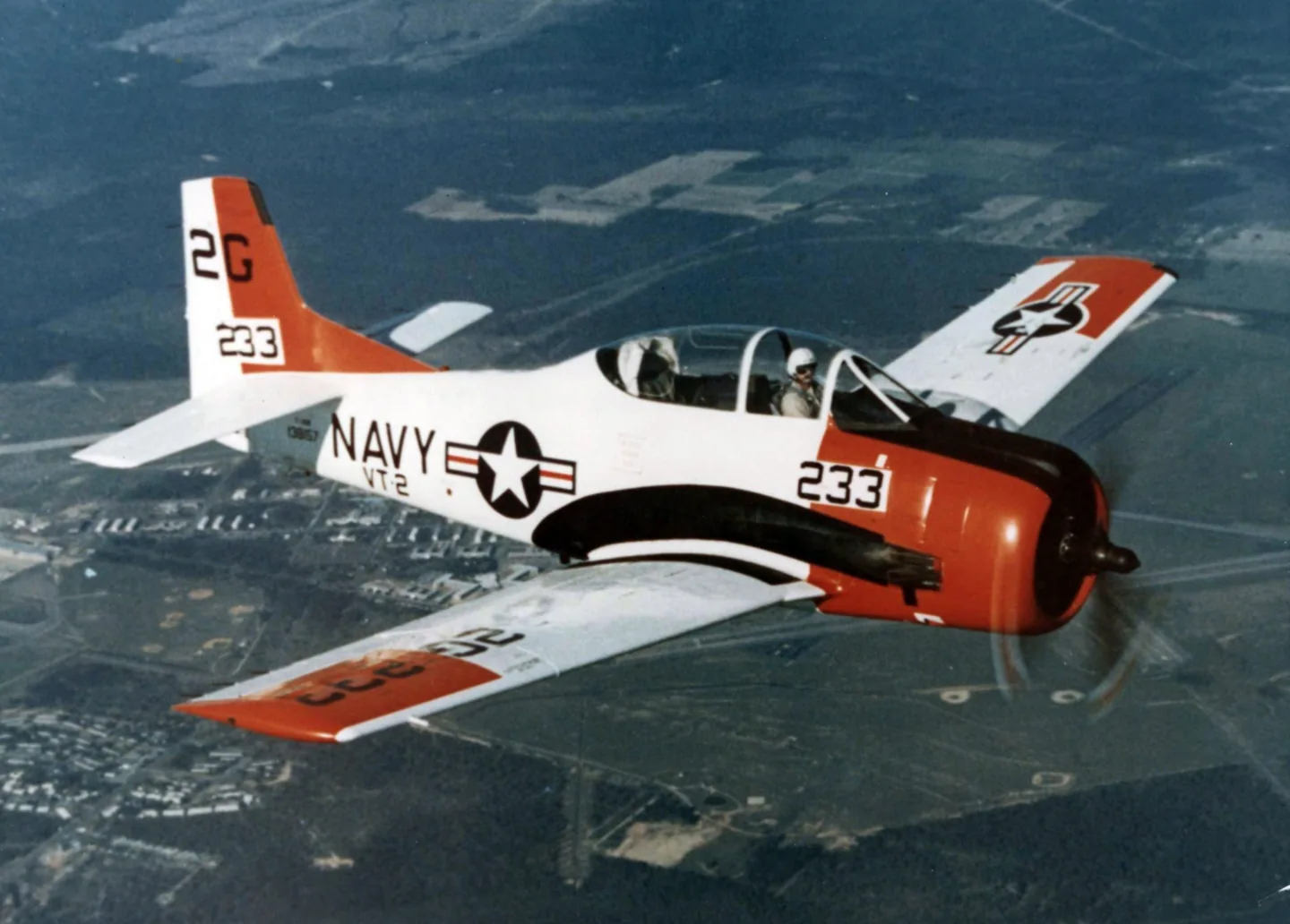
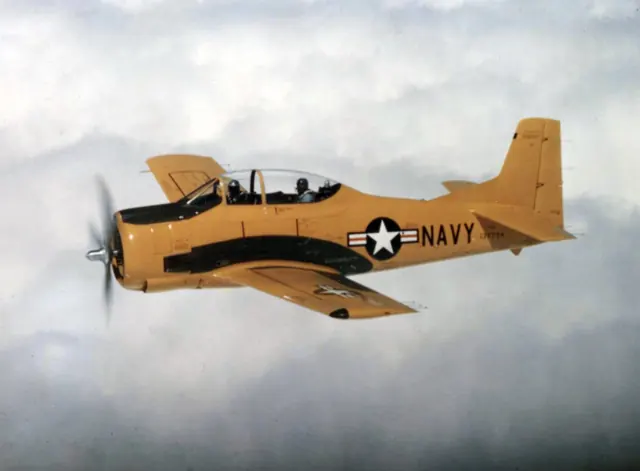
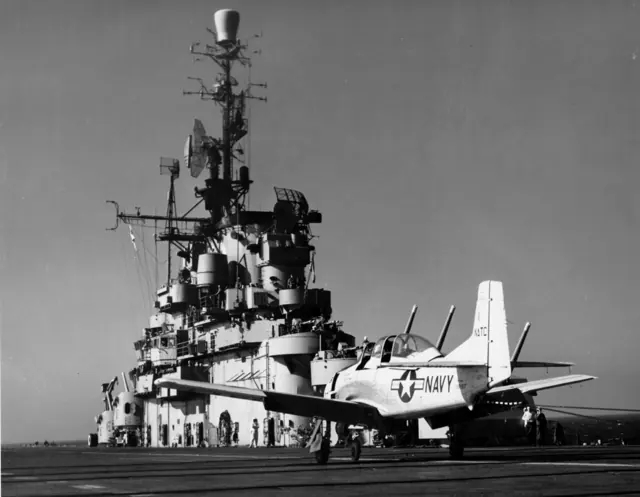
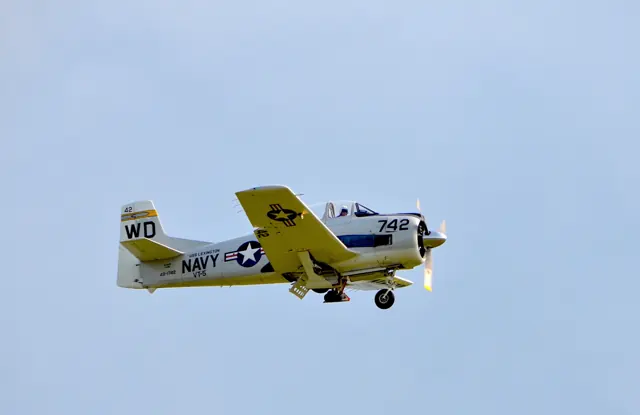
The T-28 entered US Air Force and Navy training service in the 1950s. It was also adapted for counter-insurgency operations, including Vietnam War service. Surviving Trojans later entered civilian display and aerobatic flying. The simulator represents the T-28C.
Aircraft background
Wikipedia contributors · Read more ↗A trainer that made naval flying feel real
Liebman remembers the move from the small T-34B into the Trojan as a physical event: climbing onto a much larger aircraft, arranging the parachute and harness, then settling beneath a canopy with a remarkably open view. His affection includes the sound and smell of the radial starting, but also the habits his instructors insisted on.
Personal memoir · August 2013. Navy training in the T-28B and carrier qualification in the T-28C after primary training in 1968.
Marc Liebman · Read more ↗Into the cockpit
 YouTube
Warbirds · 1 min ·
Flying the North American T-28 Trojan — Cockpit POV Aerobatics at Hahnweide Airshow! ✈️🔥
A short cockpit sequence from a T-28 aerobatic display at Hahnweide.
Real aircraft · North American T-28 Trojan
Watch on YouTube ↗Preview images are served by AirframeDB. Videos open on YouTube only when you choose to watch.
Meet North American T-28 Trojan
The T-28 entered US Air Force and Navy training service in the 1950s. It was also adapted for counter-insurgency operations, including Vietnam War service. Surviving Trojans later entered civilian display and aerobatic flying. The simulator represents the T-28C.
North American T-28 Trojan
North American → · Explore the family →
North American T-28 Trojan
Wikipedia contributors · North American T-28 Trojan ↗Aircraft type designators
Use the code for the model you are flying. The linked authority lists the applicable aircraft.
History & design
A piston trainer for the jet age
The T-28 followed the T-6 with tricycle landing gear and a layout intended to prepare students for newer high-performance aircraft. The prototype flew in September 1949, with T-28A production beginning in 1950. The Air Force moved to the T-34 and T-37 during the following decade, while naval training kept the Trojan in service into the 1980s.
National Museum of the U.S. Air Force · North American T-28A Trojan ↗National Museum of the U.S. Air Force · training role
The variants had different power and purposes
The museum distinguishes the Air Force T-28A’s 800-hp engine from the 1,425-hp installation in Navy B and C models. The T-28D Nomad adapted surplus A-model airframes for counterinsurgency work with the more powerful engine. The accounts and performance figures identify the version flown.
National Museum of the U.S. Air Force · North American T-28A Trojan ↗National Museum of the U.S. Air Force · A, B/C and D variants
Development milestones
First flight: 24 September 1949
Developed from: North American XSN2J
Wikipedia contributors · North American T-28 Trojan ↗North American T-28 Trojan · family/variant named by the source · Wikipedia revision 1373875662
Pilot accounts
A trainer that made naval flying feel real
Liebman remembers the move from the small T-34B into the Trojan as a physical event: climbing onto a much larger aircraft, arranging the parachute and harness, then settling beneath a canopy with a remarkably open view. His affection includes the sound and smell of the radial starting, but also the habits his instructors insisted on. A consistent seating position and careful trimming helped him manage the aircraft without continually fighting it.
Aerobatics became a favourite part of flying the T-28, and he enjoyed returning to it after earning his wings. His strongest training memory is the first arrested landing aboard USS Lexington. The abrupt stop immediately gave way to following the deck crew’s signals and preparing to leave again. Those carrier landings felt like an arrival in naval aviation, even though his training was still unfinished.
Personal memoir · August 2013. Navy training in the T-28B and carrier qualification in the T-28C after primary training in 1968.
Read the full account · Marc Liebman ↗An unexpected invitation over lunch
Peters’s first warbird flight began with lunch at Sebring. A conversation with a visiting T-28 pilot named Bob turned into an invitation to fly. Peters had only a few hundred hours at the time, and the chance was especially meaningful because his father, a wartime pilot, had passed on an affection for older military aircraft. His father preferred the T-6 and teased that the tricycle-gear Trojan made things too easy.
With Bob coaching, Peters took the front seat and experienced the big radial aircraft for himself. The lasting memory is not a detailed evaluation of its handling: he openly admits that the excitement overwhelmed much of his recollection. What remained was time spent among the clouds, the thrill of being at the controls and the pleasure of an opportunity that had appeared without any planning.
Plane & Pilot · July 2019. Civilian familiarisation flight arranged after meeting a T-28 pilot at Sebring; variant and flight date are not stated.
Read the full account · Plane & Pilot ↗A first lesson that stayed with him
James had recently completed primary training in the T-34 when he moved into the T-28. He remembers the number of adjustments needed as power, speed and configuration changed, and the effort of keeping up with them. His instructor arranged a simulated approach high above the ground, followed by a go-around intended to expose how easily a student could overlook the rudder trim.
A glance at the instructor bracing himself made James cautious. Even so, the aircraft rolled sharply when he added power, and he lost considerable height before restoring level flight. A second attempt went more smoothly. Back on the ground, the reactions of instructors and fellow students revealed that others already knew about this unsettling introduction.
Personal memoir · October 2021. First T-28 training flight from Whiting Field; recollection of an instructor-supervised exercise at altitude, with no variant or flight date established.
Read the full account · EZChron ↗In your simulator
No released simulator product is listed for this aircraft in the developers reviewed. Announced products are excluded.
Aircraft specifications
Published figures for the named real-aircraft variant. Simulator equipment and performance can differ.
| Specification | Published value |
|---|---|
| Length | 33 ft 0 in (10.06 m) |
| Wingspan | 40 ft 1 in (12.22 m) |
| Height | 12 ft 8 in (3.86 m) |
| Wing area | 268.0 sq ft (24.90 m² ) |
| Empty weight | 6,424 lb (2,914 kg) (equipped) |
| Max takeoff weight | 8,500 lb (3,856 kg) |
| Powerplant | 1 × Wright R-1820 -86 Cyclone 9-cylinder air-cooled radial engine , 1,425 hp (1,063 kW) |
| Maximum speed | 343 mph (552 km/h, 298 kn) at 10,000 ft (3,000 m) |
| Service ceiling | 35,500 ft (10,800 m) |
| Rate of climb | 3,540 ft/min (18.0 m/s) |
Manuals & resources
Find your next read
Choose a topic for a short introduction and a link to the original source. Simulator references identify the developer and edition they cover.
Pilot account
A trainer that made naval flying feel realPersonal memoir · August 2013. Navy training in the T-28B and carrier qualification in the T-28C after primary training in 1968.
Liebman remembers the move from the small T-34B into the Trojan as a physical event: climbing onto a much larger aircraft, arranging the parachute and harness, then settling beneath a canopy with a remarkably open view. His affection includes the sound and smell of the radial starting, but also the habits his instructors insisted on. A consistent seating position and careful trimming helped him manage the aircraft without continually fighting it.
Marc Liebman
Marc Liebman · Read the source ↗An unexpected invitation over lunchPlane & Pilot · July 2019. Civilian familiarisation flight arranged after meeting a T-28 pilot at Sebring; variant and flight date are not stated.
Peters’s first warbird flight began with lunch at Sebring. A conversation with a visiting T-28 pilot named Bob turned into an invitation to fly. Peters had only a few hundred hours at the time, and the chance was especially meaningful because his father, a wartime pilot, had passed on an affection for older military aircraft. His father preferred the T-6 and teased that the tricycle-gear Trojan made things too easy.
Roger Peters
Plane & Pilot · Read the source ↗Read the original documentation from the people who created it. Manuals open on their publisher’s website.
Aircraft background
North American T-28 TrojanWikipedia contributors · Research background · retrieved 2026-09-12 North American T-28A TrojanNational Museum of the U.S. Air Force · Trainer development and variant distinctionsProduct
T-28C TrojanKhamsin · Official developer / designated store catalogue · checked 2026-09-12Type designator
ICAO Doc 8643 — aircraft type designatorsInternational Civil Aviation Organization · Public search data retrieved 2026-09-14; authority update 2026-09-03Built-in force-feedback profiles
Read the documentary basis, editable starting settings and remaining questions for the aircraft you fly. Each explanation refers to the exact profile revision shown.
Catalogue programme-20261022-v1 · 1 profile choice
North American T-28 Trojan
Free and Pro · Revision 1 · Partial review
Aircraft reference · Manual starting point
North American T-28 Trojan: The selected spring and load supply the trainer’s stick resistance.
Discuss this aircraft (0)
Questions, observations and useful sources from the community.
No published discussions yet. Bring a question or share a useful source.
Open aircraft discussions →Content expanded · What’s new
Something missing or a source that needs attention?
Suggest a correction ↗