
Start here
A few places to begin, from the aircraft’s story to the people who fly it.
Meet the aircraft
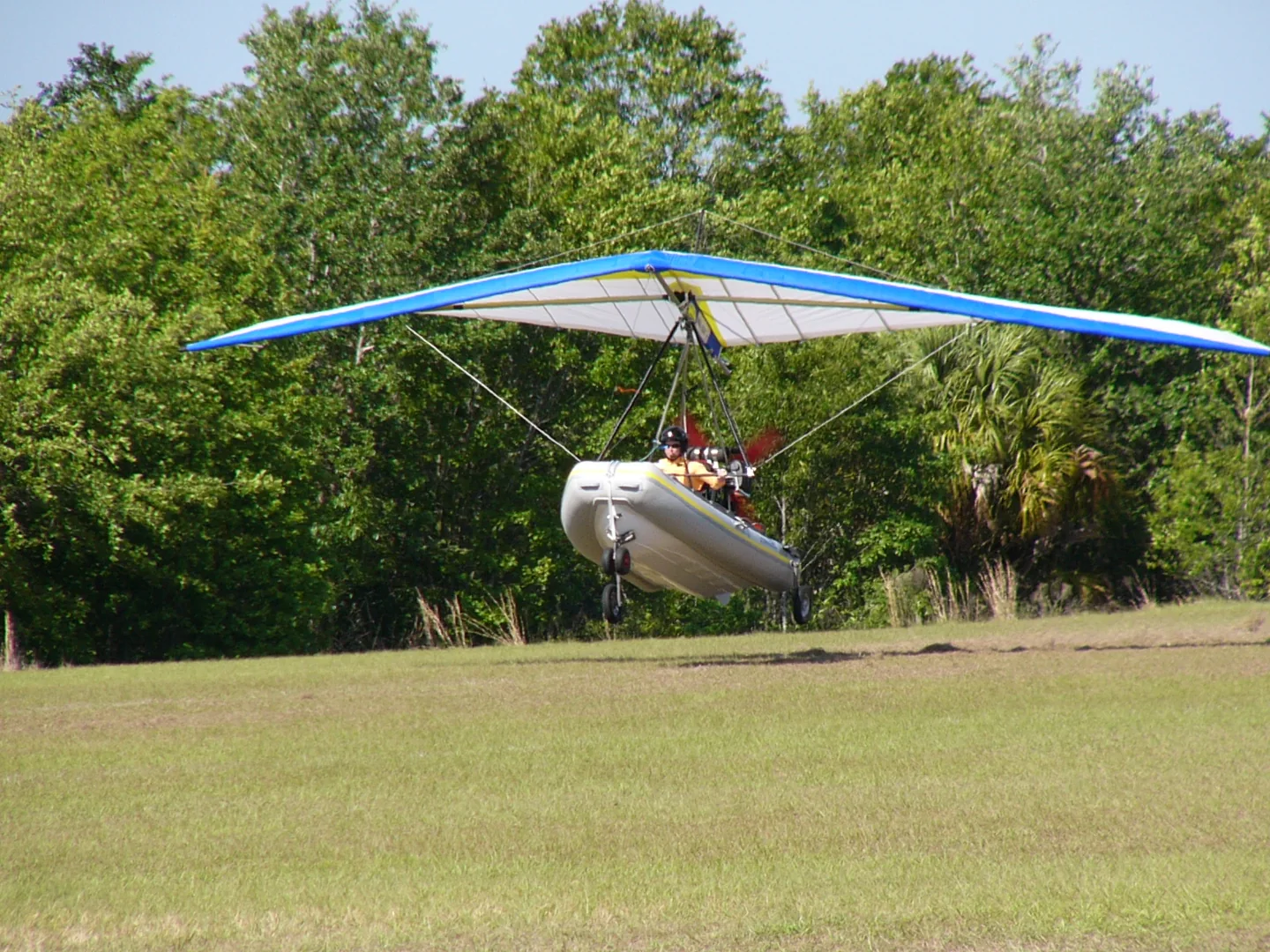
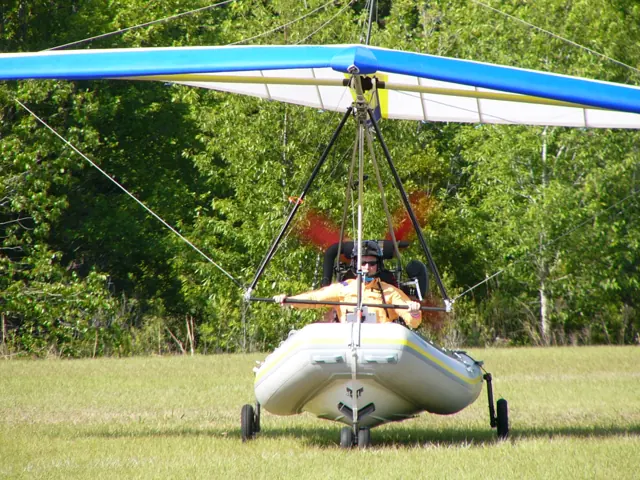
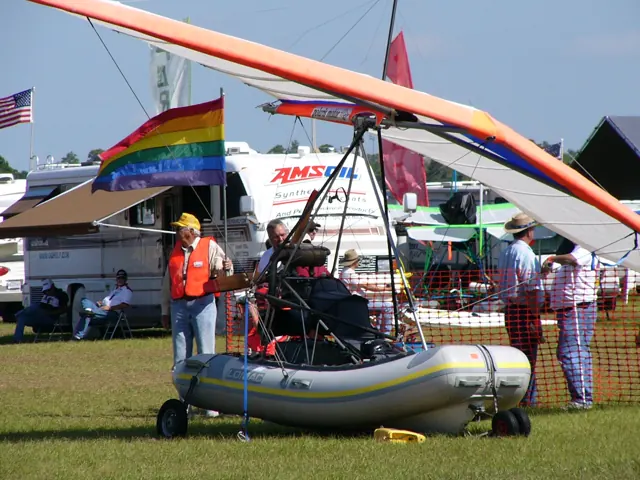
The Polaris FIB places a powered hang-glider wing above an inflatable hull. The AM-FIB adds manually retractable wheels for both water and land operation.
Aircraft background
VSKYLABS · Read more ↗Weight shift is part of the design
The developer describes a simulation of weight-shift control in this amphibious trike. Its retractable landing gear and boat-like hull distinguish the AM-FIB configuration, while the removable passenger changes loading. The operating reference describes these systems.
VSKYLABS Polaris AM-FIB · X-Plane 12
VSKYLABS · Read more ↗Into the cockpit
 YouTube
VSKYLABS · 2 min ·
[Archive-2025] Test-Drive: Polaris AM-FIB Amphibian Trike - Short 'Hop' X-Plane 12
VSKYLABS demonstrates a short AM-FIB flight in X-Plane 12.
Simulator · VSKYLABS Polaris AM-FIB · X-Plane 12 (2025 footage)
Watch on YouTube ↗Preview images are served by AirframeDB. Videos open on YouTube only when you choose to watch.
Meet Polaris AM-FIB
The Polaris FIB places a powered hang-glider wing above an inflatable hull. The AM-FIB adds manually retractable wheels for both water and land operation.
VSKYLABS models this amphibious configuration. Other land-conversion options in the manufacturer's range are not included in the product.
Polaris AM-FIB
Aircraft type designators
A model-specific ICAO or FAA designator has not been confirmed in the references reviewed for this aircraft.
History & design
An inflatable boat takes wing
Polaris Motor developed the Italian Flying Inflatable Boat in the mid-1980s. The later AM-FIB added amphibious capability in the early 2000s, combining the flex-wing trike with an inflatable hull and retractable wheels.
VSKYLABS · VSKYLABS Aerospace Simulations Aircraft Center: VSKYLABS Polaris AM-FIB ↗Polaris AM-FIB, Rotax 582 simulation configuration
Which Polaris is represented
VSKYLABS began its independent project in 2017 with references supplied by Polaris Motor. It models the AM-FIB’s manually retractable landing gear. The separate land-trike conversion removes the hull, and its ski option should not be confused with the amphibious configuration.
VSKYLABS · VSKYLABS Aerospace Simulations Aircraft Center: VSKYLABS Polaris AM-FIB ↗Polaris AM-FIB, Rotax 582 simulation configuration
Systems & details
Reading speed in a simulated trike
The handbook adds smartphone flight data because a desktop simulation cannot supply the full physical sensations of the control bar. It also documents a virtual overhead throttle arrangement for easier interaction. These are simulator accommodations; the wing still uses weight-shift control.
In your simulator
Systems, equipment and documentation for each developer’s aircraft.
X-Plane 11 · X-Plane 12Polaris AM-FIB
VSKYLABS · Released
Polaris AM-FIB
VSKYLABS · Released
Manuals & resources
Find your next read
Choose a topic for a short introduction and a link to the original source. Simulator references identify the developer and edition they cover.
Simulator documentation
Weight shift is part of the designVSKYLABS Polaris AM-FIB · X-Plane 12
The developer describes a simulation of weight-shift control in this amphibious trike. Its retractable landing gear and boat-like hull distinguish the AM-FIB configuration, while the removable passenger changes loading. The operating reference describes these systems.
Control, loading and amphibious-configuration features
VSKYLABS · Read the source ↗Amphibious FIB configurationPolaris AM-FIB · VSKYLABS · X-Plane 11 · X-Plane 12
The product specifically represents the amphibious FIB with manually retractable wheels. Other real-world conversion kits discussed in the reference are not automatically included.
Official developer / designated-store reference · checked 2026-09-14
VSKYLABS · Read the source ↗Read the original documentation from the people who created it. Manuals open on their publisher’s website.
Developer documentation
VSKYLABS Aerospace Simulations Aircraft Center: VSKYLABS Polaris AM-FIBVSKYLABS · Official developer / designated-store reference · checked 2026-09-14 VSKYLABS Polaris AM-FIB. Highly-Engineered Amphibian Trike for X-Plane.VSKYLABS · Official developer / designated-store reference · checked 2026-09-14Aircraft documentation
Polaris AM-FIB handbookVSKYLABS · AM-FIB versus FIB weights; developer handbook and simulator-specific controlsBuilt-in force-feedback profiles
Read the documentary basis, editable starting settings and remaining questions for the aircraft you fly. Each explanation refers to the exact profile revision shown.
Catalogue programme-20261022-v1 · 2 profile choices
VSKYLABS Polaris AM-FIB
VSKYLABS · Free and Pro · Revision 3 · Inherited starting point
X-Plane 12
VSKYLABS Polaris AM-FIB: Symmetric bar resistance does not assume conventional elevator-force direction.
Polaris AM-FIB
Free and Pro · Revision 1 · Partial review
MSFS 2020 · MSFS 2024 · X-Plane 12
A powered hang-glider wing above an amphibious inflatable boat.
Polaris AM-FIB
A powered hang-glider wing above an amphibious inflatable boat.
Aircraft and simulator scope
- Polaris AM-FIB · MSFS 2020 · Variant starting point
- Polaris AM-FIB · MSFS 2024 · Variant starting point
- Polaris AM-FIB · X-Plane 12 · Variant starting point
Universal named airframe/configuration; intended MSFS2020/MSFS2024/XP12 starting point, not add-on or edition acceptance. · Physical facts and prior documentary review are reused from their archived dated sources; new market availability is not inferred.
The simulator model and controls
A powered hang-glider wing above an amphibious inflatable boat.
How this profile feels
The spring stays independent of airspeed. Directed aerodynamic loading is omitted.
Pitch-trim relief is off. Autopilot following is off.
Aircraft and configuration
Rotax 582 64 hp installation, three-blade pusher, boat hull and the modeled amphibian wheeled fit.
About the values
Strengths are normalized hardware-feel settings. They set the effect balance; hand force depends on the device and its limits. The IAS reference is a tuning value.
What the documentation establishes
Polaris AM-FIB: Rotax 582 64 hp installation, three-blade pusher, boat hull and the modeled amphibian wheeled fit.
Documentary review and sources
These decisions describe the documentary basis and remaining gaps for this revision. Aircraft documentation and a starting setting describe different kinds of evidence.
Aircraft and variant
ReviewedA powered hang-glider wing above an amphibious inflatable boat.
Flight controls
InheritedA powered hang-glider wing above an amphibious inflatable boat.
Trim
InheritedThe profile uses the trim behaviour configured below. Pitch relief is off, with stored authority 0; roll authority is 0.
Autopilot and stability
ReviewedAutopilot following is off; the configured spring and load retain the hardware feel.
Equipment
InheritedRotax 582 64 hp installation, three-blade pusher, boat hull and the modeled amphibian wheeled fit.
Speeds and limits
InheritedThe indicated-speed references set the profile response scale; they are separate from aircraft operating limits.
Simulator integration
ReviewedThe profile targets msfs2020, msfs2024, xplane12. Add-on-specific controls use only the supported references configured by this profile.
Force-feedback settings
InheritedThe settings define the profile’s effect balance. Device output limits affect physical hand force.
Starting settings and their rationale
These configured values are starting estimates. The explanations describe what each setting controls; physical validation appears separately below.
| Setting | Starting value | What it controls and why |
|---|---|---|
| Spring strength | Starting value0.74 | What it controls and whyThis profile uses reversible-control loading for Polaris AM-FIB. The baseline spring is 0.74. Low-speed spring blending is off. |
| Master force gain | Starting value0.85 | What it controls and whyScales overall profile strength while preserving effect balance, subject to device and output limits. |
| Profile force gain | Starting value0 | What it controls and whyThe 0 gain omits sustained directed airspeed loading. Spring resistance remains independent. |
| Force tuning speed/reference | Starting value37 kt | What it controls and whySets the IAS reference for aerodynamic loading. It is an estimate, not published cruise TAS or a flight limit. |
| Spring response reference speed | Starting value45 kt | What it controls and whySets the IAS where the low-speed blend reaches baseline strength; high-speed stiffening also uses it. |
| Aileron force scale | Starting value0.72 | What it controls and whyRoll and pitch aerodynamic scales are 0.72 and 1, respectively. These stored weights do not create directed aerodynamic loading while that term is inactive. No custom spring-travel curve is enabled. |
| Elevator force scale | Starting value1.0 | What it controls and whyScales pitch aerodynamic loading; pitch spring travel and trim responses are separate settings. |
| Trim feel | Starting valueDisabled | What it controls and whyRetained for compatibility and group membership. Trim relief, rather than this flag, controls centre movement. |
| Trim relief | Starting valueDisabled | What it controls and whyAllows trim relief with supported control law and valid telemetry. Axis authorities set its amount. |
| Autopilot follow | Starting valueDisabled | What it controls and whyAutopilot following is off; the configured spring and load retain the hardware feel. |
| Autopilot neutral hold | Starting valueDisabled | What it controls and whyPermits centering hold during a supported AP state, separate from following a moving target. |
| Output force limit | Starting value0.55 | What it controls and whyCaps directed-force output. Native spring effects and device limits remain separate. |
All 44 starting settings and their rationale
The settings define the profile’s effect balance. Device output limits affect physical hand force.
| Setting | Starting value | What it controls and why |
|---|---|---|
| Spring strength | Starting value0.74 | What it controls and whyThis profile uses reversible-control loading for Polaris AM-FIB. The baseline spring is 0.74. Low-speed spring blending is off. |
| Profile force gain | Starting value0 | What it controls and whyThe 0 gain omits sustained directed airspeed loading. Spring resistance remains independent. |
| Elevator force scale | Starting value1.0 | What it controls and whyScales pitch aerodynamic loading; pitch spring travel and trim responses are separate settings. |
| Aileron force scale | Starting value0.72 | What it controls and whyRoll and pitch aerodynamic scales are 0.72 and 1, respectively. These stored weights do not create directed aerodynamic loading while that term is inactive. No custom spring-travel curve is enabled. |
| Output force limit | Starting value0.55 | What it controls and whyCaps directed-force output. Native spring effects and device limits remain separate. |
Polaris AM-FIB: Trim position in the handbook means balanced bar position, not a proven adjustable elevator-tab signal. No physical trim displacement or helicopter force-trim. Estimated pitch/roll trim authorities 0/0; exact add-on sign, travel, units and build-specific neutral remain unqualified. Rudder trim never substitutes for roll trim.
| Setting | Starting value | What it controls and why |
|---|---|---|
| Elevator Authority | Starting value0 | What it controls and whyThe profile uses the trim behaviour configured below. Pitch relief is off, with stored authority 0; roll authority is 0. |
| Aileron Authority | Starting value0 | What it controls and whyScales supported roll-trim relief and permitted centre movement. Zero removes roll response. |
Polaris AM-FIB: 37 KIAS is the retained estimated tuning reference. It is not published cruise TAS, VNE, a new flight limit or a measured force threshold. Source-specific operating quantities remain attached to their original configuration and conditions.
| Setting | Starting value | What it controls and why |
|---|---|---|
| Force tuning speed/reference | Starting value37 kt | What it controls and whySets the IAS reference for aerodynamic loading. It is an estimate, not published cruise TAS or a flight limit. |
Gear, brake and anchor command assignments do not establish actuator forces. Contact and movement texture remain estimates.
| Setting | Starting value | What it controls and why |
|---|---|---|
| Gain | Starting value0 | What it controls and whyGear, brake and anchor command assignments do not establish actuator forces. Contact and movement texture remain estimates. |
| Gain | Starting value0.02 | What it controls and whyGear, brake and anchor command assignments do not establish actuator forces. Contact and movement texture remain estimates. |
| Gain | Starting value0.24 | What it controls and whyGear, brake and anchor command assignments do not establish actuator forces. Contact and movement texture remain estimates. |
Exact configured values with software explanations. Force magnitudes remain editable estimates; disabled features retain inactive values.
| Setting | Starting value | What it controls and why |
|---|---|---|
| Spring deadband | Starting value0.04 | What it controls and whySets travel around the centre before the baseline spring resists. Smaller values engage it sooner. |
| Master force gain | Starting value0.85 | What it controls and whyScales overall profile strength while preserving effect balance, subject to device and output limits. |
| QBlend Enabled | Starting valueDisabled | What it controls and whyAllows baseline spring strength to rise with indicated airspeed where the control law permits it. |
| QSpring Minimum Factor | Starting value0.55 | What it controls and whySets low-speed spring strength as a fraction of baseline when blending is enabled. One keeps full strength. |
| QSpring Start Knots | Starting value10 kt | What it controls and whySets the IAS where the low-speed spring blend starts rising. This is a feel threshold, not a flight limit. |
| Spring response reference speed | Starting value45 kt | What it controls and whySets the IAS where the low-speed blend reaches baseline strength; high-speed stiffening also uses it. |
| Airspeed spring stiffening gain | Starting value0 | What it controls and whyThe high-speed spring-stiffening gain is 0. No additional speed-driven stiffening is added; this does not disable independent aerodynamic loading. |
| Airspeed spring stiffening limit | Starting value5 | What it controls and whyLimits the squared airspeed ratio used for high-speed spring stiffening; it is not a device-force cap. |
| Trim feel | Starting valueDisabled | What it controls and whyRetained for compatibility and group membership. Trim relief, rather than this flag, controls centre movement. |
| Trim relief | Starting valueDisabled | What it controls and whyAllows trim relief with supported control law and valid telemetry. Axis authorities set its amount. |
| Force Trim Enabled | Starting valueDisabled | What it controls and whyEnables local force trim, separate from aircraft-owned trim and add-on integration qualification. |
| GLoad Enabled | Starting valueDisabled | What it controls and whyAllows load-factor changes to modify permitted spring laws. Passive fly-by-wire feel can suppress it. |
| Rate Damping Enabled | Starting valueDisabled | What it controls and whyEnables rate damping with the configured coefficients and control law. |
| Autopilot follow | Starting valueDisabled | What it controls and whyAutopilot following is off; the configured spring and load retain the hardware feel. |
| Autopilot follow authority | Starting value0.1 | What it controls and whySets admitted AP-follow gain, not a percentage of travel. Runtime ownership and input limits still apply. |
| Autopilot neutral hold | Starting valueDisabled | What it controls and whyPermits centering hold during a supported AP state, separate from following a moving target. |
| Autopilot neutral hold strength | Starting value0.6 | What it controls and whySets admitted AP neutral-hold strength; inactive while neutral hold is disabled. |
| Enabled | Starting valueEnabled | What it controls and whyEnables aerodynamic cues; each still needs nonzero strength and its simulator conditions. |
| Gain | Starting value0 | What it controls and whySets stall-buffet strength. Zero removes the cue without changing simulator stalls or warnings. |
| Gain | Starting value0 | What it controls and whySets high-Mach buffet strength; onset and full-strength thresholds are separate. |
| Gain | Starting value0 | What it controls and whySets flap buffet at the configured position and speed gates. Flap movement texture is separate. |
| Maximum flap index | Starting value3 | What it controls and whySets the final flap index for detent normalization. UP plus three detents uses maximum index3. |
| Minimum flap index | Starting value2 | What it controls and whySets the first flap detent that admits buffet; this is a handle index, not degrees. |
| Gain | Starting value0 | What it controls and whySets gear aerodynamic buffet; movement and ground-contact cues are separate. |
| Shaker Enabled | Starting valueDisabled | What it controls and whyPermits shaker at supported warning conditions; the switch does not establish aircraft equipment. |
| Stick shaker amplitude | Starting value0.5 | What it controls and whySets triggered shaker strength; inactive while the shaker feature is disabled. |
| Enabled | Starting valueEnabled | What it controls and whyEnables ground effects; each still needs its own strength and contact or motion telemetry. |
| Gain | Starting value0.18 | What it controls and whySets gear-bump texture during ground motion, separate from touchdown impact. |
| Gain | Starting value0.32 | What it controls and whySets landing-impact strength; landing telemetry and response shape determine the pulse. |
| Gain | Starting value0 | What it controls and whySets reverse-thrust vibration with valid reverser and engine conditions. Zero removes the cue. |
| Enabled | Starting valueEnabled | What it controls and whyEnables engine cues with nonzero settings and valid running-engine telemetry. |
| Gain | Starting value0.12 | What it controls and whySets estimated engine vibration using configured telemetry and response, not measured cockpit vibration. |
| Enabled | Starting valueEnabled | What it controls and whyEnables accessory cues with configured strengths and observed accessory movement. |
Limits and open questions
- Polaris AM-FIB is a universal starting point; exact add-on matching, edition operation and physical hand-force calibration remain unqualified.
- Autopilot movement and unknown custom trim, failure or force-input signals are disabled. Confirm the selected equipment fit and trim direction for the implementation in use.
- Force magnitudes and speed tuning are editable inherited estimates. Owner physical and installed-aircraft acceptance remain pending.
Physical validation
No physical force validation is recorded in this public catalogue for this revision. Documentary review and software checks do not establish how a particular device feels.
Discuss this aircraft (0)
Questions, observations and useful sources from the community.
No published discussions yet. Bring a question or share a useful source.
Open aircraft discussions →Content expanded · What’s new
Something missing or a source that needs attention?
Suggest a correction ↗