



Start here
A few places to begin, from the aircraft’s story to the people who fly it.
Meet the aircraft
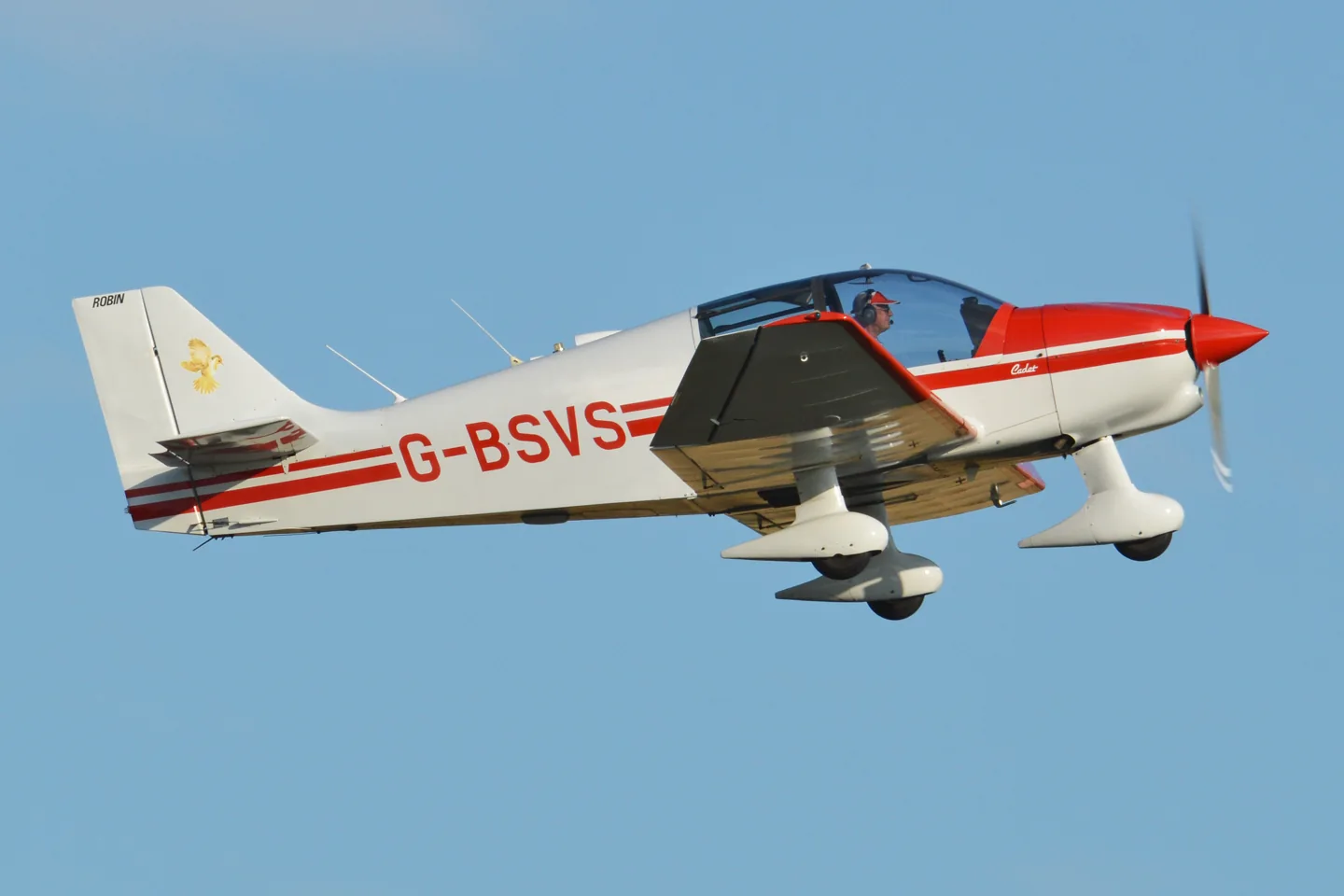
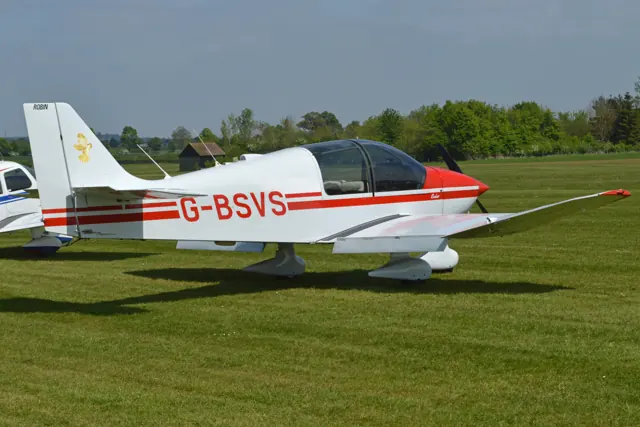
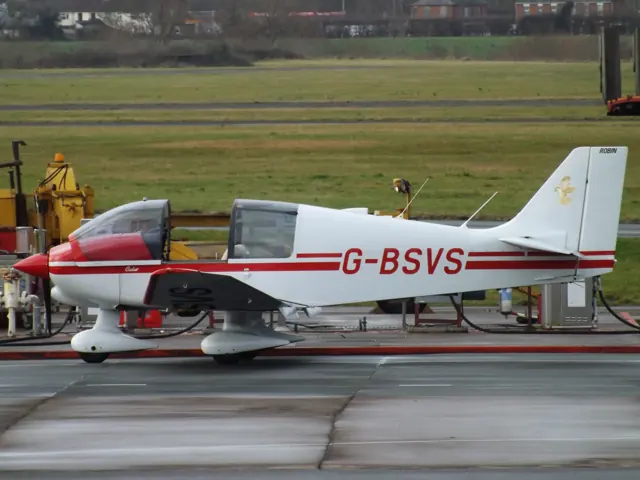
The wooden DR400 has a side-by-side cabin under a large canopy and outer wing panels angled upward. French flying clubs have used it widely for instruction and personal flying.
Aircraft background
Wikipedia contributors · Read more ↗A familiar glider tug gets a closer look
Unwin already knew the DR400 through glider towing, so this flight offered a chance to pay closer attention to an aircraft that was familiar in daily work. Departing Saltby in the Regent, he set out for a photographic flight with Steve Waddy’s Cessna 172. The late-afternoon meeting near the former RAF Cottesmore and the surrounding landscape gave the assessment a pleasant travelling setting.
Pilot · September 2018. Solo evaluation of a 27-year-old DR400/180 Regent from Saltby, including formation photography; a different variant from the simulated 100 Cadet.
Pilot · Read more ↗Cockpit lighting and sound have additional controls
The X-Plane 11 package includes a popup flashlight and a sound mixer with separate external, cockpit and effects controls.
Robin DR400/100 Cadet · Just Flight · Just Flight · X-Plane 12 · X-Plane 11
Just Flight · Read more ↗Into the cockpit
 YouTube
Frankie HM Channel & Plane Spotting · 3 min ·
Robin DR400 (D-EQHS) | Pilots eye landing | Cockpit view landing on Mautendorf Airfield
A DR400 approach and landing at Mauterndorf in the Austrian mountains.
Family reference · DR400; exact subvariant not identified
Watch on YouTube ↗Preview images are served by AirframeDB. Videos open on YouTube only when you choose to watch.
Meet Robin DR400/100 Cadet
The wooden DR400 has a side-by-side cabin under a large canopy and outer wing panels angled upward. French flying clubs have used it widely for instruction and personal flying.
Engines and roles vary across the family, including towing versions. The DR400/100 Cadet is a lower-powered development; photographs and specifications of larger-engined Robins describe those versions.
Robin DR400/100 Cadet
Aircraft type designators
Use the code for the model you are flying. The linked authority lists the applicable aircraft.
History & design
Production returns after the Apex closure
Borchert’s 2012 report describes Robin New Aircraft restarting production after Apex’s 2008 closure. It distinguishes that restart from the intervening support work: CEAPR had retained the type certificates and continued supplying parts.
fliegermagazin · Pilot Report: Robin Ecoflyer 2.0S ↗Historical company situation reported in October 2012
Development milestones
Designer: Jean Délémontez and Pierre Robin
First flight: 1972
Developed from: Robin DR.200
Wikipedia contributors · Robin DR400 ↗Robin DR400 · family/variant named by the source · Wikipedia revision 1348740052
Pilot accounts
A familiar glider tug gets a closer look
Unwin already knew the DR400 through glider towing, so this flight offered a chance to pay closer attention to an aircraft that was familiar in daily work. Departing Saltby in the Regent, he set out for a photographic flight with Steve Waddy’s Cessna 172. The late-afternoon meeting near the former RAF Cottesmore and the surrounding landscape gave the assessment a pleasant travelling setting.
Familiarity did not prevent him noticing small irritations. The harness arrangement and lack of an opening window mattered, and for formation work he preferred the more open view of the Remorqueur’s bubble canopy. Nevertheless, the older Regent remained a comfortable and enjoyable aircraft to fly, with the outing revealing details that ordinary towing duties could leave in the background.
Pilot · September 2018. Solo evaluation of a 27-year-old DR400/180 Regent from Saltby, including formation photography; a different variant from the simulated 100 Cadet.
Read the full account · Pilot ↗An old club aircraft tries a different engine
Briand encountered a Robin with more than ten thousand hours behind it that nevertheless looked remarkably fresh after restoration. Nogaro Aviation’s Gilles Aurensan and Karine Baillou were exploring a different future for such club aircraft through a Rotax engine conversion. The quieter start and revised engine display made the change apparent before the flying began.
The report compares the converted Dauphin with a conventional Lycoming-powered club Robin, using loads chosen for a comparable two-person travelling mission. Briand found the lighter conversion more playful in its responses. The appeal lay in giving an established club aeroplane a new working life, while the prototype status and differing loads make this a particular development-stage comparison rather than a result for every DR400.
FLYER · published online December 2022. Historical test of Nogaro Aviation’s early Rotax 912 iS Sport conversion in DR400/120 Dauphin F-GORZ; certification was still pending in the account.
Read the full account · FLYER ↗A hot-day flight attracts interest back at the airport
Borchert’s Ecoflyer flight began with a simple turn of the key, one of the diesel installation’s conspicuous differences from earlier Robins. With three people aboard on a hot day, he felt there was adequate power for the outing. In the air, he appreciated the direct stick controls and the wide view through the low window line.
The cabin still involved compromises, particularly in rear-seat legroom, and the report gives those practical details space alongside its enthusiasm. After returning, Borchert went to the airport restaurant and looked back to find people already gathering around the aircraft.
fliegermagazin · October 2012. DR400 Ecoflyer F-HECA with a 155-hp Thielert Centurion 2.0S diesel; three aboard in hot weather, distinct from the 100 Cadet.
Read the full account · fliegermagazin ↗In your simulator
Systems, equipment and documentation for each developer’s aircraft.
Compare simulator versions →MSFS 2024DR400-100 Cadet
Microsoft Flight Simulator · Released
DR400-100 Cadet
Microsoft Flight Simulator · Released
MSFS 2020DR400-100 Cadet
Microsoft Flight Simulator · Released
DR400-100 Cadet
Microsoft Flight Simulator · Released
X-Plane 12 · X-Plane 11Robin DR400/100 Cadet · Just Flight
Just Flight · Released
Robin DR400/100 Cadet · Just Flight
Just Flight · Released
X-Plane 12Robin DR400/100 Cadet
Aerobask · Released
Robin DR400/100 Cadet
Aerobask · Released
X-Plane 11 · X-Plane 12 Enhancement Robin DR400/100 Cadet
SimCoders · Released
Robin DR400/100 Cadet
SimCoders · Released
Manuals & resources
Find your next read
Choose a topic for a short introduction and a link to the original source. Simulator references identify the developer and edition they cover.
Simulator documentation
Cockpit lighting and sound have additional controlsRobin DR400/100 Cadet · Just Flight · Just Flight · X-Plane 12 · X-Plane 11
The X-Plane 11 package includes a popup flashlight and a sound mixer with separate external, cockpit and effects controls.
X-Plane 11 Regent feature list
Just Flight · Read the source ↗Circuit breakers connect to simulator failuresRobin DR400/100 Cadet · Just Flight · Just Flight · X-Plane 12 · X-Plane 11
The publisher describes functional circuit breakers linked to X-Plane’s failure system, alongside selectable panel states and interactive flight checklists.
X-Plane 12 Regent cockpit features
Just Flight · Read the source ↗Automatic fuel-tank switching is optionalRobin DR400/100 Cadet · Just Flight · Just Flight · X-Plane 12 · X-Plane 11
An optional automatic tank-switching setting persists between sessions. The product also documents auxiliary-tank transfer controls and an EFB weight-and-balance interface.
X-Plane 12 Regent systems and EFB features
Just Flight · Read the source ↗The developer lists FADEC testing and preheatingRobin DR400/100 Cadet · Aerobask · X-Plane 12
Aerobask specifically includes a simulated FADEC test and preheating, along with VR manipulators. The feature list does not establish undocumented controls or simulator interfaces.
Aerobask DR401 feature list
Aerobask · Read the source ↗The X-Plane 11 flight computer supplies travelling informationRobin DR400/100 Cadet · Just Flight · Just Flight · X-Plane 12 · X-Plane 11
The earlier Regent product describes a flight computer displaying fuel burn, endurance, speed and wind information. This feature list applies to the X-Plane 11 release.
Just Flight X-Plane 11 product description
Just Flight · Read the source ↗The earlier release uses a popup for engine diagnosticsRobin DR400/100 Cadet · Just Flight · Just Flight · X-Plane 12 · X-Plane 11
The X-Plane 11 feature list describes a popup engine-diagnostics display. Its interface is distinct from the EFB engine-condition page documented for X-Plane 12.
X-Plane 11 Regent interface
Just Flight · Read the source ↗Pilot account
A familiar glider tug gets a closer lookPilot · September 2018. Solo evaluation of a 27-year-old DR400/180 Regent from Saltby, including formation photography; a different variant from the simulated 100 Cadet.
Unwin already knew the DR400 through glider towing, so this flight offered a chance to pay closer attention to an aircraft that was familiar in daily work. Departing Saltby in the Regent, he set out for a photographic flight with Steve Waddy’s Cessna 172. The late-afternoon meeting near the former RAF Cottesmore and the surrounding landscape gave the assessment a pleasant travelling setting. Familiarity did not prevent him noticing small irritations.
Dave Unwin
Pilot · Read the source ↗An old club aircraft tries a different engineFLYER · published online December 2022. Historical test of Nogaro Aviation’s early Rotax 912 iS Sport conversion in DR400/120 Dauphin F-GORZ; certification was still pending in the account.
Briand encountered a Robin with more than ten thousand hours behind it that nevertheless looked remarkably fresh after restoration. Nogaro Aviation’s Gilles Aurensan and Karine Baillou were exploring a different future for such club aircraft through a Rotax engine conversion. The quieter start and revised engine display made the change apparent before the flying began.
Christian Briand
FLYER · Read the source ↗Read the original documentation from the people who created it. Manuals open on their publisher’s website.
Manual
Microsoft Flight Simulator aircraft manualsMicrosoft / aircraft developersAircraft background
Robin DR400Wikipedia contributors · Research background · Wikipedia revision 1348740052 · retrieved 2026-09-12Resource
MSFS 2024 FAQ and edition aircraft inventoryMicrosoft MSFS 2020 FAQ and edition aircraft inventoryMicrosoftProduct
Robin DR400 (X-Plane 12)Just Flight · Official developer / designated store catalogue · checked 2026-09-12 Robin DR400 (X-Plane 11)Just Flight · Official developer / designated store catalogue · checked 2026-09-12 Robin DR401Aerobask · Official developer / designated store catalogue · checked 2026-09-12 Reality Expansion Pack · JustFlight Robin DR400SimCoders · Official developer / designated store catalogue · checked 2026-09-12Type designator
ICAO Doc 8643 — aircraft type designatorsInternational Civil Aviation Organization · Public search data retrieved 2026-09-14; authority update 2026-09-03Built-in force-feedback profiles
Read the documentary basis, editable starting settings and remaining questions for the aircraft you fly. Each explanation refers to the exact profile revision shown.
Catalogue programme-20261022-v1 · 5 profile choices
Aerobask Robin DR401 CDI155
Aerobask · Free and Pro · Revision 3 · Inherited starting point
X-Plane 12
Aerobask Robin DR401 CDI155: The stabilator/tab arrangement motivates reversible stick loading.
Just Flight Robin DR400
Just Flight · Free and Pro · Revision 3 · Inherited starting point
X-Plane 12
Just Flight Robin DR400: The stabilator/tab arrangement motivates reversible stick loading.
SimCoders REP / Just Flight DR400-180 Regent (XP12)
SimCoders · Free and Pro · Revision 1 · Inherited starting point
X-Plane 12
SimCoders REP / Just Flight DR400-180 Regent (XP12): The stabilator/tab arrangement motivates reversible stick loading.
Robin DR400/100 Cadet
Free and Pro · Revision 1 · Review pending
MSFS 2024 · MSFS 2020 · X-Plane 12 · X-Plane 11
Robin DR400/100 Cadet: The stabilator/tab arrangement motivates reversible stick loading.
Robin DR401 CDI155
Free and Pro · Revision 1 · Partial review
MSFS 2020 · MSFS 2024 · X-Plane 12
A wooden touring-aircraft family recognisable by the upward-angled outer wing panels.
Aerobask Robin DR401 CDI155
Aerobask Robin DR401 CDI155: The stabilator/tab arrangement motivates reversible stick loading.
Aircraft and simulator scope
- Aerobask Robin DR401 CDI155 · Aerobask · X-Plane 12 · Add-on starting point
The simulator model and controls
The wooden DR400 has a side-by-side cabin under a large canopy and outer wing panels angled upward. French flying clubs have used it widely for instruction and personal flying.
This profile selects Aerobask Robin DR401 CDI155 for X-Plane 12.
How this profile feels
The stabilator/tab arrangement motivates reversible stick loading. Spring resistance builds with the selected airspeed response. A separate aerodynamic term adds speed-dependent control load.
The anti-balance tab supplies pitch relief; diesel and manual-trim fits retain their scope. Valid trim provides the configured pressure relief. Autopilot following is off.
Controls and trim
DR400 documentation describes cable controls and a stabilator with anti-balance tabs. Later DR401 diesel aircraft use electric trim and FADEC, while a DR400-180 Regent has a different engine and manual-flap fit. Those models retain their named equipment.
The selected implementation
The DR401 CDI155 has a Centurion diesel, FADEC, electric trim/flaps and Laminar G1000 in this rendition.
About the values
The gains are normalized profile settings. They describe the chosen effect balance; hand force depends on the device and its output limits. IAS references are tuning values rather than operating limits. Physical acceptance of this revision remains pending.
Documentary review and sources
These decisions describe the documentary basis and remaining gaps for this revision. Aircraft documentation and a starting setting describe different kinds of evidence.
Aircraft and variant
InheritedThis profile selects Aerobask Robin DR401 CDI155 for X-Plane 12.
Flight controls
InheritedDR400 documentation describes cable controls and a stabilator with anti-balance tabs. Later DR401 diesel aircraft use electric trim and FADEC, while a DR400-180 Regent has a different engine and manual-flap fit. Those models retain their named equipment.
Trim
InheritedThe anti-balance tab supplies pitch relief; diesel and manual-trim fits retain their scope. Pitch authority 0.3 provides load relief and permitted centre movement; roll authority is 0.
Autopilot and stability
InheritedAutopilot following is off; the configured spring and load retain the hardware feel.
Equipment
InheritedThe DR401 CDI155 has a Centurion diesel, FADEC, electric trim/flaps and Laminar G1000 in this rendition.
Speeds and limits
InheritedThe indicated-speed references set the profile response scale; they are separate from aircraft operating limits.
Simulator integration
InheritedThe profile targets xplane12. Add-on-specific controls use only the supported references configured by this profile.
Force-feedback settings
InheritedThe settings define the profile’s effect balance. Device output limits affect physical hand force.
Starting settings and their rationale
These configured values are starting estimates. The explanations describe what each setting controls; physical validation appears separately below.
| Setting | Starting value | What it controls and why |
|---|---|---|
| Spring strength | Starting value0.74 | What it controls and whyThe stabilator/tab arrangement motivates reversible stick loading. The baseline spring is 0.74. Its low-speed blend reaches baseline strength at 65 KIAS. |
| Master force gain | Starting value0.85 | What it controls and whyScales overall profile strength while preserving effect balance, subject to device and output limits. |
| Profile force gain | Starting value0.8 | What it controls and whyThe aerodynamic-load gain is 0.8 with an indicated-speed reference of 120 KIAS. This supplies speed-dependent loading alongside the spring. |
| Force tuning speed/reference | Starting value120 kt | What it controls and whySets the IAS reference for aerodynamic loading. It is an estimate, not published cruise TAS or a flight limit. |
| Spring response reference speed | Starting value65 kt | What it controls and whySets the IAS where the low-speed blend reaches baseline strength; high-speed stiffening also uses it. |
| Aileron force scale | Starting value0.75 | What it controls and whyRoll and pitch aerodynamic scales are 0.75 and 1, respectively. They set the aerodynamic axis balance. No custom spring-travel curve is enabled. |
| Elevator force scale | Starting value1 | What it controls and whyScales pitch aerodynamic loading; pitch spring travel and trim responses are separate settings. |
| Trim feel | Starting valueDisabled | What it controls and whyRetained for compatibility and group membership. Trim relief, rather than this flag, controls centre movement. |
| Trim relief | Starting valueEnabled | What it controls and whyAllows trim relief with supported control law and valid telemetry. Axis authorities set its amount. |
| Autopilot follow | Starting valueDisabled | What it controls and whyAutopilot following is off; the configured spring and load retain the hardware feel. |
| Autopilot neutral hold | Starting valueDisabled | What it controls and whyPermits centering hold during a supported AP state, separate from following a moving target. |
| Output force limit | Starting value0.55 | What it controls and whyCaps directed-force output. Native spring effects and device limits remain separate. |
All 44 starting settings and their rationale
The settings define the profile’s effect balance. Device output limits affect physical hand force.
| Setting | Starting value | What it controls and why |
|---|---|---|
| Spring strength | Starting value0.74 | What it controls and whyThe stabilator/tab arrangement motivates reversible stick loading. The baseline spring is 0.74. Its low-speed blend reaches baseline strength at 65 KIAS. |
| Spring deadband | Starting value0.04 | What it controls and whySets travel around the centre before the baseline spring resists. Smaller values engage it sooner. |
| Profile force gain | Starting value0.8 | What it controls and whyThe aerodynamic-load gain is 0.8 with an indicated-speed reference of 120 KIAS. This supplies speed-dependent loading alongside the spring. |
| Master force gain | Starting value0.85 | What it controls and whyScales overall profile strength while preserving effect balance, subject to device and output limits. |
| QBlend Enabled | Starting valueEnabled | What it controls and whyAllows baseline spring strength to rise with indicated airspeed where the control law permits it. |
| QSpring Minimum Factor | Starting value0.55 | What it controls and whySets low-speed spring strength as a fraction of baseline when blending is enabled. One keeps full strength. |
| QSpring Start Knots | Starting value20 kt | What it controls and whySets the IAS where the low-speed spring blend starts rising. This is a feel threshold, not a flight limit. |
| Spring response reference speed | Starting value65 kt | What it controls and whySets the IAS where the low-speed blend reaches baseline strength; high-speed stiffening also uses it. |
| Force tuning speed/reference | Starting value120 kt | What it controls and whySets the IAS reference for aerodynamic loading. It is an estimate, not published cruise TAS or a flight limit. |
| Airspeed spring stiffening gain | Starting value0.15 | What it controls and whyThe high-speed spring-stiffening gain is 0.15. It strengthens the permitted spring response above 65 KIAS, with the squared-speed ratio capped at 5. |
| Airspeed spring stiffening limit | Starting value5 | What it controls and whyLimits the squared airspeed ratio used for high-speed spring stiffening; it is not a device-force cap. |
| Aileron force scale | Starting value0.75 | What it controls and whyRoll and pitch aerodynamic scales are 0.75 and 1, respectively. They set the aerodynamic axis balance. No custom spring-travel curve is enabled. |
| Elevator force scale | Starting value1 | What it controls and whyScales pitch aerodynamic loading; pitch spring travel and trim responses are separate settings. |
| Output force limit | Starting value0.55 | What it controls and whyCaps directed-force output. Native spring effects and device limits remain separate. |
| Trim feel | Starting valueDisabled | What it controls and whyRetained for compatibility and group membership. Trim relief, rather than this flag, controls centre movement. |
| Trim relief | Starting valueEnabled | What it controls and whyAllows trim relief with supported control law and valid telemetry. Axis authorities set its amount. |
| Elevator Authority | Starting value0.3 | What it controls and whyThe anti-balance tab supplies pitch relief; diesel and manual-trim fits retain their scope. Pitch authority 0.3 provides load relief and permitted centre movement; roll authority is 0. |
| Aileron Authority | Starting value0 | What it controls and whyScales supported roll-trim relief and permitted centre movement. Zero removes roll response. |
| Force Trim Enabled | Starting valueDisabled | What it controls and whyEnables local force trim, separate from aircraft-owned trim and add-on integration qualification. |
| GLoad Enabled | Starting valueEnabled | What it controls and whyAllows load-factor changes to modify permitted spring laws. Passive fly-by-wire feel can suppress it. |
| Rate Damping Enabled | Starting valueEnabled | What it controls and whyEnables rate damping with the configured coefficients and control law. |
| Autopilot follow | Starting valueDisabled | What it controls and whyAutopilot following is off; the configured spring and load retain the hardware feel. |
| Autopilot follow authority | Starting value0.1 | What it controls and whySets admitted AP-follow gain, not a percentage of travel. Runtime ownership and input limits still apply. |
| Autopilot neutral hold | Starting valueDisabled | What it controls and whyPermits centering hold during a supported AP state, separate from following a moving target. |
| Autopilot neutral hold strength | Starting value0.6 | What it controls and whySets admitted AP neutral-hold strength; inactive while neutral hold is disabled. |
| Enabled | Starting valueEnabled | What it controls and whyEnables aerodynamic cues; each still needs nonzero strength and its simulator conditions. |
| Gain | Starting value0.35 | What it controls and whySets stall-buffet strength. Zero removes the cue without changing simulator stalls or warnings. |
| Gain | Starting value0 | What it controls and whySets high-Mach buffet strength; onset and full-strength thresholds are separate. |
| Gain | Starting value0 | What it controls and whySets flap buffet at the configured position and speed gates. Flap movement texture is separate. |
| Maximum flap index | Starting value2 | What it controls and whySets the final flap index for detent normalization. UP plus three detents uses maximum index3. |
| Minimum flap index | Starting value2 | What it controls and whySets the first flap detent that admits buffet; this is a handle index, not degrees. |
| Gain | Starting value0 | What it controls and whySets gear aerodynamic buffet; movement and ground-contact cues are separate. |
| Shaker Enabled | Starting valueDisabled | What it controls and whyPermits shaker at supported warning conditions; the switch does not establish aircraft equipment. |
| Stick shaker amplitude | Starting value0.5 | What it controls and whySets triggered shaker strength; inactive while the shaker feature is disabled. |
| Enabled | Starting valueEnabled | What it controls and whyEnables ground effects; each still needs its own strength and contact or motion telemetry. |
| Gain | Starting value0.4 | What it controls and whySets rolling texture strength, modified by speed, surface and undercarriage configuration. |
| Gain | Starting value0.25 | What it controls and whySets gear-bump texture during ground motion, separate from touchdown impact. |
| Gain | Starting value0.65 | What it controls and whySets landing-impact strength; landing telemetry and response shape determine the pulse. |
| Gain | Starting value0 | What it controls and whySets reverse-thrust vibration with valid reverser and engine conditions. Zero removes the cue. |
| Enabled | Starting valueEnabled | What it controls and whyEnables engine cues with nonzero settings and valid running-engine telemetry. |
| Gain | Starting value0.12 | What it controls and whySets estimated engine vibration using configured telemetry and response, not measured cockpit vibration. |
| Enabled | Starting valueEnabled | What it controls and whyEnables accessory cues with configured strengths and observed accessory movement. |
| Gain | Starting value0.12 | What it controls and whySets texture from observed flap movement; a command without movement does not establish the cue. |
| Gain | Starting value0 | What it controls and whySets texture from observed gear movement, separate from aerodynamic and touchdown effects. |
Limits and open questions
- Force amplitudes, response curves and tuning speed references are engineering estimates. Installed-product and physical acceptance remain deferred.
- Exact current Aerobask manual/.acf and CDI155 trim/AP interfaces remain unqualified. Related120hpmanual is mechanical background only.
- Older140Boperatordownload lacks the promiseddiesel supplement and is excluded from profile claims; dedicatedDR401 DB identity remains open.
- AirframeDB links to the DR400/100 Cadet page for Robin-family background only; it does not identify the DR401 CDI155 as a Cadet or supply its diesel performance, trim or autopilot interfaces.
Physical validation
No physical force validation is recorded in this public catalogue for this revision. Documentary review and software checks do not establish how a particular device feels.
Discuss this aircraft (0)
Questions, observations and useful sources from the community.
No published discussions yet. Bring a question or share a useful source.
Open aircraft discussions →Content expanded · What’s new
Something missing or a source that needs attention?
Suggest a correction ↗