
Start here
A few places to begin, from the aircraft’s story to the people who fly it.
Meet the aircraft
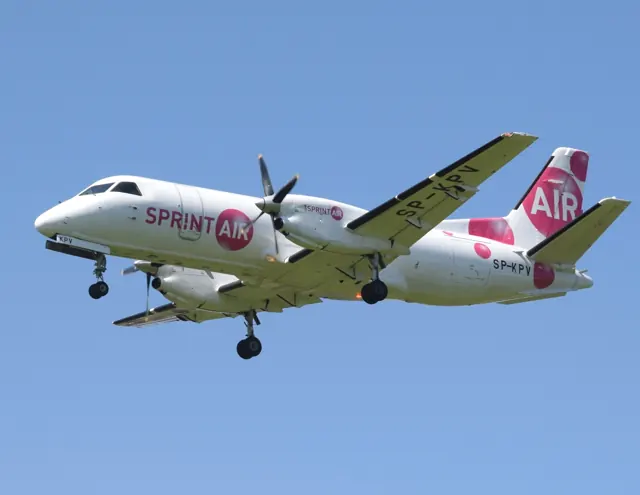
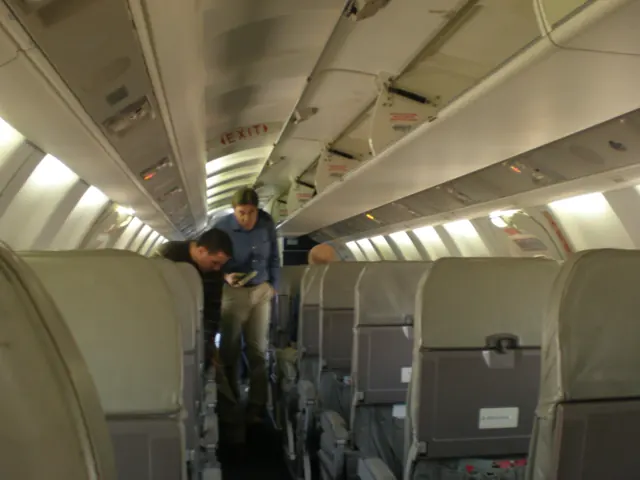
Saab and Fairchild developed the 340 for short regional routes. Its low wing carries two turboprops, and its cabin seats passengers three abreast. Saab continued the programme after Fairchild withdrew.
Aircraft background
Wikipedia contributors · Read more ↗A smooth first landing followed by a difficult radio call
Watching flights from the jumpseat helped the new pilot prepare, but the first real sector still felt overwhelming. The training captain carried much of the preparation workload while the trainee tried to keep up. The Saab moved much faster than the small aircraft used in training, and the first arrival into Sydney came after dark. With coaching, the landing went surprisingly well.
Pseudonymous first-person account · June 2020. Rex Saab 340 line training from Wagga Wagga to Sydney; exact date and variant of the earlier flight are not given.
That 777 Pilot · Read more ↗Later updates addressed cockpit indications and lighting
Sim Update 4 lists corrections to the localizer/CDI display in approach mode, the HSI navigation-source indication, the cold-and-dark MFD state and the dome-light dimmer. The source records what Microsoft reported fixing in that release.
340B · Microsoft Flight Simulator · MSFS 2024
Microsoft Flight Simulator Team · Read more ↗Into the cockpit
 YouTube
Stockholm Planespotting · 22 min ·
Cockpit Jumpseat on a Saab 340B | Bromma to Trollhättan with Västflyg
A sponsored cockpit ride on a Saab 340B between Bromma and Trollhättan.
Real aircraft · Saab 340B
Watch on YouTube ↗Preview images are served by AirframeDB. Videos open on YouTube only when you choose to watch.
Meet Saab 340B
Saab and Fairchild developed the 340 for short regional routes. Its low wing carries two turboprops, and its cabin seats passengers three abreast. Saab continued the programme after Fairchild withdrew.
The 340A and 340B are separate developments, with cockpit equipment also varying by operator. The simulator documentation describes the represented 340B.
Saab 340B
Aircraft type designators
Use the code for the model you are flying. The linked authority lists the applicable aircraft.
History & design
The first crew takes a new commuter aircraft into the air
Saab’s anniversary account names Per Pellebergs and Eric Sjöberg as the pilots of the first flight from Tannefors on 25 January 1983. The flight lasted one hour and twenty-one minutes, with planned system checks reported to have proceeded normally.
Saab · Forty years since the Saab 340 inaugural flight ↗Saab retrospective published forty years after the flight
Development milestones
First flight: 25 January 1983
Wikipedia contributors · Saab 340 ↗Saab 340 · family/variant named by the source · Wikipedia revision 1370519868
Pilot accounts
A smooth first landing followed by a difficult radio call
Watching flights from the jumpseat helped the new pilot prepare, but the first real sector still felt overwhelming. The training captain carried much of the preparation workload while the trainee tried to keep up. The Saab moved much faster than the small aircraft used in training, and the first arrival into Sydney came after dark.
With coaching, the landing went surprisingly well. The next radio call was less successful: rapid taxi instructions overwhelmed the trainee, and the captain calmly corrected the readback. On the return to Wagga Wagga, the more experienced pilots could relax and joke while their new colleague was still struggling to process the day. The recollection captures how a successful landing can coexist with feeling very new to the rest of airline work.
Pseudonymous first-person account · June 2020. Rex Saab 340 line training from Wagga Wagga to Sydney; exact date and variant of the earlier flight are not given.
Read the full account · That 777 Pilot ↗A winter arrival challenges a new captain’s confidence
Reed had spent more than two years as a Saab copilot before moving into command. On a snowy night at International Falls, a full aircraft and a slippery runway produced a much longer landing roll than he expected. From the ramp, a local fuel-truck driver saw the aircraft rushing past in a cloud of snow and set off to help, believing it would not stop in time.
The aircraft stopped close to the runway’s end. Afterwards, Reed returned to his manuals to understand what he had missed and found a more restrictive winter-operations limit than the one he had used. His account ends with a pointed reflection on being a new captain. The experience is presented as a personal recollection of a mistake, with its historical operating details kept in the source.
Historic Airline Group · September 2016 retrospective. Northwest Airlink Saab 340 captain recalling International Falls; exact flight date and variant are not supplied.
Read the full account · Historic Airline Group ↗Retiring with the aircraft that shaped a career
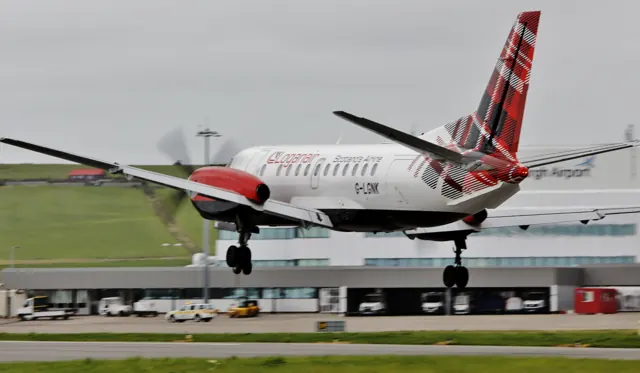
Watt’s final airline landing coincided with Loganair retiring the Saab 340, bringing two farewells together. He flew the last scheduled service along the Kirkwall, Inverness and Glasgow route, with his wife Rosemary among the passengers. His sixty-fifth birthday followed the next day, giving the occasion another personal marker beyond the change in fleet.
He described retiring with the aircraft as fitting after decades of watching Scotland pass beneath its wings. The airline also remembered the cockpit commentaries for which he had become known to crews and customers. The departure closed a period in which the Saab had connected island communities with the mainland, carrying everyday passengers and supplies. Watt’s remarks connect that wider transport role with the view of someone who had spent much of his career doing the flying.
Shetland News · 25 January 2024. Loganair’s last scheduled Saab 340 service, Kirkwall–Inverness–Glasgow; the report includes Watt’s comments and his wife’s presence onboard.
Read the full account · Shetland News ↗In your simulator
Systems, equipment and documentation for each developer’s aircraft.
MSFS 2024340B
Microsoft Flight Simulator · Released
340B
Microsoft Flight Simulator · Released
Aircraft specifications
Published figures for the named real-aircraft variant. Simulator equipment and performance can differ.
| Specification | Published value |
|---|---|
| Length | 19.73 m (64 ft 9 in) |
| Wingspan | 21.44 m (70 ft 4 in) |
| Height | 6.97 m (22 ft 10 in) |
| Wing area | 41.81 m² (450.0 sq ft) |
| Empty weight | 8,618 kg (19,000 lb) average operational empty weight |
| Max takeoff weight | 13,154 kg (29,000 lb) , increased to 30,000 pounds for 340B models by SAAB Service Bulletin (SB) 340-51-033 with Modification Number 3655 |
| Powerplant | 2 × General Electric CT7 -9B turboprop engines, 1,390 kW (1,870 shp) each for take-off (ISA, APR) |
| Propellers | 4-bladed Hamilton Standard 14RF19 (or Dowty Rotol ), 3.35 m (11 ft 0 in) diameter four-blade constant speed, fully-feathering reversible propellers |
| Cruise speed | 524 km/h (326 mph, 283 kn) |
| Range | 1,350 km (840 mi, 730 nmi) long range cruise with 34 passengers and baggage |
| Service ceiling | 7,620 m (25,000 ft) |
| Rate of climb | 10.2 m/s (2,010 ft/min) |
Manuals & resources
Find your next read
Choose a topic for a short introduction and a link to the original source. Simulator references identify the developer and edition they cover.
Simulator documentation
Later updates addressed cockpit indications and lighting340B · Microsoft Flight Simulator · MSFS 2024
Sim Update 4 lists corrections to the localizer/CDI display in approach mode, the HSI navigation-source indication, the cold-and-dark MFD state and the dome-light dimmer. The source records what Microsoft reported fixing in that release.
MSFS 2024 1.6.32.0 release notes · 8 December 2025; subsequent version behaviour is not established here
Microsoft Flight Simulator Team · Read the source ↗Startup and checklist behaviour changed after release340B · Microsoft Flight Simulator · MSFS 2024
Sim Update 2 lists Saab 1.0.9 fixes for runway-start readiness, cold-and-dark displays and checklist camera targets, documenting changes since release.
MSFS 2024 1.4.20.0 release notes · 15 May 2025; published fixes, not a current runtime test
Microsoft Flight Simulator Team · Read the source ↗Pilot account
A smooth first landing followed by a difficult radio callPseudonymous first-person account · June 2020. Rex Saab 340 line training from Wagga Wagga to Sydney; exact date and variant of the earlier flight are not given.
Watching flights from the jumpseat helped the new pilot prepare, but the first real sector still felt overwhelming. The training captain carried much of the preparation workload while the trainee tried to keep up. The Saab moved much faster than the small aircraft used in training, and the first arrival into Sydney came after dark. With coaching, the landing went surprisingly well.
That 777 Pilot
That 777 Pilot · Read the source ↗A winter arrival challenges a new captain’s confidenceHistoric Airline Group · September 2016 retrospective. Northwest Airlink Saab 340 captain recalling International Falls; exact flight date and variant are not supplied.
Reed had spent more than two years as a Saab copilot before moving into command. On a snowy night at International Falls, a full aircraft and a slippery runway produced a much longer landing roll than he expected. From the ramp, a local fuel-truck driver saw the aircraft rushing past in a cloud of snow and set off to help, believing it would not stop in time. The aircraft stopped close to the runway’s end.
David Reed
Historic Airline Group · Read the source ↗Read the original documentation from the people who created it. Manuals open on their publisher’s website.
Manual
Microsoft Flight Simulator aircraft manualsMicrosoft / aircraft developersAircraft background
Saab 340Wikipedia contributors · Research background · Wikipedia revision 1370519868 · retrieved 2026-09-12 Forty years since the Saab 340 inaugural flightSaab · January 2023 · manufacturer retrospectiveResource
MSFS 2024 FAQ and edition aircraft inventoryMicrosoftDeveloper documentation
MSFS 2024 Sim Update 2 release notesMicrosoft Flight Simulator Team · 15 May 2025 · simulator 1.4.20.0, Saab package 1.0.9 MSFS 2024 Sim Update 4 release notesMicrosoft Flight Simulator Team · 8 December 2025 · simulator 1.6.32.0Type designator
ICAO Doc 8643 — aircraft type designatorsInternational Civil Aviation Organization · Public search data retrieved 2026-09-14; authority update 2026-09-03Built-in force-feedback profiles
Read the documentary basis, editable starting settings and remaining questions for the aircraft you fly. Each explanation refers to the exact profile revision shown.
Catalogue programme-20261022-v1 · 2 profile choices
Carenado Saab 340
Carenado · Free and Pro · Revision 1 · Partial review
X-Plane 11
Carenado Saab 340: The profile supplies selected regional-aircraft yoke resistance.
Saab 340B
Free and Pro · Revision 1 · Partial review
MSFS 2024
Saab 340B: The profile supplies selected regional-aircraft yoke resistance.
Carenado Saab 340
Carenado Saab 340: The profile supplies selected regional-aircraft yoke resistance.
Aircraft and simulator scope
- Carenado Saab 340 · Carenado · X-Plane 11 · Add-on starting point
Carenado Saab 340 · Historical XP11 catalogue scope; compatibility is not transferred to XP12.
The simulator model and controls
Saab and Fairchild developed the 340 for short regional routes. Its low wing carries two turboprops, and its cabin seats passengers three abreast. Saab continued the programme after Fairchild withdrew.
This profile selects Carenado Saab 340 for X-Plane 11.
How this profile feels
The profile supplies selected regional-aircraft yoke resistance. Spring resistance builds with the selected airspeed response. A separate aerodynamic term adds speed-dependent control load.
Configured pitch relief belongs to the represented 340B cockpit. Valid trim provides the configured pressure relief. Autopilot following is off.
Controls and trim
The Saab340B combines twin turboprops and a low wing with three-abreast regional seating. Its B-model and operator cockpit equipment remain separately named from the original 340A and from other regional-turboprop families.
The selected implementation
The Saab 340 selection retains the twin-turboprop regional-airliner configuration and its own Carenado cockpit implementation.
About the values
The gains are normalized profile settings. They describe the chosen effect balance; hand force depends on the device and its output limits. IAS references are tuning values rather than operating limits. Physical acceptance of this revision remains pending.
What the documentation establishes
Carenado identifies S340 for XP11 with APS85 autopilot, CTOT, pusher and gust-lock functions.
Carenado lists APS85 autopilot, CTOT, stick pusher and gust lock. Those custom functions are not automatically supplied by generic force cues.
Documentary review and sources
These decisions describe the documentary basis and remaining gaps for this revision. Aircraft documentation and a starting setting describe different kinds of evidence.
Aircraft and variant
ReviewedThis profile selects Carenado Saab 340 for X-Plane 11.
Flight controls
Not yet reviewedThe Saab340B combines twin turboprops and a low wing with three-abreast regional seating. Its B-model and operator cockpit equipment remain separately named from the original 340A and from other regional-turboprop families.
Trim
Not yet reviewedConfigured pitch relief belongs to the represented 340B cockpit. Pitch authority 0.3 provides load relief and permitted centre movement; roll authority is 0.
Autopilot and stability
Not yet reviewedAutopilot following is off; the configured spring and load retain the hardware feel.
Equipment
ReviewedThe Saab 340 selection retains the twin-turboprop regional-airliner configuration and its own Carenado cockpit implementation.
Speeds and limits
Not yet reviewedThe indicated-speed references set the profile response scale; they are separate from aircraft operating limits.
Simulator integration
Not yet reviewedThe profile targets xplane11. Add-on-specific controls use only the supported references configured by this profile.
Force-feedback settings
Not yet reviewedThe settings define the profile’s effect balance. Device output limits affect physical hand force.
Starting settings and their rationale
These configured values are starting estimates. The explanations describe what each setting controls; physical validation appears separately below.
| Setting | Starting value | What it controls and why |
|---|---|---|
| Spring strength | Starting value0.74 | What it controls and whyThe profile supplies selected regional-aircraft yoke resistance. The baseline spring is 0.74. Its low-speed blend reaches baseline strength at 95 KIAS. |
| Master force gain | Starting value0.85 | What it controls and whyScales overall profile strength while preserving effect balance, subject to device and output limits. |
| Profile force gain | Starting value0.68 | What it controls and whyThe aerodynamic-load gain is 0.68 with an indicated-speed reference of 220 KIAS. This supplies speed-dependent loading alongside the spring. |
| Force tuning speed/reference | Starting value220.0 kt | What it controls and whySets the IAS reference for aerodynamic loading. It is an estimate, not published cruise TAS or a flight limit. |
| Spring response reference speed | Starting value95 kt | What it controls and whySets the IAS where the low-speed blend reaches baseline strength; high-speed stiffening also uses it. |
| Aileron force scale | Starting value0.72 | What it controls and whyRoll and pitch aerodynamic scales are 0.72 and 1, respectively. They set the aerodynamic axis balance. No custom spring-travel curve is enabled. |
| Elevator force scale | Starting value1.0 | What it controls and whyScales pitch aerodynamic loading; pitch spring travel and trim responses are separate settings. |
| Trim feel | Starting valueEnabled | What it controls and whyRetained for compatibility and group membership. Trim relief, rather than this flag, controls centre movement. |
| Trim relief | Starting valueEnabled | What it controls and whyAllows trim relief with supported control law and valid telemetry. Axis authorities set its amount. |
| Autopilot follow | Starting valueDisabled | What it controls and whyAutopilot following is off; the configured spring and load retain the hardware feel. |
| Autopilot neutral hold | Starting valueDisabled | What it controls and whyPermits centering hold during a supported AP state, separate from following a moving target. |
| Output force limit | Starting value0.55 | What it controls and whyCaps directed-force output. Native spring effects and device limits remain separate. |
All 44 starting settings and their rationale
The settings define the profile’s effect balance. Device output limits affect physical hand force.
| Setting | Starting value | What it controls and why |
|---|---|---|
| Spring strength | Starting value0.74 | What it controls and whyThe profile supplies selected regional-aircraft yoke resistance. The baseline spring is 0.74. Its low-speed blend reaches baseline strength at 95 KIAS. |
| Spring deadband | Starting value0.05 | What it controls and whySets travel around the centre before the baseline spring resists. Smaller values engage it sooner. |
| Profile force gain | Starting value0.68 | What it controls and whyThe aerodynamic-load gain is 0.68 with an indicated-speed reference of 220 KIAS. This supplies speed-dependent loading alongside the spring. |
| Master force gain | Starting value0.85 | What it controls and whyScales overall profile strength while preserving effect balance, subject to device and output limits. |
| QBlend Enabled | Starting valueEnabled | What it controls and whyAllows baseline spring strength to rise with indicated airspeed where the control law permits it. |
| QSpring Minimum Factor | Starting value0.55 | What it controls and whySets low-speed spring strength as a fraction of baseline when blending is enabled. One keeps full strength. |
| QSpring Start Knots | Starting value30.8 kt | What it controls and whySets the IAS where the low-speed spring blend starts rising. This is a feel threshold, not a flight limit. |
| Spring response reference speed | Starting value95 kt | What it controls and whySets the IAS where the low-speed blend reaches baseline strength; high-speed stiffening also uses it. |
| Force tuning speed/reference | Starting value220.0 kt | What it controls and whySets the IAS reference for aerodynamic loading. It is an estimate, not published cruise TAS or a flight limit. |
| Airspeed spring stiffening gain | Starting value0.1 | What it controls and whyThe high-speed spring-stiffening gain is 0.1. It strengthens the permitted spring response above 95 KIAS, with the squared-speed ratio capped at 5. |
| Airspeed spring stiffening limit | Starting value5 | What it controls and whyLimits the squared airspeed ratio used for high-speed spring stiffening; it is not a device-force cap. |
| Aileron force scale | Starting value0.72 | What it controls and whyRoll and pitch aerodynamic scales are 0.72 and 1, respectively. They set the aerodynamic axis balance. No custom spring-travel curve is enabled. |
| Elevator force scale | Starting value1.0 | What it controls and whyScales pitch aerodynamic loading; pitch spring travel and trim responses are separate settings. |
| Output force limit | Starting value0.55 | What it controls and whyCaps directed-force output. Native spring effects and device limits remain separate. |
| Trim feel | Starting valueEnabled | What it controls and whyRetained for compatibility and group membership. Trim relief, rather than this flag, controls centre movement. |
| Trim relief | Starting valueEnabled | What it controls and whyAllows trim relief with supported control law and valid telemetry. Axis authorities set its amount. |
| Elevator Authority | Starting value0.3 | What it controls and whyConfigured pitch relief belongs to the represented 340B cockpit. Pitch authority 0.3 provides load relief and permitted centre movement; roll authority is 0. |
| Aileron Authority | Starting value0 | What it controls and whyScales supported roll-trim relief and permitted centre movement. Zero removes roll response. |
| Force Trim Enabled | Starting valueDisabled | What it controls and whyEnables local force trim, separate from aircraft-owned trim and add-on integration qualification. |
| GLoad Enabled | Starting valueEnabled | What it controls and whyAllows load-factor changes to modify permitted spring laws. Passive fly-by-wire feel can suppress it. |
| Rate Damping Enabled | Starting valueEnabled | What it controls and whyEnables rate damping with the configured coefficients and control law. |
| Autopilot follow | Starting valueDisabled | What it controls and whyAutopilot following is off; the configured spring and load retain the hardware feel. |
| Autopilot follow authority | Starting value0.1 | What it controls and whySets admitted AP-follow gain, not a percentage of travel. Runtime ownership and input limits still apply. |
| Autopilot neutral hold | Starting valueDisabled | What it controls and whyPermits centering hold during a supported AP state, separate from following a moving target. |
| Autopilot neutral hold strength | Starting value0.6 | What it controls and whySets admitted AP neutral-hold strength; inactive while neutral hold is disabled. |
| Enabled | Starting valueEnabled | What it controls and whyEnables aerodynamic cues; each still needs nonzero strength and its simulator conditions. |
| Gain | Starting value0.28 | What it controls and whySets stall-buffet strength. Zero removes the cue without changing simulator stalls or warnings. |
| Gain | Starting value0 | What it controls and whySets high-Mach buffet strength; onset and full-strength thresholds are separate. |
| Gain | Starting value0.14 | What it controls and whySets flap buffet at the configured position and speed gates. Flap movement texture is separate. |
| Maximum flap index | Starting value3 | What it controls and whySets the final flap index for detent normalization. UP plus three detents uses maximum index3. |
| Minimum flap index | Starting value2 | What it controls and whySets the first flap detent that admits buffet; this is a handle index, not degrees. |
| Gain | Starting value0.12 | What it controls and whySets gear aerodynamic buffet; movement and ground-contact cues are separate. |
| Shaker Enabled | Starting valueDisabled | What it controls and whyPermits shaker at supported warning conditions; the switch does not establish aircraft equipment. |
| Stick shaker amplitude | Starting value0.5 | What it controls and whySets triggered shaker strength; inactive while the shaker feature is disabled. |
| Enabled | Starting valueEnabled | What it controls and whyEnables ground effects; each still needs its own strength and contact or motion telemetry. |
| Gain | Starting value0.42 | What it controls and whySets rolling texture strength, modified by speed, surface and undercarriage configuration. |
| Gain | Starting value0.32 | What it controls and whySets gear-bump texture during ground motion, separate from touchdown impact. |
| Gain | Starting value0.82 | What it controls and whySets landing-impact strength; landing telemetry and response shape determine the pulse. |
| Gain | Starting value0.48 | What it controls and whySets reverse-thrust vibration with valid reverser and engine conditions. Zero removes the cue. |
| Enabled | Starting valueEnabled | What it controls and whyEnables engine cues with nonzero settings and valid running-engine telemetry. |
| Gain | Starting value0.06 | What it controls and whySets estimated engine vibration using configured telemetry and response, not measured cockpit vibration. |
| Enabled | Starting valueEnabled | What it controls and whyEnables accessory cues with configured strengths and observed accessory movement. |
| Gain | Starting value0.12 | What it controls and whySets texture from observed flap movement; a command without movement does not establish the cue. |
| Gain | Starting value0.12 | What it controls and whySets texture from observed gear movement, separate from aerodynamic and touchdown effects. |
Limits and open questions
- Those custom systems need their own signals. A generic texture or disabled follow does not implement APS85 forces, stick pusher or gust-lock behavior.
- No simulator launch or physical force validation.
Physical validation
No physical force validation is recorded in this public catalogue for this revision. Documentary review and software checks do not establish how a particular device feels.
Discuss this aircraft (0)
Questions, observations and useful sources from the community.
No published discussions yet. Bring a question or share a useful source.
Open aircraft discussions →Content expanded · What’s new
Something missing or a source that needs attention?
Suggest a correction ↗