

Start here
A few places to begin, from the aircraft’s story to the people who fly it.
Meet the aircraft
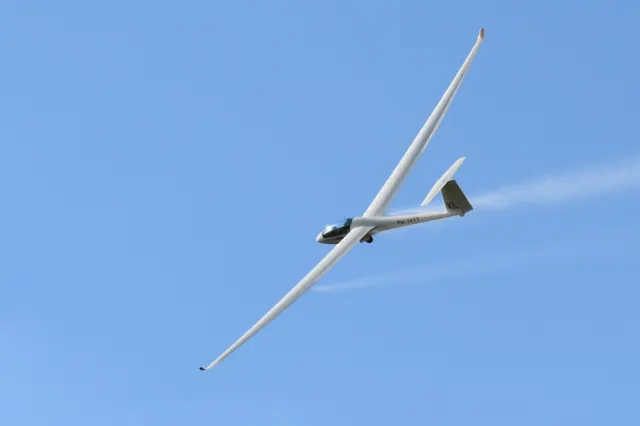
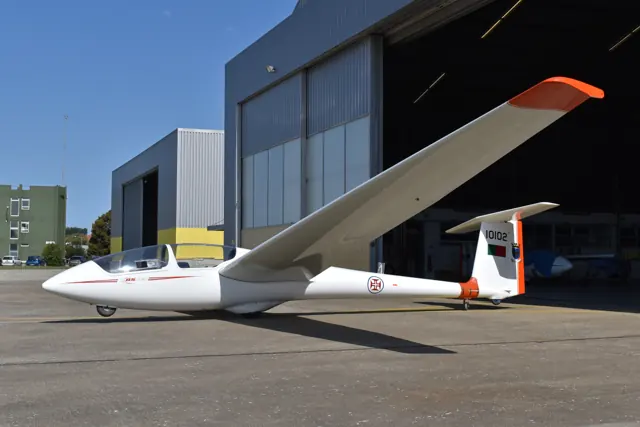
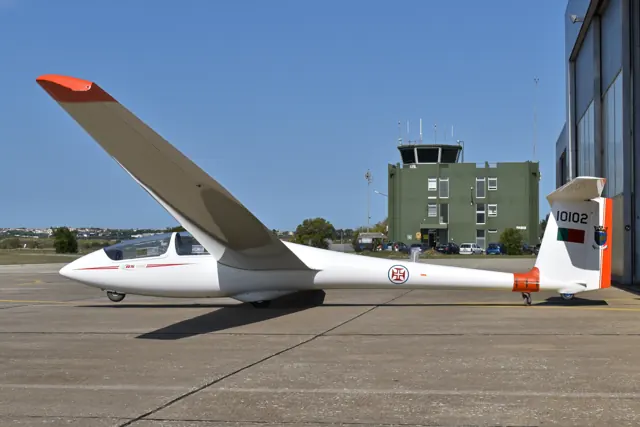
The ASK 21 has a glass-fibre structure, long wings, a T-tail and tandem seats for an instructor and student. The design also supports cross-country and aerobatic instruction within its operating limits.
Aircraft background
Wikipedia contributors · Read more ↗A birthday solo after a lunch break resets the day
Elliott had spent months preparing for his first solo, including winter practice in a cockpit simulator and an intensive flying course. When his birthday arrived, nerves unsettled his early circuits. A lunch break with his father gave him a chance to relax before returning to the airfield for another attempt. Three better flights followed.
EAA · May 2017. ASK21 first solo at Williams Soaring Center on his fourteenth birthday; winter simulator sessions preceded the flying course.
EAA · Read more ↗Soaring instruments and launch methods
Laminar's desktop manual describes aerotow and winch launches for the ASK 21, the total-energy variometer and speedbrake use. The manual describes the instruments and launch options included in X-Plane.
Schleicher ASK 21 · Laminar Research · X-Plane 12 / X-Plane 11
Laminar Research · Read more ↗Into the cockpit
 YouTube
XPlaneOfficial · 25 min ·
ASK21 Glider Tutorial – X-Plane 12
Laminar Research's tutorial introduces glider flying with the X-Plane 12 ASK21.
Simulator · Laminar Research ASK21 · X-Plane 12
Watch on YouTube ↗ YouTube
Glider Airstrip · 2 min ·
ASK 21 Glider Training Flight Cockpit View | Aerotow Under Cumulus Clouds
A cockpit view of a two-seat ASK21 training aerotow.
Real aircraft · Schleicher ASK 21
Watch on YouTube ↗Preview images are served by AirframeDB. Videos open on YouTube only when you choose to watch.
Meet Schleicher ASK 21
The ASK 21 has a glass-fibre structure, long wings, a T-tail and tandem seats for an instructor and student. The design also supports cross-country and aerobatic instruction within its operating limits.
X-Plane documents aerotow and winch launching for its implementation, together with instruments including the total-energy variometer.
Schleicher ASK 21
Aircraft type designators
Use the code for the model you are flying. The linked authority lists the applicable aircraft.
Schleicher ASK 21 — unpowered glider; ICAO special designator
ICAO — special designators ↗Checked 2026-09-14History & design
Development milestones
Designer: Rudolf Kaiser
First flight: February 1979
Wikipedia contributors · Schleicher ASK 21 ↗Schleicher ASK 21 · family/variant named by the source · Wikipedia revision 1372986619
Systems & details
Linked sticks and spring trim
Schleicher's maintenance pages show the front and rear sticks connected mechanically, with rods and bellcranks transmitting elevator movement. The trim system uses two levers, a connecting rod and two springs. Its friction arrangement holds the selected trim position, while a separate indicator shows that setting. The accompanying drawing makes the relationship between both seats' sticks and trim levers visible. These are details of the manufacturer's documented mechanical arrangement, without assuming how a simulator or force-feedback device reproduces it.
Pilot accounts
A birthday solo after a lunch break resets the day
Elliott had spent months preparing for his first solo, including winter practice in a cockpit simulator and an intensive flying course. When his birthday arrived, nerves unsettled his early circuits. A lunch break with his father gave him a chance to relax before returning to the airfield for another attempt.
Three better flights followed. Expecting another check, he instead found his instructor closing the rear canopy and sending him off alone. In the air, attention to traffic and his position replaced the anticipation. Back on the ground, celebration included the club’s water and shirt traditions. The story makes the short flight significant through the preparation, family support and sudden change from pupil to solo pilot.
EAA · May 2017. ASK21 first solo at Williams Soaring Center on his fourteenth birthday; winter simulator sessions preceded the flying course.
Read the full account · EAA ↗His parents arrive just in time for a long-awaited solo
Moving between countries, study and work had repeatedly interrupted Pinder’s progress towards solo flight. A friendly conversation at an airshow eventually led him to EZAC, where members welcomed him despite his limited Dutch. Regular flying and the club’s camps finally gave him the continuity he had been missing.
During a July camp, instructor David Lindberg asked whether he was ready to go alone. At almost that moment, his parents arrived by chance on a journey through the area. A successful landing brought an enormous shout of satisfaction after a wait stretching back twenty-four years. The club’s ceremonial tyre and a second solo flight completed an afternoon made memorable by the people there to share it.
Personal account published February 2020. July 2018 ASK21 solo at EZAC, Axel; earlier scholarship flights were in Puchacz gliders.
Read the full account · Mike Pinder ↗An evening checkout between work and gathering rain
Finishing work early gave Kasprzyk a chance to hurry from his hotel to Booker before dusk and building clouds ended the flying. David Byass agreed to a checkout in the ASK21. Behind the towplane, Kasprzyk found it quiet and well balanced, with a reassuringly smooth climb despite the rutted grass below.
Rain and weakening lift limited the outing, but the surroundings supplied another kind of interest: a Blériot on the field and Concorde approaching Heathrow. Byass flew Concordes for work, giving the two pilots plenty to discuss alongside Kasprzyk’s fighter experience. After an easy return, the airfield pub provided shelter from the arriving downpour and a place to continue their conversation.
FlightLog · May 1999. First ASK21 flight at Booker with instructor David Byass; other gliders and visits in the travel account are separate.
Read the full account · Stan Kasprzyk FlightLog ↗In your simulator
Systems, equipment and documentation for each developer’s aircraft.
Compare simulator versions →X-Plane 12Schleicher ASK 21
Laminar Research · Released
Schleicher ASK 21
Laminar Research · Released
X-Plane 11Schleicher ASK 21
Laminar Research · Released
Schleicher ASK 21
Laminar Research · Released
MSFS 2020ASK 21
f7 Simulations · Released
ASK 21
f7 Simulations · Released
Aircraft specifications
Published figures for the named real-aircraft variant. Simulator equipment and performance can differ.
| Specification | Published value |
|---|---|
| Length | 8.35 m (27 ft 5 in) |
| Wingspan | 17 m (55 ft 9 in) |
| Height | 1.55 m (5 ft 1 in) |
| Wing area | 17.95 m² (193.2 sq ft) |
| Empty weight | 360 kg (794 lb) |
| Max takeoff weight | 600 kg (1,323 lb) |
| Stall speed | 65 km/h (40 mph, 35 kn) |
Manuals & resources
Find your next read
Choose a topic for a short introduction and a link to the original source. Simulator references identify the developer and edition they cover.
Simulator documentation
Soaring instruments and launch methodsSchleicher ASK 21 · Laminar Research · X-Plane 12 / X-Plane 11
Laminar's desktop manual describes aerotow and winch launches for the ASK 21, the total-energy variometer and speedbrake use. The manual describes the instruments and launch options included in X-Plane.
XP12 desktop manual; XP11 counterpart separately archived · Flying Special Situations / Flying Gliders
Laminar Research · Read the source ↗Pilot account
A birthday solo after a lunch break resets the dayEAA · May 2017. ASK21 first solo at Williams Soaring Center on his fourteenth birthday; winter simulator sessions preceded the flying course.
Elliott had spent months preparing for his first solo, including winter practice in a cockpit simulator and an intensive flying course. When his birthday arrived, nerves unsettled his early circuits. A lunch break with his father gave him a chance to relax before returning to the airfield for another attempt. Three better flights followed. Expecting another check, he instead found his instructor closing the rear canopy and sending him off alone.
Ryan Elliott
EAA · Read the source ↗His parents arrive just in time for a long-awaited soloPersonal account published February 2020. July 2018 ASK21 solo at EZAC, Axel; earlier scholarship flights were in Puchacz gliders.
Moving between countries, study and work had repeatedly interrupted Pinder’s progress towards solo flight. A friendly conversation at an airshow eventually led him to EZAC, where members welcomed him despite his limited Dutch. Regular flying and the club’s camps finally gave him the continuity he had been missing. During a July camp, instructor David Lindberg asked whether he was ready to go alone. At almost that moment, his parents arrived by chance on a journey through the area.
Mike Pinder
Mike Pinder · Read the source ↗Developer documentation
ASK 21 — product listingASK 21 · MSFS 2020
Product listing captured 2026-09-30; edition scope from the reviewed catalogue
iniBuilds Store · Read the source ↗Read the original documentation from the people who created it. Manuals open on their publisher’s website.
Manual
X-Plane 12 Desktop ManualLaminar Research X-Plane aircraft and avionics manualsLaminar Research X-Plane 11 Desktop ManualLaminar ResearchAircraft background
Schleicher ASK 21Wikipedia contributors · Research background · Wikipedia revision 1372986619 · retrieved 2026-09-12Manufacturer documentation
ASK21 continued airworthiness trim system bulletinAlexander Schleicher · Schleicher manual amendment pages, TN 11, 20 December 1983; stick/trim drawing dated 9 March 1983Type designator
ICAO — special designatorsInternational Civil Aviation Organization · Glider and motorglider categories; checked 2026-09-14Product
f7 Simulations ASK 21 for MSFS-2020 – iniBuilds StoreiniBuilds Store · Product listing captured 2026-09-30; edition scope from the reviewed catalogueBuilt-in force-feedback profiles
Read the documentary basis, editable starting settings and remaining questions for the aircraft you fly. Each explanation refers to the exact profile revision shown.
Catalogue programme-20261022-v1 · 2 profile choices
f7 Simulations Schleicher ASK 21
f7 Simulations · Free and Pro · Revision 3 · Inherited starting point
MSFS 2020
f7 Simulations Schleicher ASK 21: The profile supplies the glider’s selected stick balance.
Schleicher ASK 21
Free and Pro · Revision 2 · Review pending
X-Plane 12 · X-Plane 11
Schleicher ASK 21: The profile supplies the glider’s selected stick balance.
f7 Simulations Schleicher ASK 21
f7 Simulations Schleicher ASK 21: The profile supplies the glider’s selected stick balance.
Aircraft and simulator scope
- f7 Simulations Schleicher ASK 21 · f7 Simulations · MSFS 2020 · Add-on starting point
The simulator model and controls
The ASK 21 has a glass-fibre structure, long wings, a T-tail and tandem seats for an instructor and student. The design also supports cross-country and aerobatic instruction within its operating limits.
This profile selects f7 Simulations Schleicher ASK 21 for MSFS 2020.
How this profile feels
The profile supplies the glider’s selected stick balance. Spring resistance builds with the selected airspeed response. A separate aerodynamic term adds speed-dependent control load.
Spring trim supplies pitch context rather than an external elevator tab. Pitch-trim relief is off. Autopilot following is off.
Controls and trim
The ASK21 is a two-seat aerobatic glider with fixed-wheel landing gear, spoilers and no engine or wing flaps in the reviewed configuration. Its pitch spring-trim arrangement is distinct from an elevator-tab aircraft.
The selected implementation
f7’s ASK 21 is a two-seat aerobatic glider with spoilers and fixed wheels. It has neither an engine nor wing flaps.
About the values
The gains are normalized profile settings. They describe the chosen effect balance; hand force depends on the device and its output limits. IAS references are tuning values rather than operating limits. Physical acceptance of this revision remains pending.
Documentary review and sources
These decisions describe the documentary basis and remaining gaps for this revision. Aircraft documentation and a starting setting describe different kinds of evidence.
Aircraft and variant
InheritedThis profile selects f7 Simulations Schleicher ASK 21 for MSFS 2020.
Flight controls
InheritedThe ASK21 is a two-seat aerobatic glider with fixed-wheel landing gear, spoilers and no engine or wing flaps in the reviewed configuration. Its pitch spring-trim arrangement is distinct from an elevator-tab aircraft.
Trim
InheritedSpring trim supplies pitch context rather than an external elevator tab. Pitch relief is off, with stored authority 0; roll authority is 0.
Autopilot and stability
InheritedAutopilot following is off; the configured spring and load retain the hardware feel.
Equipment
Inheritedf7’s ASK 21 is a two-seat aerobatic glider with spoilers and fixed wheels. It has neither an engine nor wing flaps.
Speeds and limits
InheritedThe indicated-speed references set the profile response scale; they are separate from aircraft operating limits.
Simulator integration
InheritedThe profile targets msfs2020. Add-on-specific controls use only the supported references configured by this profile.
Force-feedback settings
InheritedThe settings define the profile’s effect balance. Device output limits affect physical hand force.
Starting settings and their rationale
These configured values are starting estimates. The explanations describe what each setting controls; physical validation appears separately below.
| Setting | Starting value | What it controls and why |
|---|---|---|
| Spring strength | Starting value0.74 | What it controls and whyThe profile supplies the glider’s selected stick balance. The baseline spring is 0.74. Its low-speed blend reaches baseline strength at 35 KIAS. |
| Master force gain | Starting value0.85 | What it controls and whyScales overall profile strength while preserving effect balance, subject to device and output limits. |
| Profile force gain | Starting value0.8 | What it controls and whyThe aerodynamic-load gain is 0.8 with an indicated-speed reference of 70 KIAS. This supplies speed-dependent loading alongside the spring. |
| Force tuning speed/reference | Starting value70 kt | What it controls and whySets the IAS reference for aerodynamic loading. It is an estimate, not published cruise TAS or a flight limit. |
| Spring response reference speed | Starting value35.0 kt | What it controls and whySets the IAS where the low-speed blend reaches baseline strength; high-speed stiffening also uses it. |
| Aileron force scale | Starting value0.72 | What it controls and whyRoll and pitch aerodynamic scales are 0.72 and 1, respectively. They set the aerodynamic axis balance. No custom spring-travel curve is enabled. |
| Elevator force scale | Starting value1.0 | What it controls and whyScales pitch aerodynamic loading; pitch spring travel and trim responses are separate settings. |
| Trim feel | Starting valueDisabled | What it controls and whyRetained for compatibility and group membership. Trim relief, rather than this flag, controls centre movement. |
| Trim relief | Starting valueDisabled | What it controls and whyAllows trim relief with supported control law and valid telemetry. Axis authorities set its amount. |
| Autopilot follow | Starting valueDisabled | What it controls and whyAutopilot following is off; the configured spring and load retain the hardware feel. |
| Autopilot neutral hold | Starting valueDisabled | What it controls and whyPermits centering hold during a supported AP state, separate from following a moving target. |
| Output force limit | Starting value0.55 | What it controls and whyCaps directed-force output. Native spring effects and device limits remain separate. |
All 44 starting settings and their rationale
The settings define the profile’s effect balance. Device output limits affect physical hand force.
| Setting | Starting value | What it controls and why |
|---|---|---|
| Spring strength | Starting value0.74 | What it controls and whyThe profile supplies the glider’s selected stick balance. The baseline spring is 0.74. Its low-speed blend reaches baseline strength at 35 KIAS. |
| Spring deadband | Starting value0.04 | What it controls and whySets travel around the centre before the baseline spring resists. Smaller values engage it sooner. |
| Profile force gain | Starting value0.8 | What it controls and whyThe aerodynamic-load gain is 0.8 with an indicated-speed reference of 70 KIAS. This supplies speed-dependent loading alongside the spring. |
| Master force gain | Starting value0.85 | What it controls and whyScales overall profile strength while preserving effect balance, subject to device and output limits. |
| QBlend Enabled | Starting valueEnabled | What it controls and whyAllows baseline spring strength to rise with indicated airspeed where the control law permits it. |
| QSpring Minimum Factor | Starting value0.55 | What it controls and whySets low-speed spring strength as a fraction of baseline when blending is enabled. One keeps full strength. |
| QSpring Start Knots | Starting value8 kt | What it controls and whySets the IAS where the low-speed spring blend starts rising. This is a feel threshold, not a flight limit. |
| Spring response reference speed | Starting value35.0 kt | What it controls and whySets the IAS where the low-speed blend reaches baseline strength; high-speed stiffening also uses it. |
| Force tuning speed/reference | Starting value70 kt | What it controls and whySets the IAS reference for aerodynamic loading. It is an estimate, not published cruise TAS or a flight limit. |
| Airspeed spring stiffening gain | Starting value0.15 | What it controls and whyThe high-speed spring-stiffening gain is 0.15. It strengthens the permitted spring response above 35 KIAS, with the squared-speed ratio capped at 5. |
| Airspeed spring stiffening limit | Starting value5 | What it controls and whyLimits the squared airspeed ratio used for high-speed spring stiffening; it is not a device-force cap. |
| Aileron force scale | Starting value0.72 | What it controls and whyRoll and pitch aerodynamic scales are 0.72 and 1, respectively. They set the aerodynamic axis balance. No custom spring-travel curve is enabled. |
| Elevator force scale | Starting value1.0 | What it controls and whyScales pitch aerodynamic loading; pitch spring travel and trim responses are separate settings. |
| Output force limit | Starting value0.55 | What it controls and whyCaps directed-force output. Native spring effects and device limits remain separate. |
| Trim feel | Starting valueDisabled | What it controls and whyRetained for compatibility and group membership. Trim relief, rather than this flag, controls centre movement. |
| Trim relief | Starting valueDisabled | What it controls and whyAllows trim relief with supported control law and valid telemetry. Axis authorities set its amount. |
| Elevator Authority | Starting value0 | What it controls and whySpring trim supplies pitch context rather than an external elevator tab. Pitch relief is off, with stored authority 0; roll authority is 0. |
| Aileron Authority | Starting value0 | What it controls and whyScales supported roll-trim relief and permitted centre movement. Zero removes roll response. |
| Force Trim Enabled | Starting valueDisabled | What it controls and whyEnables local force trim, separate from aircraft-owned trim and add-on integration qualification. |
| GLoad Enabled | Starting valueEnabled | What it controls and whyAllows load-factor changes to modify permitted spring laws. Passive fly-by-wire feel can suppress it. |
| Rate Damping Enabled | Starting valueEnabled | What it controls and whyEnables rate damping with the configured coefficients and control law. |
| Autopilot follow | Starting valueDisabled | What it controls and whyAutopilot following is off; the configured spring and load retain the hardware feel. |
| Autopilot follow authority | Starting value0.1 | What it controls and whySets admitted AP-follow gain, not a percentage of travel. Runtime ownership and input limits still apply. |
| Autopilot neutral hold | Starting valueDisabled | What it controls and whyPermits centering hold during a supported AP state, separate from following a moving target. |
| Autopilot neutral hold strength | Starting value0.6 | What it controls and whySets admitted AP neutral-hold strength; inactive while neutral hold is disabled. |
| Enabled | Starting valueEnabled | What it controls and whyEnables aerodynamic cues; each still needs nonzero strength and its simulator conditions. |
| Gain | Starting value0.35 | What it controls and whySets stall-buffet strength. Zero removes the cue without changing simulator stalls or warnings. |
| Gain | Starting value0 | What it controls and whySets high-Mach buffet strength; onset and full-strength thresholds are separate. |
| Gain | Starting value0 | What it controls and whySets flap buffet at the configured position and speed gates. Flap movement texture is separate. |
| Maximum flap index | Starting value3 | What it controls and whySets the final flap index for detent normalization. UP plus three detents uses maximum index3. |
| Minimum flap index | Starting value2 | What it controls and whySets the first flap detent that admits buffet; this is a handle index, not degrees. |
| Gain | Starting value0 | What it controls and whySets gear aerodynamic buffet; movement and ground-contact cues are separate. |
| Shaker Enabled | Starting valueDisabled | What it controls and whyPermits shaker at supported warning conditions; the switch does not establish aircraft equipment. |
| Stick shaker amplitude | Starting value0.5 | What it controls and whySets triggered shaker strength; inactive while the shaker feature is disabled. |
| Enabled | Starting valueEnabled | What it controls and whyEnables ground effects; each still needs its own strength and contact or motion telemetry. |
| Gain | Starting value0.4 | What it controls and whySets rolling texture strength, modified by speed, surface and undercarriage configuration. |
| Gain | Starting value0.25 | What it controls and whySets gear-bump texture during ground motion, separate from touchdown impact. |
| Gain | Starting value0.65 | What it controls and whySets landing-impact strength; landing telemetry and response shape determine the pulse. |
| Gain | Starting value0 | What it controls and whySets reverse-thrust vibration with valid reverser and engine conditions. Zero removes the cue. |
| Enabled | Starting valueDisabled | What it controls and whyEnables engine cues with nonzero settings and valid running-engine telemetry. |
| Gain | Starting value0 | What it controls and whySets estimated engine vibration using configured telemetry and response, not measured cockpit vibration. |
| Enabled | Starting valueEnabled | What it controls and whyEnables accessory cues with configured strengths and observed accessory movement. |
| Gain | Starting value0 | What it controls and whySets texture from observed flap movement; a command without movement does not establish the cue. |
| Gain | Starting value0 | What it controls and whySets texture from observed gear movement, separate from aerodynamic and touchdown effects. |
Limits and open questions
- Manual sailplane controls; no engine-derived force or artificial powered-yoke support.
- Exact modeled trim-neutral geometry is not established; relief off.
- No calibrated autopilot servo or inceptor-demand output established. AP follow and neutral hold are disabled.
- 70 KIAS is an estimated tuning reference, not a certified operating limit or cruise TAS. 280 km/h is not 280 knots.
- Native read-only aircraft telemetry only. No custom interface names, units or freshness contract invented; switches and animated controls are not servo demands.
- Spring 0.74, lateral scale 0.7, pitch/roll relief 0/0; editable estimates. No measured hand-force calibration, unsupported failure loads, surface-follow or body-rate torque.
- Installed-aircraft and physical checks are deferred. If telemetry omits the developer or configuration, select this profile and save it as the aircraft default.
- Only actual accessory-position changes drive movement textures. No release or installed-product acceptance is inferred.
Physical validation
No physical force validation is recorded in this public catalogue for this revision. Documentary review and software checks do not establish how a particular device feels.
Discuss this aircraft (0)
Questions, observations and useful sources from the community.
No published discussions yet. Bring a question or share a useful source.
Open aircraft discussions →Content expanded · What’s new
Something missing or a source that needs attention?
Suggest a correction ↗