
Start here
A few places to begin, from the aircraft’s story to the people who fly it.
Meet the aircraft
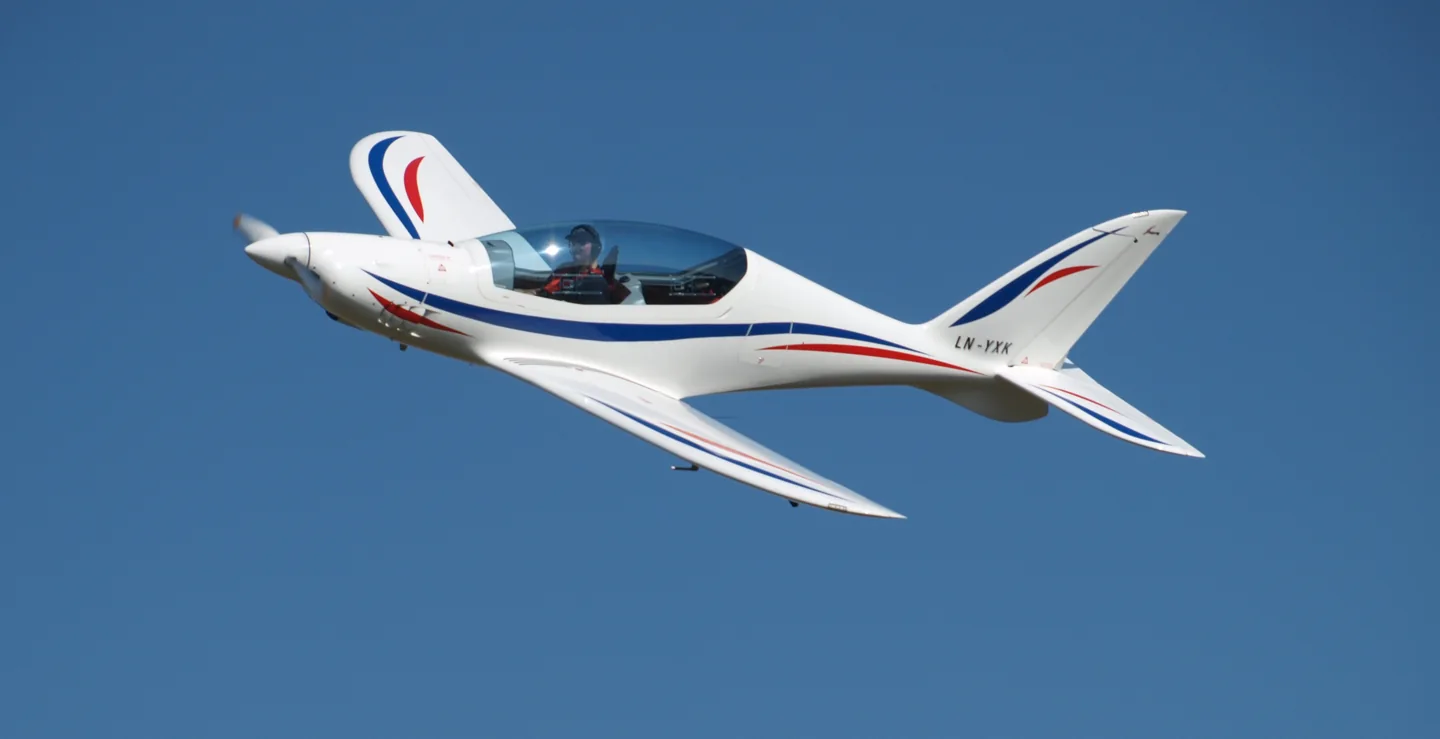
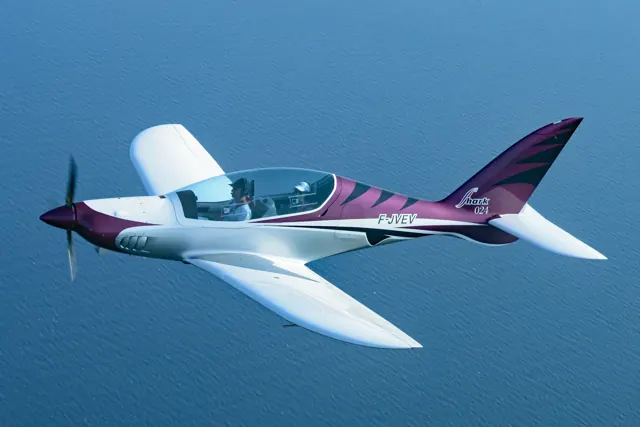
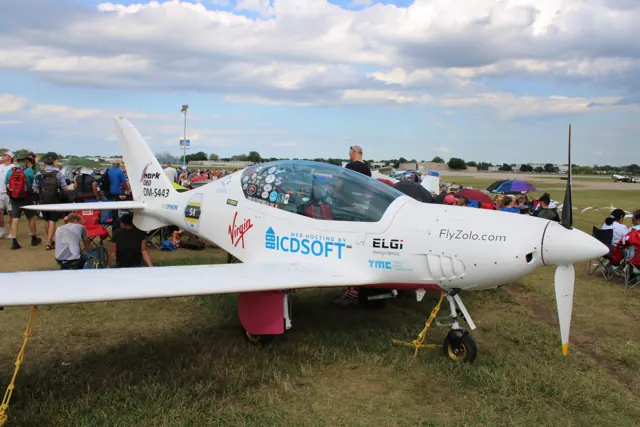
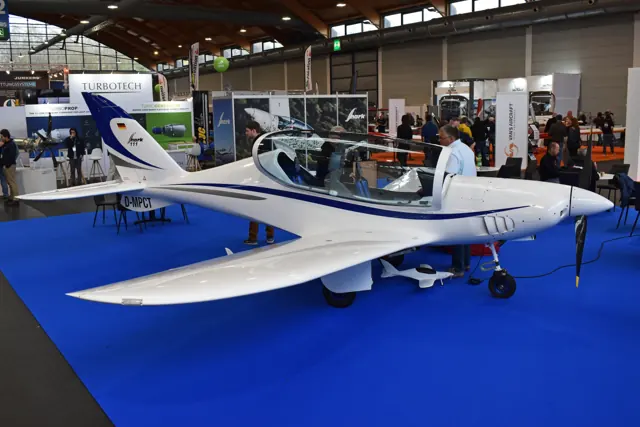
The Shark first flew in August 2009 and was built by Shark.Aero in Slovakia and the Czech Republic. Two occupants sit in tandem beneath a canopy on a streamlined low-wing airframe. Fixed and retractable landing-gear versions have been offered. Aerobask represents the Shark UL.
Aircraft background
Wikipedia contributors · Read more ↗Living with the aircraft beyond the first impression
Mareček wanted more than a brief checkout before judging the Shark. His time with it included fast journeys, slow photographic flying and varied weather, as well as rides shared with other pilots. He found the aircraft enjoyable across that range, with low-speed handling easing his initial concern about keeping company with a slower camera aircraft. Living with it also revealed details a short flight might miss.
Pilot LAA ČR 11/2023 · English translation hosted by Shark Aero. Dozens of hours in the aircraft and a separate survey of fifteen pilots; anonymous survey responses are not extra accounts.
Pilot LAA ČR / Shark Aero · Read more ↗A SkyView cockpit with a stated navigation limit
Aerobask lists synthetic vision, a touchscreen, autopilot and optional Navigraph charts. The developer says the SkyView map and flight-plan displays cannot show arrivals or approaches because of X-Plane limitations.
Shark.Aero Shark · Aerobask · X-Plane 12
Aerobask · Read more ↗Into the cockpit
 YouTube
SHARK AERO · 10 min ·
Shark aircraft features - The cockpit
Shark Aero's CEO explains details of the Shark cockpit.
Real aircraft · Shark.Aero Shark
Watch on YouTube ↗Preview images are served by AirframeDB. Videos open on YouTube only when you choose to watch.
Meet Shark.Aero Shark
The Shark first flew in August 2009 and was built by Shark.Aero in Slovakia and the Czech Republic. Two occupants sit in tandem beneath a canopy on a streamlined low-wing airframe. Fixed and retractable landing-gear versions have been offered. Aerobask represents the Shark UL.
Shark.Aero Shark
Shark.Aero → · Explore the family →
Shark.Aero Shark
Wikipedia contributors · Shark.Aero Shark ↗Aerobask · X-Plane 12 →Aircraft type designators
Use the code for the model you are flying. The linked authority lists the applicable aircraft.
History & design
Development milestones
Designer: Jaroslav Dostál, Vlado Pekár
First flight: 19 August 2009
Wikipedia contributors · Shark.Aero Shark ↗Shark.Aero Shark · family/variant named by the source · Wikipedia revision 1340856113
Pilot accounts
Living with the aircraft beyond the first impression
Mareček wanted more than a brief checkout before judging the Shark. His time with it included fast journeys, slow photographic flying and varied weather, as well as rides shared with other pilots. He found the aircraft enjoyable across that range, with low-speed handling easing his initial concern about keeping company with a slower camera aircraft.
Living with it also revealed details a short flight might miss. He appreciated the illuminated mechanical landing-gear indicators when returning at dusk, but criticised the canopy-lock arrangement and some control conventions. His affection survived those reservations. The report presents an aircraft that had become an experience in its own right for him, while remaining specific about things he wanted improved.
Pilot LAA ČR 11/2023 · English translation hosted by Shark Aero. Dozens of hours in the aircraft and a separate survey of fifteen pilots; anonymous survey responses are not extra accounts.
Read the full account · Pilot LAA ČR / Shark Aero ↗From the midnight sun to a welcome beside the Adriatic
Pruša planned a north-to-south flight to use the summer daylight, with an additional fuel tank occupying the rear seat. Friends and airport staff helped prepare the aircraft and organise the departure. Once airborne, the midnight sun behind him and the darker sky ahead made the passage south a striking personal experience.
The long flight brought repeated calculations about distance, weather and remaining fuel. Messages from friends provided company, while deteriorating conditions later required changes along the route. At Brač, a musical welcome surprised him after landing, and a swim in the Adriatic followed soon afterwards. His account reports a 3,189-kilometre journey while clearly distinguishing the attempt from a formally recognised world record.
Flying Revue 8/2024. Modified Shark 600 long-distance flight, Honningsvåg to Brač, 30 June–1 July 2024; expressly described as an unofficial record attempt.
Read the full account · Flying Revue / Shark Aero ↗An unexpected stop becomes a memory of kindness
Rutherford described a journey repeatedly reshaped by weather and changing entry rules. An unexpected diversion in Indonesia left her unable to leave a small airport’s property, sleeping in the terminal. The discomfort was tempered by helpful people and good food, making their kindness part of the memory of the flight.
Arriving in Singapore also required patience while thunderstorms complicated the approach. In the interview, she placed the journey within a wider ambition to encourage young women to pursue aviation and technical subjects. Family members helped with logistics, and rest days included university applications. The Shark’s long journey was therefore also a gap-year adventure, supported by people at home and strangers along the way.
Aerospace Singapore interview during her December 2021 stopover. Extended-range Shark loaned for her circumnavigation; the webpage’s May 2023 date is later than the conversation.
Read the full account · Aerospace Singapore / AAIS ↗In your simulator
Systems, equipment and documentation for each developer’s aircraft.
X-Plane 12Shark.Aero Shark
Aerobask · Released
Shark.Aero Shark
Aerobask · Released
Aircraft specifications
Published figures for the named real-aircraft variant. Simulator equipment and performance can differ.
| Specification | Published value |
|---|---|
| Length | 6.715 m (22 ft 0 in) |
| Wingspan | 7.90 m (25 ft 11 in) |
| Height | 2.51 m (8 ft 3 in) |
| Wing area | 9.50 m² (102.3 sq ft) |
| Empty weight | 275 kg (606 lb) |
| Max takeoff weight | 472.5 kg (1,042 lb) |
| Powerplant | 1 × Rotax 912ULS flat-four, air and liquid cooled., 73.5 kW (98.6 hp) |
| Propellers | 3-bladed Duc Hélices variable pitch composite, Woodcomp 2 blade hydraulic. |
| Maximum speed | 300 km/h (190 mph, 160 kn) |
| Cruise speed | 250 km/h (160 mph, 130 kn) economical |
| Stall speed | 64 km/h (40 mph, 35 kn) flaps down |
| Range | 2,500 km (1,550 mi, 1,350 nmi) 40 gallon tanks |
| Service ceiling | 4,100 m (13,500 ft) |
| Rate of climb | 7.4 m/s (1,460 ft/min) max, at sea level |
Manuals & resources
Find your next read
Choose a topic for a short introduction and a link to the original source. Simulator references identify the developer and edition they cover.
Simulator documentation
A SkyView cockpit with a stated navigation limitShark.Aero Shark · Aerobask · X-Plane 12
Aerobask lists synthetic vision, a touchscreen, autopilot and optional Navigraph charts. The developer says the SkyView map and flight-plan displays cannot show arrivals or approaches because of X-Plane limitations.
Aerobask Shark UL · X-Plane12; Navigraph subscription required for charts
Aerobask · Read the source ↗Bring individual instruments into viewShark.Aero Shark · Aerobask · X-Plane 12
The feature list offers instrument popups, popouts and custom options, including engine monitoring, an electric propeller regulator, standby instruments and a rear-seat attitude module.
Developer feature list; no unlisted equipment compatibility inferred
Aerobask · Read the source ↗Configure switches and return to saved settingsShark.Aero Shark · Aerobask · X-Plane 12
Aerobask lists functional breaker-switches with configurable reliability, flap-extension and gear-retraction protection, and persistence for many settings between flights.
Shark UL X-Plane12 feature list
Aerobask · Read the source ↗Sound and visibility respond to the flightShark.Aero Shark · Aerobask · X-Plane 12
The listed FMOD environment is by Daniela Rodriguez Careri, with a simulated headset and exterior sound effects. Windshield effects include reflections, rain and frost.
Developer attribution; documented features, without a runtime-fidelity claim
Aerobask · Read the source ↗Pilot account
Living with the aircraft beyond the first impressionPilot LAA ČR 11/2023 · English translation hosted by Shark Aero. Dozens of hours in the aircraft and a separate survey of fifteen pilots; anonymous survey responses are not extra accounts.
Mareček wanted more than a brief checkout before judging the Shark. His time with it included fast journeys, slow photographic flying and varied weather, as well as rides shared with other pilots. He found the aircraft enjoyable across that range, with low-speed handling easing his initial concern about keeping company with a slower camera aircraft. Living with it also revealed details a short flight might miss.
Martin Mareček
Pilot LAA ČR / Shark Aero · Read the source ↗From the midnight sun to a welcome beside the AdriaticFlying Revue 8/2024. Modified Shark 600 long-distance flight, Honningsvåg to Brač, 30 June–1 July 2024; expressly described as an unofficial record attempt.
Pruša planned a north-to-south flight to use the summer daylight, with an additional fuel tank occupying the rear seat. Friends and airport staff helped prepare the aircraft and organise the departure. Once airborne, the midnight sun behind him and the darker sky ahead made the passage south a striking personal experience. The long flight brought repeated calculations about distance, weather and remaining fuel.
Jiří Pruša
Flying Revue / Shark Aero · Read the source ↗Read the original documentation from the people who created it. Manuals open on their publisher’s website.
Aircraft background
Shark.Aero SharkWikipedia contributors · Research background · retrieved 2026-09-12Product
Shark ULAerobask · Official developer / designated store catalogue · checked 2026-09-12Type designator
ICAO Doc 8643 — aircraft type designatorsInternational Civil Aviation Organization · Public search data retrieved 2026-09-14; authority update 2026-09-03Built-in force-feedback profiles
Read the documentary basis, editable starting settings and remaining questions for the aircraft you fly. Each explanation refers to the exact profile revision shown.
Catalogue programme-20261022-v1 · 2 profile choices
Aerobask Shark UL
Aerobask · Free and Pro · Revision 3 · Inherited starting point
X-Plane 12
Aerobask Shark UL: The selected response supplies light-aircraft stick loading.
Shark.Aero Shark
Free and Pro · Revision 1 · Partial review
X-Plane 12
Shark.Aero Shark: The selected response supplies light-aircraft stick loading.
Aerobask Shark UL
Aerobask Shark UL: The selected response supplies light-aircraft stick loading.
Aircraft and simulator scope
- Aerobask Shark UL · Aerobask · X-Plane 12 · Add-on starting point
The simulator model and controls
The Shark first flew in August 2009 and was built by Shark.Aero in Slovakia and the Czech Republic. Two occupants sit in tandem beneath a canopy on a streamlined low-wing airframe. Fixed and retractable landing-gear versions have been offered. Aerobask represents the Shark UL.
This profile selects Aerobask Shark UL for X-Plane 12.
How this profile feels
The selected response supplies light-aircraft stick loading. Spring resistance builds with the selected airspeed response. A separate aerodynamic term adds speed-dependent control load.
Configured trim response is separate from gear/flap protection logic. Pitch-trim relief is off. Autopilot following is off.
Controls and trim
The Shark is a tandem ultralight with retractable-gear and flap protections. Its optional SkyView/SV-AP and navigation equipment have their own implementation limits, independent of the underlying control linkage.
The selected implementation
Aerobask’s tandem Shark has retractable gear and flap/gear protections with a custom SkyView/SV-AP panel.
About the values
The gains are normalized profile settings. They describe the chosen effect balance; hand force depends on the device and its output limits. IAS references are tuning values rather than operating limits. Physical acceptance of this revision remains pending.
Documentary review and sources
These decisions describe the documentary basis and remaining gaps for this revision. Aircraft documentation and a starting setting describe different kinds of evidence.
Aircraft and variant
InheritedThis profile selects Aerobask Shark UL for X-Plane 12.
Flight controls
InheritedThe Shark is a tandem ultralight with retractable-gear and flap protections. Its optional SkyView/SV-AP and navigation equipment have their own implementation limits, independent of the underlying control linkage.
Trim
InheritedConfigured trim response is separate from gear/flap protection logic. Pitch relief is off, with stored authority 0; roll authority is 0.
Autopilot and stability
InheritedAutopilot following is off; the configured spring and load retain the hardware feel.
Equipment
InheritedAerobask’s tandem Shark has retractable gear and flap/gear protections with a custom SkyView/SV-AP panel.
Speeds and limits
InheritedThe indicated-speed references set the profile response scale; they are separate from aircraft operating limits.
Simulator integration
InheritedThe profile targets xplane12. Add-on-specific controls use only the supported references configured by this profile.
Force-feedback settings
InheritedThe settings define the profile’s effect balance. Device output limits affect physical hand force.
Starting settings and their rationale
These configured values are starting estimates. The explanations describe what each setting controls; physical validation appears separately below.
| Setting | Starting value | What it controls and why |
|---|---|---|
| Spring strength | Starting value0.74 | What it controls and whyThe selected response supplies light-aircraft stick loading. The baseline spring is 0.74. Its low-speed blend reaches baseline strength at 62.5 KIAS. |
| Master force gain | Starting value0.85 | What it controls and whyScales overall profile strength while preserving effect balance, subject to device and output limits. |
| Profile force gain | Starting value0.8 | What it controls and whyThe aerodynamic-load gain is 0.8 with an indicated-speed reference of 125 KIAS. This supplies speed-dependent loading alongside the spring. |
| Force tuning speed/reference | Starting value125 kt | What it controls and whySets the IAS reference for aerodynamic loading. It is an estimate, not published cruise TAS or a flight limit. |
| Spring response reference speed | Starting value62.5 kt | What it controls and whySets the IAS where the low-speed blend reaches baseline strength; high-speed stiffening also uses it. |
| Aileron force scale | Starting value0.72 | What it controls and whyRoll and pitch aerodynamic scales are 0.72 and 1, respectively. They set the aerodynamic axis balance. No custom spring-travel curve is enabled. |
| Elevator force scale | Starting value1 | What it controls and whyScales pitch aerodynamic loading; pitch spring travel and trim responses are separate settings. |
| Trim feel | Starting valueDisabled | What it controls and whyRetained for compatibility and group membership. Trim relief, rather than this flag, controls centre movement. |
| Trim relief | Starting valueDisabled | What it controls and whyAllows trim relief with supported control law and valid telemetry. Axis authorities set its amount. |
| Autopilot follow | Starting valueDisabled | What it controls and whyAutopilot following is off; the configured spring and load retain the hardware feel. |
| Autopilot neutral hold | Starting valueDisabled | What it controls and whyPermits centering hold during a supported AP state, separate from following a moving target. |
| Output force limit | Starting value0.55 | What it controls and whyCaps directed-force output. Native spring effects and device limits remain separate. |
All 44 starting settings and their rationale
The settings define the profile’s effect balance. Device output limits affect physical hand force.
| Setting | Starting value | What it controls and why |
|---|---|---|
| Spring strength | Starting value0.74 | What it controls and whyThe selected response supplies light-aircraft stick loading. The baseline spring is 0.74. Its low-speed blend reaches baseline strength at 62.5 KIAS. |
| Spring deadband | Starting value0.045 | What it controls and whySets travel around the centre before the baseline spring resists. Smaller values engage it sooner. |
| Profile force gain | Starting value0.8 | What it controls and whyThe aerodynamic-load gain is 0.8 with an indicated-speed reference of 125 KIAS. This supplies speed-dependent loading alongside the spring. |
| Master force gain | Starting value0.85 | What it controls and whyScales overall profile strength while preserving effect balance, subject to device and output limits. |
| QBlend Enabled | Starting valueEnabled | What it controls and whyAllows baseline spring strength to rise with indicated airspeed where the control law permits it. |
| QSpring Minimum Factor | Starting value0.5 | What it controls and whySets low-speed spring strength as a fraction of baseline when blending is enabled. One keeps full strength. |
| QSpring Start Knots | Starting value8 kt | What it controls and whySets the IAS where the low-speed spring blend starts rising. This is a feel threshold, not a flight limit. |
| Spring response reference speed | Starting value62.5 kt | What it controls and whySets the IAS where the low-speed blend reaches baseline strength; high-speed stiffening also uses it. |
| Force tuning speed/reference | Starting value125 kt | What it controls and whySets the IAS reference for aerodynamic loading. It is an estimate, not published cruise TAS or a flight limit. |
| Airspeed spring stiffening gain | Starting value0.15 | What it controls and whyThe high-speed spring-stiffening gain is 0.15. It strengthens the permitted spring response above 62.5 KIAS, with the squared-speed ratio capped at 5. |
| Airspeed spring stiffening limit | Starting value5 | What it controls and whyLimits the squared airspeed ratio used for high-speed spring stiffening; it is not a device-force cap. |
| Aileron force scale | Starting value0.72 | What it controls and whyRoll and pitch aerodynamic scales are 0.72 and 1, respectively. They set the aerodynamic axis balance. No custom spring-travel curve is enabled. |
| Elevator force scale | Starting value1 | What it controls and whyScales pitch aerodynamic loading; pitch spring travel and trim responses are separate settings. |
| Output force limit | Starting value0.55 | What it controls and whyCaps directed-force output. Native spring effects and device limits remain separate. |
| Trim feel | Starting valueDisabled | What it controls and whyRetained for compatibility and group membership. Trim relief, rather than this flag, controls centre movement. |
| Trim relief | Starting valueDisabled | What it controls and whyAllows trim relief with supported control law and valid telemetry. Axis authorities set its amount. |
| Elevator Authority | Starting value0 | What it controls and whyConfigured trim response is separate from gear/flap protection logic. Pitch relief is off, with stored authority 0; roll authority is 0. |
| Aileron Authority | Starting value0 | What it controls and whyScales supported roll-trim relief and permitted centre movement. Zero removes roll response. |
| Force Trim Enabled | Starting valueDisabled | What it controls and whyEnables local force trim, separate from aircraft-owned trim and add-on integration qualification. |
| GLoad Enabled | Starting valueEnabled | What it controls and whyAllows load-factor changes to modify permitted spring laws. Passive fly-by-wire feel can suppress it. |
| Rate Damping Enabled | Starting valueEnabled | What it controls and whyEnables rate damping with the configured coefficients and control law. |
| Autopilot follow | Starting valueDisabled | What it controls and whyAutopilot following is off; the configured spring and load retain the hardware feel. |
| Autopilot follow authority | Starting value0.1 | What it controls and whySets admitted AP-follow gain, not a percentage of travel. Runtime ownership and input limits still apply. |
| Autopilot neutral hold | Starting valueDisabled | What it controls and whyPermits centering hold during a supported AP state, separate from following a moving target. |
| Autopilot neutral hold strength | Starting value0.6 | What it controls and whySets admitted AP neutral-hold strength; inactive while neutral hold is disabled. |
| Enabled | Starting valueEnabled | What it controls and whyEnables aerodynamic cues; each still needs nonzero strength and its simulator conditions. |
| Gain | Starting value0.35 | What it controls and whySets stall-buffet strength. Zero removes the cue without changing simulator stalls or warnings. |
| Gain | Starting value0 | What it controls and whySets high-Mach buffet strength; onset and full-strength thresholds are separate. |
| Gain | Starting value0 | What it controls and whySets flap buffet at the configured position and speed gates. Flap movement texture is separate. |
| Maximum flap index | Starting value3 | What it controls and whySets the final flap index for detent normalization. UP plus three detents uses maximum index3. |
| Minimum flap index | Starting value2 | What it controls and whySets the first flap detent that admits buffet; this is a handle index, not degrees. |
| Gain | Starting value0 | What it controls and whySets gear aerodynamic buffet; movement and ground-contact cues are separate. |
| Shaker Enabled | Starting valueDisabled | What it controls and whyPermits shaker at supported warning conditions; the switch does not establish aircraft equipment. |
| Stick shaker amplitude | Starting value0.5 | What it controls and whySets triggered shaker strength; inactive while the shaker feature is disabled. |
| Enabled | Starting valueEnabled | What it controls and whyEnables ground effects; each still needs its own strength and contact or motion telemetry. |
| Gain | Starting value0.4 | What it controls and whySets rolling texture strength, modified by speed, surface and undercarriage configuration. |
| Gain | Starting value0.25 | What it controls and whySets gear-bump texture during ground motion, separate from touchdown impact. |
| Gain | Starting value0.65 | What it controls and whySets landing-impact strength; landing telemetry and response shape determine the pulse. |
| Gain | Starting value0 | What it controls and whySets reverse-thrust vibration with valid reverser and engine conditions. Zero removes the cue. |
| Enabled | Starting valueEnabled | What it controls and whyEnables engine cues with nonzero settings and valid running-engine telemetry. |
| Gain | Starting value0.12 | What it controls and whySets estimated engine vibration using configured telemetry and response, not measured cockpit vibration. |
| Enabled | Starting valueEnabled | What it controls and whyEnables accessory cues with configured strengths and observed accessory movement. |
| Gain | Starting value0.12 | What it controls and whySets texture from observed flap movement; a command without movement does not establish the cue. |
| Gain | Starting value0.12 | What it controls and whySets texture from observed gear movement, separate from aerodynamic and touchdown effects. |
Limits and open questions
- Aerobask Shark UL; xplane12. Previously observed titles and implementation identifiers are retained; installed matching remains deferred.
- This profile uses a conventional manual-control engineering approximation. Published product features establish configuration, but do not supply a measured linkage/force curve; FADEC and avionics are not evidence of FBW.
- Published product source does not specify the complete add-on trim-to-inceptor relationship. Automatic neutral shift is disabled pending that relationship; no false roll tab or cross-developer trim coefficient is added.
- Custom SkyView/SV-AP panel; the developer documents limited arrival/approach display support, not a servo interface. AP servo-follow and neutral hold remain disabled; engagement indicators are not force-demand signals.
- Shark tandem ultralight with retracting-gear and flap protections. Optional avionics do not create a different control linkage.
- 125 KIAS is an estimated feel reference, not cruise TAS or a certified limit. No invented Mach, VNE or weight scheduling.
- Read-only native telemetry for aircraft motion and accessory positions. Custom switches, display animations and mode lamps are not calibrated servo targets. No unverified LVars/datarefs or simulator writes.
- Spring 0.74; lateral scale 0.72; trim authorities 0/0; per-axis output cap 0.55. Editable engineering estimates, not measured hand forces. No body-rate torque, surface following or fabricated hydraulic-failure loads.
- New physical and installed-product checks deferred by owner. Existing separately recorded acceptance retains its original device, simulator, add-on and version limits. Source review does not broaden custom telemetry acceptance.
- Only actual accessory position changes drive movement texture; static drag and command-triggered kicks are disabled. Select and save an aircraft default when telemetry lacks a discriminating developer/configuration identity.
Physical validation
No physical force validation is recorded in this public catalogue for this revision. Documentary review and software checks do not establish how a particular device feels.
Discuss this aircraft (0)
Questions, observations and useful sources from the community.
No published discussions yet. Bring a question or share a useful source.
Open aircraft discussions →Content expanded · What’s new
Something missing or a source that needs attention?
Suggest a correction ↗