
Start here
A few places to begin, from the aircraft’s story to the people who fly it.
Meet the aircraft
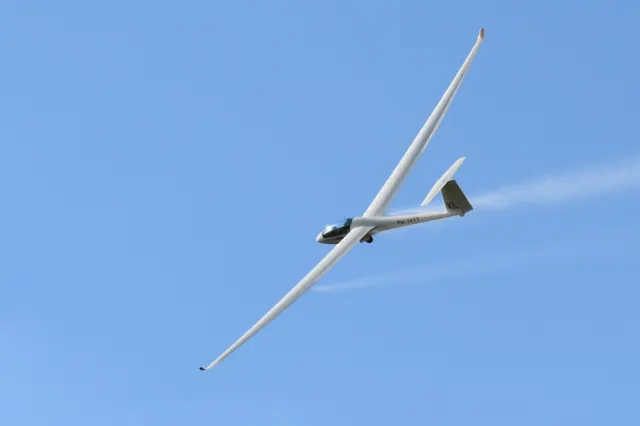
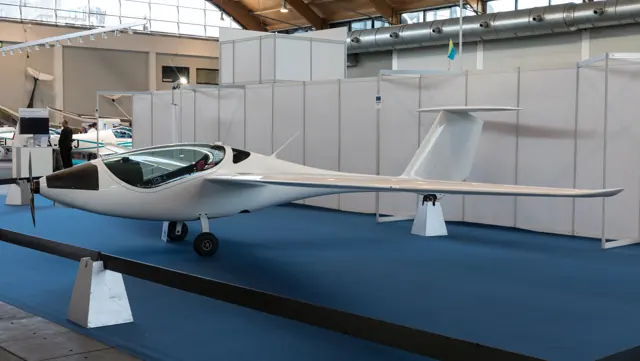
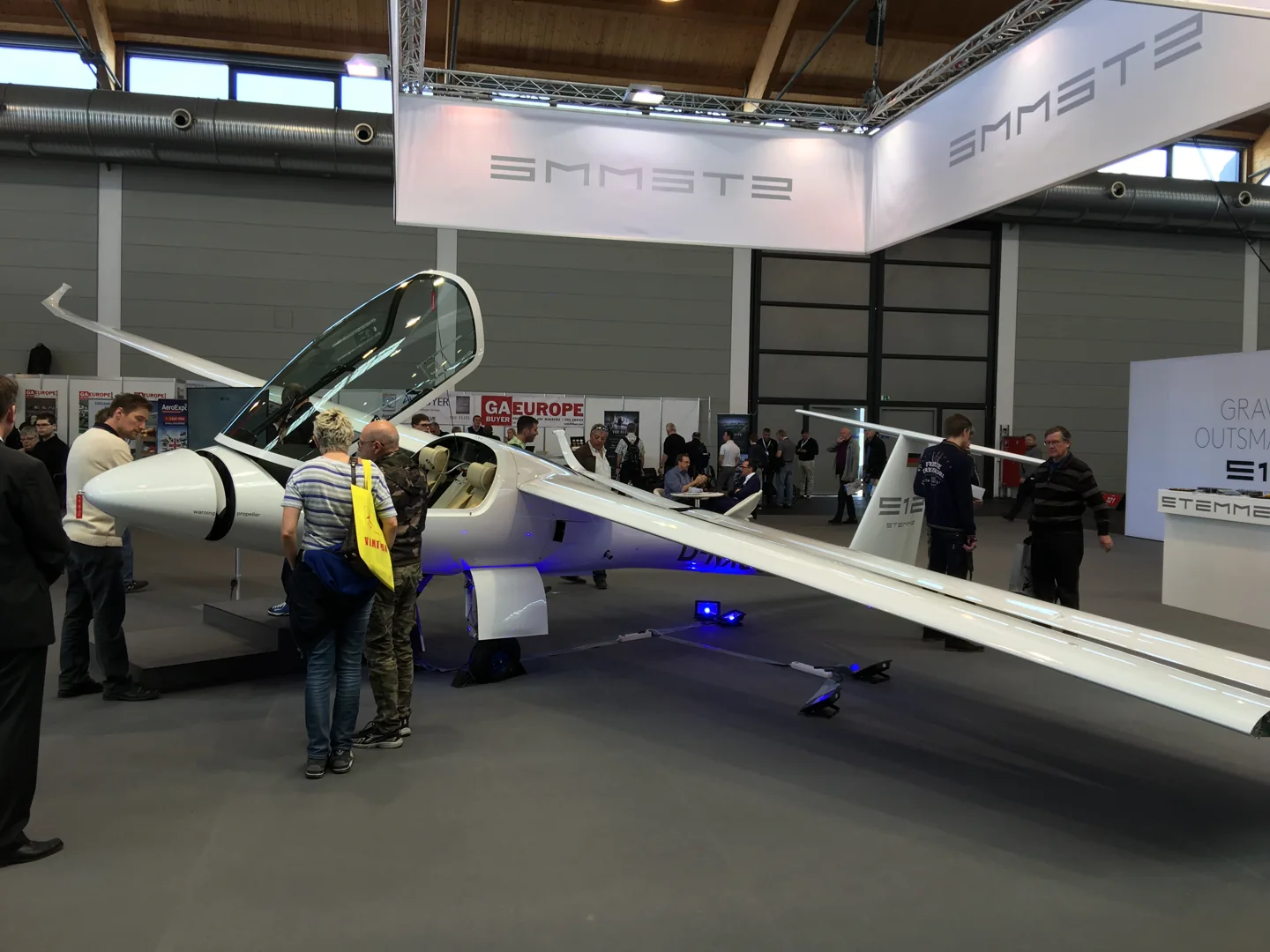
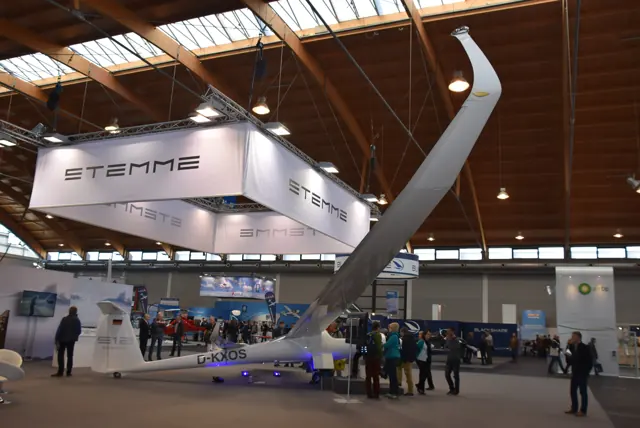
Stemme places the engine within the fuselage and drives a propeller that folds into the nose for gliding flight. Side-by-side seats and long wings combine powered touring with soaring.
Aircraft background
Wikipedia contributors · Read more ↗Berlin sightseeing becomes his first glider landing
Stagnito joined Martin Just in an aircraft awaiting delivery to its new owner. Just handled the crosswind takeoff, then handed over the controls for a flight above Berlin. The direct control feel appealed to Stagnito, while familiar landmarks below supplied plenty of reasons to reach for his camera. The hoped-for lift failed to appear, so the flight returned towards Strausberg.
AOPA Pilot · September 2025. Spring flight in a 2025 S12-G with 71 ft wings at Strausberg, with instructor Martin Just. This is the shorter-wing configuration.
AOPA Pilot · Read more ↗Bring the propeller into the nose
The cockpit guide labels separate propeller-brake, propeller-position and nose-cone controls. The feature list describes simulated braking and stowing.
S12G · Microsoft Flight Simulator · MSFS 2024
Microsoft / aircraft developers · Read more ↗Into the cockpit
 YouTube
Glider Airstrip · 2 min ·
Dream Journey: Stemme S12G First Flight from Strausberg to the Alps
A Stemme S12G journey from Strausberg towards the Alps.
Real aircraft · Stemme S12G
Watch on YouTube ↗Preview images are served by AirframeDB. Videos open on YouTube only when you choose to watch.
Meet Stemme S12G
Stemme places the engine within the fuselage and drives a propeller that folds into the nose for gliding flight. Side-by-side seats and long wings combine powered touring with soaring.
The MSFS S12G is a later development. S10 references describe the underlying concept, while the S12G manual documents its propulsion controls and cockpit. Photographs of the S10 are labelled as family background.
Stemme S12G
Aircraft type designators
Use the code for the model you are flying. The linked authority lists the applicable aircraft.
Stemme S12G — motorglider with a retractable engine or folding/retractable propeller; ICAO special designator
ICAO — special designators ↗Checked 2026-09-14History & design
Development milestones
First flight: 1986
Wikipedia contributors · Stemme S10 ↗Stemme S10 · family/variant named by the source · Wikipedia revision 1361362058
Pilot accounts
Berlin sightseeing becomes his first glider landing
Stagnito joined Martin Just in an aircraft awaiting delivery to its new owner. Just handled the crosswind takeoff, then handed over the controls for a flight above Berlin. The direct control feel appealed to Stagnito, while familiar landmarks below supplied plenty of reasons to reach for his camera.
The hoped-for lift failed to appear, so the flight returned towards Strausberg. Stowing the propeller changed the experience abruptly: without engine noise, they removed their headsets and talked normally. Just then coached Stagnito through his first glider landing, helping with the airbrakes on final.
AOPA Pilot · September 2025. Spring flight in a 2025 S12-G with 71 ft wings at Strausberg, with instructor Martin Just. This is the shorter-wing configuration.
Read the full account · AOPA Pilot ↗Using the engine to reach another piece of the Alps
Marzinzik’s flight towards the Zugspitze mixed powered climbing, ridge lift and rough spring thermals. The hoped-for wind was weaker than forecast, and a promising climb later disappeared. With the next wave cloud still beyond reach, restarting the engine offered a straightforward way to continue exploring the mountains.
He found that change psychologically different from using an auxiliary engine to end an unsuccessful soaring flight. Here, powered flight felt like part of the journey. Once higher, they returned to gliding and passed near the summit station before heading back to Innsbruck.
aerokurier · June 2017. March flight from Innsbruck with Markus Lewandowski in the 25 m S12 Twin Voyager, serial 6; a long-wing family variant.
Read the full account · aerokurier ↗Quiet flight and hard work over familiar Danish ground
Trabolt enjoyed the sudden quiet when the engine stopped and the propeller disappeared into the nose. Flying back towards his home airfield in a strong headwind showed how readily the aircraft could alternate between powered travel and gliding. Later, a small thermal offered a more demanding test of its soaring side.
Holding the large aircraft in the narrow lift took patience and enough rudder effort to leave his leg cramped, although the eventual height gain impressed him. He also disliked the flap selector and the additional control friction he attributed to the autopilot. The return brought a reminder of the powerful wheel brakes.
Nordic Gliding · July 2018. D-KVOY, a 25 m S12, with demonstration pilot Wolf-Rudiger Kruhl at Gørløse; distinct from the short-wing S12-G flown in the AOPA report.
Read the full account · Nordic Gliding ↗In your simulator
Systems, equipment and documentation for each developer’s aircraft.
MSFS 2024S12G
Microsoft Flight Simulator · Released
S12G
Microsoft Flight Simulator · Released
Aircraft specifications
Published figures for the named real-aircraft variant. Simulator equipment and performance can differ.
| Specification | Published value |
|---|---|
| Length | 8.42 m (27 ft 7 in) |
| Wingspan | 23.00 m (75 ft 6 in) (excluding winglets) |
| Height | 1.80 m (5 ft 11 in) |
| Wing area | 18.70 m² (201 sq ft) |
| Empty weight | 645 kg (1,422 lb) |
| Gross weight | 850 kg (1,874 lb) |
| Powerplant | 1 × Rotax 914 F2/S1 turbocharged flat-four engine, 84.6 kW (113 hp) |
| Propellers | 2-bladed |
| Cruise speed | 259 km/h (161 mph, 140 kn) |
| Stall speed | 78 km/h (48 mph, 42 kn) |
| Range | 1,730 km (1,075 mi, 934 nmi) (maximum fuel) |
| Service ceiling | 9,140 m (30,000 ft) |
| Rate of climb | 4.0 m/s (790 ft/min) |
Manuals & resources
Find your next read
Choose a topic for a short introduction and a link to the original source. Simulator references identify the developer and edition they cover.
Simulator documentation
Bring the propeller into the noseS12G · Microsoft Flight Simulator · MSFS 2024
The cockpit guide labels separate propeller-brake, propeller-position and nose-cone controls. The feature list describes simulated braking and stowing.
Got Friends S12-G manual v3 · MSFS2024, PDF pages5 and8
Microsoft / aircraft developers · Read the source ↗Some labelled controls are inoperableS12G · Microsoft Flight Simulator · MSFS 2024
The manual explicitly marks the TCU emergency switch and canopy-jettison handle as inoperable. Their presence in the illustrated cockpit does not establish a working simulated function.
Manual PDF page8; stated implementation limits
Microsoft / aircraft developers · Read the source ↗A sailplane cockpit with separate engine electricsS12G · Microsoft Flight Simulator · MSFS 2024
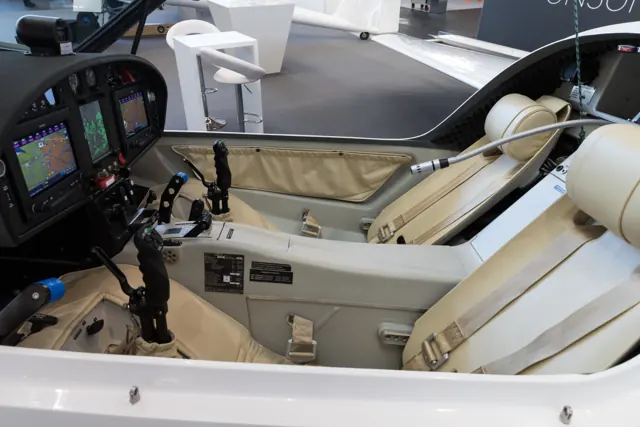
The Stemme S12G manual identifies digital trim indication and gliding instruments, together with separate engine and airframe electrical controls. The propulsion installation is part of a self-launching sailplane, so its controls have a different purpose from those in a conventional touring single.
Archived simulator manual; installed package revision not observed · PDF p.8; cockpit
Microsoft / aircraft developers · Read the source ↗Powered-flight displays meet soaring instrumentsS12G · Microsoft Flight Simulator · MSFS 2024
Working Title G3X Touch displays sit alongside the custom LX navigation and variometer suite. A yaw string and conventional airspeed and altitude instruments remain part of the illustrated panel.
Manual PDF pages5 and8
Microsoft / aircraft developers · Read the source ↗Use the EFB for the aircraft checklistS12G · Microsoft Flight Simulator · MSFS 2024
The MSFS2024 chapter describes interactive EFB checklists with location highlighting and progress tracking. The canopy handles are documented as the MSFS2024 entry and exit interaction.
Manual PDF pages7 and11
Microsoft / aircraft developers · Read the source ↗Pilot account
Berlin sightseeing becomes his first glider landingAOPA Pilot · September 2025. Spring flight in a 2025 S12-G with 71 ft wings at Strausberg, with instructor Martin Just. This is the shorter-wing configuration.
Stagnito joined Martin Just in an aircraft awaiting delivery to its new owner. Just handled the crosswind takeoff, then handed over the controls for a flight above Berlin. The direct control feel appealed to Stagnito, while familiar landmarks below supplied plenty of reasons to reach for his camera. The hoped-for lift failed to appear, so the flight returned towards Strausberg.
Kollin Stagnito
AOPA Pilot · Read the source ↗Using the engine to reach another piece of the Alpsaerokurier · June 2017. March flight from Innsbruck with Markus Lewandowski in the 25 m S12 Twin Voyager, serial 6; a long-wing family variant.
Marzinzik’s flight towards the Zugspitze mixed powered climbing, ridge lift and rough spring thermals. The hoped-for wind was weaker than forecast, and a promising climb later disappeared. With the next wave cloud still beyond reach, restarting the engine offered a straightforward way to continue exploring the mountains. He found that change psychologically different from using an auxiliary engine to end an unsuccessful soaring flight. Here, powered flight felt like part of the journey.
Gerhard Marzinzik
aerokurier · Read the source ↗Read the original documentation from the people who created it. Manuals open on their publisher’s website.
Manual
Microsoft Flight Simulator aircraft manualsMicrosoft / aircraft developers Stemme S12-G ManualMicrosoft / aircraft developersAircraft background
Stemme S10Wikipedia contributors · Research background · Wikipedia revision 1361362058 · retrieved 2026-09-12Resource
MSFS 2024 FAQ and edition aircraft inventoryMicrosoftType designator
ICAO — special designatorsInternational Civil Aviation Organization · Glider and motorglider categories; checked 2026-09-14Built-in force-feedback profiles
Read the documentary basis, editable starting settings and remaining questions for the aircraft you fly. Each explanation refers to the exact profile revision shown.
Catalogue programme-20261022-v1 · 1 profile choice
Stemme S12G
Free and Pro · Revision 1 · Partial review
MSFS 2024
Stemme S12G: The selected resistance supplies motor-glider stick loading.
Stemme S12G
Stemme S12G: The selected resistance supplies motor-glider stick loading.
Aircraft and simulator scope
- Stemme S12G · MSFS 2024 · family starting point
Stemme S12G · Family sources identify only the variants and product versions described above.
The simulator model and controls
Stemme places the engine within the fuselage and drives a propeller that folds into the nose for gliding flight. Side-by-side seats and long wings combine powered touring with soaring.
This starting point selects Stemme S12G. Its aircraft-level settings do not select a particular developer’s custom systems.
How this profile feels
The selected resistance supplies motor-glider stick loading. Spring resistance builds with the selected airspeed response. A separate aerodynamic term adds speed-dependent control load.
Pitch relief is separate from propulsion deployment and gliding configuration. Valid trim provides the configured pressure relief. Autopilot following is off.
Controls and trim
The Stemme places its engine inside the fuselage and drives a propeller that folds into the nose for soaring. Long wings and side-by-side seating combine sailplane and touring roles. The S12G cockpit is a later model within that design lineage.
About the values
The gains are normalized profile settings. They describe the chosen effect balance; hand force depends on the device and its output limits. IAS references are tuning values rather than operating limits. Physical acceptance of this revision remains pending.
What the documentation establishes
Microsoft identifies Stemme S12G with Rotax 914 configuration.
Manual lists flaps at -10/-5/0/5/10/16 degrees, airbrakes and two-blade propeller.
Documentary review and sources
These decisions describe the documentary basis and remaining gaps for this revision. Aircraft documentation and a starting setting describe different kinds of evidence.
Aircraft and variant
ReviewedThis starting point selects Stemme S12G. Its aircraft-level settings do not select a particular developer’s custom systems.
Flight controls
Not yet reviewedThe Stemme places its engine inside the fuselage and drives a propeller that folds into the nose for soaring. Long wings and side-by-side seating combine sailplane and touring roles. The S12G cockpit is a later model within that design lineage.
Trim
Not yet reviewedPitch relief is separate from propulsion deployment and gliding configuration. Pitch authority 0.3 provides load relief and permitted centre movement; roll authority is 0.1.
Autopilot and stability
Not yet reviewedAutopilot following is off; the configured spring and load retain the hardware feel.
Equipment
ReviewedGear, flap and ground cues follow the selected settings and available simulator-reported states.
Speeds and limits
Not yet reviewedThe indicated-speed references set the profile response scale; they are separate from aircraft operating limits.
Simulator integration
Not yet reviewedThe profile targets msfs2024. Add-on-specific controls use only the supported references configured by this profile.
Force-feedback settings
Not yet reviewedThe settings define the profile’s effect balance. Device output limits affect physical hand force.
Starting settings and their rationale
These configured values are starting estimates. The explanations describe what each setting controls; physical validation appears separately below.
| Setting | Starting value | What it controls and why |
|---|---|---|
| Spring strength | Starting value0.74 | What it controls and whyThe selected resistance supplies motor-glider stick loading. The baseline spring is 0.74. Its low-speed blend reaches baseline strength at 42.5 KIAS. |
| Master force gain | Starting value0.85 | What it controls and whyScales overall profile strength while preserving effect balance, subject to device and output limits. |
| Profile force gain | Starting value1 | What it controls and whyThe aerodynamic-load gain is 1 with an indicated-speed reference of 85 KIAS. This supplies speed-dependent loading alongside the spring. |
| Force tuning speed/reference | Starting value85.0 kt | What it controls and whySets the IAS reference for aerodynamic loading. It is an estimate, not published cruise TAS or a flight limit. |
| Spring response reference speed | Starting value42.5 kt | What it controls and whySets the IAS where the low-speed blend reaches baseline strength; high-speed stiffening also uses it. |
| Aileron force scale | Starting value0.6 | What it controls and whyRoll and pitch aerodynamic scales are 0.6 and 0.78, respectively. They set the aerodynamic axis balance. No custom spring-travel curve is enabled. |
| Elevator force scale | Starting value0.78 | What it controls and whyScales pitch aerodynamic loading; pitch spring travel and trim responses are separate settings. |
| Trim feel | Starting valueEnabled | What it controls and whyRetained for compatibility and group membership. Trim relief, rather than this flag, controls centre movement. |
| Trim relief | Starting valueEnabled | What it controls and whyAllows trim relief with supported control law and valid telemetry. Axis authorities set its amount. |
| Autopilot follow | Starting valueDisabled | What it controls and whyAutopilot following is off; the configured spring and load retain the hardware feel. |
| Autopilot neutral hold | Starting valueDisabled | What it controls and whyPermits centering hold during a supported AP state, separate from following a moving target. |
| Output force limit | Starting value0.55 | What it controls and whyCaps directed-force output. Native spring effects and device limits remain separate. |
All 44 starting settings and their rationale
The settings define the profile’s effect balance. Device output limits affect physical hand force.
| Setting | Starting value | What it controls and why |
|---|---|---|
| Spring strength | Starting value0.74 | What it controls and whyThe selected resistance supplies motor-glider stick loading. The baseline spring is 0.74. Its low-speed blend reaches baseline strength at 42.5 KIAS. |
| Spring deadband | Starting value0.04 | What it controls and whySets travel around the centre before the baseline spring resists. Smaller values engage it sooner. |
| Profile force gain | Starting value1 | What it controls and whyThe aerodynamic-load gain is 1 with an indicated-speed reference of 85 KIAS. This supplies speed-dependent loading alongside the spring. |
| Master force gain | Starting value0.85 | What it controls and whyScales overall profile strength while preserving effect balance, subject to device and output limits. |
| QBlend Enabled | Starting valueEnabled | What it controls and whyAllows baseline spring strength to rise with indicated airspeed where the control law permits it. |
| QSpring Minimum Factor | Starting value0.4 | What it controls and whySets low-speed spring strength as a fraction of baseline when blending is enabled. One keeps full strength. |
| QSpring Start Knots | Starting value11.9 kt | What it controls and whySets the IAS where the low-speed spring blend starts rising. This is a feel threshold, not a flight limit. |
| Spring response reference speed | Starting value42.5 kt | What it controls and whySets the IAS where the low-speed blend reaches baseline strength; high-speed stiffening also uses it. |
| Force tuning speed/reference | Starting value85.0 kt | What it controls and whySets the IAS reference for aerodynamic loading. It is an estimate, not published cruise TAS or a flight limit. |
| Airspeed spring stiffening gain | Starting value0.3 | What it controls and whyThe high-speed spring-stiffening gain is 0.3. It strengthens the permitted spring response above 42.5 KIAS, with the squared-speed ratio capped at 5. |
| Airspeed spring stiffening limit | Starting value5 | What it controls and whyLimits the squared airspeed ratio used for high-speed spring stiffening; it is not a device-force cap. |
| Aileron force scale | Starting value0.6 | What it controls and whyRoll and pitch aerodynamic scales are 0.6 and 0.78, respectively. They set the aerodynamic axis balance. No custom spring-travel curve is enabled. |
| Elevator force scale | Starting value0.78 | What it controls and whyScales pitch aerodynamic loading; pitch spring travel and trim responses are separate settings. |
| Output force limit | Starting value0.55 | What it controls and whyCaps directed-force output. Native spring effects and device limits remain separate. |
| Trim feel | Starting valueEnabled | What it controls and whyRetained for compatibility and group membership. Trim relief, rather than this flag, controls centre movement. |
| Trim relief | Starting valueEnabled | What it controls and whyAllows trim relief with supported control law and valid telemetry. Axis authorities set its amount. |
| Elevator Authority | Starting value0.3 | What it controls and whyPitch relief is separate from propulsion deployment and gliding configuration. Pitch authority 0.3 provides load relief and permitted centre movement; roll authority is 0.1. |
| Aileron Authority | Starting value0.1 | What it controls and whyScales supported roll-trim relief and permitted centre movement. Zero removes roll response. |
| Force Trim Enabled | Starting valueDisabled | What it controls and whyEnables local force trim, separate from aircraft-owned trim and add-on integration qualification. |
| GLoad Enabled | Starting valueEnabled | What it controls and whyAllows load-factor changes to modify permitted spring laws. Passive fly-by-wire feel can suppress it. |
| Rate Damping Enabled | Starting valueEnabled | What it controls and whyEnables rate damping with the configured coefficients and control law. |
| Autopilot follow | Starting valueDisabled | What it controls and whyAutopilot following is off; the configured spring and load retain the hardware feel. |
| Autopilot follow authority | Starting value0.05 | What it controls and whySets admitted AP-follow gain, not a percentage of travel. Runtime ownership and input limits still apply. |
| Autopilot neutral hold | Starting valueDisabled | What it controls and whyPermits centering hold during a supported AP state, separate from following a moving target. |
| Autopilot neutral hold strength | Starting value0.6 | What it controls and whySets admitted AP neutral-hold strength; inactive while neutral hold is disabled. |
| Enabled | Starting valueEnabled | What it controls and whyEnables aerodynamic cues; each still needs nonzero strength and its simulator conditions. |
| Gain | Starting value0.4 | What it controls and whySets stall-buffet strength. Zero removes the cue without changing simulator stalls or warnings. |
| Gain | Starting value0 | What it controls and whySets high-Mach buffet strength; onset and full-strength thresholds are separate. |
| Gain | Starting value0.14 | What it controls and whySets flap buffet at the configured position and speed gates. Flap movement texture is separate. |
| Maximum flap index | Starting value5 | What it controls and whySets the final flap index for detent normalization. UP plus three detents uses maximum index3. |
| Minimum flap index | Starting value2 | What it controls and whySets the first flap detent that admits buffet; this is a handle index, not degrees. |
| Gain | Starting value0.1 | What it controls and whySets gear aerodynamic buffet; movement and ground-contact cues are separate. |
| Shaker Enabled | Starting valueDisabled | What it controls and whyPermits shaker at supported warning conditions; the switch does not establish aircraft equipment. |
| Stick shaker amplitude | Starting value0.5 | What it controls and whySets triggered shaker strength; inactive while the shaker feature is disabled. |
| Enabled | Starting valueEnabled | What it controls and whyEnables ground effects; each still needs its own strength and contact or motion telemetry. |
| Gain | Starting value0.3 | What it controls and whySets rolling texture strength, modified by speed, surface and undercarriage configuration. |
| Gain | Starting value0.3 | What it controls and whySets gear-bump texture during ground motion, separate from touchdown impact. |
| Gain | Starting value0.5 | What it controls and whySets landing-impact strength; landing telemetry and response shape determine the pulse. |
| Gain | Starting value0 | What it controls and whySets reverse-thrust vibration with valid reverser and engine conditions. Zero removes the cue. |
| Enabled | Starting valueEnabled | What it controls and whyEnables engine cues with nonzero settings and valid running-engine telemetry. |
| Gain | Starting value0.12 | What it controls and whySets estimated engine vibration using configured telemetry and response, not measured cockpit vibration. |
| Enabled | Starting valueEnabled | What it controls and whyEnables accessory cues with configured strengths and observed accessory movement. |
| Gain | Starting value0.12 | What it controls and whySets texture from observed flap movement; a command without movement does not establish the cue. |
| Gain | Starting value0.12 | What it controls and whySets texture from observed gear movement, separate from aerodynamic and touchdown effects. |
Limits and open questions
- Specifications do not establish control-force gearing.
- Trim authority remains estimated.
- Follow is off; no installed system was established.
- Knot/kph/mph figures lack IAS/TAS scope; no anchor is copied.
- Negative flaps/folding-propeller states require actual deployment signals.
- Monotonic deployment cannot reproduce every negative-camber state; no force calibration is claimed.
Physical validation
No physical force validation is recorded in this public catalogue for this revision. Documentary review and software checks do not establish how a particular device feels.
Discuss this aircraft (0)
Questions, observations and useful sources from the community.
No published discussions yet. Bring a question or share a useful source.
Open aircraft discussions →Content expanded · What’s new
Something missing or a source that needs attention?
Suggest a correction ↗