

Start here
A few places to begin, from the aircraft’s story to the people who fly it.
Meet the aircraft
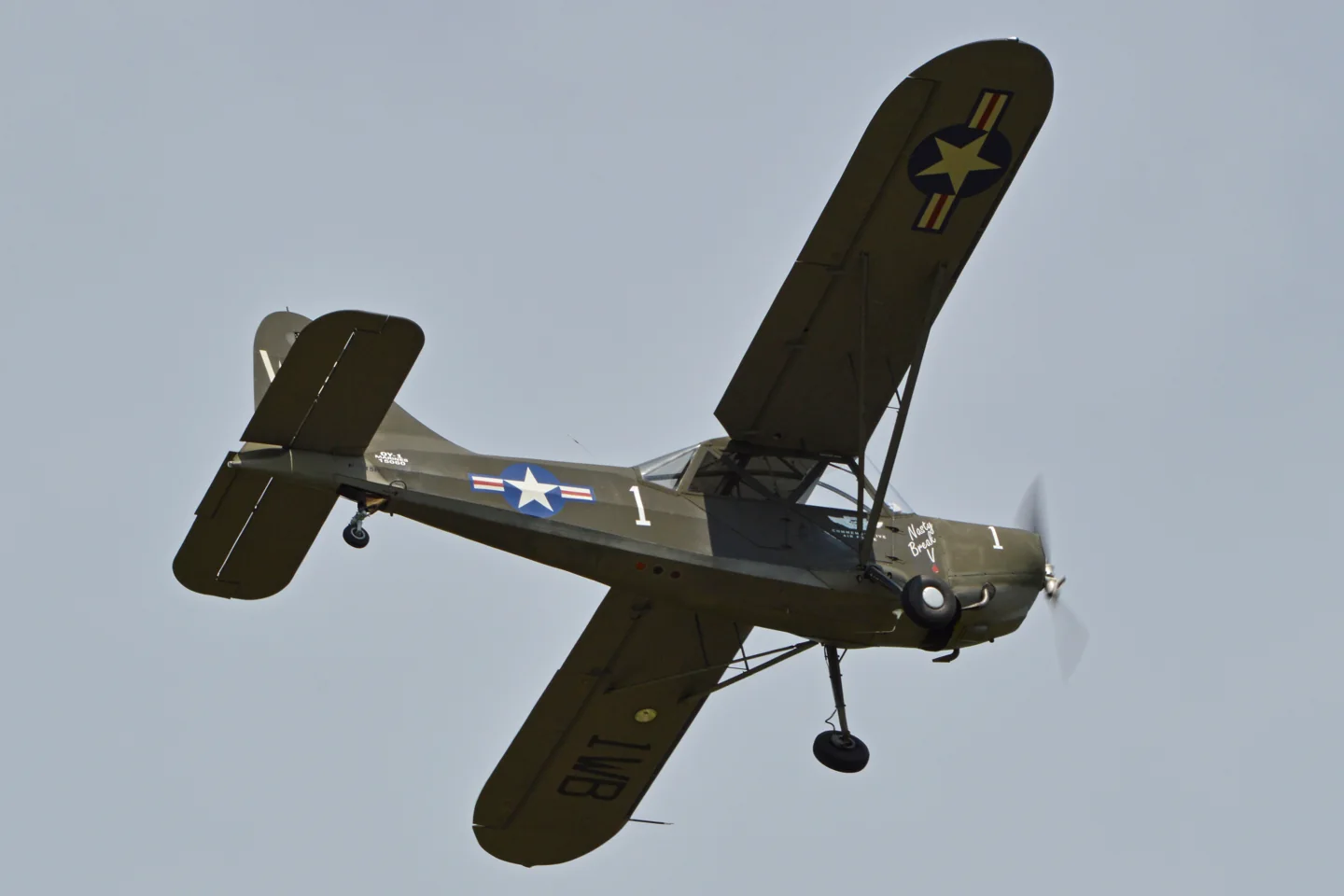
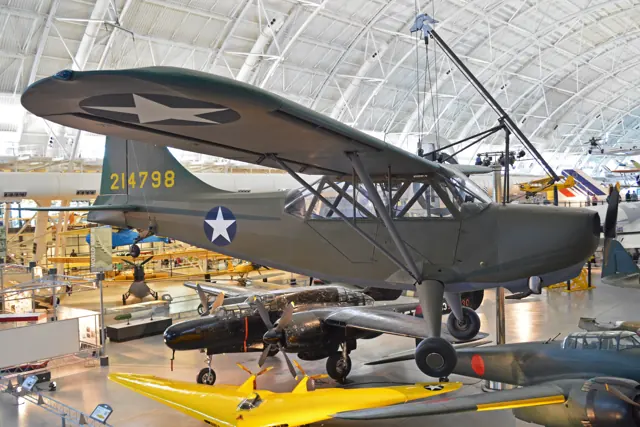
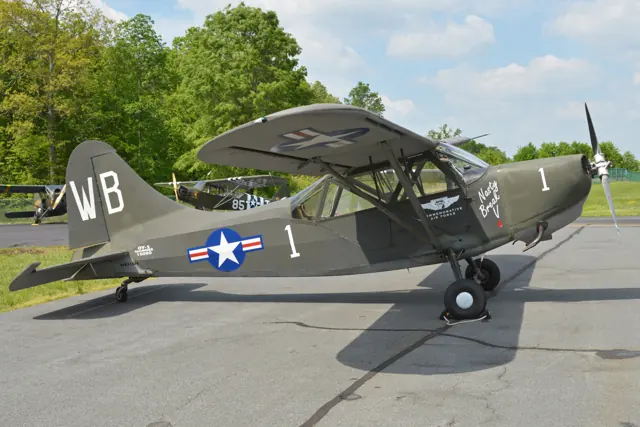
Stinson developed the L-5 for military liaison work. It served US forces and the Royal Air Force in the Second World War, using a light high-wing airframe and tandem cabin for observation, communications and front-line support. Some versions carried casualties.
Aircraft background
Wikipedia contributors · Read more ↗A bare cockpit hides surprisingly pleasant controls
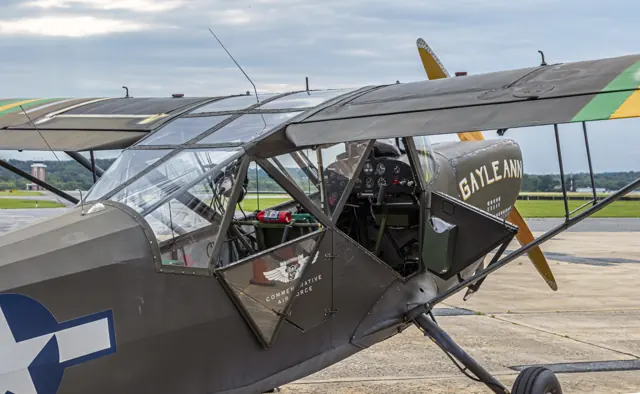
Climbing into the Sentinel meant hauling himself past the gear and steel tubes to a high seat in a very plain cockpit. Davisson remembered the sunlight, shadows and engine noise as part of its character. The appearance suggested crude controls, but the aircraft surprised him with how pleasantly it responded in the air. One memorable flight followed the purchase of a tired G-model from the Civil Air Patrol.
Airbum pilot report. Includes a G-model bought from the Civil Air Patrol; recollections span more than one L-5, with no single flight date established.
Airbum · Read more ↗Into the cockpit
 YouTube
danam0228 · 19 min ·
Stinson L-5/OY-1 Sentinel & Fieseler Fi-156 Storch flying demonstration at American Heritage Museum
A joint display features the Stinson L-5/OY-1 and Fieseler Storch.
Mixed aircraft · Stinson L-5/OY-1 and Fieseler Fi-156
Watch on YouTube ↗Preview images are served by AirframeDB. Videos open on YouTube only when you choose to watch.
Meet Stinson L-5 Sentinel
Stinson developed the L-5 for military liaison work. It served US forces and the Royal Air Force in the Second World War, using a light high-wing airframe and tandem cabin for observation, communications and front-line support. Some versions carried casualties.
Stinson L-5 Sentinel
Aircraft type designators
Use the code for the model you are flying. The linked authority lists the applicable aircraft.
History & design
A military design with work beyond observation
James H. Gray’s type history describes the L-5 as purpose-built, despite roots in earlier Stinson designs. Courier and artillery-observation duties expanded to medical evacuation, reconnaissance and supply work. He also distinguishes its advanced liaison training role from the primary training assigned to smaller L-birds.
Sentinel Owners and Pilots Association · Stinson’s Venerable Flying Jeep ↗Sentinel type-history account · 2021; conflicting first-flight dates not selected
Development milestones
First flight: 28 June 1941
Developed from: Stinson Model 75B
Wikipedia contributors · Stinson L-5 Sentinel ↗Stinson L-5 Sentinel · family/variant named by the source · Wikipedia revision 1338047388
Pilot accounts
A bare cockpit hides surprisingly pleasant controls
Climbing into the Sentinel meant hauling himself past the gear and steel tubes to a high seat in a very plain cockpit. Davisson remembered the sunlight, shadows and engine noise as part of its character. The appearance suggested crude controls, but the aircraft surprised him with how pleasantly it responded in the air.
One memorable flight followed the purchase of a tired G-model from the Civil Air Patrol. A circuit to check it over quickly renewed his appreciation of its handling. Quieter pleasures mattered too: open windows, a breeze and a broad view of the ground. He advised taking comfort seriously, with cushions and an intercom making a substantial difference to enjoying time in an otherwise austere aircraft.
Airbum pilot report. Includes a G-model bought from the Civil Air Patrol; recollections span more than one L-5, with no single flight date established.
Read the full account · Airbum ↗An Italian gliding club becomes a second flying home
While living in Milan, Haslbeck found a flying home with the gliding club at Alzate. When the club acquired a Sentinel, Riccardo Brigliadori offered to teach him to fly it. Closer inspection made the aircraft rather more imposing than the small liaison aeroplanes he had expected.
Only afterwards did he fully appreciate his instructor’s trust: from the rear seat, Brigliadori had no brakes with which to rescue an untidy ground run. Haslbeck came to value the aircraft’s steadiness while towing gliders, despite its restricted forward view and appetite for fuel. Returning to Alzate for a later gathering reunited him with a familiar aircraft and a community that still found practical work for these old machines.
fliegermagazin · May 2013. Recollections of L-5 checkout and glider towing at Alzate; the account discusses uprated Italian aircraft, not a standard-engine-only evaluation.
Read the full account · fliegermagazin ↗Two friends bring Stinsy to the gathering
Schönenberger and Nietlispach arrived with stories, aircraft-history brochures and the easy humour of old friends. They often took Stinsy to events together, including a Swiss military-vehicle gathering where the short field suited the aircraft’s particular strengths. Schönenberger admired its low-speed behaviour while acknowledging the attention a crosswind could demand.
For the photographic flight near Hahnweide, Schönenberger flew the Sentinel alongside the photographer’s Cessna after a detailed briefing. Prinzing watched him hold position and respond carefully to signals, then described the relaxed return in the evening light.
Philipp Prinzing’s September 2017 report. CAF Swiss Wing’s N121MC with fellow L-5 pilot Ferdi Nietlispach; Prinzing photographed it from a Cessna 140.
Read the full account · Flug Revue ↗In your simulator
Systems, equipment and documentation for each developer’s aircraft.
Compare simulator versions →X-Plane 12Stinson L-5 Sentinel
Laminar Research · Released
Stinson L-5 Sentinel
Laminar Research · Released
X-Plane 11Stinson L-5 Sentinel
Laminar Research · Released
Stinson L-5 Sentinel
Laminar Research · Released
Aircraft specifications
Published figures for the named real-aircraft variant. Simulator equipment and performance can differ.
| Specification | Published value |
|---|---|
| Length | 24 ft 1 in (7.34 m) |
| Wingspan | 34 ft 0 in (10.36 m) |
| Height | 7 ft 11 in (2.41 m) |
| Wing area | 155 sq ft (14.4 m² ) |
| Empty weight | 1,550 lb (703 kg) approx |
| Gross weight | 2,250 lb (1,021 kg) civilian limit |
| Max takeoff weight | 2,250 lb (1,021 kg) civilian limit |
| Powerplant | 1 × Lycoming O-435 6-cylinder air-cooled horizontally-opposed piston engine, 185 hp (138 kW) (O-435-1) 190 (O-435-11) |
| Propellers | 2-bladed fixed-pitch propeller |
| Maximum speed | 130 mph (210 km/h, 110 kn) level flight |
| Cruise speed | 100 mph (160 km/h, 87 kn) to 110 mph |
| Stall speed | 42 mph (68 km/h, 36 kn) power off, 38 mph power on |
| Range | 375 mi (604 km, 326 nmi) no reserve |
| Service ceiling | 15,800 ft (4,800 m) |
| Rate of climb | 900 ft/min (4.6 m/s) at sea level |
Manuals & resources
Find your next read
Choose a topic for a short introduction and a link to the original source. Simulator references identify the developer and edition they cover.
Pilot account
A bare cockpit hides surprisingly pleasant controlsAirbum pilot report. Includes a G-model bought from the Civil Air Patrol; recollections span more than one L-5, with no single flight date established.
Climbing into the Sentinel meant hauling himself past the gear and steel tubes to a high seat in a very plain cockpit. Davisson remembered the sunlight, shadows and engine noise as part of its character. The appearance suggested crude controls, but the aircraft surprised him with how pleasantly it responded in the air. One memorable flight followed the purchase of a tired G-model from the Civil Air Patrol. A circuit to check it over quickly renewed his appreciation of its handling.
Budd Davisson
Airbum · Read the source ↗An Italian gliding club becomes a second flying homefliegermagazin · May 2013. Recollections of L-5 checkout and glider towing at Alzate; the account discusses uprated Italian aircraft, not a standard-engine-only evaluation.
While living in Milan, Haslbeck found a flying home with the gliding club at Alzate. When the club acquired a Sentinel, Riccardo Brigliadori offered to teach him to fly it. Closer inspection made the aircraft rather more imposing than the small liaison aeroplanes he had expected. Only afterwards did he fully appreciate his instructor’s trust: from the rear seat, Brigliadori had no brakes with which to rescue an untidy ground run.
Ludwig Haslbeck
fliegermagazin · Read the source ↗Read the original documentation from the people who created it. Manuals open on their publisher’s website.
Manual
X-Plane 12 Desktop ManualLaminar Research X-Plane aircraft and avionics manualsLaminar Research X-Plane 11 Desktop ManualLaminar ResearchAircraft background
Stinson L-5 SentinelWikipedia contributors · Research background · Wikipedia revision 1338047388 · retrieved 2026-09-12 Stinson’s Venerable Flying JeepSentinel Owners and Pilots Association · James H. Gray · 2021Type designator
ICAO Doc 8643 — aircraft type designatorsInternational Civil Aviation Organization · Public search data retrieved 2026-09-14; authority update 2026-09-03Built-in force-feedback profiles
Read the documentary basis, editable starting settings and remaining questions for the aircraft you fly. Each explanation refers to the exact profile revision shown.
Catalogue programme-20261022-v1 · 1 profile choice
Stinson L-5 Sentinel
Free and Pro · Revision 1 · Partial review
X-Plane 12 · X-Plane 11
Stinson L-5 Sentinel: The chosen response supplies light utility-aircraft resistance.
Stinson L-5 Sentinel
Stinson L-5 Sentinel: The chosen response supplies light utility-aircraft resistance.
Aircraft and simulator scope
- Stinson L-5 Sentinel · X-Plane 12 · family starting point
- Stinson L-5 Sentinel · X-Plane 11 · family starting point
Stinson L-5 Sentinel · Family sources identify only the variants and product versions described above.
The simulator model and controls
Stinson developed the L-5 for military liaison work. It served US forces and the Royal Air Force in the Second World War, using a light high-wing airframe and tandem cabin for observation, communications and front-line support. Some versions carried casualties.
This starting point selects Stinson L-5 Sentinel. Its aircraft-level settings do not select a particular developer’s custom systems.
How this profile feels
The chosen response supplies light utility-aircraft resistance. Spring resistance builds with the selected airspeed response. A separate aerodynamic term adds speed-dependent control load.
Configured pitch relief stays with the represented Sentinel cockpit. Valid trim provides the configured pressure relief. Autopilot following is off.
Controls and trim
The L5 was developed for military observation, communications and support, including casualty-evacuation variants. Its compact cabin and light high-wing structure retain that military role rather than being only a civilian-aircraft conversion.
About the values
The gains are normalized profile settings. They describe the chosen effect balance; hand force depends on the device and its output limits. IAS references are tuning values rather than operating limits. Physical acceptance of this revision remains pending.
What the documentation establishes
Laminar desktop manual identifies stock Stinson L-5 in simulator aircraft scope.
Documentary review and sources
These decisions describe the documentary basis and remaining gaps for this revision. Aircraft documentation and a starting setting describe different kinds of evidence.
Aircraft and variant
ReviewedThis starting point selects Stinson L-5 Sentinel. Its aircraft-level settings do not select a particular developer’s custom systems.
Flight controls
Not yet reviewedThe L5 was developed for military observation, communications and support, including casualty-evacuation variants. Its compact cabin and light high-wing structure retain that military role rather than being only a civilian-aircraft conversion.
Trim
Not yet reviewedConfigured pitch relief stays with the represented Sentinel cockpit. Pitch authority 0.3 provides load relief and permitted centre movement; roll authority is 0.12.
Autopilot and stability
Not yet reviewedAutopilot following is off; the configured spring and load retain the hardware feel.
Equipment
Not yet reviewedGear, flap and ground cues follow the selected settings and available simulator-reported states.
Speeds and limits
Not yet reviewedThe indicated-speed references set the profile response scale; they are separate from aircraft operating limits.
Simulator integration
Not yet reviewedThe profile targets xplane12, xplane11. Add-on-specific controls use only the supported references configured by this profile.
Force-feedback settings
Not yet reviewedThe settings define the profile’s effect balance. Device output limits affect physical hand force.
Starting settings and their rationale
These configured values are starting estimates. The explanations describe what each setting controls; physical validation appears separately below.
| Setting | Starting value | What it controls and why |
|---|---|---|
| Spring strength | Starting value0.74 | What it controls and whyThe chosen response supplies light utility-aircraft resistance. The baseline spring is 0.74. Its low-speed blend reaches baseline strength at 42.5 KIAS. |
| Master force gain | Starting value0.85 | What it controls and whyScales overall profile strength while preserving effect balance, subject to device and output limits. |
| Profile force gain | Starting value0.95 | What it controls and whyThe aerodynamic-load gain is 0.95 with an indicated-speed reference of 85 KIAS. This supplies speed-dependent loading alongside the spring. |
| Force tuning speed/reference | Starting value85.0 kt | What it controls and whySets the IAS reference for aerodynamic loading. It is an estimate, not published cruise TAS or a flight limit. |
| Spring response reference speed | Starting value42.5 kt | What it controls and whySets the IAS where the low-speed blend reaches baseline strength; high-speed stiffening also uses it. |
| Aileron force scale | Starting value0.6 | What it controls and whyRoll and pitch aerodynamic scales are 0.6 and 0.78, respectively. They set the aerodynamic axis balance. No custom spring-travel curve is enabled. |
| Elevator force scale | Starting value0.78 | What it controls and whyScales pitch aerodynamic loading; pitch spring travel and trim responses are separate settings. |
| Trim feel | Starting valueEnabled | What it controls and whyRetained for compatibility and group membership. Trim relief, rather than this flag, controls centre movement. |
| Trim relief | Starting valueEnabled | What it controls and whyAllows trim relief with supported control law and valid telemetry. Axis authorities set its amount. |
| Autopilot follow | Starting valueDisabled | What it controls and whyAutopilot following is off; the configured spring and load retain the hardware feel. |
| Autopilot neutral hold | Starting valueDisabled | What it controls and whyPermits centering hold during a supported AP state, separate from following a moving target. |
| Output force limit | Starting value0.55 | What it controls and whyCaps directed-force output. Native spring effects and device limits remain separate. |
All 44 starting settings and their rationale
The settings define the profile’s effect balance. Device output limits affect physical hand force.
| Setting | Starting value | What it controls and why |
|---|---|---|
| Spring strength | Starting value0.74 | What it controls and whyThe chosen response supplies light utility-aircraft resistance. The baseline spring is 0.74. Its low-speed blend reaches baseline strength at 42.5 KIAS. |
| Spring deadband | Starting value0.045 | What it controls and whySets travel around the centre before the baseline spring resists. Smaller values engage it sooner. |
| Profile force gain | Starting value0.95 | What it controls and whyThe aerodynamic-load gain is 0.95 with an indicated-speed reference of 85 KIAS. This supplies speed-dependent loading alongside the spring. |
| Master force gain | Starting value0.85 | What it controls and whyScales overall profile strength while preserving effect balance, subject to device and output limits. |
| QBlend Enabled | Starting valueEnabled | What it controls and whyAllows baseline spring strength to rise with indicated airspeed where the control law permits it. |
| QSpring Minimum Factor | Starting value0.5 | What it controls and whySets low-speed spring strength as a fraction of baseline when blending is enabled. One keeps full strength. |
| QSpring Start Knots | Starting value11.9 kt | What it controls and whySets the IAS where the low-speed spring blend starts rising. This is a feel threshold, not a flight limit. |
| Spring response reference speed | Starting value42.5 kt | What it controls and whySets the IAS where the low-speed blend reaches baseline strength; high-speed stiffening also uses it. |
| Force tuning speed/reference | Starting value85.0 kt | What it controls and whySets the IAS reference for aerodynamic loading. It is an estimate, not published cruise TAS or a flight limit. |
| Airspeed spring stiffening gain | Starting value0.1 | What it controls and whyThe high-speed spring-stiffening gain is 0.1. It strengthens the permitted spring response above 42.5 KIAS, with the squared-speed ratio capped at 5. |
| Airspeed spring stiffening limit | Starting value5 | What it controls and whyLimits the squared airspeed ratio used for high-speed spring stiffening; it is not a device-force cap. |
| Aileron force scale | Starting value0.6 | What it controls and whyRoll and pitch aerodynamic scales are 0.6 and 0.78, respectively. They set the aerodynamic axis balance. No custom spring-travel curve is enabled. |
| Elevator force scale | Starting value0.78 | What it controls and whyScales pitch aerodynamic loading; pitch spring travel and trim responses are separate settings. |
| Output force limit | Starting value0.55 | What it controls and whyCaps directed-force output. Native spring effects and device limits remain separate. |
| Trim feel | Starting valueEnabled | What it controls and whyRetained for compatibility and group membership. Trim relief, rather than this flag, controls centre movement. |
| Trim relief | Starting valueEnabled | What it controls and whyAllows trim relief with supported control law and valid telemetry. Axis authorities set its amount. |
| Elevator Authority | Starting value0.3 | What it controls and whyConfigured pitch relief stays with the represented Sentinel cockpit. Pitch authority 0.3 provides load relief and permitted centre movement; roll authority is 0.12. |
| Aileron Authority | Starting value0.12 | What it controls and whyScales supported roll-trim relief and permitted centre movement. Zero removes roll response. |
| Force Trim Enabled | Starting valueDisabled | What it controls and whyEnables local force trim, separate from aircraft-owned trim and add-on integration qualification. |
| GLoad Enabled | Starting valueEnabled | What it controls and whyAllows load-factor changes to modify permitted spring laws. Passive fly-by-wire feel can suppress it. |
| Rate Damping Enabled | Starting valueEnabled | What it controls and whyEnables rate damping with the configured coefficients and control law. |
| Autopilot follow | Starting valueDisabled | What it controls and whyAutopilot following is off; the configured spring and load retain the hardware feel. |
| Autopilot follow authority | Starting value0.05 | What it controls and whySets admitted AP-follow gain, not a percentage of travel. Runtime ownership and input limits still apply. |
| Autopilot neutral hold | Starting valueDisabled | What it controls and whyPermits centering hold during a supported AP state, separate from following a moving target. |
| Autopilot neutral hold strength | Starting value0.6 | What it controls and whySets admitted AP neutral-hold strength; inactive while neutral hold is disabled. |
| Enabled | Starting valueEnabled | What it controls and whyEnables aerodynamic cues; each still needs nonzero strength and its simulator conditions. |
| Gain | Starting value0.35 | What it controls and whySets stall-buffet strength. Zero removes the cue without changing simulator stalls or warnings. |
| Gain | Starting value0 | What it controls and whySets high-Mach buffet strength; onset and full-strength thresholds are separate. |
| Gain | Starting value0.14 | What it controls and whySets flap buffet at the configured position and speed gates. Flap movement texture is separate. |
| Maximum flap index | Starting value3 | What it controls and whySets the final flap index for detent normalization. UP plus three detents uses maximum index3. |
| Minimum flap index | Starting value2 | What it controls and whySets the first flap detent that admits buffet; this is a handle index, not degrees. |
| Gain | Starting value0 | What it controls and whySets gear aerodynamic buffet; movement and ground-contact cues are separate. |
| Shaker Enabled | Starting valueDisabled | What it controls and whyPermits shaker at supported warning conditions; the switch does not establish aircraft equipment. |
| Stick shaker amplitude | Starting value0.5 | What it controls and whySets triggered shaker strength; inactive while the shaker feature is disabled. |
| Enabled | Starting valueEnabled | What it controls and whyEnables ground effects; each still needs its own strength and contact or motion telemetry. |
| Gain | Starting value0.42 | What it controls and whySets rolling texture strength, modified by speed, surface and undercarriage configuration. |
| Gain | Starting value0.3 | What it controls and whySets gear-bump texture during ground motion, separate from touchdown impact. |
| Gain | Starting value0.75 | What it controls and whySets landing-impact strength; landing telemetry and response shape determine the pulse. |
| Gain | Starting value0 | What it controls and whySets reverse-thrust vibration with valid reverser and engine conditions. Zero removes the cue. |
| Enabled | Starting valueEnabled | What it controls and whyEnables engine cues with nonzero settings and valid running-engine telemetry. |
| Gain | Starting value0.12 | What it controls and whySets estimated engine vibration using configured telemetry and response, not measured cockpit vibration. |
| Enabled | Starting valueEnabled | What it controls and whyEnables accessory cues with configured strengths and observed accessory movement. |
| Gain | Starting value0.12 | What it controls and whySets texture from observed flap movement; a command without movement does not establish the cue. |
| Gain | Starting value0 | What it controls and whySets texture from observed gear movement, separate from aerodynamic and touchdown effects. |
Limits and open questions
- General simulator manual does not establish L-5 gearing.
- Trim relief is enabled; general manual supplies no L-5 trim mechanism evidence.
- Follow is off; no L-5 installation was established.
- Fixed-tailwheel/flap settings need an L-5 manual.
- General controls chapters give no L-5 indicated-airspeed force curve.
- XP11/12 desktop manuals do not qualify product-specific trim signals.
- Observation-aircraft/piston identity does not measure stick forces.
Physical validation
No physical force validation is recorded in this public catalogue for this revision. Documentary review and software checks do not establish how a particular device feels.
Discuss this aircraft (0)
Questions, observations and useful sources from the community.
No published discussions yet. Bring a question or share a useful source.
Open aircraft discussions →Content expanded · What’s new
Something missing or a source that needs attention?
Suggest a correction ↗