
Start here
A few places to begin, from the aircraft’s story to the people who fly it.
Meet the aircraft
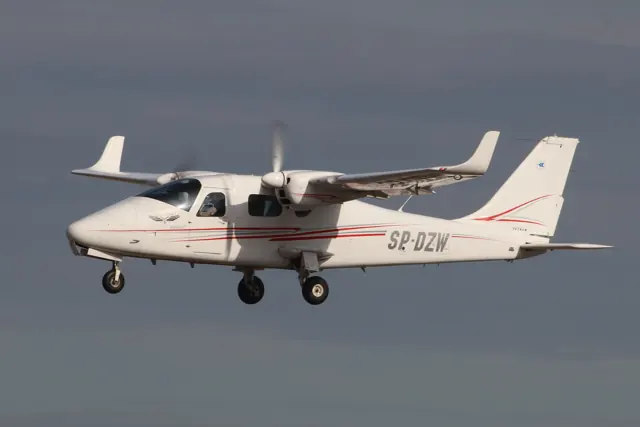
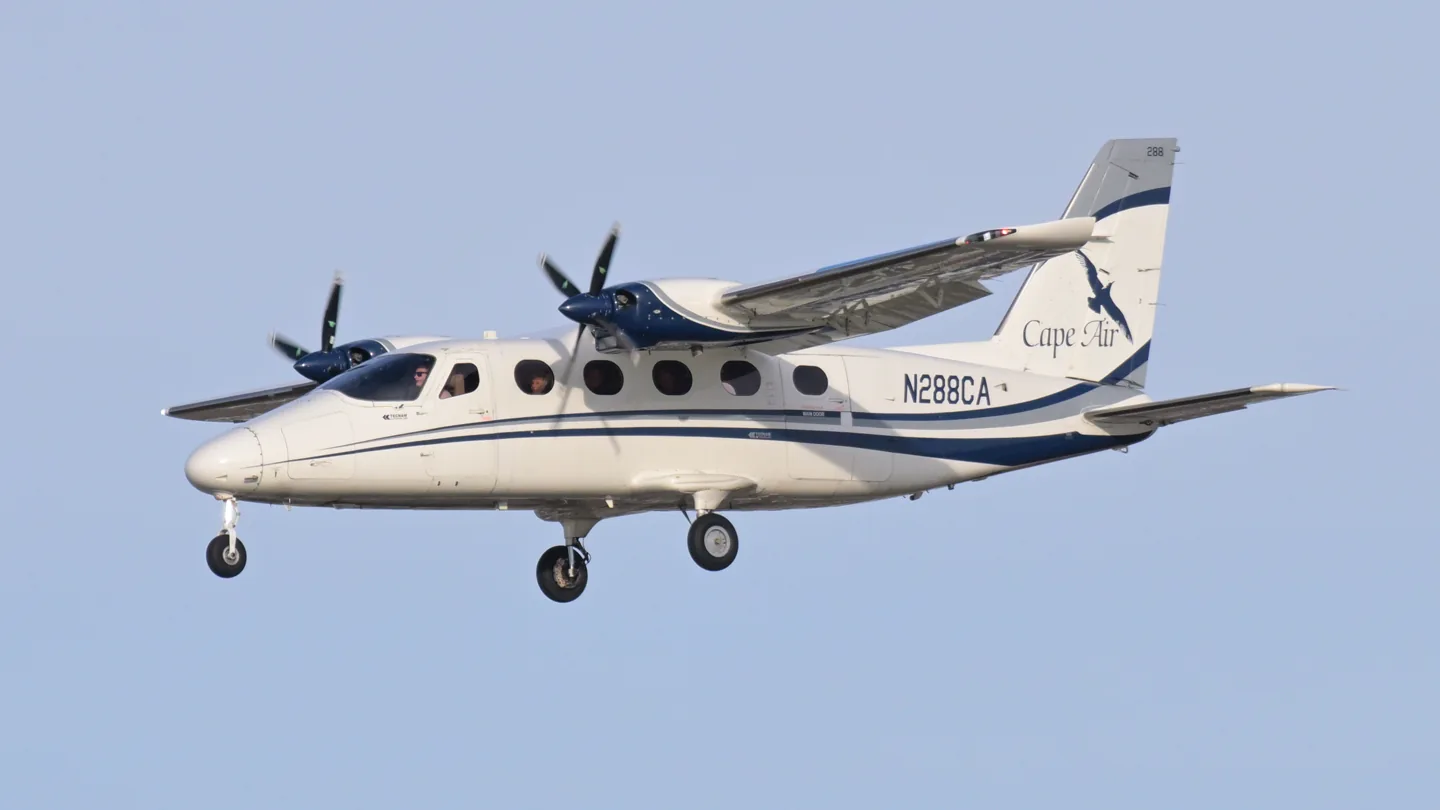
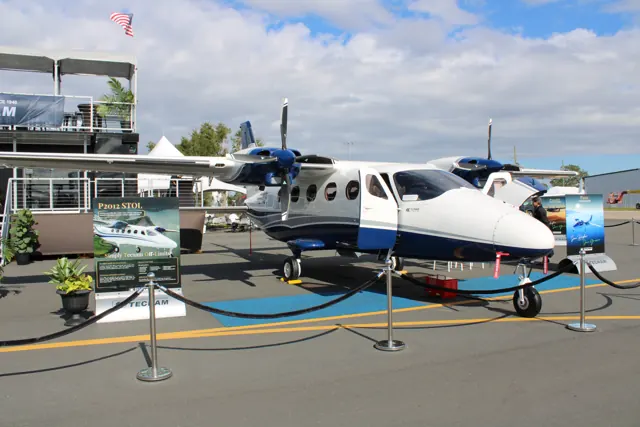
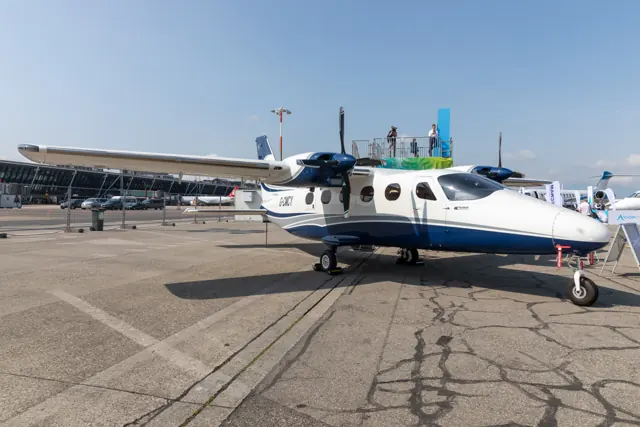
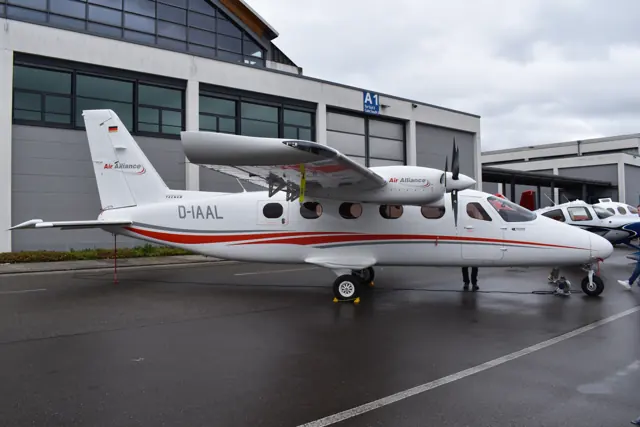
Tecnam designed the P2012 Traveller for commuter, charter, cargo and medical transport. A shoulder wing sits above a cabin accommodating up to nine passengers and one or two pilots. The simulator product documents its equipment, released versions and planned updates.
Aircraft background
Wikipedia contributors · Read more ↗A loaded trip from Las Vegas to the coast
Horne joined Tecnam test pilot Francesco Sferra for a demonstration trip after the October 2021 NBAA convention. Their Traveller carried four people and substantial baggage on the leg from Las Vegas to Camarillo. He describes an aircraft whose electronic engine management removes mixture adjustment and automates much of the preflight engine check.
AOPA Pilot, 1 February 2022. October 2021 demonstration trip in the Lycoming-powered Traveller, nine-passenger cabin configuration.
AOPA Pilot · Read more ↗Into the cockpit
 YouTube
Tecnam Aircraft · 1 min ·
Tecnam P2012 Traveller Maiden Flight
Tecnam shares its P2012 Traveller's maiden flight.
Real aircraft · Tecnam P2012 Traveller
Watch on YouTube ↗Preview images are served by AirframeDB. Videos open on YouTube only when you choose to watch.
Meet Tecnam P2012 Traveller
Tecnam designed the P2012 Traveller for commuter, charter, cargo and medical transport. A shoulder wing sits above a cabin accommodating up to nine passengers and one or two pilots. The simulator product documents its equipment, released versions and planned updates.
Tecnam P2012 Traveller
Tecnam → · Explore the family →
Tecnam P2012 Traveller
Wikipedia contributors · Tecnam P2012 Traveller ↗FlightSim Studio · MSFS 2020 →Aircraft type designators
Use the code for the model you are flying. The linked authority lists the applicable aircraft.
History & design
Designed around a working airline
Cape Air’s search for a replacement for its Cessna 402 fleet helped shape the P2012. Tecnam developed a fixed-gear piston twin around regional passenger operations, with the first prototype flying in 2016. The Traveller subsequently gained related configurations, including a STOL version. Engine and propeller-control arrangements vary, so the familiar P2012 silhouette does not imply that every version uses the same cockpit controls.
Wikipedia contributors · Tecnam P2012 Traveller ↗Research-based history of the real aircraft family; see the linked source.
Development milestones
Designer: Luigi Pascale
First flight: 21 July 2016
Wikipedia contributors · Tecnam P2012 Traveller ↗Tecnam P2012 Traveller · family/variant named by the source · Wikipedia revision 1363070527
Pilot accounts
A loaded trip from Las Vegas to the coast
Horne joined Tecnam test pilot Francesco Sferra for a demonstration trip after the October 2021 NBAA convention. Their Traveller carried four people and substantial baggage on the leg from Las Vegas to Camarillo. He describes an aircraft whose electronic engine management removes mixture adjustment and automates much of the preflight engine check. In cruise, he experimented with reducing power and found that a modest loss of speed brought an appreciable reduction in fuel consumption. The report gives the loading, altitudes and power settings, making those observations useful in their actual context.
Near the California coast, Horne tried steep turns, slow flight and stalls. He found the manoeuvres straightforward and reported that aileron response remained available during his stall demonstration. His landing account adds a less obvious characteristic: a sudden reduction to idle creates pronounced propeller drag and can turn the last part of an approach into a firm arrival.
AOPA Pilot, 1 February 2022. October 2021 demonstration trip in the Lycoming-powered Traveller, nine-passenger cabin configuration.
Read the full account · AOPA Pilot ↗Exploring the handling, including one engine shut down
Pickett flew a commuter-configured Traveller with Francesco Sferra during NBAA and took it into the countryside west of Las Vegas. He appreciated the view through the large windows and the reduction in engine-management work provided by electronic controls. At the controls, the sizeable twin felt unexpectedly responsive to him: steep turns needed only modest trim changes, and his stall exercises ended with little height loss. These observations came from a deliberate demonstration flight, with a manufacturer test pilot alongside him.
He also examined asymmetric handling. When Sferra shut down the left engine, Pickett noticed reduced speed and noise but described the aircraft as stable and manageable in turns and a climb. The subsequent restart worked smoothly with electronic engine management. His return to North Las Vegas included a steep-approach demonstration, followed by a landing he thought the undercarriage treated kindly. His account is particularly useful for its description of workload and handling during that flight; it does not establish the climb capability of every loading or atmospheric condition.
Twin & Turbine, January 2022 issue. NBAA demonstration with Tecnam test pilot Francesco Sferra; original Lycoming-powered Traveller.
Read the full account · Twin & Turbine ↗Heavy ailerons, steady turns and considerable propeller drag
Hitchen evaluated Australian demonstrator VH-VNV on a trip involving Essendon and Wangaratta, then flew handling exercises with demonstration pilot Charles Gunter. He liked the straightforward engine starts and found the aircraft moved readily on the ground at their relatively light loading. Once airborne, the weight of the ailerons surprised him: changing roll direction took considerably more effort than he expected. Small control movements still produced a useful response, and in a sustained steep turn he needed very little back pressure to hold the attitude.
His stall observations were more detailed than an unqualified description of benign handling. Clean, the aircraft descended with the wings level while he held the control back; with takeoff flap, he provoked alternating wing drops by overcorrecting with rudder. Closing the throttles also produced an immediate, conspicuous increase in drag. Gunter demonstrated how that drag could support a steep arrival, before Hitchen tried a conventional circuit and landing himself.
Australian Flying, 22 June 2023. VH-VNV with demonstration pilot Charles Gunter; Lycoming-powered Traveller.
Read the full account · Australian Flying ↗In your simulator
Systems, equipment and documentation for each developer’s aircraft.
Compare simulator versions →MSFS 2020Tecnam P2012 Traveller
FlightSim Studio · Released
Tecnam P2012 Traveller
FlightSim Studio · Released
MSFS 2024P2012 Traveller v2
FlightSim Studio · Released
P2012 Traveller v2
FlightSim Studio · Released
Aircraft specifications
Published figures for the named real-aircraft variant. Simulator equipment and performance can differ.
| Specification | Published value |
|---|---|
| Length | 11.8 m (38 ft 9 in) |
| Wingspan | 14 m (45 ft 11 in) ; 16.6 m (54 ft) on STOL variant |
| Height | 4.4 m (14 ft 5 in) |
| Wing area | 25.4 m² (273 sq ft) |
| Empty weight | 2,386 kg (5,260 lb) ; 2,416 kg (5,326 lb) on STOL variant |
| Max takeoff weight | 3,680 kg (8,113 lb) |
| Powerplant | 2 × Lycoming TEO-540C1A 6-cylinder air-cooled horizontally-opposed turbocharged piston engines, 280 kW (375 hp) each |
| Powerplant | 2 × Continental GTSIO-520-S 6-cylinder horizontally-opposed turbocharged, geared piston engines, 280 kW (375 hp) each |
| Propellers | 3 or 4-bladed MT-Propeller, 1.95 m (6 ft 5 in) diameter constant-speed fully-feathering propeller |
| Maximum speed | 359 km/h (223 mph, 194 kn) at 10,000 ft (3,000 m) |
| Cruise speed | 319 km/h (198 mph, 172 kn) at 75% power at 10,000 ft (3,000 m) |
| Stall speed | 120 km/h (75 mph, 65 kn) full flaps; 122 km/h (76 mph; 66 kn) full flaps on STOL variant |
| Range | 2,500 km (1,600 mi, 1,300 nmi) |
| Service ceiling | 5,900 m (19,500 ft) restricted to four passengers over 4,000 m (13,000 ft) |
| Rate of climb | 5.8 m/s (1,140 ft/min) ; 6.53 m/s (1,285 ft/min) on STOL variant |
Manuals & resources
Find your next read
Choose a topic for a short introduction and a link to the original source. Simulator references identify the developer and edition they cover.
Pilot account
A loaded trip from Las Vegas to the coastAOPA Pilot, 1 February 2022. October 2021 demonstration trip in the Lycoming-powered Traveller, nine-passenger cabin configuration.
Horne joined Tecnam test pilot Francesco Sferra for a demonstration trip after the October 2021 NBAA convention. Their Traveller carried four people and substantial baggage on the leg from Las Vegas to Camarillo. He describes an aircraft whose electronic engine management removes mixture adjustment and automates much of the preflight engine check. In cruise, he experimented with reducing power and found that a modest loss of speed brought an appreciable reduction in fuel consumption.
Thomas A. Horne
AOPA Pilot · Read the source ↗Exploring the handling, including one engine shut downTwin & Turbine, January 2022 issue. NBAA demonstration with Tecnam test pilot Francesco Sferra; original Lycoming-powered Traveller.
Pickett flew a commuter-configured Traveller with Francesco Sferra during NBAA and took it into the countryside west of Las Vegas. He appreciated the view through the large windows and the reduction in engine-management work provided by electronic controls. At the controls, the sizeable twin felt unexpectedly responsive to him: steep turns needed only modest trim changes, and his stall exercises ended with little height loss.
Rich Pickett
Twin & Turbine · Read the source ↗Developer documentation
P2012 Traveller v2 — product listingP2012 Traveller v2 · MSFS 2024
Product listing captured 2026-09-30; edition scope from the reviewed catalogue
Contrail · Read the source ↗P2012 Traveller v2 — product listingP2012 Traveller v2 · MSFS 2024
Product listing captured 2026-09-30; edition scope from the reviewed catalogue
Contrail · Read the source ↗Read the original documentation from the people who created it. Manuals open on their publisher’s website.
Aircraft background
Tecnam P2012 TravellerWikipedia contributors · Research background · retrieved 2026-09-12Product
Tecnam P2012 TravellerFlightSim Studio · Official developer / designated store catalogue · checked 2026-09-12 Tecnam P2012 Traveller v2 MSFS24 by FlightSim Studio AG | Contrail ShopContrail · Product listing captured 2026-09-30; edition scope from the reviewed catalogue Tecnam P2012 Traveller MSFS by FlightSim Studio AG | Contrail ShopContrail · Product listing captured 2026-09-30; edition scope from the reviewed catalogueType designator
ICAO Doc 8643 — aircraft type designatorsInternational Civil Aviation Organization · Public search data retrieved 2026-09-14; authority update 2026-09-03Built-in force-feedback profiles
Read the documentary basis, editable starting settings and remaining questions for the aircraft you fly. Each explanation refers to the exact profile revision shown.
Catalogue programme-20261022-v1 · 3 profile choices
FlightSim Studio Tecnam P2012 Traveller V1
FlightSim Studio · Free and Pro · Revision 3 · Inherited starting point
MSFS 2020
FlightSim Studio Tecnam P2012 Traveller V1: Mechanical transport controls motivate aerodynamic yoke loading.
FlightSim Studio Tecnam P2012 Traveller V2
FlightSim Studio · Free and Pro · Revision 3 · Inherited starting point
MSFS 2024
FlightSim Studio Tecnam P2012 Traveller V2: Mechanical transport controls motivate aerodynamic yoke loading.
Tecnam P2012 Traveller
Free and Pro · Revision 1 · Partial review
MSFS 2020
Tecnam P2012 Traveller: Mechanical transport controls motivate aerodynamic yoke loading.
FlightSim Studio Tecnam P2012 Traveller V2
FlightSim Studio Tecnam P2012 Traveller V2: Mechanical transport controls motivate aerodynamic yoke loading.
Aircraft and simulator scope
- FlightSim Studio Tecnam P2012 Traveller V2 · FlightSim Studio · MSFS 2024 · Add-on starting point
The simulator model and controls
Tecnam designed the P2012 Traveller for commuter, charter, cargo and medical transport. A shoulder wing sits above a cabin accommodating up to nine passengers and one or two pilots. The simulator product documents its equipment, released versions and planned updates.
This profile selects FlightSim Studio Tecnam P2012 Traveller V2 for MSFS 2024.
How this profile feels
Mechanical transport controls motivate aerodynamic yoke loading. Spring resistance builds with the selected airspeed response. A separate aerodynamic term adds speed-dependent control load.
Electrical trim supports separate axis pressure relief; automatic pitch trim belongs to the GFC installation. Valid trim provides the configured pressure relief. Autopilot following is off.
Controls and trim
The Traveller uses manual rods/cables with electrical trim on all axes. Twin EECS-controlled piston engines, fixed tricycle gear and electric flaps surround a GFC700/GMC710 cockpit. Its stall warning is a vane/horn system.
The selected implementation
Native MSFS 2024 V2 is a separate Traveller product from 2020 V1, with revised systems and seven cabin layouts.
About the values
The gains are normalized profile settings. They describe the chosen effect balance; hand force depends on the device and its output limits. IAS references are tuning values rather than operating limits. Physical acceptance of this revision remains pending.
Documentary review and sources
These decisions describe the documentary basis and remaining gaps for this revision. Aircraft documentation and a starting setting describe different kinds of evidence.
Aircraft and variant
InheritedThis profile selects FlightSim Studio Tecnam P2012 Traveller V2 for MSFS 2024.
Flight controls
InheritedThe Traveller uses manual rods/cables with electrical trim on all axes. Twin EECS-controlled piston engines, fixed tricycle gear and electric flaps surround a GFC700/GMC710 cockpit. Its stall warning is a vane/horn system.
Trim
InheritedElectrical trim supports separate axis pressure relief; automatic pitch trim belongs to the GFC installation. Pitch authority 0.3 provides load relief and permitted centre movement; roll authority is 0.12.
Autopilot and stability
InheritedAutopilot following is off; the configured spring and load retain the hardware feel.
Equipment
InheritedNative MSFS 2024 V2 is a separate Traveller product from 2020 V1, with revised systems and seven cabin layouts.
Speeds and limits
InheritedThe indicated-speed references set the profile response scale; they are separate from aircraft operating limits.
Simulator integration
InheritedThe profile targets msfs2024. Add-on-specific controls use only the supported references configured by this profile.
Force-feedback settings
InheritedThe settings define the profile’s effect balance. Device output limits affect physical hand force.
Starting settings and their rationale
These configured values are starting estimates. The explanations describe what each setting controls; physical validation appears separately below.
| Setting | Starting value | What it controls and why |
|---|---|---|
| Spring strength | Starting value0.74 | What it controls and whyMechanical transport controls motivate aerodynamic yoke loading. The baseline spring is 0.74. Its low-speed blend reaches baseline strength at 50 KIAS. |
| Master force gain | Starting value0.85 | What it controls and whyScales overall profile strength while preserving effect balance, subject to device and output limits. |
| Profile force gain | Starting value0.8 | What it controls and whyThe aerodynamic-load gain is 0.8 with an indicated-speed reference of 150 KIAS. This supplies speed-dependent loading alongside the spring. |
| Force tuning speed/reference | Starting value150 kt | What it controls and whySets the IAS reference for aerodynamic loading. It is an estimate, not published cruise TAS or a flight limit. |
| Spring response reference speed | Starting value50 kt | What it controls and whySets the IAS where the low-speed blend reaches baseline strength; high-speed stiffening also uses it. |
| Aileron force scale | Starting value0.72 | What it controls and whyRoll and pitch aerodynamic scales are 0.72 and 1, respectively. They set the aerodynamic axis balance. No custom spring-travel curve is enabled. |
| Elevator force scale | Starting value1.0 | What it controls and whyScales pitch aerodynamic loading; pitch spring travel and trim responses are separate settings. |
| Trim feel | Starting valueDisabled | What it controls and whyRetained for compatibility and group membership. Trim relief, rather than this flag, controls centre movement. |
| Trim relief | Starting valueEnabled | What it controls and whyAllows trim relief with supported control law and valid telemetry. Axis authorities set its amount. |
| Autopilot follow | Starting valueDisabled | What it controls and whyAutopilot following is off; the configured spring and load retain the hardware feel. |
| Autopilot neutral hold | Starting valueDisabled | What it controls and whyPermits centering hold during a supported AP state, separate from following a moving target. |
| Output force limit | Starting value0.55 | What it controls and whyCaps directed-force output. Native spring effects and device limits remain separate. |
All 44 starting settings and their rationale
The settings define the profile’s effect balance. Device output limits affect physical hand force.
| Setting | Starting value | What it controls and why |
|---|---|---|
| Spring strength | Starting value0.74 | What it controls and whyMechanical transport controls motivate aerodynamic yoke loading. The baseline spring is 0.74. Its low-speed blend reaches baseline strength at 50 KIAS. |
| Spring deadband | Starting value0.04 | What it controls and whySets travel around the centre before the baseline spring resists. Smaller values engage it sooner. |
| Profile force gain | Starting value0.8 | What it controls and whyThe aerodynamic-load gain is 0.8 with an indicated-speed reference of 150 KIAS. This supplies speed-dependent loading alongside the spring. |
| Master force gain | Starting value0.85 | What it controls and whyScales overall profile strength while preserving effect balance, subject to device and output limits. |
| QBlend Enabled | Starting valueEnabled | What it controls and whyAllows baseline spring strength to rise with indicated airspeed where the control law permits it. |
| QSpring Minimum Factor | Starting value0.55 | What it controls and whySets low-speed spring strength as a fraction of baseline when blending is enabled. One keeps full strength. |
| QSpring Start Knots | Starting value8 kt | What it controls and whySets the IAS where the low-speed spring blend starts rising. This is a feel threshold, not a flight limit. |
| Spring response reference speed | Starting value50 kt | What it controls and whySets the IAS where the low-speed blend reaches baseline strength; high-speed stiffening also uses it. |
| Force tuning speed/reference | Starting value150 kt | What it controls and whySets the IAS reference for aerodynamic loading. It is an estimate, not published cruise TAS or a flight limit. |
| Airspeed spring stiffening gain | Starting value0.15 | What it controls and whyThe high-speed spring-stiffening gain is 0.15. It strengthens the permitted spring response above 50 KIAS, with the squared-speed ratio capped at 5. |
| Airspeed spring stiffening limit | Starting value5 | What it controls and whyLimits the squared airspeed ratio used for high-speed spring stiffening; it is not a device-force cap. |
| Aileron force scale | Starting value0.72 | What it controls and whyRoll and pitch aerodynamic scales are 0.72 and 1, respectively. They set the aerodynamic axis balance. No custom spring-travel curve is enabled. |
| Elevator force scale | Starting value1.0 | What it controls and whyScales pitch aerodynamic loading; pitch spring travel and trim responses are separate settings. |
| Output force limit | Starting value0.55 | What it controls and whyCaps directed-force output. Native spring effects and device limits remain separate. |
| Trim feel | Starting valueDisabled | What it controls and whyRetained for compatibility and group membership. Trim relief, rather than this flag, controls centre movement. |
| Trim relief | Starting valueEnabled | What it controls and whyAllows trim relief with supported control law and valid telemetry. Axis authorities set its amount. |
| Elevator Authority | Starting value0.3 | What it controls and whyElectrical trim supports separate axis pressure relief; automatic pitch trim belongs to the GFC installation. Pitch authority 0.3 provides load relief and permitted centre movement; roll authority is 0.12. |
| Aileron Authority | Starting value0.12 | What it controls and whyScales supported roll-trim relief and permitted centre movement. Zero removes roll response. |
| Force Trim Enabled | Starting valueDisabled | What it controls and whyEnables local force trim, separate from aircraft-owned trim and add-on integration qualification. |
| GLoad Enabled | Starting valueEnabled | What it controls and whyAllows load-factor changes to modify permitted spring laws. Passive fly-by-wire feel can suppress it. |
| Rate Damping Enabled | Starting valueEnabled | What it controls and whyEnables rate damping with the configured coefficients and control law. |
| Autopilot follow | Starting valueDisabled | What it controls and whyAutopilot following is off; the configured spring and load retain the hardware feel. |
| Autopilot follow authority | Starting value0.1 | What it controls and whySets admitted AP-follow gain, not a percentage of travel. Runtime ownership and input limits still apply. |
| Autopilot neutral hold | Starting valueDisabled | What it controls and whyPermits centering hold during a supported AP state, separate from following a moving target. |
| Autopilot neutral hold strength | Starting value0.6 | What it controls and whySets admitted AP neutral-hold strength; inactive while neutral hold is disabled. |
| Enabled | Starting valueEnabled | What it controls and whyEnables aerodynamic cues; each still needs nonzero strength and its simulator conditions. |
| Gain | Starting value0.35 | What it controls and whySets stall-buffet strength. Zero removes the cue without changing simulator stalls or warnings. |
| Gain | Starting value0 | What it controls and whySets high-Mach buffet strength; onset and full-strength thresholds are separate. |
| Gain | Starting value0 | What it controls and whySets flap buffet at the configured position and speed gates. Flap movement texture is separate. |
| Maximum flap index | Starting value3 | What it controls and whySets the final flap index for detent normalization. UP plus three detents uses maximum index3. |
| Minimum flap index | Starting value2 | What it controls and whySets the first flap detent that admits buffet; this is a handle index, not degrees. |
| Gain | Starting value0 | What it controls and whySets gear aerodynamic buffet; movement and ground-contact cues are separate. |
| Shaker Enabled | Starting valueDisabled | What it controls and whyPermits shaker at supported warning conditions; the switch does not establish aircraft equipment. |
| Stick shaker amplitude | Starting value0.5 | What it controls and whySets triggered shaker strength; inactive while the shaker feature is disabled. |
| Enabled | Starting valueEnabled | What it controls and whyEnables ground effects; each still needs its own strength and contact or motion telemetry. |
| Gain | Starting value0.4 | What it controls and whySets rolling texture strength, modified by speed, surface and undercarriage configuration. |
| Gain | Starting value0.25 | What it controls and whySets gear-bump texture during ground motion, separate from touchdown impact. |
| Gain | Starting value0.65 | What it controls and whySets landing-impact strength; landing telemetry and response shape determine the pulse. |
| Gain | Starting value0 | What it controls and whySets reverse-thrust vibration with valid reverser and engine conditions. Zero removes the cue. |
| Enabled | Starting valueEnabled | What it controls and whyEnables engine cues with nonzero settings and valid running-engine telemetry. |
| Gain | Starting value0.12 | What it controls and whySets estimated engine vibration using configured telemetry and response, not measured cockpit vibration. |
| Enabled | Starting valueEnabled | What it controls and whyEnables accessory cues with configured strengths and observed accessory movement. |
| Gain | Starting value0.12 | What it controls and whySets texture from observed flap movement; a command without movement does not establish the cue. |
| Gain | Starting value0 | What it controls and whySets texture from observed gear movement, separate from aerodynamic and touchdown effects. |
Limits and open questions
- Native2024V2 flight/FADEC changes are documented but not individually flight-tested. Force reference is IAS, not marketing cruise TAS. No TKS failure or icing load qualification.
- Force magnitudes and tuning references are estimates; installed-aircraft and physical acceptance deferred.
- No custom failure, AP servo, dynamic fit detection or control-lock integration is qualified. Select the exact equipment choice manually if aircraft telemetry omits it.
Physical validation
No physical force validation is recorded in this public catalogue for this revision. Documentary review and software checks do not establish how a particular device feels.
Discuss this aircraft (1)
Questions, observations and useful sources from the community.
- What about Tecnam aircraft ? →Related discussion2 replies · Last activity
Content expanded · What’s new
Something missing or a source that needs attention?
Suggest a correction ↗