
Start here
A few places to begin, from the aircraft’s story to the people who fly it.
Meet the aircraft
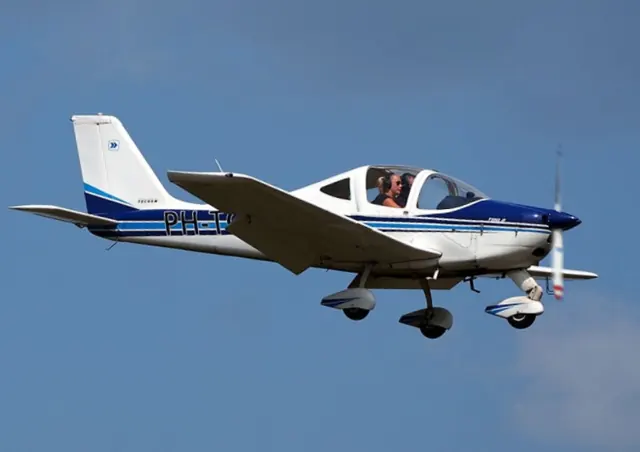
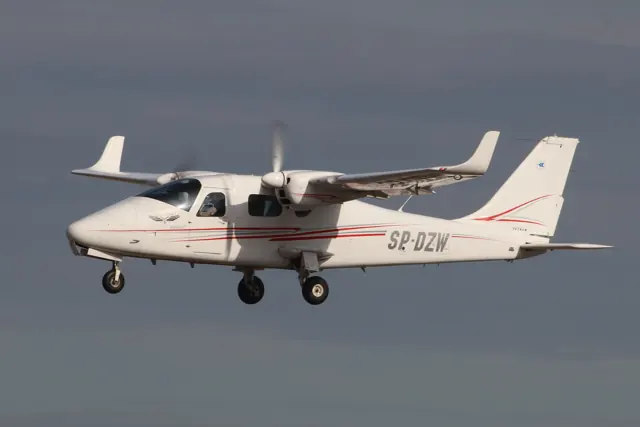
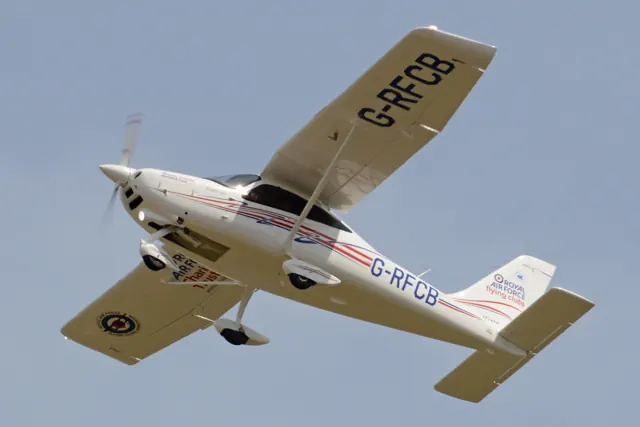
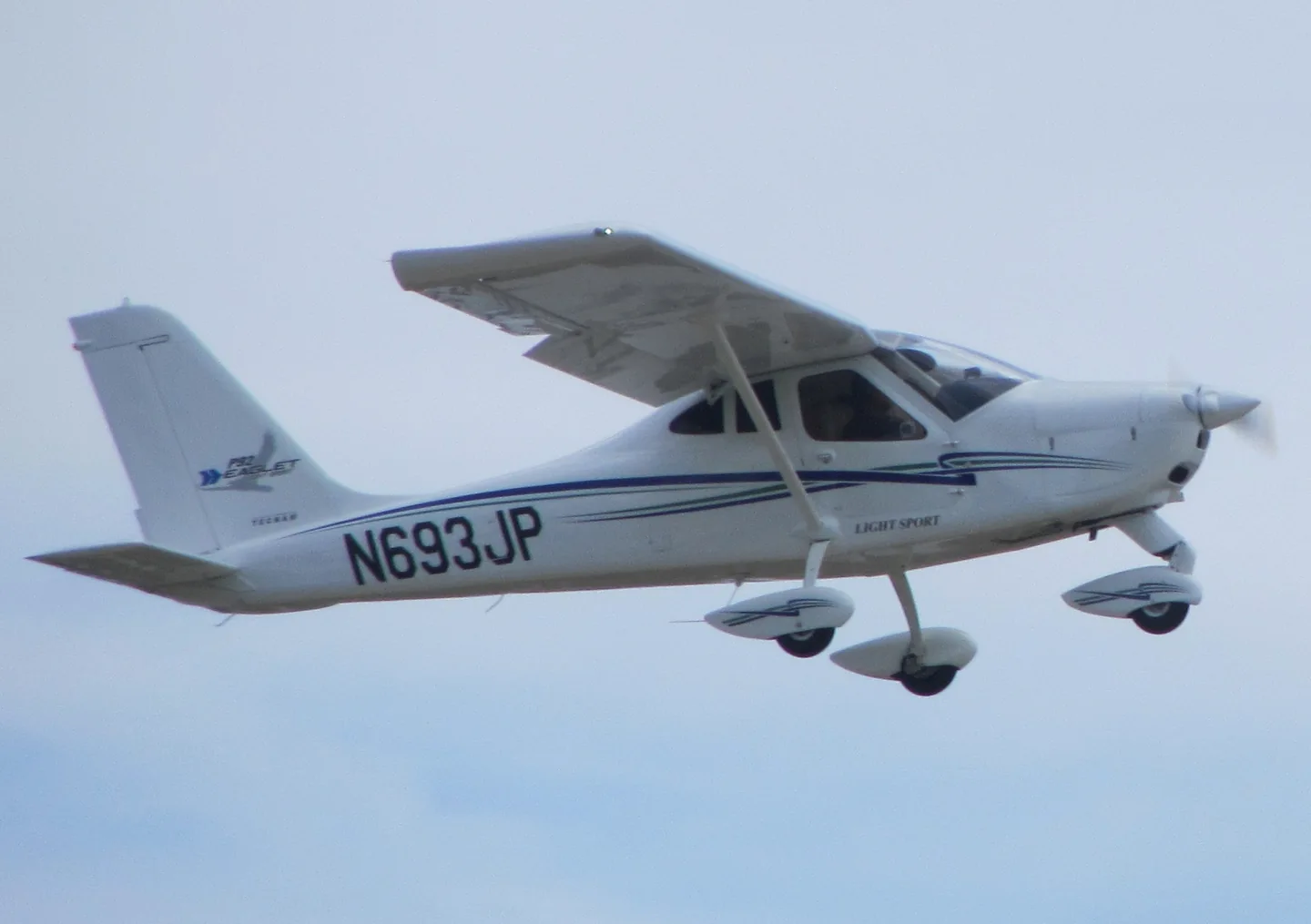
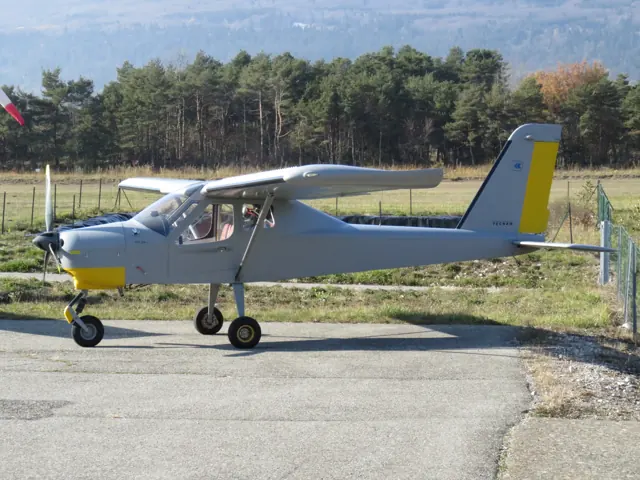
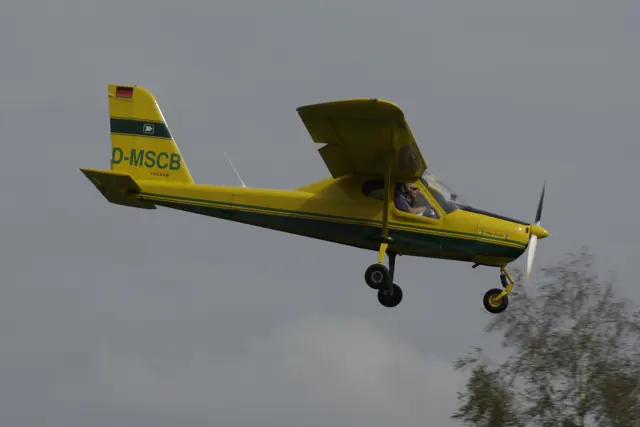
Luigi Pascale designed Tecnam's two-seat high-wing P92, manufactured at Capua. The family includes several configurations with different weights and performance. AeroSachs documents the platforms supported by its simulator package.
Aircraft background
Wikipedia contributors · Read more ↗A windy day challenges an expectation of a very light aircraft
Tallman expected the little Eaglet to feel vulnerable to a windy day around Chesapeake Bay. Instead, the demonstration left her impressed by its steadiness. Flying with Helen Woods and Colin Russell, she had time to explore both its handling and the unexpectedly comfortable surroundings of a small training aircraft. The cockpit contributed to that change of opinion.
AOPA · June 2009. P92 Eaglet N115TE with Helen Woods and Colin Russell of Chesapeake Sport Pilot, a training organisation and dealer.
AOPA · Read more ↗The later release restores the stock KAP140
After adding WTT autopilot logic in v1.7.1, the publisher restored the stock KAP140 in v1.7.5 for MSFS 2024 compatibility. The later entry defines the documented configuration.
Tecnam P92 · AeroSachs · MSFS 2020 · MSFS 2024
AeroSachs · Read more ↗Into the cockpit
 YouTube
GreatFlyer · 6 min ·
Tecnam P92 Lowpass at Paphos Intl Airport - GoPro Cockpit View - High Speed Flyby
A P92 cockpit view during a low pass at Paphos.
Real aircraft · Tecnam P92
Watch on YouTube ↗Preview images are served by AirframeDB. Videos open on YouTube only when you choose to watch.
Meet Tecnam P92
Luigi Pascale designed Tecnam's two-seat high-wing P92, manufactured at Capua. The family includes several configurations with different weights and performance. AeroSachs documents the platforms supported by its simulator package.
Tecnam P92
Aircraft type designators
Use the code for the model you are flying. The linked authority lists the applicable aircraft.
History & design
The Eaglet adapts the P92 for a new market
Tallman’s 2009 report describes the Eaglet as a P92 development aimed at the U.S. market. Its wraparound windscreen and revised cockpit controls formed part of that adaptation. The accounts describe the Eaglet, Echo Super and Echo MkII variants.
AOPA · Light Sport Aircraft: Little giant ↗Historical development and variant scope
Development milestones
Designer: Luigi Pascale
First flight: 14 March 1993
Wikipedia contributors · Tecnam P92 ↗Tecnam P92 · family/variant named by the source · Wikipedia revision 1361813905
Pilot accounts
A windy day challenges an expectation of a very light aircraft
Tallman expected the little Eaglet to feel vulnerable to a windy day around Chesapeake Bay. Instead, the demonstration left her impressed by its steadiness. Flying with Helen Woods and Colin Russell, she had time to explore both its handling and the unexpectedly comfortable surroundings of a small training aircraft.
The cockpit contributed to that change of opinion. Leather seats, the view through the wraparound windscreen and even a cupholder made the aircraft feel welcoming. Russell and Woods also showed her how they used it in training, including demonstrations of coordination and slow-flight behaviour.
AOPA · June 2009. P92 Eaglet N115TE with Helen Woods and Colin Russell of Chesapeake Sport Pilot, a training organisation and dealer.
Read the full account · AOPA ↗Enjoying the coast means remembering the approach
With dealer Bruce Stark handing over the keys and going for a coffee, Hitchen and Murray Gerraty took the Echo MkII out along Victoria’s Surf Coast. The flight had small learning moments: Hitchen initially raised the nose too far on departure and later found his thumb working the wrong direction on the trim switch. Once settled, he enjoyed making turns and looking along the coastline.
That enjoyment distracted him from preparing the return. He arrived higher than intended, and a fast first approach ended in a go-around. The next circuit produced a gentle touchdown, with another landing improving on it.
Australian Flying · October 2021. February 2021 flight in a P92 Echo MkII from Barwon Heads with Murray Gerraty; not an Echo Classic or Eaglet test.
Read the full account · Australian Flying ↗A spot-landing contest becomes part of an affectionate review
The blogger’s affection for the Echo Super appears in a story about a spot-landing competition. A friend added a flash and sound effect to the accompanying video, making the touchdown look more dramatic than the writer said it really was. The author also admitted that the performance had not won the competition. These details come from the written account; the embedded video is not the basis of this summary.
Elsewhere, the review describes an uncomplicated aircraft that the writer enjoyed flying despite its practical looks. Good visibility and predictable responses mattered more than glamour. Cabin space was a compromise for two tall occupants, and gusty approaches still demanded attention.
Personal flying blog · displayed date 1 September 2009, despite a July URL. Public author handle retained; Echo Super account, with no independently established pilot biography.
Read the full account · CriticalAlpha ↗In your simulator
Systems, equipment and documentation for each developer’s aircraft.
MSFS 2020 · MSFS 2024Tecnam P92
AeroSachs · Released
Tecnam P92
AeroSachs · Released
Aircraft specifications
Published figures for the named real-aircraft variant. Simulator equipment and performance can differ.
| Specification | Published value |
|---|---|
| Length | 6.4 m (21 ft 0 in) |
| Wingspan | 8.7 m (28 ft 7 in) |
| Height | 2.5 m (8 ft 2 in) |
| Empty weight | 356 kg (785 lb) |
| Max takeoff weight | 600 kg (1,323 lb) |
| Powerplant | 1 × Rotax 912ULS 4-cylinder air-cooled horizontally-opposed piston engine, 73.5 kW (98.6 hp) |
| Propellers | 2-bladed Sensenich |
| Maximum speed | 213 km/h (132 mph, 115 kn) Max cruise speed TAS |
| Stall speed | 72 km/h (45 mph, 39 kn) flaps down |
| Range | 1,296 km (805 mi, 700 nmi) |
| Rate of climb | 4.9 m/s (960 ft/min) |
Manuals & resources
Find your next read
Choose a topic for a short introduction and a link to the original source. Simulator references identify the developer and edition they cover.
Simulator documentation
The later release restores the stock KAP140Tecnam P92 · AeroSachs · MSFS 2020 · MSFS 2024
After adding WTT autopilot logic in v1.7.1, the publisher restored the stock KAP140 in v1.7.5 for MSFS 2024 compatibility. The later entry defines the documented configuration.
Publisher changelog, v1.7.1 and v1.7.5
AeroSachs · Read the source ↗Choose a navigation fit for the Echo ClassicTecnam P92 · AeroSachs · MSFS 2020 · MSFS 2024
The package offers Aera, PMS GTN750, TDS GTNXi and GNS430 configurations. The publisher identifies the model as the Echo Classic with a 100-hp Rotax 912 ULS.
AeroSachs product description and v1.7.0 changelog
AeroSachs · Read the source ↗Select stepped or continuous flap movementTecnam P92 · AeroSachs · MSFS 2020 · MSFS 2024
Version 1.7.0 adds an EFB choice between stepped and continuous flap-lever movement. This supersedes the earlier stepped-only change recorded in v1.5.
Publisher version history
AeroSachs · Read the source ↗Choose an alternative electrical-switch layoutTecnam P92 · AeroSachs · MSFS 2020 · MSFS 2024
Version 1.7.6 adds separate left and right magneto switches with starter and battery switches, selectable through the EFB. The publisher describes a native MSFS 2020 aircraft with MSFS 2024 compatibility.
Publisher v1.7.6 changelog and platform requirements
AeroSachs · Read the source ↗Pilot account
A windy day challenges an expectation of a very light aircraftAOPA · June 2009. P92 Eaglet N115TE with Helen Woods and Colin Russell of Chesapeake Sport Pilot, a training organisation and dealer.
Tallman expected the little Eaglet to feel vulnerable to a windy day around Chesapeake Bay. Instead, the demonstration left her impressed by its steadiness. Flying with Helen Woods and Colin Russell, she had time to explore both its handling and the unexpectedly comfortable surroundings of a small training aircraft. The cockpit contributed to that change of opinion. Leather seats, the view through the wraparound windscreen and even a cupholder made the aircraft feel welcoming.
Jill W. Tallman
AOPA · Read the source ↗Enjoying the coast means remembering the approachAustralian Flying · October 2021. February 2021 flight in a P92 Echo MkII from Barwon Heads with Murray Gerraty; not an Echo Classic or Eaglet test.
With dealer Bruce Stark handing over the keys and going for a coffee, Hitchen and Murray Gerraty took the Echo MkII out along Victoria’s Surf Coast. The flight had small learning moments: Hitchen initially raised the nose too far on departure and later found his thumb working the wrong direction on the trim switch. Once settled, he enjoyed making turns and looking along the coastline. That enjoyment distracted him from preparing the return.
Steve Hitchen
Australian Flying · Read the source ↗Read the original documentation from the people who created it. Manuals open on their publisher’s website.
Aircraft background
Tecnam P92Wikipedia contributors · Research background · retrieved 2026-09-12Product
TECNAM P92 ULTRALIGHT & GA MSFSAeroSachs · Official developer / designated store catalogue · checked 2026-09-12Type designator
ICAO Doc 8643 — aircraft type designatorsInternational Civil Aviation Organization · Public search data retrieved 2026-09-14; authority update 2026-09-03Built-in force-feedback profiles
Read the documentary basis, editable starting settings and remaining questions for the aircraft you fly. Each explanation refers to the exact profile revision shown.
Catalogue programme-20261022-v1 · 2 profile choices
AeroSachs Tecnam P92 Echo Classic UL / GA
AeroSachs · Free and Pro · Revision 2 · Inherited starting point
MSFS 2020 · MSFS 2024
AeroSachs Tecnam P92 Echo Classic UL / GA: The stabilator/tab arrangement motivates reversible resistance.
Tecnam P92
Free and Pro · Revision 1 · Partial review
MSFS 2024 · MSFS 2020
Tecnam P92: The stabilator/tab arrangement motivates reversible resistance.
AeroSachs Tecnam P92 Echo Classic UL / GA
AeroSachs Tecnam P92 Echo Classic UL / GA: The stabilator/tab arrangement motivates reversible resistance.
Aircraft and simulator scope
- AeroSachs Tecnam P92 Echo Classic UL / GA · AeroSachs · MSFS 2020 · Add-on starting point
- AeroSachs Tecnam P92 Echo Classic UL / GA · AeroSachs · MSFS 2024 · Add-on starting point
The simulator model and controls
Luigi Pascale designed Tecnam's two-seat high-wing P92, manufactured at Capua. The family includes several configurations with different weights and performance. AeroSachs documents the platforms supported by its simulator package.
This profile selects AeroSachs Tecnam P92 Echo Classic UL / GA for MSFS 2020, MSFS 2024.
How this profile feels
The stabilator/tab arrangement motivates reversible resistance. Spring resistance builds with the selected airspeed response. A separate aerodynamic term adds speed-dependent control load.
Electric pitch trim serves the longitudinal tab; ground-set aileron trim is separate. Valid trim provides the configured pressure relief. Autopilot following is off.
Controls and trim
The P92 manual describes stabilator pushrods, mixed aileron linkage and electric longitudinal tab trim. Product options change instrument units and stepped/continuous flap operation, with versioned automatic-flight equipment.
The selected implementation
UL and GA instrument choices use different airspeed/tachometer units. Flap operation can select stepped or continuous movement.
About the values
The gains are normalized profile settings. They describe the chosen effect balance; hand force depends on the device and its output limits. IAS references are tuning values rather than operating limits. Physical acceptance of this revision remains pending.
Documentary review and sources
These decisions describe the documentary basis and remaining gaps for this revision. Aircraft documentation and a starting setting describe different kinds of evidence.
Aircraft and variant
InheritedThis profile selects AeroSachs Tecnam P92 Echo Classic UL / GA for MSFS 2020, MSFS 2024.
Flight controls
InheritedThe P92 manual describes stabilator pushrods, mixed aileron linkage and electric longitudinal tab trim. Product options change instrument units and stepped/continuous flap operation, with versioned automatic-flight equipment.
Trim
InheritedElectric pitch trim serves the longitudinal tab; ground-set aileron trim is separate. Pitch authority 0.3 provides load relief and permitted centre movement; roll authority is 0.
Autopilot and stability
InheritedAutopilot following is off; the configured spring and load retain the hardware feel.
Equipment
InheritedUL and GA instrument choices use different airspeed/tachometer units. Flap operation can select stepped or continuous movement.
Speeds and limits
InheritedThe indicated-speed references set the profile response scale; they are separate from aircraft operating limits.
Simulator integration
InheritedThe profile targets msfs2020, msfs2024. Add-on-specific controls use only the supported references configured by this profile.
Force-feedback settings
InheritedThe settings define the profile’s effect balance. Device output limits affect physical hand force.
Starting settings and their rationale
These configured values are starting estimates. The explanations describe what each setting controls; physical validation appears separately below.
| Setting | Starting value | What it controls and why |
|---|---|---|
| Spring strength | Starting value0.74 | What it controls and whyThe stabilator/tab arrangement motivates reversible resistance. The baseline spring is 0.74. Its low-speed blend reaches baseline strength at 55 KIAS. |
| Master force gain | Starting value0.85 | What it controls and whyScales overall profile strength while preserving effect balance, subject to device and output limits. |
| Profile force gain | Starting value0.8 | What it controls and whyThe aerodynamic-load gain is 0.8 with an indicated-speed reference of 95 KIAS. This supplies speed-dependent loading alongside the spring. |
| Force tuning speed/reference | Starting value95 kt | What it controls and whySets the IAS reference for aerodynamic loading. It is an estimate, not published cruise TAS or a flight limit. |
| Spring response reference speed | Starting value55 kt | What it controls and whySets the IAS where the low-speed blend reaches baseline strength; high-speed stiffening also uses it. |
| Aileron force scale | Starting value0.76 | What it controls and whyRoll and pitch aerodynamic scales are 0.76 and 1, respectively. They set the aerodynamic axis balance. No custom spring-travel curve is enabled. |
| Elevator force scale | Starting value1 | What it controls and whyScales pitch aerodynamic loading; pitch spring travel and trim responses are separate settings. |
| Trim feel | Starting valueDisabled | What it controls and whyRetained for compatibility and group membership. Trim relief, rather than this flag, controls centre movement. |
| Trim relief | Starting valueEnabled | What it controls and whyAllows trim relief with supported control law and valid telemetry. Axis authorities set its amount. |
| Autopilot follow | Starting valueDisabled | What it controls and whyAutopilot following is off; the configured spring and load retain the hardware feel. |
| Autopilot neutral hold | Starting valueDisabled | What it controls and whyPermits centering hold during a supported AP state, separate from following a moving target. |
| Output force limit | Starting value0.55 | What it controls and whyCaps directed-force output. Native spring effects and device limits remain separate. |
All 44 starting settings and their rationale
The settings define the profile’s effect balance. Device output limits affect physical hand force.
| Setting | Starting value | What it controls and why |
|---|---|---|
| Spring strength | Starting value0.74 | What it controls and whyThe stabilator/tab arrangement motivates reversible resistance. The baseline spring is 0.74. Its low-speed blend reaches baseline strength at 55 KIAS. |
| Spring deadband | Starting value0.04 | What it controls and whySets travel around the centre before the baseline spring resists. Smaller values engage it sooner. |
| Profile force gain | Starting value0.8 | What it controls and whyThe aerodynamic-load gain is 0.8 with an indicated-speed reference of 95 KIAS. This supplies speed-dependent loading alongside the spring. |
| Master force gain | Starting value0.85 | What it controls and whyScales overall profile strength while preserving effect balance, subject to device and output limits. |
| QBlend Enabled | Starting valueEnabled | What it controls and whyAllows baseline spring strength to rise with indicated airspeed where the control law permits it. |
| QSpring Minimum Factor | Starting value0.55 | What it controls and whySets low-speed spring strength as a fraction of baseline when blending is enabled. One keeps full strength. |
| QSpring Start Knots | Starting value20 kt | What it controls and whySets the IAS where the low-speed spring blend starts rising. This is a feel threshold, not a flight limit. |
| Spring response reference speed | Starting value55 kt | What it controls and whySets the IAS where the low-speed blend reaches baseline strength; high-speed stiffening also uses it. |
| Force tuning speed/reference | Starting value95 kt | What it controls and whySets the IAS reference for aerodynamic loading. It is an estimate, not published cruise TAS or a flight limit. |
| Airspeed spring stiffening gain | Starting value0.15 | What it controls and whyThe high-speed spring-stiffening gain is 0.15. It strengthens the permitted spring response above 55 KIAS, with the squared-speed ratio capped at 5. |
| Airspeed spring stiffening limit | Starting value5 | What it controls and whyLimits the squared airspeed ratio used for high-speed spring stiffening; it is not a device-force cap. |
| Aileron force scale | Starting value0.76 | What it controls and whyRoll and pitch aerodynamic scales are 0.76 and 1, respectively. They set the aerodynamic axis balance. No custom spring-travel curve is enabled. |
| Elevator force scale | Starting value1 | What it controls and whyScales pitch aerodynamic loading; pitch spring travel and trim responses are separate settings. |
| Output force limit | Starting value0.55 | What it controls and whyCaps directed-force output. Native spring effects and device limits remain separate. |
| Trim feel | Starting valueDisabled | What it controls and whyRetained for compatibility and group membership. Trim relief, rather than this flag, controls centre movement. |
| Trim relief | Starting valueEnabled | What it controls and whyAllows trim relief with supported control law and valid telemetry. Axis authorities set its amount. |
| Elevator Authority | Starting value0.3 | What it controls and whyElectric pitch trim serves the longitudinal tab; ground-set aileron trim is separate. Pitch authority 0.3 provides load relief and permitted centre movement; roll authority is 0. |
| Aileron Authority | Starting value0 | What it controls and whyScales supported roll-trim relief and permitted centre movement. Zero removes roll response. |
| Force Trim Enabled | Starting valueDisabled | What it controls and whyEnables local force trim, separate from aircraft-owned trim and add-on integration qualification. |
| GLoad Enabled | Starting valueEnabled | What it controls and whyAllows load-factor changes to modify permitted spring laws. Passive fly-by-wire feel can suppress it. |
| Rate Damping Enabled | Starting valueEnabled | What it controls and whyEnables rate damping with the configured coefficients and control law. |
| Autopilot follow | Starting valueDisabled | What it controls and whyAutopilot following is off; the configured spring and load retain the hardware feel. |
| Autopilot follow authority | Starting value0.1 | What it controls and whySets admitted AP-follow gain, not a percentage of travel. Runtime ownership and input limits still apply. |
| Autopilot neutral hold | Starting valueDisabled | What it controls and whyPermits centering hold during a supported AP state, separate from following a moving target. |
| Autopilot neutral hold strength | Starting value0.6 | What it controls and whySets admitted AP neutral-hold strength; inactive while neutral hold is disabled. |
| Enabled | Starting valueEnabled | What it controls and whyEnables aerodynamic cues; each still needs nonzero strength and its simulator conditions. |
| Gain | Starting value0.35 | What it controls and whySets stall-buffet strength. Zero removes the cue without changing simulator stalls or warnings. |
| Gain | Starting value0 | What it controls and whySets high-Mach buffet strength; onset and full-strength thresholds are separate. |
| Gain | Starting value0 | What it controls and whySets flap buffet at the configured position and speed gates. Flap movement texture is separate. |
| Maximum flap index | Starting value3 | What it controls and whySets the final flap index for detent normalization. UP plus three detents uses maximum index3. |
| Minimum flap index | Starting value2 | What it controls and whySets the first flap detent that admits buffet; this is a handle index, not degrees. |
| Gain | Starting value0 | What it controls and whySets gear aerodynamic buffet; movement and ground-contact cues are separate. |
| Shaker Enabled | Starting valueDisabled | What it controls and whyPermits shaker at supported warning conditions; the switch does not establish aircraft equipment. |
| Stick shaker amplitude | Starting value0.5 | What it controls and whySets triggered shaker strength; inactive while the shaker feature is disabled. |
| Enabled | Starting valueEnabled | What it controls and whyEnables ground effects; each still needs its own strength and contact or motion telemetry. |
| Gain | Starting value0.4 | What it controls and whySets rolling texture strength, modified by speed, surface and undercarriage configuration. |
| Gain | Starting value0.25 | What it controls and whySets gear-bump texture during ground motion, separate from touchdown impact. |
| Gain | Starting value0.65 | What it controls and whySets landing-impact strength; landing telemetry and response shape determine the pulse. |
| Gain | Starting value0 | What it controls and whySets reverse-thrust vibration with valid reverser and engine conditions. Zero removes the cue. |
| Enabled | Starting valueEnabled | What it controls and whyEnables engine cues with nonzero settings and valid running-engine telemetry. |
| Gain | Starting value0.12 | What it controls and whySets estimated engine vibration using configured telemetry and response, not measured cockpit vibration. |
| Enabled | Starting valueEnabled | What it controls and whyEnables accessory cues with configured strengths and observed accessory movement. |
| Gain | Starting value0.12 | What it controls and whySets texture from observed flap movement; a command without movement does not establish the cue. |
| Gain | Starting value0 | What it controls and whySets texture from observed gear movement, separate from aerodynamic and touchdown effects. |
Limits and open questions
- Force gains, curves and speed references are engineering estimates. Installed-product and physical acceptance remain deferred.
- Historical1998manual is mechanical background. Current flap-mode, trim-breaker and stockKAP140 mapping remain open.
Physical validation
No physical force validation is recorded in this public catalogue for this revision. Documentary review and software checks do not establish how a particular device feels.
Discuss this aircraft (1)
Questions, observations and useful sources from the community.
- What about Tecnam aircraft ? →Related discussion2 replies · Last activity
Content expanded · What’s new
Something missing or a source that needs attention?
Suggest a correction ↗