MSFS
Ryan NYP “Spirit of St. Louis” ↗
The purpose-built Ryan monoplane used by Charles Lindbergh for his 1927 solo Atlantic crossing.
2 implementations+ Compare
Explore the aircraft. Find your simulator. Follow the sources.
The purpose-built Ryan monoplane used by Charles Lindbergh for his 1927 solo Atlantic crossing.
A compact aerobatic biplane family with both single-seat and tandem-seat branches.
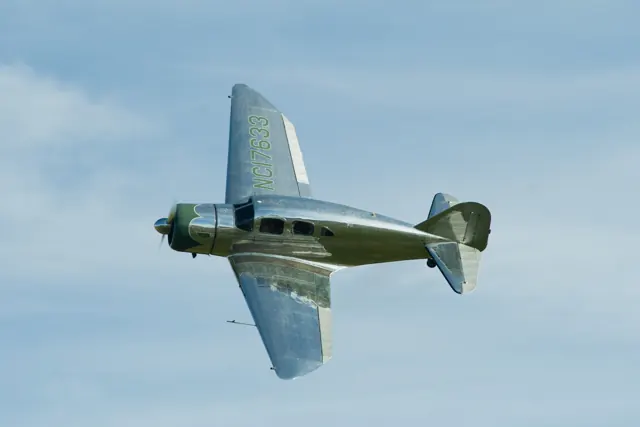
A late-1930s cabin aircraft with metal construction and retractable landing gear.
A large twin-radial transport that carried heavy loads through wartime and post-war freight service.
Epic's experimental light-jet project, represented in simulation by Aerobask.
A large amphibious flying boat built around maritime rescue and utility transport.
A twin-turboprop utility aircraft developed by Reims Aviation with Cessna.
Cirrus's first type-certified aircraft, a composite piston single.
A small observation-helicopter family with a rounded cabin and compact rotor system.
A long-running touring single, familiar in both V-tail and conventional-tail forms.
A tandem-seat light aircraft with a streamlined low-wing layout.
A four-seat touring family whose Commander 114 added a larger engine and further refinements.
A cabin biplane with the lower wing placed ahead of the upper one.
A large twin-engine helicopter from the Super Puma line, used for offshore and public-service work.
A four-engine jetliner that helped establish the shape of long-distance jet travel.
A twin-engine business jet designed to retain some of the utility flexibility associated with the PC-12.
A long-range fighter whose different engine and canopy developments produced several distinct forms.
A small two-seat piston helicopter with a two-bladed main rotor.
A four-engine Airbus wide-body developed in parallel with the A330.
A twin-radial airliner that helped make practical passenger transport a regular business.
A single-engine utility helicopter known as the Écureuil, Squirrel and AStar.
A corrugated-metal, three-engine transport from the formative years of airline travel.
A pressurised touring twin whose piston and turbine-conversion versions make a particularly interesting comparison.
The four-engine Flying Fortress, a major American bomber of the Second World War.
This is AirframeDB’s first release. More features and aircraft research are planned. Leave your email if you’d like occasional updates.