


Start here
A few places to begin, from the aircraft’s story to the people who fly it.
Meet the aircraft
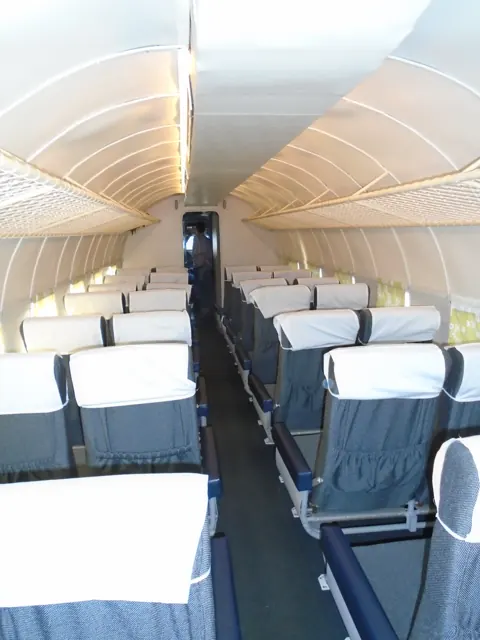
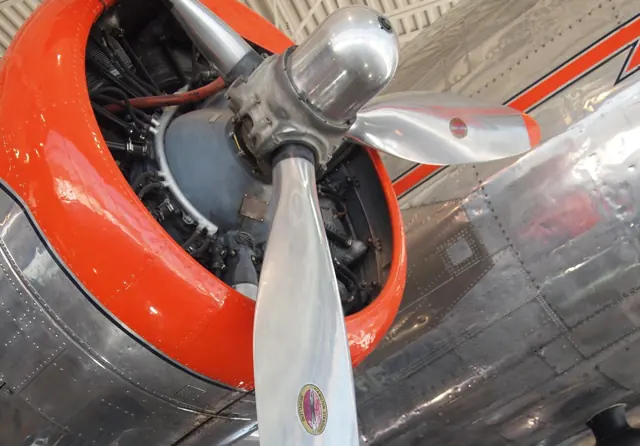
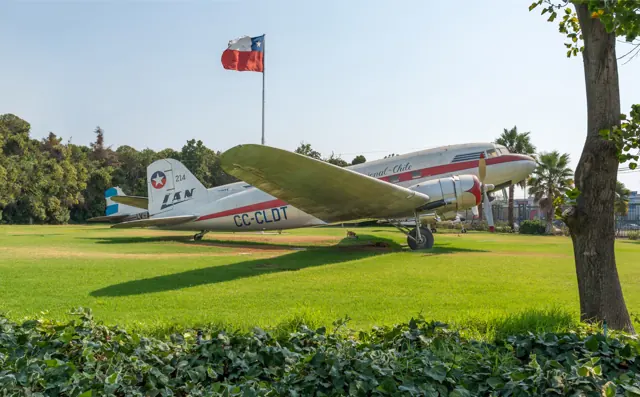
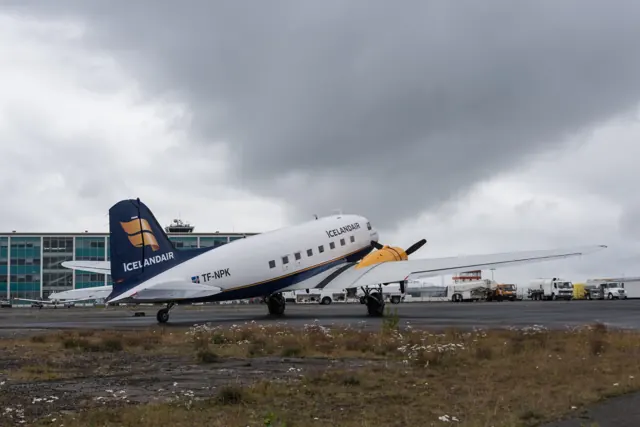
The DC-3 developed from Douglas's earlier DC-2 and sleeper-transport work. Its low-wing metal airframe, retractable main gear and two radial engines became a familiar sight on airline routes. Military derivatives expanded the design's influence during the Second World War. Civilian survivors have carried passengers and freight with a wide range of later equipment.
Aircraft background
Wikipedia contributors · Read more ↗Learning the aeroplane that shared his home airport
Schiff’s introduction to the DC-3 brought him back to the airport where he had first learned to fly. Santa Monica also happened to be the birthplace of the aircraft he was now training in. Jan Aarvik and his family supplied both the aeroplane and the instruction, turning a long-held ambition into a very personal encounter with aviation history.
AOPA Pilot · June 1994. Training with Jan Aarvik in Wright Cyclone-powered N7500A at Santa Monica; this engine installation differs from many DC-3s.
AOPA Pilot · Read more ↗Automatic start can leave a manual reset to do
The manual explains that automatic start changes fuel and engine-control states. Returning to manual operation requires resetting the relevant controls. After automatic shutdown, displayed switch positions may no longer match the simulated state; resetting them or reloading the aircraft restores the intended starting setup.
DC-3 · Microsoft Flight Simulator · MSFS 2024 / MSFS 2020
Microsoft / aircraft developers · Read more ↗Into the cockpit
 YouTube
Probable Cause: Dan Gryder · 16 min ·
Douglas DC-3 Cockpit Ride Along Video!
A DC-3 cockpit ride-along from an operator offering flights and type-rating instruction.
Real aircraft · Douglas DC-3
Watch on YouTube ↗Preview images are served by AirframeDB. Videos open on YouTube only when you choose to watch.
Meet Douglas DC-3
The DC-3 developed from Douglas's earlier DC-2 and sleeper-transport work. Its low-wing metal airframe, retractable main gear and two radial engines became a familiar sight on airline routes. Military derivatives expanded the design's influence during the Second World War.
Civilian survivors have carried passengers and freight with a wide range of later equipment. In simulation, a vintage cockpit with a Sperry system and a modernised navigation installation are different interpretations of that long life. Their manuals explain which period and equipment the virtual aircraft represents.
Douglas DC-3
Douglas → · Explore the family →
Douglas DC-3
Wikipedia contributors · Douglas DC-3 ↗Microsoft Flight Simulator · MSFS 2024 →Microsoft Flight Simulator · MSFS 2020 →DC-3C modernised civilian conversion
VSKYLABS · VSKYLABS Aerospace Simulations Aircraft Center: VSKYLABS DC-3C Airliner ↗VSKYLABS · X-Plane 12 →Aircraft type designators
Use the code for the model you are flying. The linked authority lists the applicable aircraft.
History & design
One airframe passes through several kinds of service
The DC-3 Schiff flew began in military service in 1943 and later worked for Eastern and Mercer. John Travolta subsequently owned it before Jan and Britt Aarvik acquired it. Its later training and film work illustrates the varied second careers of surviving transports.
AOPA Pilot · Flying the DC-3 ↗Airframe history reported in 1994; not a statement of current ownership
Development milestones
First flight: December 17, 1935 ( 1935-12-17 )
Developed from: Douglas DC-2
Wikipedia contributors · Douglas DC-3 ↗Douglas DC-3 · family/variant named by the source · Wikipedia revision 1373845698
Pilot accounts
Learning the aeroplane that shared his home airport
Schiff’s introduction to the DC-3 brought him back to the airport where he had first learned to fly. Santa Monica also happened to be the birthplace of the aircraft he was now training in. Jan Aarvik and his family supplied both the aeroplane and the instruction, turning a long-held ambition into a very personal encounter with aviation history.
The first takeoff demanded a new perspective: raising the tail made the nose seem alarmingly close to the ground. In flight, substantial control forces made good trimming welcome and gave Schiff fresh respect for the crews who had worked these aircraft on airline schedules. Smaller details stayed with him too, including the open-window airflow and oil on his shirt.
AOPA Pilot · June 1994. Training with Jan Aarvik in Wright Cyclone-powered N7500A at Santa Monica; this engine installation differs from many DC-3s.
Read the full account · AOPA Pilot ↗Bringing a retired airliner home through winter
Lamb’s purchase of a retired Ariana DC-3 became a long winter journey shared first with his wife Barbara. Weather and delays disrupted the plan, and she eventually returned home to their children while he continued with Iranian pilot Mohammed Hassani. The recollection includes the improvised arrangements and admitted shortcomings that accompanied the delivery, as well as its excitement.
In Europe, maintenance and additional ferry fuel prepared the aircraft for the Atlantic crossing. A later heater failure made the journey across the cold northern route particularly uncomfortable, with blankets providing what comfort they could. Help from airport staff and an engineer became part of the story of getting home. By the time Lamb reached Canada, the purchased transport had acquired personal significance through the people and difficulties encountered along the way.
Retrospective account of ferrying CF-DBJ from Kabul to Canada. The page’s date and narrative chronology conflict; it also records qualification and equipment shortcomings.
Read the full account · DouglasDC3.com ↗A young copilot watches experience at work in fog
As a young copilot, Sohn watched Captain Bill Robbins work through a difficult arrival in fog. Repeated attempts to find a usable view of the runway gave him time to study how the captain combined instrument flying with knowledge of the surrounding ground. A fence line and differently shaped hay bales became memorable details in the effort to recognise their position.
The crew eventually landed, then dealt with the practical business of obtaining a renewed departure clearance. Years later, Sohn’s attention also turned to the people sitting behind them. He wondered what the passengers had made of the repeated manoeuvring and the limited explanation they received. The recollection therefore looks beyond the satisfaction of completing an arrival, adding a more reflective passenger perspective to a formative cockpit memory.
1999 recollection of a 1961 North Central flight in N17312 with Captain Bill Robbins. Historical cockpit practices are the author’s recollection, not present-day operating guidance.
Read the full account · DouglasDC3.com ↗In your simulator
Systems, equipment and documentation for each developer’s aircraft.
Compare simulator versions →MSFS 2024DC-3
Microsoft Flight Simulator · Released
DC-3
Microsoft Flight Simulator · Released
MSFS 2020DC-3
Microsoft Flight Simulator · Released
DC-3
Microsoft Flight Simulator · Released
X-Plane 12DC-3C Airliner
VSKYLABS · Released
DC-3C Airliner
VSKYLABS · Released
X-Plane 12DC-3 v2
Leading Edge Simulations · Released
DC-3 v2
Leading Edge Simulations · Released
Aircraft specifications
Published figures for the named real-aircraft variant. Simulator equipment and performance can differ.
| Specification | Published value |
|---|---|
| Length | 64 ft 5 in (19.7 m) |
| Wingspan | 95 ft 0 in (29.0 m) |
| Height | 16 ft 9 in (5.16 m) (level attitude) 23 ft 6 in |
| Wing area | 987 sq ft (91.7 m² ) |
| Empty weight | 16,865 lb (7,650 kg) |
| Gross weight | 25,200 lb (11,431 kg) payload w/full fuel, 3,446 lb |
| Powerplant | 2 × Pratt & Whitney R-1830-S1C3G Twin Wasp 14-cyl. air-cooled two row radial piston engine, 1,200 hp (890 kW) each |
| Propellers | 3-bladed Hamilton Standard 23E50 series, 11 ft 6 in (3.5 m) diameter hydraulically controlled constant speed, feathering |
| Maximum speed | 223 kn (257 mph, 413 km/h) at 8,500 ft (2,590 m) |
| Cruise speed | 183 kn (211 mph, 339 km/h) |
| Stall speed | 68.0 kn (78.2 mph, 125.9 km/h) |
| Range | 1,370 nmi (1,580 mi, 2,540 km) (maximum fuel, 3500 lb payload), cruise speed/range at 10,000 ft ASL, cruise fuel consumption of 94 gph at 50% power, 157kt IAS, 1,740 nm |
| Service ceiling | 23,200 ft (7,100 m) , with one engine operative, 9,000 ft |
| Rate of climb | 1,140 ft/min (5.8 m/s) , rate of climb at sea level with one engine operative, 200 fpm |
Manuals & resources
Find your next read
Choose a topic for a short introduction and a link to the original source. Simulator references identify the developer and edition they cover.
Simulator documentation
Automatic start can leave a manual reset to doDC-3 · Microsoft Flight Simulator · MSFS 2024 / MSFS 2020
The manual explains that automatic start changes fuel and engine-control states. Returning to manual operation requires resetting the relevant controls. After automatic shutdown, displayed switch positions may no longer match the simulated state; resetting them or reloading the aircraft restores the intended starting setup.
Gathered MSFS operations manual · PDF p.2
Microsoft / aircraft developers · Read the source ↗Open up the panel view and check the represented fuel systemDC-3 · Microsoft Flight Simulator · MSFS 2024 / MSFS 2020
Clicking the pedestal toggles the yokes to make the cockpit easier to inspect. The manual also states that additional cabin ferry-fuel tanks are not included in this simulation, a useful distinction from long-distance delivery aircraft described in real-world accounts.
Gathered MSFS operations manual · PDF pp.3–4
Microsoft / aircraft developers · Read the source ↗Choose a period or modernised cockpitDC-3 · Microsoft Flight Simulator · MSFS 2024 / MSFS 2020
The DC-3 guide describes trim tabs and hydraulically operated auxiliary systems. It also offers a vintage Sperry installation or a modern GNS/autopilot configuration. Those choices represent different cockpit equipment, making the selected version important when looking up navigation or automation controls.
Archived simulator manual; installed package revision not observed · PDF pp.5-6,10
Microsoft / aircraft developers · Read the source ↗Released product and variantsDC-3C Airliner · VSKYLABS · X-Plane 12
The DC-3C is a modernised civilian development based on a C-47A. VSKYLABS equips it with G1000-based avionics, a matching autopilot and a passenger cabin; the military C-47B is sold separately.
Official developer / designated-store reference · checked 2026-09-14
VSKYLABS · Read the source ↗Pilot account
Learning the aeroplane that shared his home airportAOPA Pilot · June 1994. Training with Jan Aarvik in Wright Cyclone-powered N7500A at Santa Monica; this engine installation differs from many DC-3s.
Schiff’s introduction to the DC-3 brought him back to the airport where he had first learned to fly. Santa Monica also happened to be the birthplace of the aircraft he was now training in. Jan Aarvik and his family supplied both the aeroplane and the instruction, turning a long-held ambition into a very personal encounter with aviation history. The first takeoff demanded a new perspective: raising the tail made the nose seem alarmingly close to the ground.
Barry Schiff
AOPA Pilot · Read the source ↗Bringing a retired airliner home through winterRetrospective account of ferrying CF-DBJ from Kabul to Canada. The page’s date and narrative chronology conflict; it also records qualification and equipment shortcomings.
Lamb’s purchase of a retired Ariana DC-3 became a long winter journey shared first with his wife Barbara. Weather and delays disrupted the plan, and she eventually returned home to their children while he continued with Iranian pilot Mohammed Hassani. The recollection includes the improvised arrangements and admitted shortcomings that accompanied the delivery, as well as its excitement. In Europe, maintenance and additional ferry fuel prepared the aircraft for the Atlantic crossing.
Jack Lamb
DouglasDC3.com · Read the source ↗Developer documentation
DC-3 v2 — product listingDC-3 v2 · X-Plane 12
Product listing captured 2026-09-23; edition scope from the reviewed catalogue
www.x-aviation.com · Read the source ↗Read the original documentation from the people who created it. Manuals open on their publisher’s website.
Manual
DC-3 Operations ManualMicrosoft / aircraft developers Microsoft Flight Simulator aircraft manualsMicrosoft / aircraft developersAircraft background
Douglas DC-3Wikipedia contributors · Research background · Wikipedia revision 1373845698 · retrieved 2026-09-12Resource
MSFS 2024 FAQ and edition aircraft inventoryMicrosoft MSFS 2020 FAQ and edition aircraft inventoryMicrosoftDeveloper documentation
VSKYLABS DC-3C Airliner. Highly-Engineered DC-3C simulation add-on for X-Plane.VSKYLABS · Official developer / designated-store reference · checked 2026-09-14 VSKYLABS Aerospace Simulations Aircraft Center: VSKYLABS DC-3C AirlinerVSKYLABS · Official developer / designated-store reference · checked 2026-09-14Type designator
ICAO Doc 8643 — aircraft type designatorsInternational Civil Aviation Organization · Public search data retrieved 2026-09-14; authority update 2026-09-03Product
LES Douglas DC-3 v2, X-Aviationwww.x-aviation.com · Product listing captured 2026-09-23; edition scope from the reviewed catalogueBuilt-in force-feedback profiles
Read the documentary basis, editable starting settings and remaining questions for the aircraft you fly. Each explanation refers to the exact profile revision shown.
Catalogue programme-20261022-v1 · 9 profile choices
Got Friends DC-3 Amphibian Runway
Got Friends · Free and Pro · Revision 3 · Inherited starting point
MSFS 2020
Got Friends DC-3 Amphibian Runway: Reversible yoke loading follows the manually operated transport controls.
Got Friends DC-3 Amphibian Water
Got Friends · Free and Pro · Revision 3 · Inherited starting point
MSFS 2020
Got Friends DC-3 Amphibian Water: Reversible yoke loading follows the manually operated transport controls.
Got Friends DC-3 JATO
Got Friends · Free and Pro · Revision 3 · Inherited starting point
MSFS 2020
Got Friends DC-3 JATO: Reversible yoke loading follows the manually operated transport controls.
Got Friends DC-3 JATO Skis
Got Friends · Free and Pro · Revision 3 · Inherited starting point
MSFS 2020
Got Friends DC-3 JATO Skis: Reversible yoke loading follows the manually operated transport controls.
Leading Edge Simulations DC-3 v2
Leading Edge Simulations · Free and Pro · Revision 3 · Inherited starting point
X-Plane 12
Leading Edge Simulations DC-3 v2: Reversible yoke loading follows the manually operated transport controls.
VSKYLABS DC-3 Airliner NXG
VSKYLABS · Free and Pro · Revision 4 · Inherited starting point
X-Plane 12
VSKYLABS DC-3 Airliner NXG: Reversible yoke loading follows the manually operated transport controls.
VSKYLABS DC-3 Airliner NXG Skis
VSKYLABS · Free and Pro · Revision 3 · Inherited starting point
X-Plane 12
VSKYLABS DC-3 Airliner NXG Skis: Reversible yoke loading follows the manually operated transport controls.
Douglas DC-3
Free and Pro · Revision 2 · Partial review
MSFS 2024 · MSFS 2020 · X-Plane 12
Douglas DC-3: Reversible yoke loading follows the manually operated transport controls.
Douglas DC-3 Civil Airliner Skis
Free and Pro · Revision 1 · Partial review
MSFS 2020 · MSFS 2024 · X-Plane 12
A twin-radial airliner that helped make practical passenger transport a regular business.
Discuss this aircraft (0)
Questions, observations and useful sources from the community.
No published discussions yet. Bring a question or share a useful source.
Open aircraft discussions →Content expanded · What’s new
Something missing or a source that needs attention?
Suggest a correction ↗