
Start here
A few places to begin, from the aircraft’s story to the people who fly it.
Meet the aircraft
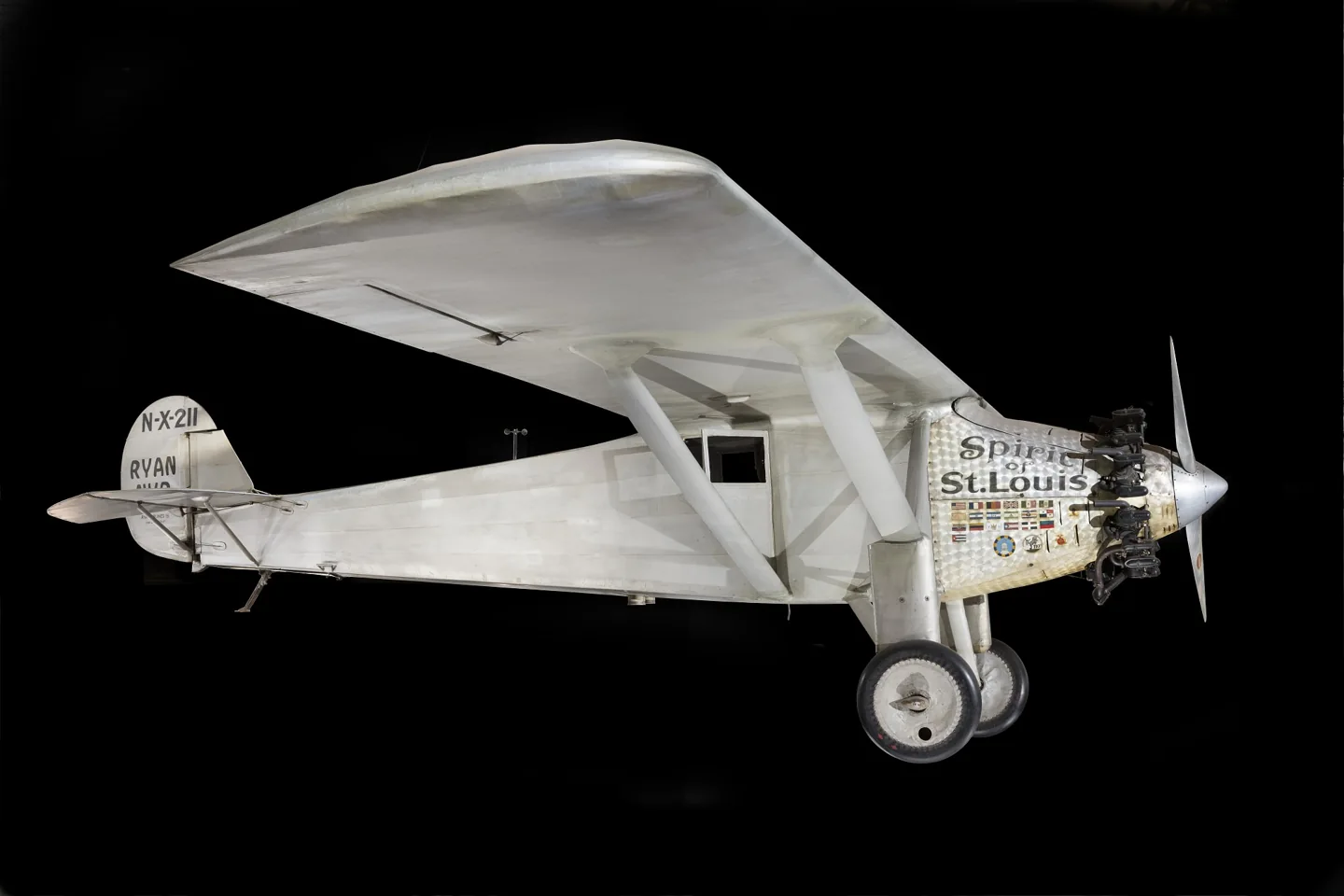
Ryan built the Spirit of St. Louis to carry fuel for Charles Lindbergh's solo Atlantic crossing. A high wing and single radial engine surrounded a one-seat cockpit whose fuel tanks blocked the forward view. Lindbergh flew from New York to Paris in May 1927.
Aircraft background
Wikipedia contributors · Read more ↗Finding the right field at the end of an ocean crossing
Lindbergh recalled the heavily laden aircraft gathering speed slowly on the rain-softened field. Once past halfway, he judged that it would clear the obstacles ahead. After passing a tractor and telephone wires, he turned away from higher trees and began following his compass course. An accompanying photographer’s aircraft eventually turned back, leaving him to continue alone.
First-person extracts describing the original aircraft’s May 1927 flight. This compilation reproduces his takeoff and arrival recollections; later replica pilots appear separately.
CharlesLindbergh.com · Read more ↗Into the cockpit
 YouTube
Kermit Weeks Channel - Over 490 Videos to See! · 27 min ·
Spirit of St. Louis - Cockpit Experience Development - Part One
Kermit Weeks describes a project to recreate the Spirit of St. Louis cockpit experience.
Museum experience development · cockpit recreation
Watch on YouTube ↗Preview images are served by AirframeDB. Videos open on YouTube only when you choose to watch.
Meet Ryan NYP “Spirit of St. Louis”
Ryan built the Spirit of St. Louis to carry fuel for Charles Lindbergh's solo Atlantic crossing. A high wing and single radial engine surrounded a one-seat cockpit whose fuel tanks blocked the forward view. Lindbergh flew from New York to Paris in May 1927.
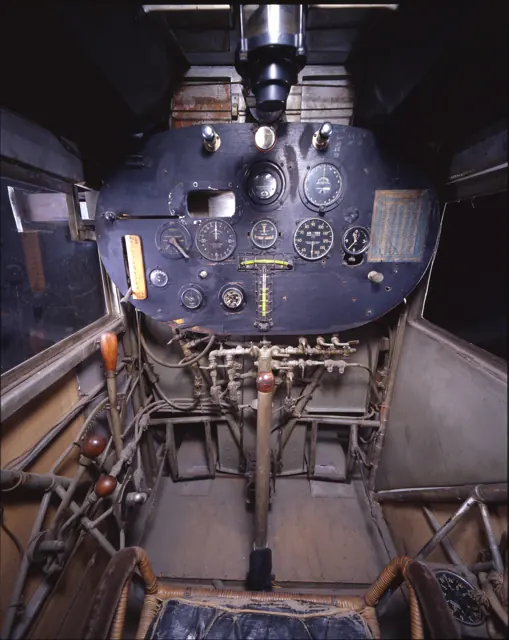
The restricted visibility and sparse cockpit reflect this purpose-built aircraft's long-distance mission. The simulator represents that customised layout.
Ryan NYP “Spirit of St. Louis”
Ryan NYP “Spirit of St. Louis”
Wikipedia contributors · Spirit of St. Louis ↗Microsoft Flight Simulator · MSFS 2024 →Microsoft Flight Simulator · MSFS 2020 →Aircraft type designators
A model-specific ICAO or FAA designator has not been confirmed in the references reviewed for this aircraft.
History & design
Replicas preserve different parts of the original experience
Schiff’s EAA replica had a second seat in space occupied by fuel tanks in the original aircraft. A different engine, starter, avionics, brakes and tailwheel supported its later flying role. The replica's equipment differs from the original aircraft.
AOPA Pilot / Barry Schiff · Spirit flies on ↗EAA second replica described in 2002
Development milestones
Designer: Donald A. Hall
First flight: April 28, 1927
Developed from: Ryan M-2
Wikipedia contributors · Spirit of St. Louis ↗Spirit of St. Louis · family/variant named by the source · Wikipedia revision 1369490121
Pilot accounts
Finding the right field at the end of an ocean crossing
Lindbergh recalled the heavily laden aircraft gathering speed slowly on the rain-softened field. Once past halfway, he judged that it would clear the obstacles ahead. After passing a tractor and telephone wires, he turned away from higher trees and began following his compass course. An accompanying photographer’s aircraft eventually turned back, leaving him to continue alone.
At the other end of the journey, recognising Paris did not immediately settle where to land. He saw the lights of Le Bourget but thought the airfield should be farther from the city. He flew beyond it to check, then returned and descended until he could identify hangars and roads packed with cars. A low pass and a circuit into wind brought the long flight to its end.
First-person extracts describing the original aircraft’s May 1927 flight. This compilation reproduces his takeoff and arrival recollections; later replica pilots appear separately.
Read the full account · CharlesLindbergh.com ↗A long control stick starts to make sense
Schiff approached the replica with a sense of occasion, then discovered how much work its cockpit demanded. Daubner occupied the forward seat during the checkout, blocking the small windows ahead. From the rear seat, Schiff had to rely on side views and peripheral vision as he learned the aircraft.
The control stick initially seemed unnecessarily tall. As the flight continued, his hand crept higher to gain more leverage against the heavy ailerons. The rudder and elevator needed continuing attention too, and even light disturbances could interrupt the aircraft’s balance. Those demands increased his affection for the machine as well as his respect for Lindbergh. A relatively short flight over Wisconsin made the endurance required for the original ocean crossing much harder to imagine.
AOPA Pilot, May 2002. Checkout with George Daubner in EAA’s second replica, fitted with a Continental engine, brakes and a tailwheel; not the original long-range aircraft.
Read the full account · AOPA Pilot / Barry Schiff ↗Looking through the skylight to see the next turn
Hammond described flying the replica through a combination of side-window views and anticipation. The windows ahead of his shoulders supplied useful peripheral references, while the skylight let him look towards the space into which he was turning. Seeing where the aircraft was going required a different habit from looking straight ahead through a windscreen.
Landing brought another adjustment. He used a sideslip to keep the runway visible and preferred some headwind, because the clean airframe could float along the approach. These were familiar characteristics to a pilot who regularly flew the aircraft, rather than reasons to dismiss it as impossibly difficult. Hammond still found the opportunity remarkable: the routine work of operating the replica had not removed the pleasure of flying such an unusual machine.
Interview published in February 2026. Old Rhinebeck Aerodrome’s chief pilot describes its flying replica, which omits the original long-range fuel tanks.
Read the full account · Vintage Aviation News ↗Preparing for an unfamiliar view before the first flight
Before flying the replica, Cassens practised in another aircraft with its windscreen made opaque. The exercise prepared him for the restricted forward view that would be part of his new cockpit. After the first flight, he reported that the aircraft had behaved well, although its low drag made it reluctant to slow down and the ailerons felt somewhat heavy.
The flight completed a project with a much longer history than those preparations. Cole Palen had obtained a Wright engine in the 1970s, and work continued after his death. Cassens took the project forward with assistance from the museum holding Lindbergh’s original aircraft. His straightforward first-flight assessment therefore marked the culmination of years of construction, research and renewed effort by the Rhinebeck team.
aeroVFR report, December 2015. Cassens’s first flight in the Old Rhinebeck replica; translated summary of the publication’s report of his comments.
Read the full account · aeroVFR ↗A short first flight opens the next stage of a long project
Ragozzino’s first outing in Spirit of St. Louis 2 lasted roughly fifteen to twenty minutes. Afterwards, the aircraft returned to its hangar so the team could discuss the flight and attend to discrepancies before continuing the test programme. His immediate comparison was with driving a heavy truck without power steering, accompanied by obvious enthusiasm for the experience.
He had joined the project years earlier and contributed to its design work, organisation and fundraising. Reaching the flying stage turned that sustained effort into a new set of practical tasks. The report looked ahead to recreating the Atlantic crossing, but the achievement it actually recorded was this first local flight and return. Ragozzino’s earlier round-the-world journey belonged to a different aircraft, a Super Stearman.
Aero-News Network, January 2021. First flight of Spirit of St. Louis 2 at Bethany, Oklahoma; the proposed Atlantic recreation was still a future goal.
Read the full account · Aero-News Network ↗In your simulator
Systems, equipment and documentation for each developer’s aircraft.
Compare simulator versions →MSFS 2024NYP “Spirit of St. Louis”
Microsoft Flight Simulator · Released
NYP “Spirit of St. Louis”
Microsoft Flight Simulator · Released
MSFS 2020NYP "Spirit of St. Louis"
Microsoft Flight Simulator · Released
NYP "Spirit of St. Louis"
Microsoft Flight Simulator · Released
Aircraft specifications
Published figures for the named real-aircraft variant. Simulator equipment and performance can differ.
| Specification | Published value |
|---|---|
| Length | 27 ft 7 in (8.41 m) |
| Wingspan | 46 ft (14 m) |
| Height | 9 ft 10 in (3.00 m) |
| Wing area | 320 sq ft (30 m² ) |
| Empty weight | 2,150 lb (975 kg) |
| Gross weight | 2,888 lb (1,310 kg) |
| Max takeoff weight | 5,135 lb (2,329 kg) |
| Powerplant | 1 × Wright J-5C Whirlwind 9-cylinder air-cooled radial piston engine, 223 hp (166 kW) |
| Propellers | 2-bladed Standard Steel fixed pitch metal propeller |
| Maximum speed | 133 mph (214 km/h, 116 kn) |
| Cruise speed | 100–110 mph (160–180 km/h, 87–96 kn) |
| Range | 4,100 mi (6,600 km, 3,600 nmi) |
| Service ceiling | 16,400 ft (5,000 m) |
Manuals & resources
Find your next read
Choose a topic for a short introduction and a link to the original source. Simulator references identify the developer and edition they cover.
Pilot account
Finding the right field at the end of an ocean crossingFirst-person extracts describing the original aircraft’s May 1927 flight. This compilation reproduces his takeoff and arrival recollections; later replica pilots appear separately.
Lindbergh recalled the heavily laden aircraft gathering speed slowly on the rain-softened field. Once past halfway, he judged that it would clear the obstacles ahead. After passing a tractor and telephone wires, he turned away from higher trees and began following his compass course. An accompanying photographer’s aircraft eventually turned back, leaving him to continue alone. At the other end of the journey, recognising Paris did not immediately settle where to land.
Charles Lindbergh
CharlesLindbergh.com · Read the source ↗A long control stick starts to make senseAOPA Pilot, May 2002. Checkout with George Daubner in EAA’s second replica, fitted with a Continental engine, brakes and a tailwheel; not the original long-range aircraft.
Schiff approached the replica with a sense of occasion, then discovered how much work its cockpit demanded. Daubner occupied the forward seat during the checkout, blocking the small windows ahead. From the rear seat, Schiff had to rely on side views and peripheral vision as he learned the aircraft. The control stick initially seemed unnecessarily tall. As the flight continued, his hand crept higher to gain more leverage against the heavy ailerons.
Barry Schiff
AOPA Pilot / Barry Schiff · Read the source ↗Read the original documentation from the people who created it. Manuals open on their publisher’s website.
Manual
Microsoft Flight Simulator aircraft manualsMicrosoft / aircraft developersAircraft background
Spirit of St. LouisWikipedia contributors · Research background · Wikipedia revision 1369490121 · retrieved 2026-09-12Resource
MSFS 2024 FAQ and edition aircraft inventoryMicrosoft MSFS 2020 FAQ and edition aircraft inventoryMicrosoftBuilt-in force-feedback profiles
Read the documentary basis, editable starting settings and remaining questions for the aircraft you fly. Each explanation refers to the exact profile revision shown.
Catalogue programme-20261022-v1 · 1 profile choice
Ryan NYP “Spirit of St. Louis”
Free and Pro · Revision 1 · Partial review
MSFS 2024 · MSFS 2020
Ryan NYP “Spirit of St. Louis”: The chosen resistance accompanies this mission-built aircraft.
Discuss this aircraft (0)
Questions, observations and useful sources from the community.
No published discussions yet. Bring a question or share a useful source.
Open aircraft discussions →Content expanded · What’s new
Something missing or a source that needs attention?
Suggest a correction ↗

