X-Plane
Schleicher ASK 21 ↗
A tandem two-seat sailplane designed for instruction and broader soaring use.
2 implementations+ Compare
Explore the aircraft. Find your simulator. Follow the sources.
A tandem two-seat sailplane designed for instruction and broader soaring use.
A utility-aircraft family whose stretched 207 branch trades compact proportions for more cabin space.
A four-engine airliner whose history also includes long-range maritime military service.
A 1920s flying boat with two engines arranged in tandem above the wing.
A post-war Czech light twin with a rounded cabin and engines carried on a low wing.
A streamlined light twin helicopter, with the later Bell 230 in the same family.
A midsize business jet developed by Bombardier’s Learjet division.
A twin-engine business jet designed to retain some of the utility flexibility associated with the PC-12.
A low-wing piston twin that carries the Beechcraft touring-aircraft lineage into two-engine flying.
A high-wing utility turboprop designed for short-field passenger and cargo work.
A six-engine heavy transport created for exceptionally large external and internal loads.
A low-wing agricultural Cessna with a cockpit and hopper arranged around the job.
A streamlined twin-engine helicopter with a Fenestron tail rotor and retractable landing gear.
A two-seat composite kit aircraft developed from the Lancair 320.
A family of single-aisle airliners built around sidesticks, electronic flight controls and a shared cockpit.
A twin-radial military transport with a rear ramp and short-field design priorities.
A two-seat light amphibian with a compact boat hull and a pusher propeller.
A compact two-seat light aircraft with a high wing and a wide range of development variants.
A large amphibious flying boat built around maritime rescue and utility transport.
A Canadian tandem-seat trainer developed after the Second World War.
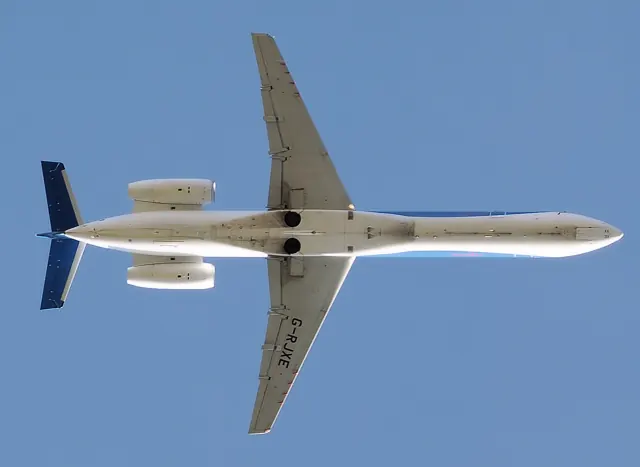
Embraer's regional-jet family, from the ERJ 135 to the longer ERJ 145.
A radial-engined utility aircraft closely associated with bush flying and float operations.
A push-pull twin with one engine at each end of the central fuselage.
The JetRanger and LongRanger family: a familiar turbine-helicopter shape with distinct cabin lengths.
This is AirframeDB’s first release. More features and aircraft research are planned. Leave your email if you’d like occasional updates.