

Start here
A few places to begin, from the aircraft’s story to the people who fly it.
Meet the aircraft
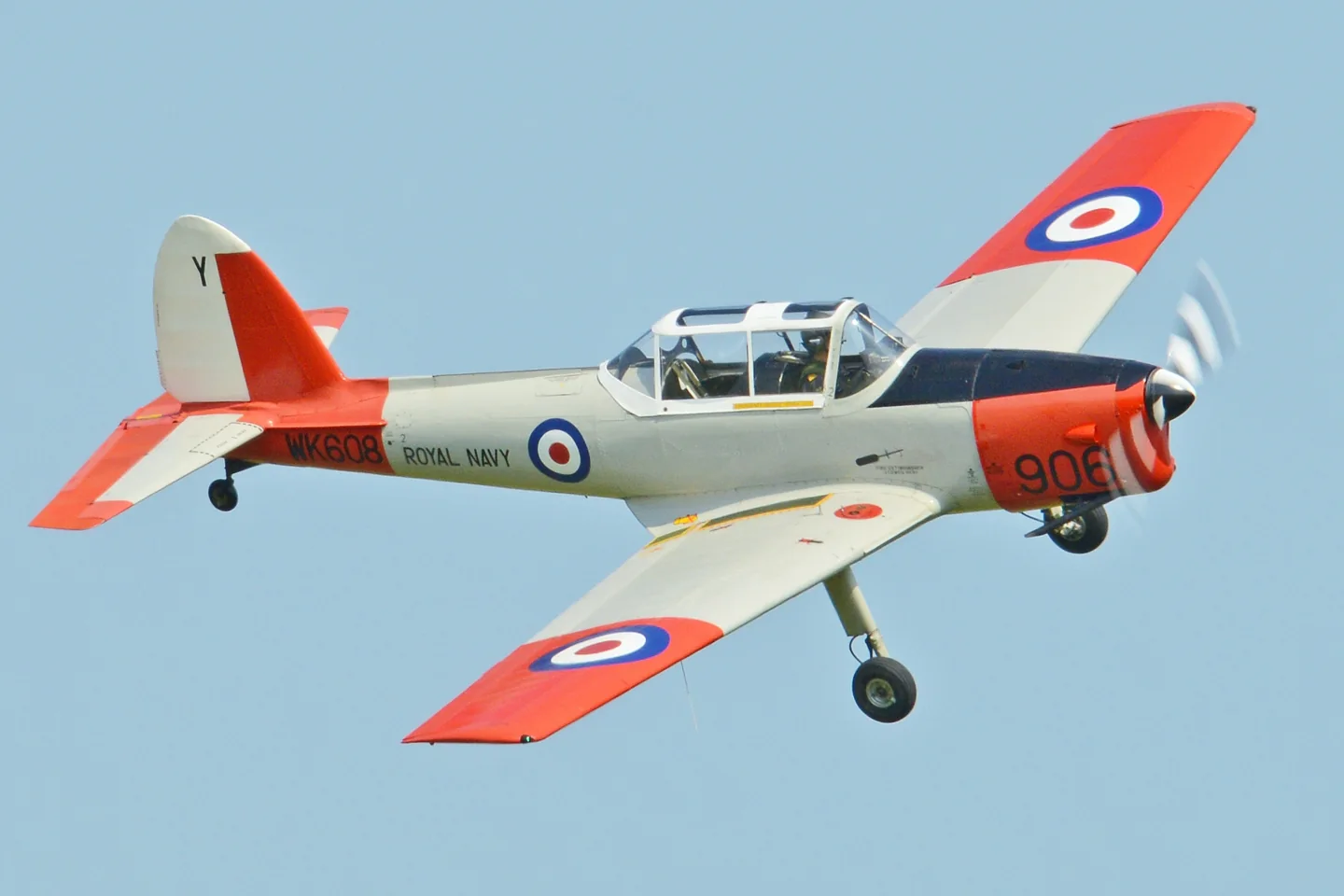
De Havilland Canada designed the DHC-1 as a postwar primary trainer. It replaced Tiger Moth biplanes in many training roles while retaining the straightforward two-seat arrangement useful for instruction. The Chipmunk became widely used outside Canada as well. Surviving examples have individual equipment fits, while simulator products document their own features.
Aircraft background
Wikipedia contributors · Read more ↗A small cockpit with a fighter’s character
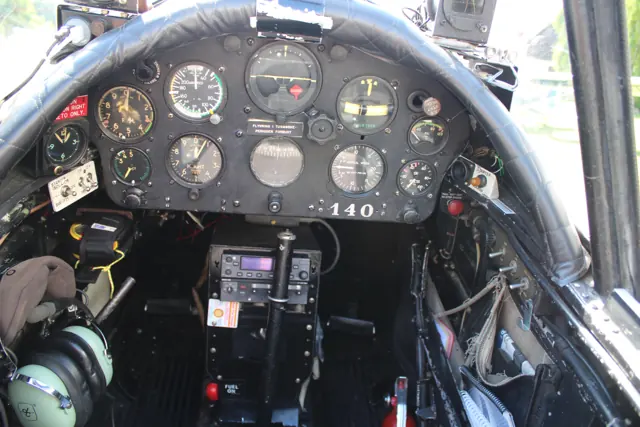
Schiff found the narrow Chipmunk cockpit surprisingly comfortable, even with two large pilots aboard. The surrounding switches, large compass and unusual instruments made its military origins tangible. Starting and taxiing introduced unfamiliar routines, and the hand-operated brake arrangement took practice before it began to feel natural. The long nose also shaped the view during ground movement.
AOPA Pilot · June 2003. Flight with Robert “Chipmunk Bob” Hill in the British-built 1952 WK639, registered N6540C.
AOPA Pilot · Read more ↗The XP11 package and its sound collaboration
Khamsin’s product page identifies the Chipmunk as version 2.0 for X-Plane 11 on Windows, macOS and Linux. It credits Khamsin with the flight model, modelling, textures and liveries, and Philip Ubben with the FMOD sound package.
De Havilland DHC-1 Chipmunk · Khamsin · X-Plane 11
Khamsin · Read more ↗Into the cockpit
 YouTube
High Flight · 3 min ·
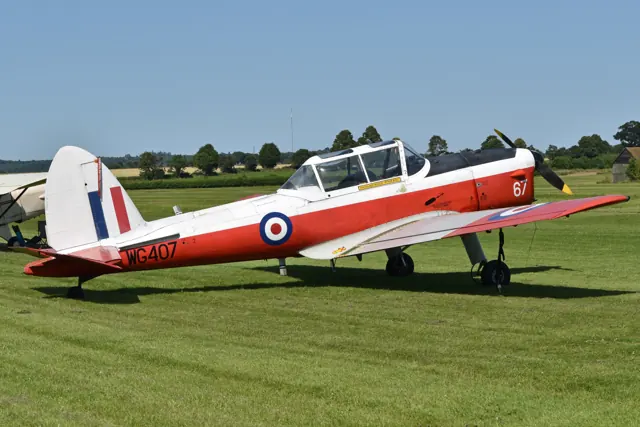
de Havilland DHC-1 Chipmunk WG407, G-BWMX
A preserved Chipmunk T.10 departs Duxford, with its service history in the publisher's notes.
Real aircraft · De Havilland DHC-1 Chipmunk
Watch on YouTube ↗Preview images are served by AirframeDB. Videos open on YouTube only when you choose to watch.
Meet De Havilland DHC-1 Chipmunk
De Havilland Canada designed the DHC-1 as a postwar primary trainer. It replaced Tiger Moth biplanes in many training roles while retaining the straightforward two-seat arrangement useful for instruction. The Chipmunk became widely used outside Canada as well. Surviving examples have individual equipment fits, while simulator products document their own features.
De Havilland DHC-1 Chipmunk
De Havilland Canada → · Explore the family →
De Havilland DHC-1 Chipmunk
Wikipedia contributors · De Havilland Canada DHC-1 Chipmunk ↗Khamsin · X-Plane 11 →Aircraft type designators
Use the code for the model you are flying. The linked authority lists the applicable aircraft.
History & design
A new classroom after the Tiger Moth
The Canadian-designed Chipmunk entered RAF service in 1950 as an initial trainer. Its enclosed cockpit, radio, flaps and brakes brought pupils into a different working environment from the Tiger Moth it replaced. The type also equipped University Air Squadrons, connecting military training with university flying.
Royal Air Force Museum · de Havilland Chipmunk ↗RAF Museum · training role
First flights for generations of cadets
The RAF Museum records the end of Chipmunk flying training in 1993, followed by Air Experience Flight service until 1996. That work introduced thousands of cadets to flying. Its displayed WP912 also carried the Duke of Edinburgh on his first solo flight in December 1952.
Royal Air Force Museum · de Havilland Chipmunk ↗RAF Museum · service chronology and WP912
Development milestones
First flight: 22 May 1946
Wikipedia contributors · De Havilland Canada DHC-1 Chipmunk ↗De Havilland Canada DHC-1 Chipmunk · family/variant named by the source · Wikipedia revision 1372668979
Pilot accounts
A small cockpit with a fighter’s character
Schiff found the narrow Chipmunk cockpit surprisingly comfortable, even with two large pilots aboard. The surrounding switches, large compass and unusual instruments made its military origins tangible. Starting and taxiing introduced unfamiliar routines, and the hand-operated brake arrangement took practice before it began to feel natural. The long nose also shaped the view during ground movement.
In the air, the controls were the attraction. He describes light, well-balanced responses that made manoeuvring especially enjoyable, while stressing that the aircraft rewarded a gentle touch. The tachometer’s resemblance to an altimeter was one small detail that could briefly confuse an unfamiliar pilot. His report ends with the pleasure of sitting quietly in the cockpit after shutdown, still absorbing the flight in an aircraft he had quickly grown to like.
AOPA Pilot · June 2003. Flight with Robert “Chipmunk Bob” Hill in the British-built 1952 WK639, registered N6540C.
Read the full account · AOPA Pilot ↗Rediscovering an aircraft from his childhood
Bundock first encountered a Chipmunk on an Air Training Corps flight at fourteen. Years later, after becoming an airline pilot, he sought some renewed enjoyment through tailwheel flying and eventually bought one of his own. Bringing it home from Oklahoma was memorable for the cold: his British-built aircraft had no cabin heater.
He valued the sound, smell and close-fitting cockpit as much as the flying. The dark interior could make controls awkward to find, and he regarded the takeoff and climb as modest. Once it had gained altitude, however, he enjoyed the light controls and smooth response in turns, while finding pitch a little sensitive. Keeping it at Andover Flight Academy let that personal enthusiasm become an opportunity for other pilots to experience the aircraft.
AOPA Pilot interview by Dennis K. Johnson · December 2022. Owner of the British-built 1952 WP829, subsequently registered N829WP in the United States.
Read the full account · AOPA Pilot ↗Taking two yellow Chipmunks to Oshkosh
Mack and Corker’s trip began with a short border crossing, then became a long day of delays and diversions. Strong headwinds changed the fuel plan, while smoke and heat made progress tiring. They discussed whether to continue before eventually reaching Oshkosh. Mack recalled the relief of joining the arrival, with the airfield closing soon afterwards as visibility deteriorated.
For Corker, turning final in a yellow Chipmunk for the anniversary gathering felt almost unreal. Both pilots had first experienced tailwheel flying in the museum aircraft, and their friendship had grown through a local flying community. Mack particularly enjoyed how directly the aeroplane communicated through its controls. Their recollections combine the pleasure of bringing historic aircraft to the event with the difficulties that made the journey demanding.
AOPA interviews by Alicia Herron · August 2026. Canadian Aviation Museum aircraft ferried from Windsor for the Chipmunk’s eightieth anniversary; Steve Thorne accompanied them in an RV-14.
Read the full account · AOPA ↗In your simulator
Systems, equipment and documentation for each developer’s aircraft.
Compare simulator versions →X-Plane 11De Havilland DHC-1 Chipmunk
Khamsin · Released
De Havilland DHC-1 Chipmunk
Khamsin · Released
MSFS 2020DHC-1 Chipmunk
Aeroplane Heaven · Released
DHC-1 Chipmunk
Aeroplane Heaven · Released
Aircraft specifications
Published figures for the named real-aircraft variant. Simulator equipment and performance can differ.
| Specification | Published value |
|---|---|
| Length | 25 ft 5 in (7.75 m) |
| Wingspan | 34 ft 4 in (10.46 m) |
| Height | 7 ft 1 in (2.16 m) |
| Wing area | 172 sq ft (16.0 m² ) |
| Empty weight | 1,517 lb (688 kg) |
| Gross weight | 2,014 lb (914 kg) |
| Max takeoff weight | 2,200 lb (998 kg) |
| Powerplant | 1 × de Havilland Gipsy Major 1C 4-cylinder air-cooled inverted in-line piston engine, 145 hp (108 kW) |
| Propellers | 2-bladed fixed-pitch propeller |
| Maximum speed | 138 mph (222 km/h, 120 kn) at sea level |
| Cruise speed | 103 mph (166 km/h, 90 kn) |
| Range | 259 mi (417 km, 225 nmi) |
| Service ceiling | 15,800 ft (4,800 m) |
| Rate of climb | 900 ft/min (4.6 m/s) |
Manuals & resources
Find your next read
Choose a topic for a short introduction and a link to the original source. Simulator references identify the developer and edition they cover.
Simulator documentation
The XP11 package and its sound collaborationDe Havilland DHC-1 Chipmunk · Khamsin · X-Plane 11
Khamsin’s product page identifies the Chipmunk as version 2.0 for X-Plane 11 on Windows, macOS and Linux. It credits Khamsin with the flight model, modelling, textures and liveries, and Philip Ubben with the FMOD sound package.
Gathered developer page · version 2.0; no X-Plane 12 compatibility inferred
Khamsin · Read the source ↗Pilot account
A small cockpit with a fighter’s characterAOPA Pilot · June 2003. Flight with Robert “Chipmunk Bob” Hill in the British-built 1952 WK639, registered N6540C.
Schiff found the narrow Chipmunk cockpit surprisingly comfortable, even with two large pilots aboard. The surrounding switches, large compass and unusual instruments made its military origins tangible. Starting and taxiing introduced unfamiliar routines, and the hand-operated brake arrangement took practice before it began to feel natural. The long nose also shaped the view during ground movement. In the air, the controls were the attraction.
Barry Schiff
AOPA Pilot · Read the source ↗Rediscovering an aircraft from his childhoodAOPA Pilot interview by Dennis K. Johnson · December 2022. Owner of the British-built 1952 WP829, subsequently registered N829WP in the United States.
Bundock first encountered a Chipmunk on an Air Training Corps flight at fourteen. Years later, after becoming an airline pilot, he sought some renewed enjoyment through tailwheel flying and eventually bought one of his own. Bringing it home from Oklahoma was memorable for the cold: his British-built aircraft had no cabin heater. He valued the sound, smell and close-fitting cockpit as much as the flying.
David Bundock
AOPA Pilot · Read the source ↗Developer documentation
DHC-1 Chipmunk — product listingDHC-1 Chipmunk · MSFS 2020
Product listing captured 2026-09-30; edition scope from the reviewed catalogue
www.aeroplaneheaven.com · Read the source ↗Read the original documentation from the people who created it. Manuals open on their publisher’s website.
Aircraft background
De Havilland Canada DHC-1 ChipmunkWikipedia contributors · Research background · retrieved 2026-09-12 de Havilland ChipmunkRoyal Air Force Museum · WP912 collection entry · retrieved September 2026Product
DHC-1 ChipmunkKhamsin · Official developer / designated store catalogue · checked 2026-09-12 Aeroplane Heaven - You're virtually there.™ deHavilland DHC-1 Chipmunk for MSFS2020www.aeroplaneheaven.com · Product listing captured 2026-09-30; edition scope from the reviewed catalogueType designator
ICAO Doc 8643 — aircraft type designatorsInternational Civil Aviation Organization · Public search data retrieved 2026-09-14; authority update 2026-09-03Built-in force-feedback profiles
Read the documentary basis, editable starting settings and remaining questions for the aircraft you fly. Each explanation refers to the exact profile revision shown.
Catalogue programme-20261022-v1 · 2 profile choices
Aeroplane Heaven DHC-1 Chipmunk
Aeroplane Heaven · Free and Pro · Revision 3 · Inherited starting point
MSFS 2020
Aeroplane Heaven DHC-1 Chipmunk: Mechanical controls motivate aerodynamic stick resistance.
De Havilland DHC-1 Chipmunk
Free and Pro · Revision 2 · Partial review
X-Plane 11
De Havilland DHC-1 Chipmunk: Mechanical controls motivate aerodynamic stick resistance.
Discuss this aircraft (0)
Questions, observations and useful sources from the community.
No published discussions yet. Bring a question or share a useful source.
Open aircraft discussions →Content expanded · What’s new
Something missing or a source that needs attention?
Suggest a correction ↗