


Start here
A few places to begin, from the aircraft’s story to the people who fly it.
Meet the aircraft
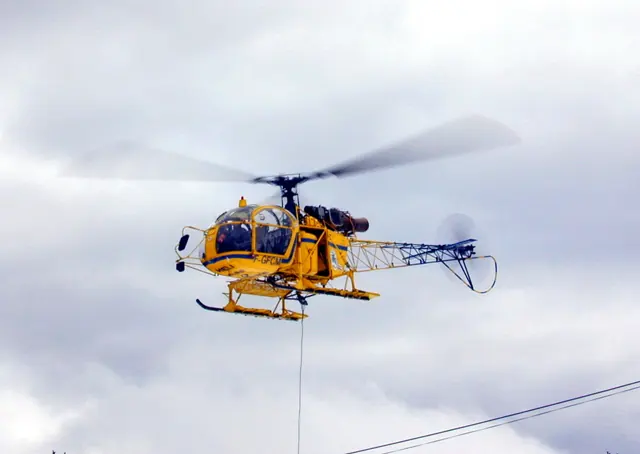
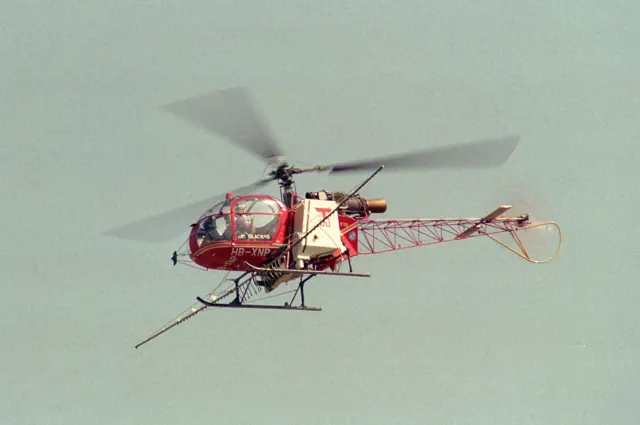
The Lama was developed for demanding high-altitude work. Its exposed structure, compact cabin and single turbine retain the visual simplicity of the Alouette II, while the powerplant and other components came from the larger Alouette III lineage. It became associated with mountain transport and external loads. The simulator catalogue includes developers with different stability options and sling-load features, so those features remain implementation-specific.
Aircraft background
Wikipedia contributors · Read more ↗A record flight remembered with humility
Boulet recalled a team effort to take the Lama higher after another helicopter had surpassed his earlier altitude record. They lightened the prototype for the attempt at Istres, and he reached 12,442 metres in June 1972. Extreme cold and heavy control forces were part of an experience very different from an ordinary working flight. Looking back, he also acknowledged the uncomfortable descent through cloud with instruments removed to save weight.
Interview reprinted in Les Vieilles Tiges de Belgique 4/2006. Lightened SA315B prototype 001 at Istres, 21 June 1972; the record aircraft was specially prepared.
ROTOR / Les Vieilles Tiges de Belgique · Read more ↗Attachments are selected on the clipboard
The clipboard below the centre console enables the available equipment. Some selections are mutually exclusive, so choosing a conflicting attachment can remove another. The guide also assigns the taxi-light toggle to releasing sling cargo.
SA315B Lama · MSFS 2020
Taog's Hangar · Read more ↗Into the cockpit
 YouTube
Mark Kuzmin
SA315B Lama - Elimast (Amazing Cockpit View HD)
A cockpit view of a Lama in operation.
Real SA 315B Lama; cockpit footage
Watch on YouTube ↗Preview images are served by AirframeDB. Videos open on YouTube only when you choose to watch.
Meet Aérospatiale SA 315B Lama
The Lama was developed for demanding high-altitude work. Its exposed structure, compact cabin and single turbine retain the visual simplicity of the Alouette II, while the powerplant and other components came from the larger Alouette III lineage.
It became associated with mountain transport and external loads. Simulator add-ons offer different stability options and sling-load features, described with each product.
Aérospatiale SA 315B Lama
Aircraft type designators
Use the code for the model you are flying. The linked authority lists the applicable aircraft.
History & design
A specialist faces a changing market
Vertical’s 2016 report describes Lama operators balancing mountain capability against parts availability and operating costs. Dwight Jones had sold two aircraft as customers moved towards the H125.
Vertical · The Mountain King ↗Operator experience reported in 2016
Development milestones
First flight: 17 March 1969
Developed from: Aérospatiale Alouette II
Wikipedia contributors · Aérospatiale SA 315B Lama ↗Aérospatiale SA 315B Lama · family/variant named by the source · Wikipedia revision 1365020353
Pilot accounts
A record flight remembered with humility
Boulet recalled a team effort to take the Lama higher after another helicopter had surpassed his earlier altitude record. They lightened the prototype for the attempt at Istres, and he reached 12,442 metres in June 1972. Extreme cold and heavy control forces were part of an experience very different from an ordinary working flight.
Looking back, he also acknowledged the uncomfortable descent through cloud with instruments removed to save weight. In the interview, the value of such a record lay in what it could contribute to the aircraft’s usefulness, especially for rescue work. Boulet spoke modestly about his own achievement and with respect for pilots doing everyday operations.
Interview reprinted in Les Vieilles Tiges de Belgique 4/2006. Lightened SA315B prototype 001 at Istres, 21 June 1972; the record aircraft was specially prepared.
Read the full account · ROTOR / Les Vieilles Tiges de Belgique ↗A frightening descent leads to years of questioning
Vuichard was flying a Lama with an empty long line along a steep mountainside when the supporting air changed and the helicopter began descending towards the trees. He described arresting the descent just before reaching them. The encounter stayed with him afterwards, disturbing his sleep and prompting him to question how a similar situation might be handled differently.
That reflection became a long period of development and testing, beginning with the Lama and extending to other helicopters. Persuading people to consider his ideas proved another challenge. The later meeting with instructor Tim Tucker happened in an R44, a separate part of the story.
First-person account in Vertical · April 2021. SA315B Lama logging flight in the Swiss Alps in 1987; later demonstrations and training also involved other helicopter types.
Read the full account · Vertical ↗Remembering a working day in the mountains
Ricks remembered the Lama through the jobs it could do in Colorado’s oil-and-gas country. Carrying people into the mountains, looking over a site and moving equipment on a sling were part of its appeal. With the doors removed, the view made a strong impression, helping explain his affection for this exposed, purposeful little helicopter.
His recollections appear in a report about the changing economics of keeping Lamas at work. Operator Dwight Jones, interviewed separately, described customers moving towards newer helicopters and the costs of continuing with the older type. That context gives Ricks’s enthusiasm a particular setting: a pilot remembering the qualities of a familiar workhorse while the industry around it was changing. The article’s comparisons are those of the people interviewed in 2016.
Interviewed by Skip Robinson for Vertical · November 2016. Ricks recalls SA315B Lama work in Colorado; the article also interviews operator Dwight Jones separately.
Read the full account · Vertical ↗In your simulator
Systems, equipment and documentation for each developer’s aircraft.
Compare simulator versions →MSFS 2020SA315B Lama
Taog's Hangar · Released
SA315B Lama
Taog's Hangar · Released
X-Plane 11 · X-Plane 12SA315B Lama
Philip Ubben / Khamsin · Released
SA315B Lama
Philip Ubben / Khamsin · Released
Aircraft specifications
Published figures for the named real-aircraft variant. Simulator equipment and performance can differ.
| Specification | Published value |
|---|---|
| Length | 10.24 m (33 ft 7.25 in) |
| Height | 3.09 m (10 ft 1.75 in) |
| Empty weight | 1,021 kg (2,251 lb) |
| Gross weight | 2,300 kg (5,070 lb) |
| Powerplant | 1 × Turbomeca Artouste IIIB turboshaft , 649 kW (870 hp) derated to 410 kW (550 hp) |
| Main rotor diameter | 11.02 m (36 ft 1.75 in) |
| Main rotor area | 95.38 m² (1,026 sq ft) |
| Maximum speed | 192 km/h (119 mph, 103 kn) |
| Range | 515 km (320 mi, 280 nmi) |
| Service ceiling | 5,400 m (17,715 ft) |
| Rate of climb | 5.5 m/s (1,080 ft/min) |
Manuals & resources
Find your next read
Choose a topic for a short introduction and a link to the original source. Simulator references identify the developer and edition they cover.
Simulator documentation
Follow a complete start or shutdownSA315B Lama · Philip Ubben / Khamsin · X-Plane 11 · X-Plane 12
The listed automatic checklist can guide the camera to switches and provide spoken accompaniment. The tablet also offers a power-management helper and controls for visible equipment, reflections and cockpit vibration.
X-Plane 12 developer listing · captured September 2026
Philip Ubben / Khamsin / X-Plane.org store · Read the source ↗Configure the helicopter for an external taskSA315B Lama · Philip Ubben / Khamsin · X-Plane 11 · X-Plane 12
The package listing includes a rescue winch that changes the load-rope attachment point, a working load scale and an adjustable Nightsun searchlight. Doors can be removed independently, and the sound system accounts for open doors.
X-Plane 12 developer listing · captured September 2026
Philip Ubben / Khamsin / X-Plane.org store · Read the source ↗Attachments are selected on the clipboardSA315B Lama · Taog's Hangar · MSFS 2020
The clipboard below the centre console enables the available equipment. Some selections are mutually exclusive, so choosing a conflicting attachment can remove another. The guide also assigns the taxi-light toggle to releasing sling cargo.
Gathered Lama manual · undated · PDF pp.18–19
Taog's Hangar · Read the source ↗The manual records flight-model limitationsSA315B Lama · Taog's Hangar · MSFS 2020
The guide acknowledges incomplete yaw response when lowering collective, shaking sling equipment and an abrupt response above platforms. The archived guide records these limitations without describing later versions.
Gathered Lama manual · PDF p.20
Taog's Hangar · Read the source ↗Separate simulator builds and stored stability settingsSA315B Lama · Philip Ubben / Khamsin · X-Plane 11 · X-Plane 12
Ubben's Lama has separate X-Plane 11 and 12 versions, with its own stored artificial-stability settings and sling-load support. The update history also tracks changes to load indications. Taog's MSFS package has separate flight-model options.
SA315B v2.5 July2025 · Features; v2.4-v2.5 history
Philip Ubben / Khamsin / X-Plane.org store · Read the source ↗Pilot account
A record flight remembered with humilityInterview reprinted in Les Vieilles Tiges de Belgique 4/2006. Lightened SA315B prototype 001 at Istres, 21 June 1972; the record aircraft was specially prepared.
Boulet recalled a team effort to take the Lama higher after another helicopter had surpassed his earlier altitude record. They lightened the prototype for the attempt at Istres, and he reached 12,442 metres in June 1972. Extreme cold and heavy control forces were part of an experience very different from an ordinary working flight. Looking back, he also acknowledged the uncomfortable descent through cloud with instruments removed to save weight.
Jean Boulet
ROTOR / Les Vieilles Tiges de Belgique · Read the source ↗A frightening descent leads to years of questioningFirst-person account in Vertical · April 2021. SA315B Lama logging flight in the Swiss Alps in 1987; later demonstrations and training also involved other helicopter types.
Vuichard was flying a Lama with an empty long line along a steep mountainside when the supporting air changed and the helicopter began descending towards the trees. He described arresting the descent just before reaching them. The encounter stayed with him afterwards, disturbing his sleep and prompting him to question how a similar situation might be handled differently. That reflection became a long period of development and testing, beginning with the Lama and extending to other helicopters.
Claude Vuichard
Vertical · Read the source ↗Read the original documentation from the people who created it. Manuals open on their publisher’s website.
Manual
Download manualTaog's Hangar Microsoft Flight Simulator aircraft manualsMicrosoft / aircraft developers Taog aircraft manualsTaog's Hangar X-Plane aircraft and avionics manualsLaminar ResearchAircraft background
Aérospatiale SA 315B LamaWikipedia contributors · Research background · Wikipedia revision 1365020353 · retrieved 2026-09-12Resource
Lama XP12Philip Ubben / Khamsin / X-Plane.org storeProduct
SA 315B LamaKhamsin · Official developer / designated store catalogue · checked 2026-09-12 SA315B LamaTaog’s Hangar · Official developer / designated store catalogue · checked 2026-09-12Type designator
ICAO Doc 8643 — aircraft type designatorsInternational Civil Aviation Organization · Public search data retrieved 2026-09-14; authority update 2026-09-03Built-in force-feedback profiles
Read the documentary basis, editable starting settings and remaining questions for the aircraft you fly. Each explanation refers to the exact profile revision shown.
Catalogue programme-20261022-v1 · 3 profile choices
Taog's Hangar SA315B Lama
Taog's Hangar · Free and Pro · Revision 2 · Inherited starting point
MSFS 2020 · MSFS 2024
Taog's Hangar SA315B Lama: Nominal cyclic centering and damping provide the selected handling balance; beginner stability and external-load weight are aircraft behaviors, not additional calibrated spring forces.
Philip Ubben / Khamsin SA315B Lama
Philip Ubben / Khamsin · Free and Pro · Revision 2 · Inherited starting point
X-Plane 12
Philip Ubben / Khamsin SA315B Lama: Nominal cyclic centering and damping provide the selected handling balance; beginner stability and external-load weight are aircraft behaviors, not additional calibrated spring forces.
Aérospatiale SA 315B Lama
Free and Pro · Revision 1 · Partial review
MSFS 2020 · X-Plane 12 · X-Plane 11
Aérospatiale SA 315B Lama: Nominal cyclic centering and damping provide the selected handling balance; beginner stability and external-load weight are aircraft behaviors, not additional calibrated spring forces.
Taog's Hangar SA315B Lama
Taog's Hangar SA315B Lama: Nominal cyclic centering and damping provide the selected handling balance; beginner stability and external-load weight are aircraft behaviors, not additional calibrated spring forces.
Aircraft and simulator scope
- Taog's Hangar SA315B Lama · Taog's Hangar · MSFS 2020 · Add-on starting point
- Taog's Hangar SA315B Lama · Taog's Hangar · MSFS 2024 · Add-on starting point
The simulator model and controls
The Lama was developed for demanding high-altitude work. Its exposed structure, compact cabin and single turbine retain the visual simplicity of the Alouette II, while the powerplant and other components came from the larger Alouette III lineage.
This profile selects Taog's Hangar SA315B Lama for MSFS 2020, MSFS 2024.
How this profile feels
The spring stays independent of airspeed. Directed aerodynamic loading is omitted.
Local force trim is off. Autopilot following is off.
Cyclic damping is on. Its configured gain is 0.35; it resists hardware motion separately from the spring and aircraft stabilization.
Controls and trim
The SA315B Lama combines a turbine with an articulated three-blade rotor. Taog documents regular and beginner flight-model choices and working external-load interactions. Ubben and Khamsin's X-Plane implementation has its own stability settings, doors and load configuration. Artificial stabilization and an automated checklist are separate functions from an autopilot that commands a physical cyclic centre.
The selected implementation
Taog separates regular/beginner input behavior and bucket loads. Ground-handling wheels and changing load weight do not automatically command extra hardware force.
About the values
The gains are normalized profile settings. They describe the chosen effect balance; hand force depends on the device and its output limits. IAS references are tuning values rather than operating limits. Physical acceptance of this revision remains pending.
Documentary review and sources
These decisions describe the documentary basis and remaining gaps for this revision. Aircraft documentation and a starting setting describe different kinds of evidence.
Aircraft and variant
InheritedThis profile selects Taog's Hangar SA315B Lama for MSFS 2020, MSFS 2024.
Flight controls
InheritedThe SA315B Lama combines a turbine with an articulated three-blade rotor. Taog documents regular and beginner flight-model choices and working external-load interactions. Ubben and Khamsin's X-Plane implementation has its own stability settings, doors and load configuration. Artificial stabilization and an automated checklist are separate functions from an autopilot that commands a physical cyclic centre.
Trim
InheritedCyclic damping is on. Its configured gain is 0.35; it resists hardware motion separately from the spring and aircraft stabilization.
Autopilot and stability
InheritedAutopilot following is off; the configured spring and load retain the hardware feel.
Equipment
InheritedTaog separates regular/beginner input behavior and bucket loads. Ground-handling wheels and changing load weight do not automatically command extra hardware force.
Speeds and limits
InheritedThe indicated-speed references set the profile response scale; they are separate from aircraft operating limits.
Simulator integration
InheritedThe profile targets msfs2020, msfs2024. Add-on-specific controls use only the supported references configured by this profile.
Force-feedback settings
InheritedThe settings define the profile’s effect balance. Device output limits affect physical hand force.
Starting settings and their rationale
These configured values are starting estimates. The explanations describe what each setting controls; physical validation appears separately below.
| Setting | Starting value | What it controls and why |
|---|---|---|
| Spring strength | Starting value0.14 | What it controls and whyNominal cyclic centering and damping provide the selected handling balance; beginner stability and external-load weight are aircraft behaviors, not additional calibrated spring forces. The baseline spring is 0.14. Low-speed spring blending is off. |
| Master force gain | Starting value0.65 | What it controls and whyScales overall profile strength while preserving effect balance, subject to device and output limits. |
| Profile force gain | Starting value0 | What it controls and whyThe 0 gain omits sustained directed airspeed loading. Spring resistance remains independent. |
| Force tuning speed/reference | Starting value90 kt | What it controls and whySets the IAS reference for aerodynamic loading. It is an estimate, not published cruise TAS or a flight limit. |
| Spring response reference speed | Starting value45.0 kt | What it controls and whySets the IAS where the low-speed blend reaches baseline strength; high-speed stiffening also uses it. |
| Aileron force scale | Starting value0.72 | What it controls and whyRoll and pitch aerodynamic scales are 0.72 and 1, respectively. These stored weights do not create directed aerodynamic loading while that term is inactive. No custom spring-travel curve is enabled. |
| Elevator force scale | Starting value1 | What it controls and whyScales pitch aerodynamic loading; pitch spring travel and trim responses are separate settings. |
| Trim feel | Starting valueDisabled | What it controls and whyRetained for compatibility and group membership. Trim relief, rather than this flag, controls centre movement. |
| Trim relief | Starting valueDisabled | What it controls and whyAllows trim relief with supported control law and valid telemetry. Axis authorities set its amount. |
| Autopilot follow | Starting valueDisabled | What it controls and whyAutopilot following is off; the configured spring and load retain the hardware feel. |
| Autopilot neutral hold | Starting valueDisabled | What it controls and whyPermits centering hold during a supported AP state, separate from following a moving target. |
| Output force limit | Starting value0.55 | What it controls and whyCaps directed-force output. Native spring effects and device limits remain separate. |
All 44 starting settings and their rationale
The settings define the profile’s effect balance. Device output limits affect physical hand force.
| Setting | Starting value | What it controls and why |
|---|---|---|
| Spring strength | Starting value0.14 | What it controls and whyNominal cyclic centering and damping provide the selected handling balance; beginner stability and external-load weight are aircraft behaviors, not additional calibrated spring forces. The baseline spring is 0.14. Low-speed spring blending is off. |
| Spring deadband | Starting value0.02 | What it controls and whySets travel around the centre before the baseline spring resists. Smaller values engage it sooner. |
| Profile force gain | Starting value0 | What it controls and whyThe 0 gain omits sustained directed airspeed loading. Spring resistance remains independent. |
| Master force gain | Starting value0.65 | What it controls and whyScales overall profile strength while preserving effect balance, subject to device and output limits. |
| QBlend Enabled | Starting valueDisabled | What it controls and whyAllows baseline spring strength to rise with indicated airspeed where the control law permits it. |
| QSpring Minimum Factor | Starting value1 | What it controls and whySets low-speed spring strength as a fraction of baseline when blending is enabled. One keeps full strength. |
| QSpring Start Knots | Starting value8 kt | What it controls and whySets the IAS where the low-speed spring blend starts rising. This is a feel threshold, not a flight limit. |
| Spring response reference speed | Starting value45.0 kt | What it controls and whySets the IAS where the low-speed blend reaches baseline strength; high-speed stiffening also uses it. |
| Force tuning speed/reference | Starting value90 kt | What it controls and whySets the IAS reference for aerodynamic loading. It is an estimate, not published cruise TAS or a flight limit. |
| Airspeed spring stiffening gain | Starting value0 | What it controls and whyAdds permitted spring resistance above the full-blend speed. Zero removes this high-speed increase. |
| Airspeed spring stiffening limit | Starting value5 | What it controls and whyLimits the squared airspeed ratio used for high-speed spring stiffening; it is not a device-force cap. |
| Aileron force scale | Starting value0.72 | What it controls and whyRoll and pitch aerodynamic scales are 0.72 and 1, respectively. These stored weights do not create directed aerodynamic loading while that term is inactive. No custom spring-travel curve is enabled. |
| Elevator force scale | Starting value1 | What it controls and whyScales pitch aerodynamic loading; pitch spring travel and trim responses are separate settings. |
| Output force limit | Starting value0.55 | What it controls and whyCaps directed-force output. Native spring effects and device limits remain separate. |
| Trim feel | Starting valueDisabled | What it controls and whyRetained for compatibility and group membership. Trim relief, rather than this flag, controls centre movement. |
| Trim relief | Starting valueDisabled | What it controls and whyAllows trim relief with supported control law and valid telemetry. Axis authorities set its amount. |
| Elevator Authority | Starting value0 | What it controls and whyScales supported pitch-trim relief and permitted centre movement. Zero removes pitch response. |
| Aileron Authority | Starting value0 | What it controls and whyScales supported roll-trim relief and permitted centre movement. Zero removes roll response. |
| Force Trim Enabled | Starting valueDisabled | What it controls and whyLocal force trim, when selected, moves the hardware spring centre; it does not reproduce every developer's stabilization or load-management logic. Local force trim is off. The stored latch parameters are inactive; the profile does not supply a local hold-where-left neutral. |
| GLoad Enabled | Starting valueDisabled | What it controls and whyAllows load-factor changes to modify permitted spring laws. Passive fly-by-wire feel can suppress it. |
| Rate Damping Enabled | Starting valueDisabled | What it controls and whyEnables rate damping with the configured coefficients and control law. |
| Autopilot follow | Starting valueDisabled | What it controls and whyAutopilot following is off; the configured spring and load retain the hardware feel. |
| Autopilot follow authority | Starting value0.05 | What it controls and whySets admitted AP-follow gain, not a percentage of travel. Runtime ownership and input limits still apply. |
| Autopilot neutral hold | Starting valueDisabled | What it controls and whyPermits centering hold during a supported AP state, separate from following a moving target. |
| Autopilot neutral hold strength | Starting value0.6 | What it controls and whySets admitted AP neutral-hold strength; inactive while neutral hold is disabled. |
| Enabled | Starting valueEnabled | What it controls and whyEnables aerodynamic cues; each still needs nonzero strength and its simulator conditions. |
| Gain | Starting value0 | What it controls and whySets stall-buffet strength. Zero removes the cue without changing simulator stalls or warnings. |
| Gain | Starting value0 | What it controls and whySets high-Mach buffet strength; onset and full-strength thresholds are separate. |
| Gain | Starting value0 | What it controls and whySets flap buffet at the configured position and speed gates. Flap movement texture is separate. |
| Maximum flap index | Starting value1 | What it controls and whySets the final flap index for detent normalization. UP plus three detents uses maximum index3. |
| Minimum flap index | Starting value1 | What it controls and whySets the first flap detent that admits buffet; this is a handle index, not degrees. |
| Gain | Starting value0 | What it controls and whySets gear aerodynamic buffet; movement and ground-contact cues are separate. |
| Shaker Enabled | Starting valueDisabled | What it controls and whyPermits shaker at supported warning conditions; the switch does not establish aircraft equipment. |
| Stick shaker amplitude | Starting value0.5 | What it controls and whySets triggered shaker strength; inactive while the shaker feature is disabled. |
| Enabled | Starting valueEnabled | What it controls and whyEnables ground effects; each still needs its own strength and contact or motion telemetry. |
| Gain | Starting value0 | What it controls and whySets rolling texture strength, modified by speed, surface and undercarriage configuration. |
| Gain | Starting value0 | What it controls and whySets gear-bump texture during ground motion, separate from touchdown impact. |
| Gain | Starting value0.5 | What it controls and whySets landing-impact strength; landing telemetry and response shape determine the pulse. |
| Gain | Starting value0 | What it controls and whySets reverse-thrust vibration with valid reverser and engine conditions. Zero removes the cue. |
| Enabled | Starting valueEnabled | What it controls and whyEnables engine cues with nonzero settings and valid running-engine telemetry. |
| Gain | Starting value0 | What it controls and whySets estimated engine vibration using configured telemetry and response, not measured cockpit vibration. |
| Enabled | Starting valueEnabled | What it controls and whyEnables accessory cues with configured strengths and observed accessory movement. |
| Gain | Starting value0 | What it controls and whySets texture from observed flap movement; a command without movement does not establish the cue. |
| Gain | Starting value0 | What it controls and whySets texture from observed gear movement, separate from aerodynamic and touchdown effects. |
Limits and open questions
- Taog's Hangar SA315B Lama; msfs2020, msfs2024. Previously observed titles and implementation identifiers are retained; installed matching remains deferred.
- Rotorcraft cyclic with estimated support. Profile addresses regular flight model; beginner input sensitivity does not justify silently changing device calibration.
- No proven custom neutral/trim signal. Local FTR and fixed-wing tab relief remain off by default.
- No coupled AP target established. Flight-model assistance and bucket/taxi-light command do not convey servo demand. AP servo-follow and neutral hold remain disabled; engagement indicators are not force-demand signals.
- Three-blade Artouste turbine, normal skid operation. Ground handling wheels are removable equipment, not a retractable flight landing gear. Cargo load changes remain in simulator telemetry.
- 90 KIAS is an estimated feel reference, not cruise TAS or a certified limit. No invented Mach, VNE or weight scheduling.
- Read-only native telemetry for aircraft motion and accessory positions. Custom switches, display animations and mode lamps are not calibrated servo targets. No unverified LVars/datarefs or simulator writes.
- Spring 0.14; lateral scale 0.72; trim authorities 0/0; per-axis output cap .55. Editable engineering estimates, not measured hand forces. No body-rate torque, surface following or fabricated hydraulic-failure loads.
- New physical and installed-product checks deferred by owner. Existing separately recorded acceptance retains its original device, simulator, add-on and version limits. Source review does not broaden custom telemetry acceptance.
- Only actual accessory position changes drive movement texture; static drag and command-triggered kicks are disabled. Select and save an aircraft default when telemetry lacks a discriminating developer/configuration identity.
Physical validation
No physical force validation is recorded in this public catalogue for this revision. Documentary review and software checks do not establish how a particular device feels.
Discuss this aircraft (0)
Questions, observations and useful sources from the community.
No published discussions yet. Bring a question or share a useful source.
Open aircraft discussions →Content expanded · What’s new
Something missing or a source that needs attention?
Suggest a correction ↗