
Start here
A few places to begin, from the aircraft’s story to the people who fly it.
Meet the aircraft
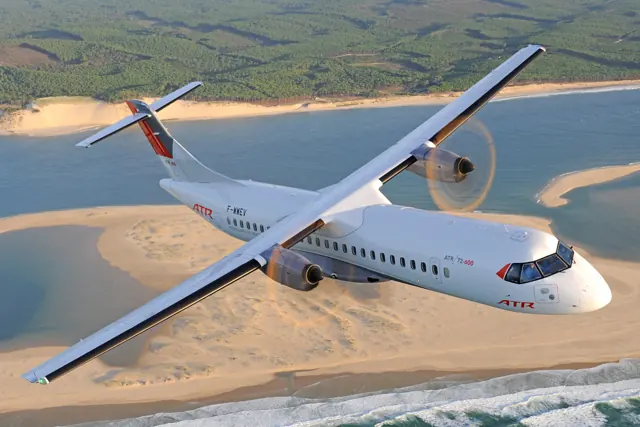
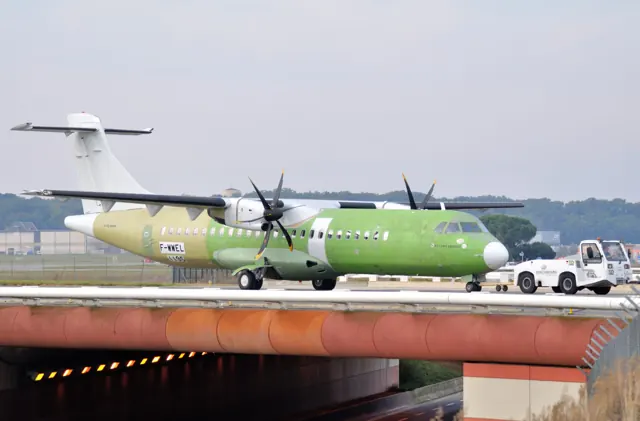
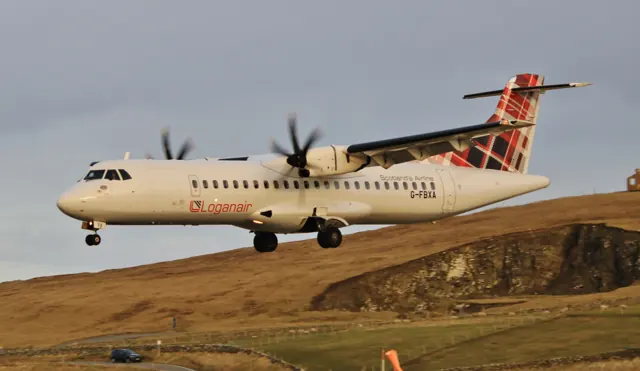
The ATR 72 grew from the smaller ATR 42 into a longer regional transport. Its cabin sits below a straight high wing, with a turboprop on each side and a T-tail behind. Cargo and maritime-patrol versions also use the airframe. The 42 and 72 share a family identity but differ in size and capacity.
Aircraft background
Wikipedia contributors · Read more ↗A light-twin pilot joins an acceptance flight
Von Croy joined ATR test pilot Eric Delesalle for a two-hour acceptance flight in an ATR 72-500. Coming from private flying with a multiengine rating, he was surprised by how manageable the much larger aircraft felt while taxiing. Its acceleration and climb made a stronger impression after takeoff, although the aircraft carried a light load.
Planet AeroSpace, Issue 1, 2007, page 10. Supervised acceptance-flight demonstration in the earlier ATR 72-500; test pilot managed systems, configuration and landing power.
Planet AeroSpace · Read more ↗The original MSFS 2020 release
Microsoft’s October 2024 announcement records a free v1.0.46 expansion for owners of Expert Series 01. This is the original MSFS 2020 product line, subsequently included in the MSFS 2024 Aviator edition.
ATR 42-600 / 72-600 · Microsoft Flight Simulator · MSFS 2020
Microsoft Flight Simulator Team · Read more ↗Into the cockpit
 YouTube
Pilot Blog · 46 min ·
Cockpit video total flight with ATC communication ATR72-600 Pilot Blog
A short Indonesian sector, with cockpit views and radio communications aboard an ATR 72-600.
Real aircraft · ATR 72-600
Watch on YouTube ↗Preview images are served by AirframeDB. Videos open on YouTube only when you choose to watch.
Meet ATR 42-600 / 72-600
The ATR 72 grew from the smaller ATR 42 into a longer regional transport. Its cabin sits below a straight high wing, with a turboprop on each side and a T-tail behind. Cargo and maritime-patrol versions also use the airframe.
The 42 and 72 share a family identity but differ in size and capacity. The -600 variants have a later flight deck than early ATRs, with equipment described in their respective developer manuals.
ATR 42-600 / 72-600
ATR 42
Wikipedia contributors · ATR 72 ↗ATR 42-600
Wikipedia contributors · ATR 72 ↗Microsoft Flight Simulator · MSFS 2024 →Microsoft Flight Simulator · MSFS 2020 →ATR 72
Wikipedia contributors · ATR 72 ↗ATR 72-600
Wikipedia contributors · ATR 72 ↗Microsoft Flight Simulator · MSFS 2024 →Microsoft Flight Simulator · MSFS 2020 →Aircraft type designators
Use the code for the model you are flying. The linked authority lists the applicable aircraft.
History & design
Development milestones
First flight: 27 October 1988
Developed from: ATR 42
Wikipedia contributors · ATR 72 ↗ATR 72 · family/variant named by the source · Wikipedia revision 1373470656
Pilot accounts
A light-twin pilot joins an acceptance flight
Von Croy joined ATR test pilot Eric Delesalle for a two-hour acceptance flight in an ATR 72-500. Coming from private flying with a multiengine rating, he was surprised by how manageable the much larger aircraft felt while taxiing. Its acceleration and climb made a stronger impression after takeoff, although the aircraft carried a light load. Along the Pyrenees, his early attempts at hand-flying involved excessive control and trim inputs before he became more accustomed to its response.
Delesalle handled the systems while von Croy concentrated on flying and simple navigation. Returning to Toulouse, the test pilot also managed configuration and power. Von Croy began the flare too high, then held the nose up until the main wheels touched; the nosewheel followed less gently than he intended. He stresses the difference between that supervised demonstration and mastering airline procedures and crew coordination. The experience concerns the earlier 72-500, before the 600-series flight deck.
Planet AeroSpace, Issue 1, 2007, page 10. Supervised acceptance-flight demonstration in the earlier ATR 72-500; test pilot managed systems, configuration and landing power.
Read the full account · Planet AeroSpace ↗A quiet cockpit and a difficult moment to speak up
Joy recalls flying the ATR as a first officer with about a year on the type. A newly upgraded captain initially made the trip pleasant, but became withdrawn and defensive after a poor crosswind landing. By their fourth day together, the atmosphere had made routine questions uncomfortable. Approaching St. Louis, a controller mistook their ATR for a smaller aircraft and offered a sidestep to a runway Joy believed their airline did not permit it to use.
The captain insisted they accept. Joy hesitated, caught between his own experience on the aircraft and the other pilot's rank and confidence. Before he resolved that conflict, the controller identified the ATR and restored their clearance to the longer runway. Joy's lasting memory is his disappointment at not asserting himself. The episode changed how seriously he regarded crew-resource-management training and, later, how he wanted colleagues to question him. It is a personal crew-coordination account; the article does not identify the ATR subvariant.
Plane + Pilot, 26 June 2018. First-officer recollection; ATR subvariant and event date are not specified.
Read the full account · Plane + Pilot ↗The ATR chapter of a career she later reclaimed
McWhirter's first airline job began in the training department at Continental Express. After fulfilling a commitment of more than two years, she moved to full-time line flying on the ATR 42. Based in Newark, she flew throughout the northeastern United States and remembers the valuable winter-operating experience those routes provided.
She expected to upgrade to ATR captain in November 2001. The changes following September 11 accelerated the airline's move toward jets, and she chose to transition to the Embraer 145 as a first officer. She later left airline flying to raise her children, continued to miss the cockpit, and began a return with her family's support.
Hera Aviation Group, 7 January 2022. Career recollection of pre-2001 ATR 42 operations; specific subvariant not identified, and this predates the 600 series.
Read the full account · Hera Aviation Group ↗In your simulator
Systems, equipment and documentation for each developer’s aircraft.
Compare simulator versions →MSFS 202442-600 / 72-600
Microsoft Flight Simulator · Released
42-600 / 72-600
Microsoft Flight Simulator · Released
MSFS 2020ATR 42-600 / 72-600
Microsoft Flight Simulator · Released
ATR 42-600 / 72-600
Microsoft Flight Simulator · Released
Manuals & resources
Find your next read
Choose a topic for a short introduction and a link to the original source. Simulator references identify the developer and edition they cover.
Simulator documentation
The original MSFS 2020 releaseATR 42-600 / 72-600 · Microsoft Flight Simulator · MSFS 2020
Microsoft’s October 2024 announcement records a free v1.0.46 expansion for owners of Expert Series 01. This is the original MSFS 2020 product line, subsequently included in the MSFS 2024 Aviator edition.
2024-10-10 · release and package scope
Microsoft Flight Simulator Team · Read the source ↗Pilot account
A light-twin pilot joins an acceptance flightPlanet AeroSpace, Issue 1, 2007, page 10. Supervised acceptance-flight demonstration in the earlier ATR 72-500; test pilot managed systems, configuration and landing power.
Von Croy joined ATR test pilot Eric Delesalle for a two-hour acceptance flight in an ATR 72-500. Coming from private flying with a multiengine rating, he was surprised by how manageable the much larger aircraft felt while taxiing. Its acceleration and climb made a stronger impression after takeoff, although the aircraft carried a light load. Along the Pyrenees, his early attempts at hand-flying involved excessive control and trim inputs before he became more accustomed to its response.
Alexis von Croy
Planet AeroSpace · Read the source ↗A quiet cockpit and a difficult moment to speak upPlane + Pilot, 26 June 2018. First-officer recollection; ATR subvariant and event date are not specified.
Joy recalls flying the ATR as a first officer with about a year on the type. A newly upgraded captain initially made the trip pleasant, but became withdrawn and defensive after a poor crosswind landing. By their fourth day together, the atmosphere had made routine questions uncomfortable. Approaching St. Louis, a controller mistook their ATR for a smaller aircraft and offered a sidestep to a runway Joy believed their airline did not permit it to use. The captain insisted they accept.
Dustin Joy
Plane + Pilot · Read the source ↗Read the original documentation from the people who created it. Manuals open on their publisher’s website.
Manual
Microsoft Flight Simulator aircraft manualsMicrosoft / aircraft developersAircraft background
ATR 72Wikipedia contributors · Research background · Wikipedia revision 1373470656 · retrieved 2026-09-12Resource
MSFS 2024 FAQ and edition aircraft inventoryMicrosoftDeveloper documentation
Expert Series 01: ATR 42-600 / 72-600 ExpansionMicrosoft Flight Simulator Team · 2024-10-10 · release and package scopeType designator
ICAO Doc 8643 — aircraft type designatorsInternational Civil Aviation Organization · Public search data retrieved 2026-09-14; authority update 2026-09-03Built-in force-feedback profiles
Read the documentary basis, editable starting settings and remaining questions for the aircraft you fly. Each explanation refers to the exact profile revision shown.
Catalogue programme-20261022-v1 · 2 profile choices
ATR 72-600
Free and Pro · Revision 3 · Partial review
MSFS 2020 · MSFS 2024
ATR 72-600: The selected yoke response is nominal.
ATR 42-600
Free and Pro · Revision 1 · Inherited starting point
MSFS 2020 · MSFS 2024
ATR 42-600: The selected yoke response is nominal.
ATR 72-600
ATR 72-600: The selected yoke response is nominal.
Aircraft and simulator scope
- ATR 72-600 · MSFS 2020 · Variant starting point
- ATR 72-600 · MSFS 2024 · Variant starting point
ATR72-600 manufacturer datasheet and Microsoft expansion announcement; the datasheet is not an ATR42-600 systems manual. · Selected choice: ATR 72-600. Documentary scope does not establish every variant, add-on revision or simulator binding.
The simulator model and controls
The ATR 72 grew from the smaller ATR 42 into a longer regional transport. Its cabin sits below a straight high wing, with a turboprop on each side and a T-tail behind. Passenger services are only part of its story: cargo and maritime-patrol versions also use the airframe.
This starting point selects ATR 72-600. Its aircraft-level settings do not select a particular developer’s custom systems.
How this profile feels
Spring resistance builds with the selected airspeed response. A separate aerodynamic term adds speed-dependent control load.
Valid trim provides the configured pressure relief. Autopilot following is enabled for supported control references.
Controls and trim
The selected ATR 42-600 and 72-600 belong to the same regional turboprop family but retain different airframes and equipment scope. The preserved technical datasheet is specifically for the 72-600, while Microsoft's simulator announcement names the included variants. Its climb figures use calibrated airspeed and its cruise figures true airspeed, so neither directly defines the profile's indicated-speed feel reference.
About the values
The gains are normalized profile settings. They describe the chosen effect balance; hand force depends on the device and its output limits. IAS references are tuning values rather than operating limits. Physical acceptance of this revision remains pending.
What the documentation establishes
The technical datasheet is specifically ATR72-600; the expansion announcement separately names the simulator ATR variants.
The ATR72 datasheet documents its turboprop installation; that later engine specification must not silently be applied to every ATR42 choice.
Climb speed is given in KCAS and cruise in KTAS under stated conditions; neither directly derives the shared indicated-speed force reference.
Documentary review and sources
These decisions describe the documentary basis and remaining gaps for this revision. Aircraft documentation and a starting setting describe different kinds of evidence.
Aircraft and variant
ReviewedThis starting point selects ATR 72-600. Its aircraft-level settings do not select a particular developer’s custom systems.
Flight controls
Not yet reviewedThe selected ATR 42-600 and 72-600 belong to the same regional turboprop family but retain different airframes and equipment scope. The preserved technical datasheet is specifically for the 72-600, while Microsoft's simulator announcement names the included variants. Its climb figures use calibrated airspeed and its cruise figures true airspeed, so neither directly defines the profile's indicated-speed feel reference.
Trim
Not yet reviewedThe selected pitch-trim relief is a software approximation; the acquired technical overview does not quantify trim-driven hardware movement. Pitch authority 0.3 provides load relief and permitted centre movement; roll authority is 0.14.
Autopilot and stability
Not yet reviewedFollowing is on at 0.1 authority when a supported, valid autopilot control reference is available.
Equipment
ReviewedGear, flap and ground cues follow the selected settings and available simulator-reported states.
Speeds and limits
ReviewedThe indicated-speed references set the profile response scale; they are separate from aircraft operating limits.
Simulator integration
Not yet reviewedThe profile targets msfs2020, msfs2024. Add-on-specific controls use only the supported references configured by this profile.
Force-feedback settings
Not yet reviewedThe settings define the profile’s effect balance. Device output limits affect physical hand force.
Starting settings and their rationale
These configured values are starting estimates. The explanations describe what each setting controls; physical validation appears separately below.
| Setting | Starting value | What it controls and why |
|---|---|---|
| Spring strength | Starting value0.74 | What it controls and whyThe selected yoke response is nominal. The 72-600 engine datasheet is not a measurement of primary-control forces for both ATR variants. The baseline spring is 0.74. Its low-speed blend reaches baseline strength at 90 KIAS. |
| Master force gain | Starting value0.85 | What it controls and whyScales overall profile strength while preserving effect balance, subject to device and output limits. |
| Profile force gain | Starting value0.68 | What it controls and whyThe aerodynamic-load gain is 0.68 with an indicated-speed reference of 210 KIAS. This supplies speed-dependent loading alongside the spring. |
| Force tuning speed/reference | Starting value210.0 kt | What it controls and whySets the IAS reference for aerodynamic loading. It is an estimate, not published cruise TAS or a flight limit. |
| Spring response reference speed | Starting value90 kt | What it controls and whySets the IAS where the low-speed blend reaches baseline strength; high-speed stiffening also uses it. |
| Aileron force scale | Starting value0.72 | What it controls and whyRoll and pitch aerodynamic scales are 0.72 and 1, respectively. They set the aerodynamic axis balance. No custom spring-travel curve is enabled. |
| Elevator force scale | Starting value1.0 | What it controls and whyScales pitch aerodynamic loading; pitch spring travel and trim responses are separate settings. |
| Trim feel | Starting valueEnabled | What it controls and whyRetained for compatibility and group membership. Trim relief, rather than this flag, controls centre movement. |
| Trim relief | Starting valueEnabled | What it controls and whyAllows trim relief with supported control law and valid telemetry. Axis authorities set its amount. |
| Autopilot follow | Starting valueEnabled | What it controls and whyFollowing is on at 0.1 authority when a supported, valid autopilot control reference is available. |
| Autopilot neutral hold | Starting valueDisabled | What it controls and whyPermits centering hold during a supported AP state, separate from following a moving target. |
| Output force limit | Starting value0.55 | What it controls and whyCaps directed-force output. Native spring effects and device limits remain separate. |
All 44 starting settings and their rationale
The settings define the profile’s effect balance. Device output limits affect physical hand force.
| Setting | Starting value | What it controls and why |
|---|---|---|
| Spring strength | Starting value0.74 | What it controls and whyThe selected yoke response is nominal. The 72-600 engine datasheet is not a measurement of primary-control forces for both ATR variants. The baseline spring is 0.74. Its low-speed blend reaches baseline strength at 90 KIAS. |
| Spring deadband | Starting value0.05 | What it controls and whySets travel around the centre before the baseline spring resists. Smaller values engage it sooner. |
| Profile force gain | Starting value0.68 | What it controls and whyThe aerodynamic-load gain is 0.68 with an indicated-speed reference of 210 KIAS. This supplies speed-dependent loading alongside the spring. |
| Master force gain | Starting value0.85 | What it controls and whyScales overall profile strength while preserving effect balance, subject to device and output limits. |
| QBlend Enabled | Starting valueEnabled | What it controls and whyAllows baseline spring strength to rise with indicated airspeed where the control law permits it. |
| QSpring Minimum Factor | Starting value0.55 | What it controls and whySets low-speed spring strength as a fraction of baseline when blending is enabled. One keeps full strength. |
| QSpring Start Knots | Starting value20 kt | What it controls and whySets the IAS where the low-speed spring blend starts rising. This is a feel threshold, not a flight limit. |
| Spring response reference speed | Starting value90 kt | What it controls and whySets the IAS where the low-speed blend reaches baseline strength; high-speed stiffening also uses it. |
| Force tuning speed/reference | Starting value210.0 kt | What it controls and whySets the IAS reference for aerodynamic loading. It is an estimate, not published cruise TAS or a flight limit. |
| Airspeed spring stiffening gain | Starting value0.1 | What it controls and whyThe high-speed spring-stiffening gain is 0.1. It strengthens the permitted spring response above 90 KIAS, with the squared-speed ratio capped at 5. |
| Airspeed spring stiffening limit | Starting value5 | What it controls and whyLimits the squared airspeed ratio used for high-speed spring stiffening; it is not a device-force cap. |
| Aileron force scale | Starting value0.72 | What it controls and whyRoll and pitch aerodynamic scales are 0.72 and 1, respectively. They set the aerodynamic axis balance. No custom spring-travel curve is enabled. |
| Elevator force scale | Starting value1.0 | What it controls and whyScales pitch aerodynamic loading; pitch spring travel and trim responses are separate settings. |
| Output force limit | Starting value0.55 | What it controls and whyCaps directed-force output. Native spring effects and device limits remain separate. |
| Trim feel | Starting valueEnabled | What it controls and whyRetained for compatibility and group membership. Trim relief, rather than this flag, controls centre movement. |
| Trim relief | Starting valueEnabled | What it controls and whyAllows trim relief with supported control law and valid telemetry. Axis authorities set its amount. |
| Elevator Authority | Starting value0.3 | What it controls and whyThe selected pitch-trim relief is a software approximation; the acquired technical overview does not quantify trim-driven hardware movement. Pitch authority 0.3 provides load relief and permitted centre movement; roll authority is 0.14. |
| Aileron Authority | Starting value0.14 | What it controls and whyScales supported roll-trim relief and permitted centre movement. Zero removes roll response. |
| Force Trim Enabled | Starting valueDisabled | What it controls and whyEnables local force trim, separate from aircraft-owned trim and add-on integration qualification. |
| GLoad Enabled | Starting valueEnabled | What it controls and whyAllows load-factor changes to modify permitted spring laws. Passive fly-by-wire feel can suppress it. |
| Rate Damping Enabled | Starting valueEnabled | What it controls and whyEnables rate damping with the configured coefficients and control law. |
| Autopilot follow | Starting valueEnabled | What it controls and whyFollowing is on at 0.1 authority when a supported, valid autopilot control reference is available. |
| Autopilot follow authority | Starting value0.1 | What it controls and whySets admitted AP-follow gain, not a percentage of travel. Runtime ownership and input limits still apply. |
| Autopilot neutral hold | Starting valueDisabled | What it controls and whyPermits centering hold during a supported AP state, separate from following a moving target. |
| Autopilot neutral hold strength | Starting value0.6 | What it controls and whySets admitted AP neutral-hold strength; inactive while neutral hold is disabled. |
| Enabled | Starting valueEnabled | What it controls and whyEnables aerodynamic cues; each still needs nonzero strength and its simulator conditions. |
| Gain | Starting value0.28 | What it controls and whySets stall-buffet strength. Zero removes the cue without changing simulator stalls or warnings. |
| Gain | Starting value0 | What it controls and whySets high-Mach buffet strength; onset and full-strength thresholds are separate. |
| Gain | Starting value0.14 | What it controls and whySets flap buffet at the configured position and speed gates. Flap movement texture is separate. |
| Maximum flap index | Starting value2 | What it controls and whySets the final flap index for detent normalization. UP plus three detents uses maximum index3. |
| Minimum flap index | Starting value2 | What it controls and whySets the first flap detent that admits buffet; this is a handle index, not degrees. |
| Gain | Starting value0.1 | What it controls and whySets gear aerodynamic buffet; movement and ground-contact cues are separate. |
| Shaker Enabled | Starting valueDisabled | What it controls and whyPermits shaker at supported warning conditions; the switch does not establish aircraft equipment. |
| Stick shaker amplitude | Starting value0.5 | What it controls and whySets triggered shaker strength; inactive while the shaker feature is disabled. |
| Enabled | Starting valueEnabled | What it controls and whyEnables ground effects; each still needs its own strength and contact or motion telemetry. |
| Gain | Starting value0.42 | What it controls and whySets rolling texture strength, modified by speed, surface and undercarriage configuration. |
| Gain | Starting value0.32 | What it controls and whySets gear-bump texture during ground motion, separate from touchdown impact. |
| Gain | Starting value0.82 | What it controls and whySets landing-impact strength; landing telemetry and response shape determine the pulse. |
| Gain | Starting value0.48 | What it controls and whySets reverse-thrust vibration with valid reverser and engine conditions. Zero removes the cue. |
| Enabled | Starting valueEnabled | What it controls and whyEnables engine cues with nonzero settings and valid running-engine telemetry. |
| Gain | Starting value0.06 | What it controls and whySets estimated engine vibration using configured telemetry and response, not measured cockpit vibration. |
| Enabled | Starting valueEnabled | What it controls and whyEnables accessory cues with configured strengths and observed accessory movement. |
| Gain | Starting value0.12 | What it controls and whySets texture from observed flap movement; a command without movement does not establish the cue. |
| Gain | Starting value0.12 | What it controls and whySets texture from observed gear movement, separate from aerodynamic and touchdown effects. |
Limits and open questions
- The ATR72 performance datasheet does not describe flight-control linkage or cockpit force transmission.
- The datasheet does not establish ATR trim equipment, sign, travel or external trim ownership.
- The expansion announcement does not document autopilot mechanics or an external servo-following contract.
- A simulator expansion/version announcement establishes package scope, without publishing force-feedback mapping semantics.
- ATR performance figures do not quantify pilot effort or justify identical force coefficients across the 42 and 72.
Physical validation
No physical force validation is recorded in this public catalogue for this revision. Documentary review and software checks do not establish how a particular device feels.
Discuss this aircraft (0)
Questions, observations and useful sources from the community.
No published discussions yet. Bring a question or share a useful source.
Open aircraft discussions →Content expanded · What’s new
Something missing or a source that needs attention?
Suggest a correction ↗