
Start here
A few places to begin, from the aircraft’s story to the people who fly it.
Meet the aircraft
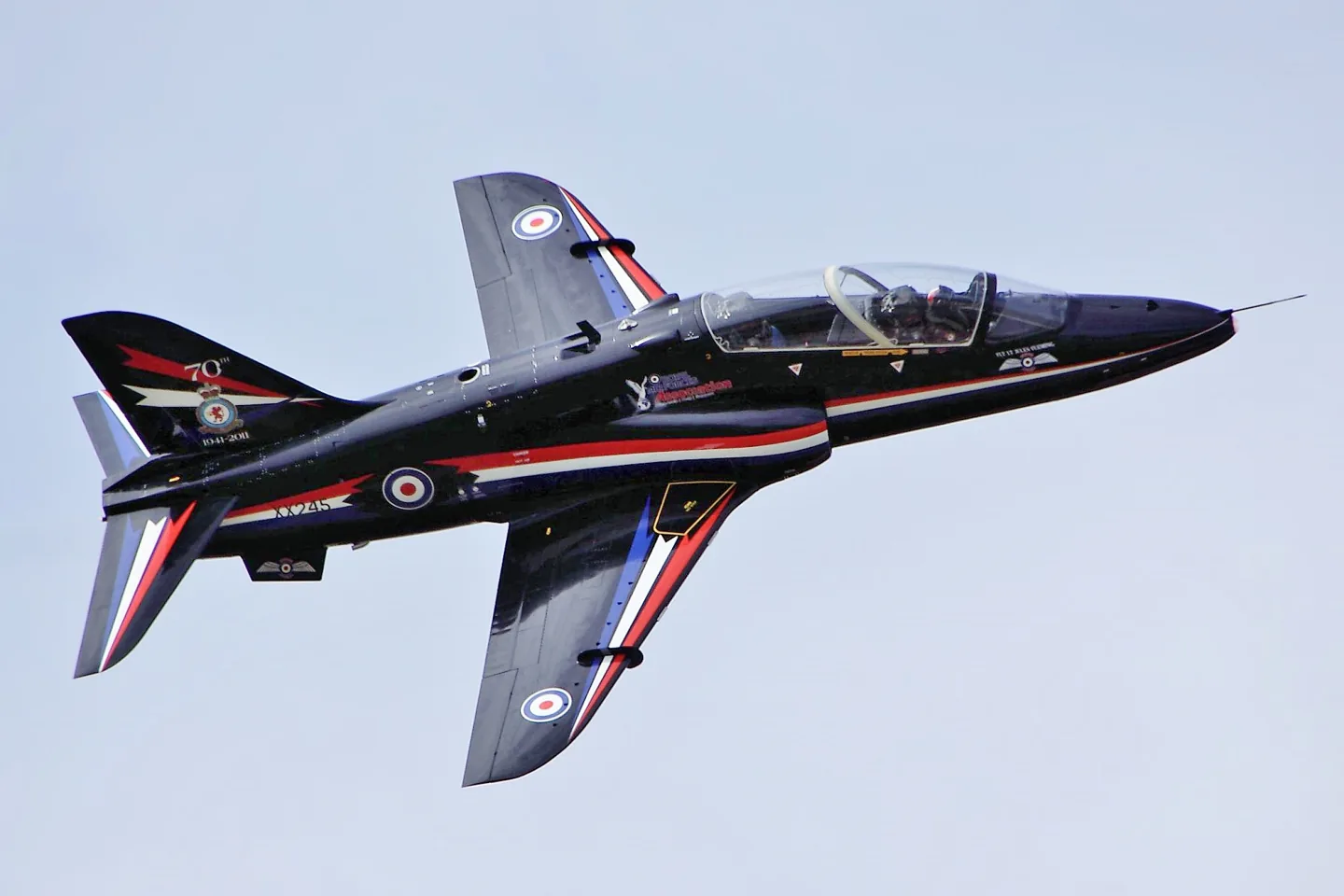
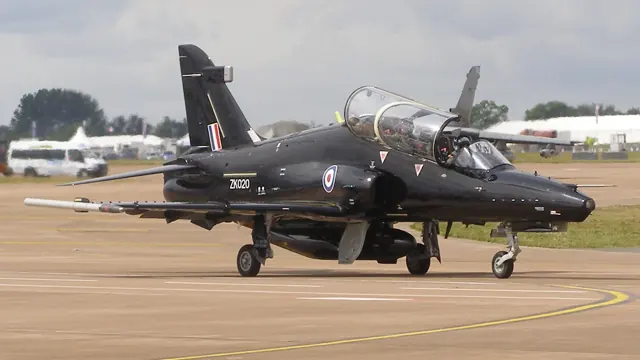
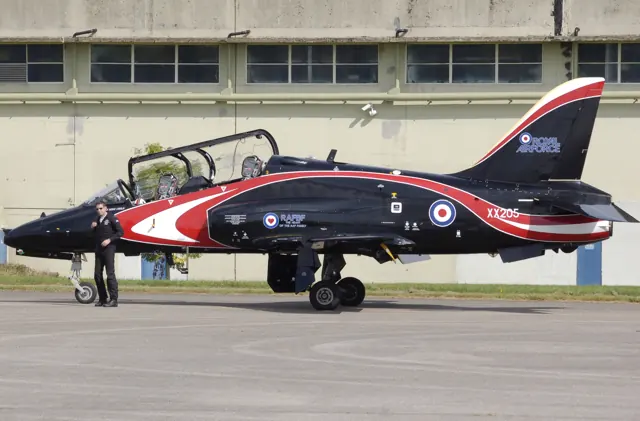
First developed under the Hawker Siddeley name, the Hawk continued through British Aerospace and BAE Systems. Its single-engine, subsonic design serves advanced training and, in some versions, combat roles. The T1 and later Hawks differ in equipment, identified by the model captions on photographs and specifications.
Aircraft background
Wikipedia contributors · Read more ↗Learning to think ahead of the jet
Coming from the Tucano, Heasman found the Hawk’s forward view immediately impressive. Other changes required adjustment. There was no nosewheel steering, and the jet responded differently to power changes from the turboprop he had known. In formation, anticipating what would happen next became especially important when the aircraft was both slippery and slower to respond to throttle movement.
Hush-Kit interview · September 2017. Pilot discussing both Hawk T1 and T2 experience; the Tucano-to-Hawk transition concerns the earlier T1.
Hush-Kit · Read more ↗Hydraulics extend beyond the flying controls
Just Flight describes two hydraulic systems, accumulators, a ram-air turbine, powered flying controls and standby functions for the gear and flaps. Its product documentation provides an overview of how these parts fit together in the add-on.
Just Flight Hawk T1/A · MSFS 2020/2024
Just Flight · Read more ↗Into the cockpit
 YouTube
cgaviator · 15 min ·
Simple Cold & Dark (Condensed Checklist) - JF Hawk T1 (MSFS) - real Hawk pilot
A former Hawk pilot presents a condensed startup walkthrough for Just Flight's MSFS model.
Simulator · Just Flight Hawk · MSFS
Watch on YouTube ↗Preview images are served by AirframeDB. Videos open on YouTube only when you choose to watch.
Meet BAe Hawk
First developed under the Hawker Siddeley name, the Hawk continued through British Aerospace and BAE Systems. Its single-engine, subsonic design serves advanced training and, in some versions, combat roles. The T1 and later Hawks differ in equipment, identified by the model captions on photographs and specifications.
BAe Hawk
Aircraft type designators
Use the code for the model you are flying. The linked authority lists the applicable aircraft.
History & design
An encouraging first flight begins a development programme
Duncan Simpson flew the first Hawk, XX154, from Dunsfold on 21 August 1974. The programme then expanded through several development aircraft and the G-HAWK demonstrator. Early favourable cockpit and handling impressions were followed by aerodynamic problems discovered as the flight envelope widened, leading to further refinement.
Royal Aeronautical Society · The Hawk Story ↗Harry Fraser-Mitchell’s engineering history · PDF pp.26–27
Development milestones
First flight: 21 August 1974
Wikipedia contributors · BAE Systems Hawk ↗BAE Systems Hawk · family/variant named by the source · Wikipedia revision 1373815529
Pilot accounts
Learning to think ahead of the jet
Coming from the Tucano, Heasman found the Hawk’s forward view immediately impressive. Other changes required adjustment. There was no nosewheel steering, and the jet responded differently to power changes from the turboprop he had known. In formation, anticipating what would happen next became especially important when the aircraft was both slippery and slower to respond to throttle movement.
Heasman enjoyed both generations of Hawk, while describing different demands in their cockpits. The T1 kept the pilot close to its basic handling; the T2 added the work of learning and managing a much more capable avionics installation. His enthusiasm for the aircraft survived those differences, with each version offering its own combination of flying pleasure and professional challenge.
Hush-Kit interview · September 2017. Pilot discussing both Hawk T1 and T2 experience; the Tucano-to-Hawk transition concerns the earlier T1.
Read the full account · Hush-Kit ↗A childhood flypast becomes a place on the team
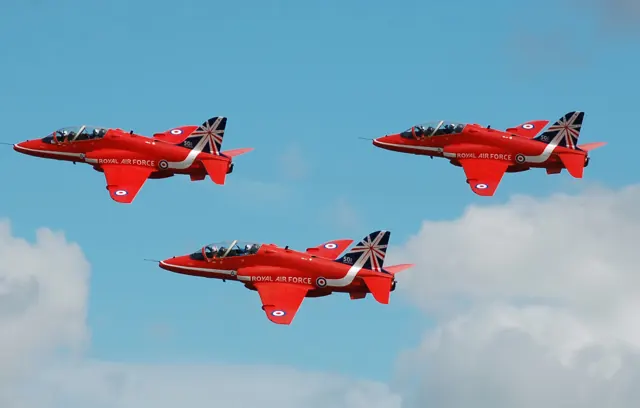
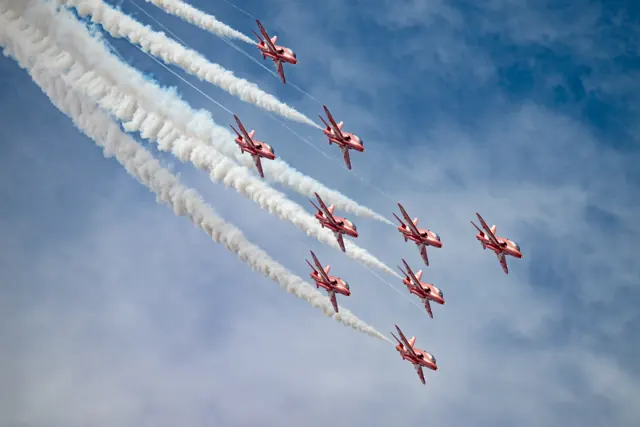
McEwen traced his ambition to seeing the Red Arrows fly over his childhood home with Concorde. Years later, learning that he had been selected for the team brought an excited telephone call to his father. The childhood spectacle had become a job for which he now had to prepare.
Moving from the F-35B to the Hawk T1 meant changing how he worked with the aircraft. He described a closer reliance on basic handling and trust in the people around him. Early preparation included observing the existing team and beginning the long process of building the next display. Progress would take daily work, with the understanding that improvement in such demanding flying would not always arrive in a straight line.
RAF interview as training began for the 2025 Red Arrows season. New Red 3 transitioning from the F-35B to the Hawk T1; subsequent season outcomes are not inferred.
Read the full account · Royal Air Force ↗Returning with experience from both sides of the formation
Roberts remembered his three years displaying with the Red Arrows as some of his most demanding and rewarding flying. He had flown on both sides of the formation and finished as Synchro Leader. That experience gave him a useful view of what each pilot was trying to achieve when he was selected to return in a different role.
As Red 10, he would supervise and commentate from the ground while also flying the spare aircraft and photography sorties. Getting a photographer into position for a fleeting opportunity was one challenge he anticipated. He was excited to return, but conscious of the work behind each appearance: mentoring pilots, organising the calendar and making sure the display could take place at each site.
RAF interview during preparations for 2026. Former Red Arrows display pilot and Hawk T1 instructor returning as Red 10; new duties were prospective at publication.
Read the full account · Royal Air Force ↗In your simulator
Systems, equipment and documentation for each developer’s aircraft.
Compare simulator versions →MSFS 2020 · MSFS 2024BAe Hawk
Just Flight · Released
BAe Hawk
Just Flight · Released
X-Plane 11BAe Hawk
Just Flight · Released
BAe Hawk
Just Flight · Released
Aircraft specifications
Published figures for the named real-aircraft variant. Simulator equipment and performance can differ.
| Specification | Published value |
|---|---|
| Length | 12.43 m (40 ft 9 in) |
| Wingspan | 9.94 m (32 ft 7 in) |
| Height | 3.98 m (13 ft 1 in) |
| Wing area | 16.70 m² (179.64 ft² ) |
| Empty weight | 4,480 kg (9,880 lb) |
| Max takeoff weight | 9,100 kg (20,000 lb) |
| Powerplant | 1× Rolls-Royce Turbomeca Adour Mk. 951 turbofan with FADEC , 29 kN (6,500 lbf ) 29 kN |
| Maximum speed | Mach 0.84 (1,028 km/h, 639 mph, 555 kn) at altitude |
| Range | 2,520 km (1,360 nmi , 1,565 mi) |
| Service ceiling | 13,565 m (44,500 ft) |
| Rate of climb | 47 m/s (9,300 ft/min) |
Manuals & resources
Find your next read
Choose a topic for a short introduction and a link to the original source. Simulator references identify the developer and edition they cover.
Simulator documentation
Separate aircraft systems from tablet conveniencesJust Flight Hawk T1/A · MSFS 2020/2024
The Hawk’s EFB includes saved aircraft states and a basic autopilot convenience function. These are simulator convenience features.
EFB features and aircraft-state options
Just Flight · Read the source ↗Hydraulics extend beyond the flying controlsJust Flight Hawk T1/A · MSFS 2020/2024
Just Flight describes two hydraulic systems, accumulators, a ram-air turbine, powered flying controls and standby functions for the gear and flaps. Its product documentation provides an overview of how these parts fit together in the add-on.
Detailed aircraft systems · hydraulics and controls
Just Flight · Read the source ↗The tablet configures the cockpit for different activitiesBAe Hawk · Just Flight · MSFS 2020 · MSFS 2024
The EFB can select weapon or display-smoke panels and alternative gunsight/GPS arrangements. It also controls the rear pilot, ordnance, ground equipment and simple autopilot assistance. These are package options available around the Hawk T1/T1A cockpit.
Just Flight MSFS 2020/2024 listing · captured September 2026
Just Flight · Read the source ↗Checklists and starting states support learning the cockpitBAe Hawk · Just Flight · X-Plane 11
The X-Plane 11 Hawk includes interactive checklists and a choice of cold-and-dark or ready-for-takeoff states while stationary. Both cockpit positions are modelled, with radio navigation and separately controlled cockpit systems.
Just Flight / Thranda X-Plane 11 listing · captured September 2026
Just Flight · Read the source ↗Some visual features require another pluginBAe Hawk · Just Flight · X-Plane 11
The developer lists rain support through the free Librain plugin. Its separate sound-mixing window adjusts exterior, cockpit and effects volumes, while opening the canopy changes the sound reaching the cockpit.
X-Plane 11 product description; not an X-Plane 12 compatibility claim
Just Flight · Read the source ↗Return to the aircraft state you leftBAe Hawk · Just Flight · MSFS 2020 · MSFS 2024
Just Flight lists persistent aircraft states alongside cold-and-dark, ready-for-start and ready-for-takeoff presets. The tablet also provides checklists, maps, notes, a descent calculator and SimBrief and Navigraph chart integration.
MSFS product description · captured September 2026
Just Flight · Read the source ↗Pilot account
Learning to think ahead of the jetHush-Kit interview · September 2017. Pilot discussing both Hawk T1 and T2 experience; the Tucano-to-Hawk transition concerns the earlier T1.
Coming from the Tucano, Heasman found the Hawk’s forward view immediately impressive. Other changes required adjustment. There was no nosewheel steering, and the jet responded differently to power changes from the turboprop he had known. In formation, anticipating what would happen next became especially important when the aircraft was both slippery and slower to respond to throttle movement. Heasman enjoyed both generations of Hawk, while describing different demands in their cockpits.
Paul Heasman
Hush-Kit · Read the source ↗A childhood flypast becomes a place on the teamRAF interview as training began for the 2025 Red Arrows season. New Red 3 transitioning from the F-35B to the Hawk T1; subsequent season outcomes are not inferred.
McEwen traced his ambition to seeing the Red Arrows fly over his childhood home with Concorde. Years later, learning that he had been selected for the team brought an excited telephone call to his father. The childhood spectacle had become a job for which he now had to prepare. Moving from the F-35B to the Hawk T1 meant changing how he worked with the aircraft. He described a closer reliance on basic handling and trust in the people around him.
Andrew McEwen
Royal Air Force · Read the source ↗Read the original documentation from the people who created it. Manuals open on their publisher’s website.
Aircraft background
BAE Systems HawkWikipedia contributors · Research background · retrieved 2026-09-12 The Hawk StoryRoyal Aeronautical Society · Harry Fraser-Mitchell · Journal of Aeronautical History 2013/01 · PDF pp.26–27Product
Hawk T1/A Advanced Trainer (MSFS)Just Flight · Official developer / designated store catalogue · checked 2026-09-12 Hawk T1/A Advanced Trainer (X-Plane 11)Just Flight · Official developer / designated store catalogue · checked 2026-09-12Type designator
ICAO Doc 8643 — aircraft type designatorsInternational Civil Aviation Organization · Public search data retrieved 2026-09-14; authority update 2026-09-03Built-in force-feedback profiles
Read the documentary basis, editable starting settings and remaining questions for the aircraft you fly. Each explanation refers to the exact profile revision shown.
Catalogue programme-20261022-v1 · 2 profile choices
Just Flight Hawk T1/A
Just Flight · Free and Pro · Revision 5 · Inherited starting point
MSFS 2020 · MSFS 2024
Just Flight Hawk T1/A: Artificial centering represents powered ailerons and tailplane; the manual rudder does not turn pitch and roll into reversible controls.
BAe Hawk
Free and Pro · Revision 1 · Partial review
MSFS 2024 · MSFS 2020 · X-Plane 11
BAe Hawk: Artificial centering represents powered ailerons and tailplane; the manual rudder does not turn pitch and roll into reversible controls.
Discuss this aircraft (0)
Questions, observations and useful sources from the community.
No published discussions yet. Bring a question or share a useful source.
Open aircraft discussions →Content expanded · What’s new
Something missing or a source that needs attention?
Suggest a correction ↗