





Start here
A few places to begin, from the aircraft’s story to the people who fly it.
Meet the aircraft
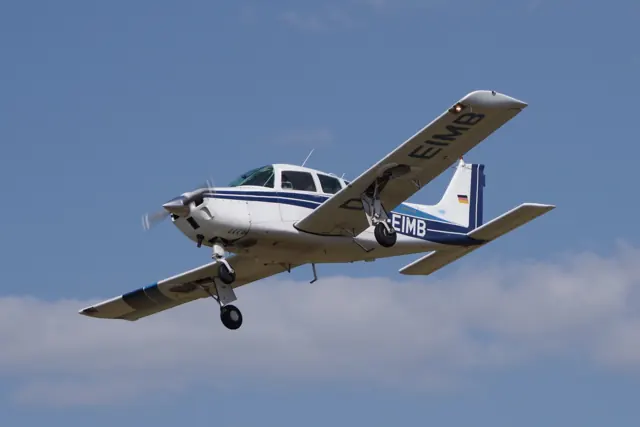
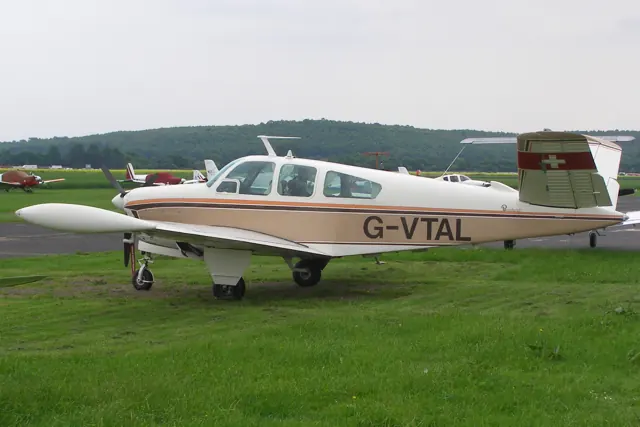
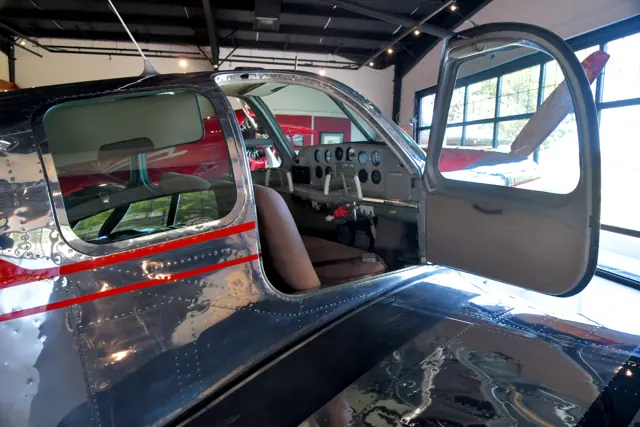
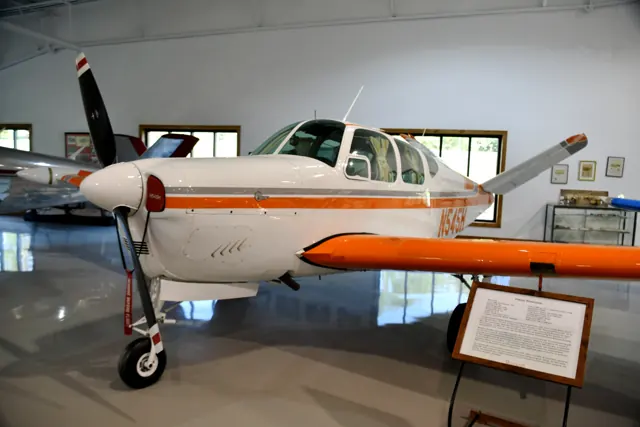
The Bonanza appeared in 1947 as an all-metal aircraft with retractable landing gear. Its distinctive early V-tail became one of general aviation's best-known silhouettes. Conventional-tail versions also developed into a major branch of the family, including the longer Model 36. Tail arrangement, fuselage and equipment distinguish the V35 and G36 branches.
Aircraft background
Wikipedia contributors · Read more ↗A first aircraft becomes a travelling companion
Ovad bought his F33A as a relatively new private pilot looking for an aircraft that could take him places. He started instrument training before collecting it, then spent the following years using it for both work and exploration. Interviewed after more than 600 hours of ownership, he valued the comfortable cabin and the flexibility of its additional tip-tank fuel. He sometimes flew long days and preferred economical reduced-power cruising to extracting the last few knots.
AOPA Pilot, September 1998. Owner account of an F33A with Osborne tip tanks, balanced fuel injectors and updated avionics.
AOPA Pilot · Read more ↗Released product and variants
PAE’s A36 and G36 products are complete X-Plane 12 aircraft with REP included. The F33A and V35B packs are separate enhancements requiring the corresponding Carenado aircraft; they are not PAE airframes.
Bonanza aircraft and Reality Expansion Packs · X-Plane 11 · X-Plane 12
SimCoders · Read more ↗Into the cockpit
 YouTube
Martin Pauly
Flying the Beech Bonanza
A complete cockpit flight account from Cedar Rapids to Madison.
Real 1978 A36; equipment differs from an A36TC
Watch on YouTube ↗Preview images are served by AirframeDB. Videos open on YouTube only when you choose to watch.
Meet Beechcraft Bonanza family
The Bonanza appeared in 1947 as an all-metal aircraft with retractable landing gear. Its distinctive early V-tail became one of general aviation's best-known silhouettes. Conventional-tail versions also developed into a major branch of the family, including the longer Model 36.
Tail arrangement, fuselage and equipment distinguish the V35 and G36 branches. Simulator products range from conventional instruments to integrated glass cockpits.
Beechcraft Bonanza
Beechcraft → · Explore the family →
Beechcraft Bonanza family
Wikipedia contributors · Beechcraft Bonanza ↗Aircraft type designators
Use the code for the model you are flying. The linked authority lists the applicable aircraft.
Bonanza 33 / Debonair, including F33A
ICAO Doc 8643 — aircraft type designators ↗Checked 2026-09-14History & design
Postwar ideas, several tails
The original Model 35 combined a low wing, retractable tricycle landing gear and a V-tail in a fast personal aircraft. Its two tail surfaces combined pitch and yaw functions through ruddervators. Later Bonanzas also used conventional tails: the Model 33 began as the Debonair, while the longer Model 36 developed the family into a six-seat aircraft. “Bonanza” therefore describes a family with distinct layouts and equipment.
Wikipedia contributors · Beechcraft Bonanza ↗Research-based history of the real aircraft family; see the linked source.
Development milestones
First flight: December 22, 1945
Wikipedia contributors · Beechcraft Bonanza ↗Beechcraft Bonanza · family/variant named by the source · Wikipedia revision 1372209707
Pilot accounts
A first aircraft becomes a travelling companion
Ovad bought his F33A as a relatively new private pilot looking for an aircraft that could take him places. He started instrument training before collecting it, then spent the following years using it for both work and exploration. Interviewed after more than 600 hours of ownership, he valued the comfortable cabin and the flexibility of its additional tip-tank fuel. He sometimes flew long days and preferred economical reduced-power cruising to extracting the last few knots.
The Bonanza carried Ovad and his fiancée Deb Mathein to places including Nova Scotia, Belize and Colorado. Shorter trips took clients sightseeing or delivered urgently needed electrical supplies for his business. His attachment went hand in hand with close attention to maintenance: he tracked oil-analysis results and engine data, and found being without the aircraft during a propeller replacement particularly difficult. His range and operating experience concern his specifically equipped F33A.
AOPA Pilot, September 1998. Owner account of an F33A with Osborne tip tanks, balanced fuel injectors and updated avionics.
Read the full account · AOPA Pilot ↗Across the Pacific in a specially prepared A36TC
Cox ferried Barry Andrews' A36TC from California to Singapore after its owner accepted an overseas posting. Fuel shortages at intended Pacific stops forced a longer route through island destinations and northern Australia. The aircraft had additional ferry tanks, substantially more fuel than a standard Bonanza and a recently overhauled engine. Cox remembers the long ocean legs as hours of repetitive flying punctuated by the relief of seeing the next island.
Andrews joined him in Darwin for the final leg. With two people, luggage, ferry fuel and tropical heat, the overloaded aircraft climbed slowly, making the departure a very different experience from an ordinary lightly loaded demonstration. Later, Cox used the Stormscope while working around thunderstorms toward Singapore. After roughly 65 flying hours over a week, he delivered the Bonanza at Seletar. His account conveys both confidence in the aeroplane and his continuing awareness of the water beneath it; the special ferry configuration is essential context for the distances and handling he describes.
Plane + Pilot, 26 May 2009. Retrospective A36TC ferry flight with additional tanks; deliberately overloaded ferry configuration described by the author.
Read the full account · Plane + Pilot ↗Around the world with Lucy
Maeda completed a six-week circumnavigation in June 2021 in Lucy, his 1963 P-model V-tail Bonanza. Speaking to David Tulis after returning to Washington, he recalled a journey complicated by fuel availability, altered routes, paperwork and pandemic restrictions. Weather added its own challenges, from desert dust to Russian fog and an encounter with icing. He also remembers the loneliness of parts of the trip and the help of a support network following his progress.
One particularly vivid memory was flying over Greenland alongside mentor Adrian Eichhorn in another Bonanza. Clear skies revealed an extraordinary landscape, but looking down at the glaciers also made Maeda intensely conscious of depending on a single engine. He found himself talking encouragingly to Lucy. Elsewhere, welcoming airport staff and strangers helped keep the mission moving. His account ends with a return to his family and a renewed appreciation for the people along the route, giving the long-distance Bonanza journey a distinctly personal scale.
AOPA, 17 June 2021. Shinji Maeda’s account after his May–June 2021 circumnavigation in a 1963 P35 Bonanza.
Read the full account · AOPA ↗In your simulator
Systems, equipment and documentation for each developer’s aircraft.
Compare simulator versions →MSFS 2024Bonanza G36
Microsoft Flight Simulator · Released
Bonanza G36
Microsoft Flight Simulator · Released
MSFS 2024Bonanza V35
Microsoft Flight Simulator · Released
Bonanza V35
Microsoft Flight Simulator · Released
MSFS 2020Beechcraft Bonanza G36
Microsoft Flight Simulator · Released
Beechcraft Bonanza G36
Microsoft Flight Simulator · Released
MSFS 2020 · MSFS 2024Beechcraft Bonanza family · Black Square
Black Square · Released
Beechcraft Bonanza family · Black Square
Black Square · Released
X-Plane 12Beechcraft Bonanza family · Thranda
Thranda · Released
Beechcraft Bonanza family · Thranda
Thranda · Released
X-Plane 11 · X-Plane 12Bonanza aircraft and Reality Expansion Packs
SimCoders · Released
Bonanza aircraft and Reality Expansion Packs
SimCoders · Released
MSFS 2020Bonanza V35
Microsoft Flight Simulator · Released
Bonanza V35
Microsoft Flight Simulator · Released
MSFS 2020 · MSFS 2024F33A
Carenado · Released
F33A
Carenado · Released
Aircraft specifications
Published figures for the named real-aircraft variant. Simulator equipment and performance can differ.
| Specification | Published value |
|---|---|
| Length | 27 ft 6 in (8.38 m) |
| Wingspan | 33 ft 6 in (10.21 m) |
| Height | 8 ft 7 in (2.62 m) |
| Wing area | 181 sq ft (16.8 m² ) |
| Empty weight | 2,517 lb (1,142 kg) |
| Gross weight | 3,650 lb (1,656 kg) |
| Powerplant | 1 × Continental IO-550-B , 300 hp (220 kW) |
| Propellers | three-bladed Hartzell Propeller , 6 ft 8 in (2.03 m) diameter |
| Cruise speed | 176 kn (203 mph, 326 km/h) |
| Range | 716 nmi (824 mi, 1,326 km) with full passenger load |
| Service ceiling | 18,500 ft (5,600 m) |
| Rate of climb | 1,230 ft/min (6.2 m/s) |
Manuals & resources
Find your next read
Choose a topic for a short introduction and a link to the original source. Simulator references identify the developer and edition they cover.
Simulator documentation
Released product and variantsBonanza aircraft and Reality Expansion Packs · SimCoders · X-Plane 11 · X-Plane 12
PAE’s A36 and G36 products are complete X-Plane 12 aircraft with REP included. The F33A and V35B packs are separate enhancements requiring the corresponding Carenado aircraft; they are not PAE airframes.
Official developer / designated-store reference · checked 2026-09-14
SimCoders · Read the source ↗The original MSFS 2020 releaseBonanza V35 · Microsoft Flight Simulator · MSFS 2020
Famous Flyer III introduced the V-tail Bonanza V35 in August 2022 with ten liveries.
2022-08-18 · release and package scope
Microsoft Flight Simulator Team · Read the source ↗Pilot account
A first aircraft becomes a travelling companionAOPA Pilot, September 1998. Owner account of an F33A with Osborne tip tanks, balanced fuel injectors and updated avionics.
Ovad bought his F33A as a relatively new private pilot looking for an aircraft that could take him places. He started instrument training before collecting it, then spent the following years using it for both work and exploration. Interviewed after more than 600 hours of ownership, he valued the comfortable cabin and the flexibility of its additional tip-tank fuel. He sometimes flew long days and preferred economical reduced-power cruising to extracting the last few knots.
David Ovad, interviewed by AOPA Pilot
AOPA Pilot · Read the source ↗Across the Pacific in a specially prepared A36TCPlane + Pilot, 26 May 2009. Retrospective A36TC ferry flight with additional tanks; deliberately overloaded ferry configuration described by the author.
Cox ferried Barry Andrews' A36TC from California to Singapore after its owner accepted an overseas posting. Fuel shortages at intended Pacific stops forced a longer route through island destinations and northern Australia. The aircraft had additional ferry tanks, substantially more fuel than a standard Bonanza and a recently overhauled engine. Cox remembers the long ocean legs as hours of repetitive flying punctuated by the relief of seeing the next island.
Bill Cox
Plane + Pilot · Read the source ↗Developer documentation
F33A — product listingF33A · MSFS 2020 · MSFS 2024
Product listing captured 2026-09-23; edition scope from the reviewed catalogue
www.carenado.com · Read the source ↗F33A — product listingF33A · MSFS 2020 · MSFS 2024
Product listing captured 2026-09-23; edition scope from the reviewed catalogue
www.carenado.com · Read the source ↗Read the original documentation from the people who created it. Manuals open on their publisher’s website.
Manual
Microsoft Flight Simulator aircraft manualsMicrosoft / aircraft developersAircraft background
Beechcraft BonanzaWikipedia contributors · Research background · Wikipedia revision 1372209707 · retrieved 2026-09-12Resource
MSFS 2024 FAQ and edition aircraft inventoryMicrosoft MSFS 2020 FAQ and edition aircraft inventoryMicrosoftProduct
Bonanza ProfessionalBlack Square · Official developer / designated store catalogue · checked 2026-09-12 Steam Gauge Overhaul - Analog BonanzaBlack Square · Official developer / designated store catalogue · checked 2026-09-12 Thranda V35B Bonanza DGS+ SeriesThranda · Official developer / designated store catalogue · checked 2026-09-12 F33A Bonanza DGS+ SeriesThranda · Official developer / designated store catalogue · checked 2026-09-12 Reality Expansion Pack · PAE A36 BonanzaSimCoders · Official developer / designated store catalogue · checked 2026-09-12 Reality Expansion Pack · PAE G36 BonanzaSimCoders · Official developer / designated store catalogue · checked 2026-09-12 Reality Expansion Pack · Beech Bonanza F33ASimCoders · Official developer / designated store catalogue · checked 2026-09-12 Reality Expansion Pack · Beech Bonanza V35BSimCoders · Official developer / designated store catalogue · checked 2026-09-12 F33A MSFS2020 – Carenadowww.carenado.com · Product listing captured 2026-09-23; edition scope from the reviewed catalogue F33A MSFS2024 – Carenadowww.carenado.com · Product listing captured 2026-09-23; edition scope from the reviewed catalogueDeveloper documentation
Famous Flyer III: Beechcraft Bonanza V35Microsoft Flight Simulator Team · 2022-08-18 · release and package scope PAE Beechcraft Bonanza A36 -- Powered by the Reality ExpansiSimCoders · Official developer / designated-store reference · checked 2026-09-14 PAE Beechcraft Bonanza G36 -- Powered by the Reality ExpansiSimCoders · Official developer / designated-store reference · checked 2026-09-14Type designator
ICAO Doc 8643 — aircraft type designatorsInternational Civil Aviation Organization · Public search data retrieved 2026-09-14; authority update 2026-09-03Built-in force-feedback profiles
Read the documentary basis, editable starting settings and remaining questions for the aircraft you fly. Each explanation refers to the exact profile revision shown.
Catalogue programme-20261022-v1 · 20 profile choices
Black Square Analog Bonanza A36
Black Square · Free and Pro · Revision 1 · Inherited starting point
MSFS 2020
Black Square Analog Bonanza A36: The selected reversible-control response accompanies the named Bonanza; engine conversion and panel options do not establish a new force law by themselves.
Black Square Analog Bonanza A36TC
Black Square · Free and Pro · Revision 1 · Inherited starting point
MSFS 2020
Black Square Analog Bonanza A36TC: The selected reversible-control response accompanies the named Bonanza; engine conversion and panel options do not establish a new force law by themselves.
Black Square Bonanza A36
Black Square · Free and Pro · Revision 6 · Inherited starting point
MSFS 2020 · MSFS 2024
Black Square Bonanza A36: The selected reversible-control response accompanies the named Bonanza; engine conversion and panel options do not establish a new force law by themselves.
Black Square Bonanza A36TC
Black Square · Free and Pro · Revision 5 · Inherited starting point
MSFS 2020 · MSFS 2024
Black Square Bonanza A36TC: The selected reversible-control response accompanies the named Bonanza; engine conversion and panel options do not establish a new force law by themselves.
Black Square Bonanza B36TP
Black Square · Free and Pro · Revision 5 · Inherited starting point
MSFS 2020 · MSFS 2024
Black Square Bonanza B36TP: The selected reversible-control response accompanies the named Bonanza; engine conversion and panel options do not establish a new force law by themselves.
Carenado F33A Bonanza (MSFS)
Carenado · Free and Pro · Revision 3 · Inherited starting point
MSFS 2020 · MSFS 2024
Carenado F33A Bonanza (MSFS): The selected reversible-control response accompanies the named Bonanza; engine conversion and panel options do not establish a new force law by themselves.
Carenado F33A Bonanza (X-Plane)
Carenado · Free and Pro · Revision 1 · Partial review
X-Plane 11
Carenado F33A Bonanza (X-Plane): The selected reversible-control response accompanies the named Bonanza; engine conversion and panel options do not establish a new force law by themselves.
PAE / SimCoders Bonanza A36
PAE Addons · Free and Pro · Revision 1 · Inherited starting point
X-Plane 12
PAE / SimCoders Bonanza A36: The selected reversible-control response accompanies the named Bonanza; engine conversion and panel options do not establish a new force law by themselves.
PAE / SimCoders Bonanza G36
PAE Addons · Free and Pro · Revision 1 · Inherited starting point
X-Plane 12
PAE / SimCoders Bonanza G36: The selected reversible-control response accompanies the named Bonanza; engine conversion and panel options do not establish a new force law by themselves.
SimCoders REP / Carenado Bonanza F33A (XP12)
SimCoders · Free and Pro · Revision 1 · Inherited starting point
X-Plane 12
SimCoders REP / Carenado Bonanza F33A (XP12): The selected reversible-control response accompanies the named Bonanza; engine conversion and panel options do not establish a new force law by themselves.
Thranda V35B Bonanza
Thranda · Free and Pro · Revision 3 · Inherited starting point
X-Plane 12
Thranda V35B Bonanza: The selected reversible-control response accompanies the named Bonanza; engine conversion and panel options do not establish a new force law by themselves.
Thranda F33A Bonanza DGS+ (XP12)
Thranda · Free and Pro · Revision 1 · Inherited starting point
X-Plane 12
Thranda F33A Bonanza DGS+ (XP12): The selected reversible-control response accompanies the named Bonanza; engine conversion and panel options do not establish a new force law by themselves.
Beechcraft Bonanza G36
Free and Pro · Revision 3 · Inherited starting point
MSFS 2020 · MSFS 2024 · X-Plane 11 · X-Plane 12
Beechcraft Bonanza G36: The selected reversible-control response accompanies the named Bonanza; engine conversion and panel options do not establish a new force law by themselves.
Beechcraft Bonanza A36
Free and Pro · Revision 1 · Partial review
MSFS 2020 · MSFS 2024 · X-Plane 11 · X-Plane 12
Beechcraft Bonanza A36: The selected reversible-control response accompanies the named Bonanza; engine conversion and panel options do not establish a new force law by themselves.
Beechcraft Bonanza A36TC
Free and Pro · Revision 1 · Partial review
MSFS 2020 · MSFS 2024 · X-Plane 11 · X-Plane 12
Beechcraft Bonanza A36TC: The selected reversible-control response accompanies the named Bonanza; engine conversion and panel options do not establish a new force law by themselves.
Beechcraft Bonanza B36TP
Free and Pro · Revision 1 · Inherited starting point
MSFS 2020 · MSFS 2024 · X-Plane 11 · X-Plane 12
Beechcraft Bonanza B36TP: The selected reversible-control response accompanies the named Bonanza; engine conversion and panel options do not establish a new force law by themselves.
Beechcraft Bonanza F33A
Free and Pro · Revision 1 · Inherited starting point
MSFS 2020 · MSFS 2024 · X-Plane 11 · X-Plane 12
Beechcraft Bonanza F33A: The selected reversible-control response accompanies the named Bonanza; engine conversion and panel options do not establish a new force law by themselves.
Beechcraft Bonanza V35B
Free and Pro · Revision 1 · Inherited starting point
MSFS 2020 · MSFS 2024 · X-Plane 11 · X-Plane 12
Beechcraft Bonanza V35B: The selected reversible-control response accompanies the named Bonanza; engine conversion and panel options do not establish a new force law by themselves.
BRsim Designs Beechcraft Bonanza H35 V-tail
BRsim Designs · Free and Pro · Revision 1 · Partial review
MSFS 2020
A long-running touring single, familiar in both V-tail and conventional-tail forms.
Beechcraft Bonanza H35 V-Tail
Free and Pro · Revision 1 · Partial review
MSFS 2020 · MSFS 2024 · X-Plane 12
A long-running touring single, familiar in both V-tail and conventional-tail forms.
Carenado F33A Bonanza (X-Plane)
Carenado F33A Bonanza (X-Plane): The selected reversible-control response accompanies the named Bonanza; engine conversion and panel options do not establish a new force law by themselves.
Aircraft and simulator scope
- Carenado F33A Bonanza (X-Plane) · Carenado · X-Plane 11 · Add-on starting point
Carenado F33A Bonanza (X-Plane) · Historical XP11 catalogue scope; compatibility is not transferred to XP12.
The simulator model and controls
The Bonanza appeared in 1947 as an all-metal aircraft with retractable landing gear. Its distinctive early V-tail became one of general aviation's best-known silhouettes. Conventional-tail versions also developed into a major branch of the family, including the longer Model 36.
This profile selects Carenado F33A Bonanza (X-Plane) for X-Plane 11.
How this profile feels
Spring resistance builds with the selected airspeed response. A separate aerodynamic term adds speed-dependent control load.
Valid trim provides the configured pressure relief. Autopilot following is off.
Controls and trim
Later A36/G36 Bonanzas use adjustable aileron trim tabs and an electromechanical retractable-gear system. The manufacturer's control-system material should not be replaced by an earlier throw-over-column trimmer description. Black Square separates normally aspirated, turbonormalized and turbine configurations; its Professional manual names KFC150 equipment but also uses Century IV wording in its FAQ. That unresolved label conflict does not establish an autopilot interface.
The selected implementation
Carenado F33A XP11 lists GNS430 and an included KFC150 guide, distinct from Thranda DGS+.
About the values
The gains are normalized profile settings. They describe the chosen effect balance; hand force depends on the device and its output limits. IAS references are tuning values rather than operating limits. Physical acceptance of this revision remains pending.
What the documentation establishes
Carenado identifies F33A Bonanza for XP11 with GNS430 and an included KFC150 manual.
Documentary review and sources
These decisions describe the documentary basis and remaining gaps for this revision. Aircraft documentation and a starting setting describe different kinds of evidence.
Aircraft and variant
ReviewedThis profile selects Carenado F33A Bonanza (X-Plane) for X-Plane 11.
Flight controls
Not yet reviewedLater A36/G36 Bonanzas use adjustable aileron trim tabs and an electromechanical retractable-gear system. The manufacturer's control-system material should not be replaced by an earlier throw-over-column trimmer description. Black Square separates normally aspirated, turbonormalized and turbine configurations; its Professional manual names KFC150 equipment but also uses Century IV wording in its FAQ. That unresolved label conflict does not establish an autopilot interface.
Trim
Not yet reviewedElevator trim and flight-adjustable aileron trim support separate pitch and roll relief. The profile's authorities remain selected approximations. Pitch authority 0.3 provides load relief and permitted centre movement; roll authority is 0.
Autopilot and stability
Not yet reviewedAutopilot following is off; the configured spring and load retain the hardware feel.
Equipment
Not yet reviewedCarenado F33A XP11 lists GNS430 and an included KFC150 guide, distinct from Thranda DGS+.
Speeds and limits
Not yet reviewedThe indicated-speed references set the profile response scale; they are separate from aircraft operating limits.
Simulator integration
Not yet reviewedThe profile targets xplane11. Add-on-specific controls use only the supported references configured by this profile.
Force-feedback settings
Not yet reviewedThe settings define the profile’s effect balance. Device output limits affect physical hand force.
Starting settings and their rationale
These configured values are starting estimates. The explanations describe what each setting controls; physical validation appears separately below.
| Setting | Starting value | What it controls and why |
|---|---|---|
| Spring strength | Starting value0.74 | What it controls and whyThe selected reversible-control response accompanies the named Bonanza; engine conversion and panel options do not establish a new force law by themselves. The baseline spring is 0.74. Its low-speed blend reaches baseline strength at 75 KIAS. |
| Master force gain | Starting value0.85 | What it controls and whyScales overall profile strength while preserving effect balance, subject to device and output limits. |
| Profile force gain | Starting value0.8 | What it controls and whyThe aerodynamic-load gain is 0.8 with an indicated-speed reference of 150 KIAS. This supplies speed-dependent loading alongside the spring. |
| Force tuning speed/reference | Starting value150.0 kt | What it controls and whySets the IAS reference for aerodynamic loading. It is an estimate, not published cruise TAS or a flight limit. |
| Spring response reference speed | Starting value75.0 kt | What it controls and whySets the IAS where the low-speed blend reaches baseline strength; high-speed stiffening also uses it. |
| Aileron force scale | Starting value0.72 | What it controls and whyRoll and pitch aerodynamic scales are 0.72 and 1, respectively. They set the aerodynamic axis balance. No custom spring-travel curve is enabled. |
| Elevator force scale | Starting value1.0 | What it controls and whyScales pitch aerodynamic loading; pitch spring travel and trim responses are separate settings. |
| Trim feel | Starting valueEnabled | What it controls and whyRetained for compatibility and group membership. Trim relief, rather than this flag, controls centre movement. |
| Trim relief | Starting valueEnabled | What it controls and whyAllows trim relief with supported control law and valid telemetry. Axis authorities set its amount. |
| Autopilot follow | Starting valueDisabled | What it controls and whyAutopilot following is off; the configured spring and load retain the hardware feel. |
| Autopilot neutral hold | Starting valueDisabled | What it controls and whyPermits centering hold during a supported AP state, separate from following a moving target. |
| Output force limit | Starting value0.55 | What it controls and whyCaps directed-force output. Native spring effects and device limits remain separate. |
All 44 starting settings and their rationale
The settings define the profile’s effect balance. Device output limits affect physical hand force.
| Setting | Starting value | What it controls and why |
|---|---|---|
| Spring strength | Starting value0.74 | What it controls and whyThe selected reversible-control response accompanies the named Bonanza; engine conversion and panel options do not establish a new force law by themselves. The baseline spring is 0.74. Its low-speed blend reaches baseline strength at 75 KIAS. |
| Spring deadband | Starting value0.045 | What it controls and whySets travel around the centre before the baseline spring resists. Smaller values engage it sooner. |
| Profile force gain | Starting value0.8 | What it controls and whyThe aerodynamic-load gain is 0.8 with an indicated-speed reference of 150 KIAS. This supplies speed-dependent loading alongside the spring. |
| Master force gain | Starting value0.85 | What it controls and whyScales overall profile strength while preserving effect balance, subject to device and output limits. |
| QBlend Enabled | Starting valueEnabled | What it controls and whyAllows baseline spring strength to rise with indicated airspeed where the control law permits it. |
| QSpring Minimum Factor | Starting value0.5 | What it controls and whySets low-speed spring strength as a fraction of baseline when blending is enabled. One keeps full strength. |
| QSpring Start Knots | Starting value21.0 kt | What it controls and whySets the IAS where the low-speed spring blend starts rising. This is a feel threshold, not a flight limit. |
| Spring response reference speed | Starting value75.0 kt | What it controls and whySets the IAS where the low-speed blend reaches baseline strength; high-speed stiffening also uses it. |
| Force tuning speed/reference | Starting value150.0 kt | What it controls and whySets the IAS reference for aerodynamic loading. It is an estimate, not published cruise TAS or a flight limit. |
| Airspeed spring stiffening gain | Starting value0.15 | What it controls and whyThe high-speed spring-stiffening gain is 0.15. It strengthens the permitted spring response above 75 KIAS, with the squared-speed ratio capped at 5. |
| Airspeed spring stiffening limit | Starting value5 | What it controls and whyLimits the squared airspeed ratio used for high-speed spring stiffening; it is not a device-force cap. |
| Aileron force scale | Starting value0.72 | What it controls and whyRoll and pitch aerodynamic scales are 0.72 and 1, respectively. They set the aerodynamic axis balance. No custom spring-travel curve is enabled. |
| Elevator force scale | Starting value1.0 | What it controls and whyScales pitch aerodynamic loading; pitch spring travel and trim responses are separate settings. |
| Output force limit | Starting value0.55 | What it controls and whyCaps directed-force output. Native spring effects and device limits remain separate. |
| Trim feel | Starting valueEnabled | What it controls and whyRetained for compatibility and group membership. Trim relief, rather than this flag, controls centre movement. |
| Trim relief | Starting valueEnabled | What it controls and whyAllows trim relief with supported control law and valid telemetry. Axis authorities set its amount. |
| Elevator Authority | Starting value0.3 | What it controls and whyElevator trim and flight-adjustable aileron trim support separate pitch and roll relief. The profile's authorities remain selected approximations. Pitch authority 0.3 provides load relief and permitted centre movement; roll authority is 0. |
| Aileron Authority | Starting value0 | What it controls and whyScales supported roll-trim relief and permitted centre movement. Zero removes roll response. |
| Force Trim Enabled | Starting valueDisabled | What it controls and whyEnables local force trim, separate from aircraft-owned trim and add-on integration qualification. |
| GLoad Enabled | Starting valueEnabled | What it controls and whyAllows load-factor changes to modify permitted spring laws. Passive fly-by-wire feel can suppress it. |
| Rate Damping Enabled | Starting valueEnabled | What it controls and whyEnables rate damping with the configured coefficients and control law. |
| Autopilot follow | Starting valueDisabled | What it controls and whyAutopilot following is off; the configured spring and load retain the hardware feel. |
| Autopilot follow authority | Starting value0.1 | What it controls and whySets admitted AP-follow gain, not a percentage of travel. Runtime ownership and input limits still apply. |
| Autopilot neutral hold | Starting valueDisabled | What it controls and whyPermits centering hold during a supported AP state, separate from following a moving target. |
| Autopilot neutral hold strength | Starting value0.6 | What it controls and whySets admitted AP neutral-hold strength; inactive while neutral hold is disabled. |
| Enabled | Starting valueEnabled | What it controls and whyEnables aerodynamic cues; each still needs nonzero strength and its simulator conditions. |
| Gain | Starting value0.35 | What it controls and whySets stall-buffet strength. Zero removes the cue without changing simulator stalls or warnings. |
| Gain | Starting value0 | What it controls and whySets high-Mach buffet strength; onset and full-strength thresholds are separate. |
| Gain | Starting value0.14 | What it controls and whySets flap buffet at the configured position and speed gates. Flap movement texture is separate. |
| Maximum flap index | Starting value2 | What it controls and whySets the final flap index for detent normalization. UP plus three detents uses maximum index3. |
| Minimum flap index | Starting value2 | What it controls and whySets the first flap detent that admits buffet; this is a handle index, not degrees. |
| Gain | Starting value0.12 | What it controls and whySets gear aerodynamic buffet; movement and ground-contact cues are separate. |
| Shaker Enabled | Starting valueDisabled | What it controls and whyPermits shaker at supported warning conditions; the switch does not establish aircraft equipment. |
| Stick shaker amplitude | Starting value0.5 | What it controls and whySets triggered shaker strength; inactive while the shaker feature is disabled. |
| Enabled | Starting valueEnabled | What it controls and whyEnables ground effects; each still needs its own strength and contact or motion telemetry. |
| Gain | Starting value0.4 | What it controls and whySets rolling texture strength, modified by speed, surface and undercarriage configuration. |
| Gain | Starting value0.25 | What it controls and whySets gear-bump texture during ground motion, separate from touchdown impact. |
| Gain | Starting value0.65 | What it controls and whySets landing-impact strength; landing telemetry and response shape determine the pulse. |
| Gain | Starting value0 | What it controls and whySets reverse-thrust vibration with valid reverser and engine conditions. Zero removes the cue. |
| Enabled | Starting valueEnabled | What it controls and whyEnables engine cues with nonzero settings and valid running-engine telemetry. |
| Gain | Starting value0.12 | What it controls and whySets estimated engine vibration using configured telemetry and response, not measured cockpit vibration. |
| Enabled | Starting valueEnabled | What it controls and whyEnables accessory cues with configured strengths and observed accessory movement. |
| Gain | Starting value0.12 | What it controls and whySets texture from observed flap movement; a command without movement does not establish the cue. |
| Gain | Starting value0.12 | What it controls and whySets texture from observed gear movement, separate from aerodynamic and touchdown effects. |
Limits and open questions
- Optional GTN750 support does not establish F33A trim gearing or valid KFC150 demand signals. Force follow stays a separate unqualified setting.
- No simulator launch or physical force validation.
Physical validation
No physical force validation is recorded in this public catalogue for this revision. Documentary review and software checks do not establish how a particular device feels.
Discuss this aircraft (0)
Questions, observations and useful sources from the community.
No published discussions yet. Bring a question or share a useful source.
Open aircraft discussions →Content expanded · What’s new
Something missing or a source that needs attention?
Suggest a correction ↗