
Start here
A few places to begin, from the aircraft’s story to the people who fly it.
Meet the aircraft
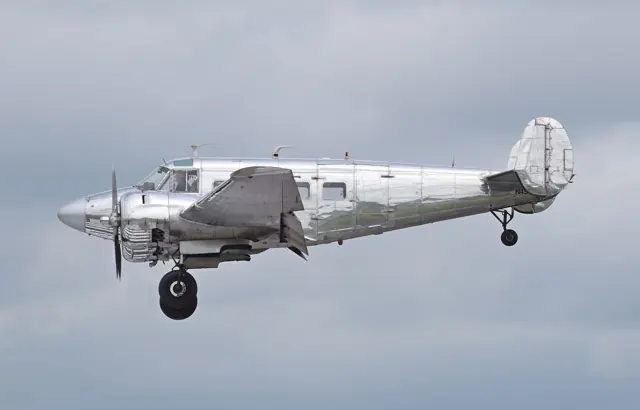
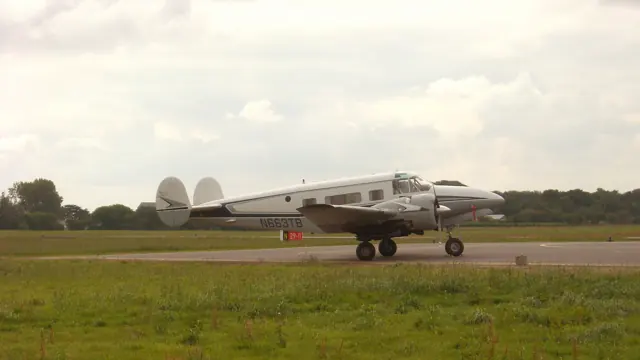
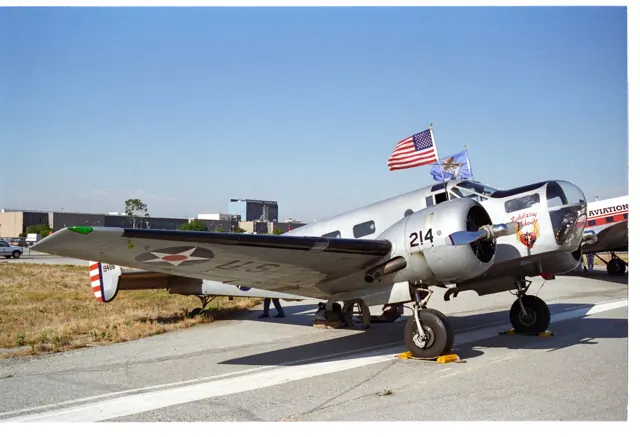
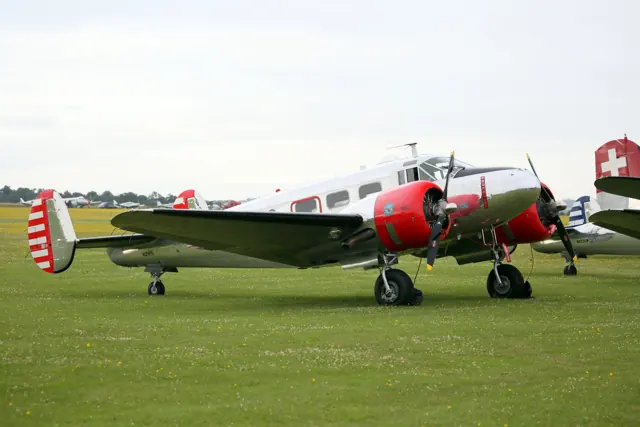
The Twin Beech is a low-wing, twin-engine aircraft recognisable by its twin fins and, in its familiar configuration, tailwheel landing gear. Production began in the 1930s and continued for decades. Operators adapted it to a wide range of commercial and military jobs. Different Model 18 derivatives can carry different undercarriages, cabin layouts and equipment.
Aircraft background
Wikipedia contributors · Read more ↗Following the rivers south on straight floats
Haines remembers the preparation almost as strongly as the flying. Moving a float-equipped Beech 18 south for the winter meant hauling fuel cans, adding oil, pumping water from float compartments and climbing across the aircraft to reach its far side. Once airborne, he recognised the familiar balance of Beech controls, although the loads felt heavier and the floats made the journey unhurried.
AOPA Pilot · April 2014. Three-day Minnesota–Florida trip in C18S N44573 on straight floats, with owner Mark Baker.
AOPA Pilot · Read more ↗Carenado’s entry in the Local Legends series
Microsoft identifies Carenado as the developer of Local Legend V, released in June 2022. The announcement describes ten liveries, including Navy, Aviator’s Club and civilian schemes. Its historical descriptions of floats and skis concern the real aircraft family and do not establish those configurations in the add-on.
Model 18 Twin Beech · Microsoft Flight Simulator · MSFS 2024
Microsoft Flight Simulator · Read more ↗Into the cockpit
 YouTube
Martin Pauly · 46 min ·
Flying the Twin Beech (Beech 18)
Martin Pauly joins a Twin Beech owner to explore the aircraft in flight.
Real aircraft · Beechcraft Model 18 Twin Beech
Watch on YouTube ↗Preview images are served by AirframeDB. Videos open on YouTube only when you choose to watch.
Meet Beechcraft Model 18 Twin Beech
The Twin Beech is a low-wing, twin-engine aircraft recognisable by its twin fins and, in its familiar configuration, tailwheel landing gear. Production began in the 1930s and continued for decades. Operators adapted it to a wide range of commercial and military jobs.
Different Model 18 derivatives can carry different undercarriages, cabin layouts and equipment. It carried passengers and freight on smaller-scale transport routes before turboprops became commonplace.
Beechcraft Model 18 Twin Beech
Beechcraft → · Explore the family →
Beechcraft Model 18 Twin Beech
Wikipedia contributors · Beechcraft Model 18 ↗Microsoft Flight Simulator · MSFS 2024 →Microsoft Flight Simulator · MSFS 2020 →Aircraft type designators
Use the code for the model you are flying. The linked authority lists the applicable aircraft.
History & design
A business twin that found many other jobs
The Model 18 began flying in 1937 as an executive and small-airline transport. Its adaptable layout also suited charter routes, mail services and operations on skis or floats. Military versions expanded the family into personnel transport, reconnaissance, navigation training and bombardier training, helping establish the Twin Beech as a familiar working aircraft.
Smithsonian National Air and Space Museum · Beechcraft D18S Twin Beech ↗Smithsonian collection history · Model 18 family and wartime roles
Postwar development and an air-ambulance career
The postwar D18S incorporated structural changes for greater payload, revised landing gear and Pratt & Whitney radial engines. Further development led to the Super 18, and final production deliveries came in 1969. The museum’s D18S, N522B, illustrates the type’s civilian usefulness: Mike Mitchell acquired it in 1958 and operated it as a Phoenix-based air ambulance for fifteen years before its later donation.
Smithsonian National Air and Space Museum · Beechcraft D18S Twin Beech ↗Smithsonian collection history · D18S, Super 18 and the specific history of N522B
Development milestones
First flight: 15 January 1937
Wikipedia contributors · Beechcraft Model 18 ↗Beechcraft Model 18 · family/variant named by the source · Wikipedia revision 1365640017
Pilot accounts
Following the rivers south on straight floats
Haines remembers the preparation almost as strongly as the flying. Moving a float-equipped Beech 18 south for the winter meant hauling fuel cans, adding oil, pumping water from float compartments and climbing across the aircraft to reach its far side. Once airborne, he recognised the familiar balance of Beech controls, although the loads felt heavier and the floats made the journey unhurried.
His first landing on the trip was on Kentucky Lake, with Mark Baker coaching him. They used ample open water and accepted a long taxi to the marina, where another pilot helped at the dock. Then the servicing began again. Following rivers and looking down at the towns and transport routes gave the journey a sense of continuity with the aircraft’s earlier working life. For Haines, the effort was part of the reward of travelling in it.
AOPA Pilot · April 2014. Three-day Minnesota–Florida trip in C18S N44573 on straight floats, with owner Mark Baker.
Read the full account · AOPA Pilot ↗An aeroplane to keep flying with his father
Blackstone and his father had already shared airline cockpits when they decided to create a small charter operation together. His father’s retirement from airline flying made the project especially meaningful. They wanted vintage character and a comfortable cabin, and chose a restored Twin Beech after deciding that a DC-3 was beyond the scale of their plans.
They collected the aircraft in Florida on Father’s Day in 2014 and flew it home together. Their plans included trips to places such as Napa Valley and Catalina Island, giving passengers a personal version of travel in an older airliner. After his father died the following year, Blackstone continued flying the aircraft in his memory. In the interview, he hoped their example would encourage other parents and children to pursue flying together, making the Beech a link between a family’s past and future.
Barry Schiff’s AOPA Pilot interview · June 2017. Restored E18S N90TT with a Volpar tricycle-gear conversion; ownership and charter recollections.
Read the full account · AOPA Pilot ↗A patient introduction to a large taildragger
Darrah gave the visiting pilot time to learn the unfamiliar cockpit before starting the engines. During the flight he managed small engine adjustments while the reviewer concentrated on formation flying and handling. Both enjoyed the sound of the synchronised radials after their preparations for the flight.
The reviewer had postponed earlier opportunities to wait for suitable runway and wind conditions. Returning to White Waltham, he became tense about landing a large taildragger on its uneven grass. Darrah added a little control pressure after a small bounce and later cautioned against turning off too quickly. Once parked, the reviewer sat quietly before climbing out, noticing how much concentration the flight had required. Darrah’s calm coaching had made a long-awaited experience possible without disguising the aircraft’s demands.
Pilot magazine · March 2017 web edition. D-model Expeditor G-BKGL at White Waltham; Darrah owns the aircraft and coaches the visiting reviewer, whose name is absent from this web edition.
Read the full account · Pilot magazine ↗In your simulator
Systems, equipment and documentation for each developer’s aircraft.
Compare simulator versions →MSFS 2024Model 18 Twin Beech
Microsoft Flight Simulator · Released
Model 18 Twin Beech
Microsoft Flight Simulator · Released
MSFS 2020Model 18 Twin Beech
Microsoft Flight Simulator · Released
Model 18 Twin Beech
Microsoft Flight Simulator · Released
Aircraft specifications
Published figures for the named real-aircraft variant. Simulator equipment and performance can differ.
| Specification | Published value |
|---|---|
| Length | 34 ft 3 in (10.44 m) |
| Wingspan | 47 ft 8 in (14.53 m) |
| Height | 9 ft 9 in (2.97 m) |
| Wing area | 349 sq ft (32.4 m² ) |
| Empty weight | 5,420 lb (2,458 kg) |
| Gross weight | 7,500 lb (3,402 kg) |
| Powerplant | 2 × Pratt & Whitney R-985-AN-1 "Wasp Junior" radial engines , 450 hp (340 kW) each |
| Maximum speed | 225 mph (362 km/h, 196 kn) |
| Range | 1,200 mi (1,900 km, 1,000 nmi) at 160 mph (260 km/h; 140 kn) and 5,000 ft (1,500 m) |
| Service ceiling | 26,000 ft (7,900 m) |
| Rate of climb | 1,850 ft/min (9.4 m/s) |
Manuals & resources
Find your next read
Choose a topic for a short introduction and a link to the original source. Simulator references identify the developer and edition they cover.
Simulator documentation
Carenado’s entry in the Local Legends seriesModel 18 Twin Beech · Microsoft Flight Simulator · MSFS 2024
Microsoft identifies Carenado as the developer of Local Legend V, released in June 2022. The announcement describes ten liveries, including Navy, Aviator’s Club and civilian schemes. Its historical descriptions of floats and skis concern the real aircraft family and do not establish those configurations in the add-on.
Original MSFS release context, 2022; current MSFS 2024 inclusion is sourced separately.
Microsoft Flight Simulator · Read the source ↗The original MSFS 2020 releaseModel 18 Twin Beech · Microsoft Flight Simulator · MSFS 2020
The June 2022 Local Legend V release offers the Twin Beech for PC and Xbox. Its ten-livery package includes a historic Navy scheme and civil variations.
2022-06-14 · release and package scope
Microsoft Flight Simulator Team · Read the source ↗Pilot account
Following the rivers south on straight floatsAOPA Pilot · April 2014. Three-day Minnesota–Florida trip in C18S N44573 on straight floats, with owner Mark Baker.
Haines remembers the preparation almost as strongly as the flying. Moving a float-equipped Beech 18 south for the winter meant hauling fuel cans, adding oil, pumping water from float compartments and climbing across the aircraft to reach its far side. Once airborne, he recognised the familiar balance of Beech controls, although the loads felt heavier and the floats made the journey unhurried. His first landing on the trip was on Kentucky Lake, with Mark Baker coaching him.
Thomas B. Haines
AOPA Pilot · Read the source ↗An aeroplane to keep flying with his fatherBarry Schiff’s AOPA Pilot interview · June 2017. Restored E18S N90TT with a Volpar tricycle-gear conversion; ownership and charter recollections.
Blackstone and his father had already shared airline cockpits when they decided to create a small charter operation together. His father’s retirement from airline flying made the project especially meaningful. They wanted vintage character and a comfortable cabin, and chose a restored Twin Beech after deciding that a DC-3 was beyond the scale of their plans. They collected the aircraft in Florida on Father’s Day in 2014 and flew it home together.
Michael “Rocket” Blackstone
AOPA Pilot · Read the source ↗Read the original documentation from the people who created it. Manuals open on their publisher’s website.
Manual
Microsoft Flight Simulator aircraft manualsMicrosoft / aircraft developersAircraft background
Beechcraft Model 18Wikipedia contributors · Research background · Wikipedia revision 1365640017 · retrieved 2026-09-12 Beechcraft D18S Twin BeechSmithsonian National Air and Space Museum · Collection A19761792000 · family development and air-ambulance N522BResource
MSFS 2024 FAQ and edition aircraft inventoryMicrosoftDeveloper documentation
LOCAL LEGEND V: BEECHCRAFT MODEL 18Microsoft Flight Simulator Team · 2022-06-14 · release and package scopeType designator
ICAO Doc 8643 — aircraft type designatorsInternational Civil Aviation Organization · Public search data retrieved 2026-09-14; authority update 2026-09-03Built-in force-feedback profiles
Read the documentary basis, editable starting settings and remaining questions for the aircraft you fly. Each explanation refers to the exact profile revision shown.
Catalogue programme-20261022-v1 · 1 profile choice
Beechcraft Model 18 Twin Beech
Free and Pro · Revision 2 · Partial review
MSFS 2024 · MSFS 2020
Beechcraft Model 18 Twin Beech: The twin radial's selected mechanical loading is nominal; engine count and optional surface kits do not measure yoke resistance.
Discuss this aircraft (0)
Questions, observations and useful sources from the community.
No published discussions yet. Bring a question or share a useful source.
Open aircraft discussions →Content expanded · What’s new
Something missing or a source that needs attention?
Suggest a correction ↗