

Start here
A few places to begin, from the aircraft’s story to the people who fly it.
Meet the aircraft
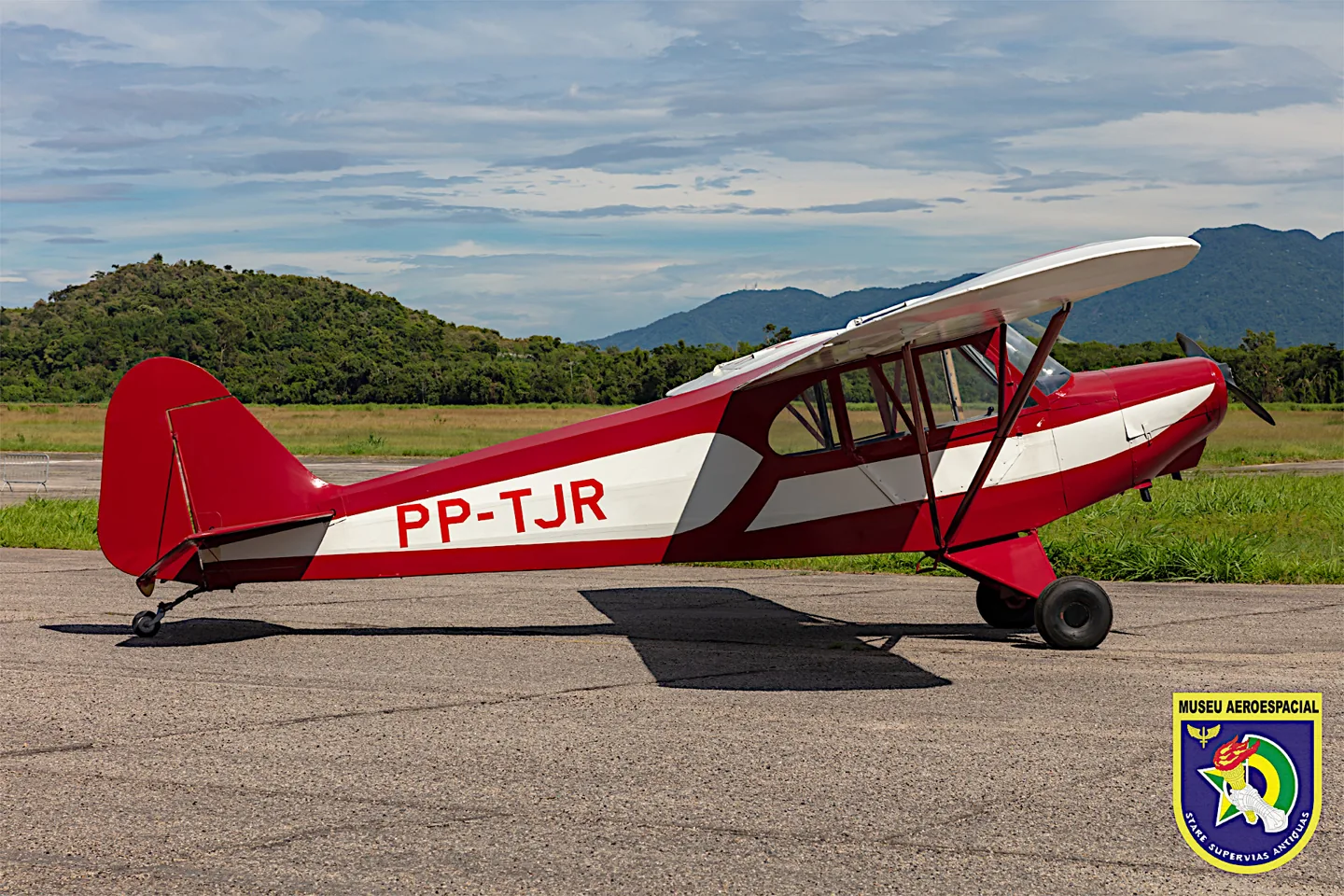
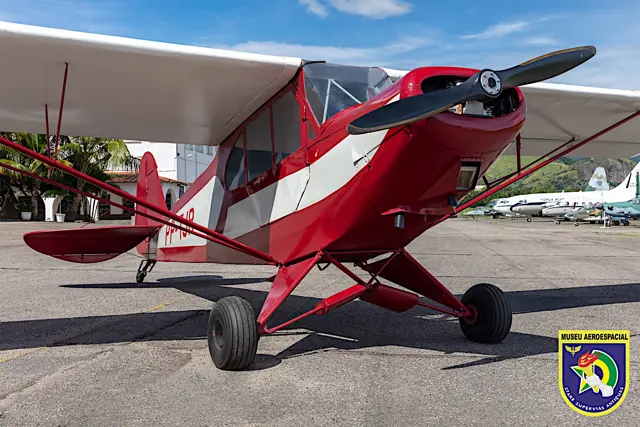
The Paulistinha belongs to the history of Brazilian flying clubs and basic aviation training. Its braced high wing, enclosed tandem cabin and tailwheel undercarriage follow the practical light-aircraft pattern of the period. The CAP-4 name identifies a particular development within that history.
Aircraft background
Wikipedia contributors · Read more ↗An empty front seat changes the whole first-solo flight
Sharp had practised from the CAP-4’s rear seat while his instructor, Salo Roth, occupied the front. Then Roth unfastened his belt, climbed out and handed over the aircraft. The empty seat made the responsibility immediate: Sharp would have to take it into the air and bring it back alone. He had been warned about the missing weight, but was still surprised by the quicker acceleration and more responsive feel.
First solo in CAP-4 PP-ROL at Nova Iguaçu, recalled in 2014. Earlier lessons in the memoir also involve the P-56; this selection follows the explicitly identified CAP-4 flight.
Autoentusiastas / Bob Sharp · Read more ↗The original MSFS 2020 release
The March 2025 Local Legend 20 release offers the Paulistinha separately in the original MSFS Marketplace, while giving it free to MSFS 2024 owners. The package includes six liveries.
CAP-4 Paulistinha · Microsoft Flight Simulator · MSFS 2020
Microsoft Flight Simulator Team · Read more ↗Into the cockpit
 YouTube
Aviação Executiva Brazil x USA · 14 min ·
CAP-4 ...1948 - Paulistinha...!
A short video introduction to a 1948 Paulistinha.
Real aircraft · CAP 4 Paulistinha
Watch on YouTube ↗Preview images are served by AirframeDB. Videos open on YouTube only when you choose to watch.
Meet CAP 4 Paulistinha
The Paulistinha belongs to the history of Brazilian flying clubs and basic aviation training. Its braced high wing, enclosed tandem cabin and tailwheel undercarriage follow the practical light-aircraft pattern of the period.
The CAP-4 name identifies a particular development of this compact trainer.
CAP 4 Paulistinha
Aircraft type designators
Use the code for the model you are flying. The linked authority lists the applicable aircraft.
History & design
A trainer built for a growing network of flying clubs
The museum places the CAP-4 in the Campanha Nacional de Aviação, which raised private funds for aircraft, airfields and aeroclubs. The EAY-201 design was revised before the CAP-4’s homologation flight in January 1943, with the first production aircraft completed that April. The museum cautions that surviving records do not establish an unquestionable production total.
Museu Aeroespacial · O primeiro avião Paulistinha CAP-4 é entregue ↗Museum historical account · numerical production totals excluded
The later Neiva Paulistinha is a related development
Neiva acquired manufacturing rights in 1955 and developed the design further. The museum identifies its N-56B as a descendant of the CAP-4, with the military L-6 used for liaison and observation as well as training. The P56B and P56C training memories on this page concern that later family, with their differences stated in each account.
Museu Aeroespacial · Neiva N-56B (L-6) Paulistinha ↗Museum lineage description; the accounts themselves identify the P56B and P56C
Development milestones
EAY-201 predecessor first flight: 1935
Wikipedia contributors · CAP-4 Paulistinha ↗Predecessor date; CAP-4 production followed in 1943, as explained in the linked museum history.
Pilot accounts
An empty front seat changes the whole first-solo flight
Sharp had practised from the CAP-4’s rear seat while his instructor, Salo Roth, occupied the front. Then Roth unfastened his belt, climbed out and handed over the aircraft. The empty seat made the responsibility immediate: Sharp would have to take it into the air and bring it back alone. He had been warned about the missing weight, but was still surprised by the quicker acceleration and more responsive feel.
The change also appeared on approach, when the aircraft seemed reluctant to lose height. Sharp recalled using the sideslip he had practised and completing the landing. Roth sent him around twice more. After parking, Sharp escaped on his Vespa before anyone could give him the customary first-solo bath in used oil.
First solo in CAP-4 PP-ROL at Nova Iguaçu, recalled in 2014. Earlier lessons in the memoir also involve the P-56; this selection follows the explicitly identified CAP-4 flight.
Read the full account · Autoentusiastas / Bob Sharp ↗Learning to fly brings freedom beyond the aeroclub
Negreiros joined the aeroclub at eighteen, remembering how a childhood flight had made her want to become an aviator. Training brought delight in the changing landscape below. Her first solo remained especially vivid: the aircraft was under her own control and responsibility, and the celebration afterwards mattered more than the discomfort of the customary oil bath.
She explicitly recalled soloing both the Paulistinha CAP-4 and the Piper J-3 during her years at the school. Flying also meant negotiating the expectations placed on a young woman in that environment; her father required her to attend the hangar and classes with companions. She remembered those years as an experience of independence and freedom, even after a judicial career occupied her time.
Her own memoir names solo flying in both the CAP-4 and Piper J-3. The first-solo memory below is not assigned to one type because her text does not specify which aircraft it involved.
Read the full account · Tribuna do Norte / Ângela Negreiros ↗A first lesson turns preparation into the experience of control
Ferrão arrived for his first lesson having studied the manual and completed the aeroclub’s ground assessment. His instructor then explained the training areas, walkaround and departure. PP-GXN differed from the other Paulistinhas there by having electric starting and an intercom. Taxiing brought an early challenge: limited forward visibility and unfamiliar tailwheel steering made progress less straightforward than the preparation on paper.
Once established in flight, the instructor gave him control. He practised holding the aircraft steady, watched demonstrations and explored the training areas around Bragança Paulista. Near the end, the instructor asked him to find the way home. Ferrão remembered the simple act of keeping an aircraft in the air as something difficult to describe, and left looking forward to the next lesson.
Related Paulistinha family: Neiva P56C PP-GXN, not the CAP-4. The article is filed under Lucas Ferrão and signed Ferrão, despite its site-level Renato Cobel byline.
Read the full account · Canal Piloto / Lucas Ferrão ↗Familiarity gradually replaces a student’s first-flight fear
Duque remembered his first Paulistinha flight as a mixture of a fulfilled dream and unexpected fear. Engine power, the departure and even light turbulence felt alarming. When the instructor handed over control, he suddenly understood how different the experience was from imagining himself as a pilot. Those feelings persisted into the early lessons.
With more flying, the movements that had unsettled him became familiar. He learned about thermals, stalls and coordination, and admitted needing three attempts to pass one coordination exercise. His account does not describe instant confidence or effortless mastery. It follows a student becoming more comfortable through practice, learning about his own reactions as well as the aircraft he had wanted so much to fly.
Related Paulistinha family: Neiva P56B training at Bragança Paulista, not the CAP-4. His personal reactions are retained; the article’s loose historical and technical claims are not adopted.
Read the full account · Espaço Aéreo / Felipe Duque ↗In your simulator
Systems, equipment and documentation for each developer’s aircraft.
Compare simulator versions →MSFS 2024CAP 4 Paulistinha
Microsoft Flight Simulator · Released
CAP 4 Paulistinha
Microsoft Flight Simulator · Released
MSFS 2020CAP-4 Paulistinha
Microsoft Flight Simulator · Released
CAP-4 Paulistinha
Microsoft Flight Simulator · Released
Aircraft specifications
Published figures for the named real-aircraft variant. Simulator equipment and performance can differ.
| Specification | Published value |
|---|---|
| Length | 6.65 m (21 ft 10 in) |
| Wingspan | 10.10 m (33 ft 2 in) |
| Height | 1.95 m (6 ft 5 in) |
| Wing area | 17.0 m² (183 sq ft) |
| Empty weight | 320 kg (705 lb) |
| Gross weight | 540 kg (1,190 lb) |
| Powerplant | 1 × Franklin 4AC air-cooled flat-four engine, 48 kW (65 hp) |
| Maximum speed | 155 km/h (96 mph, 84 kn) |
| Cruise speed | 140 km/h (87 mph, 76 kn) |
| Range | 500 km (310 mi, 270 nmi) |
| Service ceiling | 4,000 m (13,000 ft) |
| Rate of climb | 3.1 m/s (610 ft/min) |
Manuals & resources
Find your next read
Choose a topic for a short introduction and a link to the original source. Simulator references identify the developer and edition they cover.
Simulator documentation
The original MSFS 2020 releaseCAP-4 Paulistinha · Microsoft Flight Simulator · MSFS 2020
The March 2025 Local Legend 20 release offers the Paulistinha separately in the original MSFS Marketplace, while giving it free to MSFS 2024 owners. The package includes six liveries.
2025-03-11 · release and package scope
Microsoft Flight Simulator Team · Read the source ↗Pilot account
An empty front seat changes the whole first-solo flightFirst solo in CAP-4 PP-ROL at Nova Iguaçu, recalled in 2014. Earlier lessons in the memoir also involve the P-56; this selection follows the explicitly identified CAP-4 flight.
Sharp had practised from the CAP-4’s rear seat while his instructor, Salo Roth, occupied the front. Then Roth unfastened his belt, climbed out and handed over the aircraft. The empty seat made the responsibility immediate: Sharp would have to take it into the air and bring it back alone. He had been warned about the missing weight, but was still surprised by the quicker acceleration and more responsive feel. The change also appeared on approach, when the aircraft seemed reluctant to lose height.
Bob Sharp
Autoentusiastas / Bob Sharp · Read the source ↗Learning to fly brings freedom beyond the aeroclubHer own memoir names solo flying in both the CAP-4 and Piper J-3. The first-solo memory below is not assigned to one type because her text does not specify which aircraft it involved.
Negreiros joined the aeroclub at eighteen, remembering how a childhood flight had made her want to become an aviator. Training brought delight in the changing landscape below. Her first solo remained especially vivid: the aircraft was under her own control and responsibility, and the celebration afterwards mattered more than the discomfort of the customary oil bath. She explicitly recalled soloing both the Paulistinha CAP-4 and the Piper J-3 during her years at the school.
Ângela Negreiros
Tribuna do Norte / Ângela Negreiros · Read the source ↗Read the original documentation from the people who created it. Manuals open on their publisher’s website.
Manual
Microsoft Flight Simulator aircraft manualsMicrosoft / aircraft developersAircraft background
CAP-4 PaulistinhaWikipedia contributors · Research background · Wikipedia revision 1280901579 · retrieved 2026-09-12 Paulistinha — CAP 4AMuseu Aeroespacial · Museum collection description; predecessor and production aircraft distinguished O primeiro avião Paulistinha CAP-4 é entregueMuseu Aeroespacial · Historical article citing INCAER and Autoentusiastas; production totals explicitly uncertain Neiva N-56B (L-6) PaulistinhaMuseu Aeroespacial · Related development; not the same aircraft variantResource
CAP4 free for MSFS 2024 ownersMicrosoftType designator
ICAO Doc 8643 — aircraft type designatorsInternational Civil Aviation Organization · Public search data retrieved 2026-09-14; authority update 2026-09-03Built-in force-feedback profiles
Read the documentary basis, editable starting settings and remaining questions for the aircraft you fly. Each explanation refers to the exact profile revision shown.
Catalogue programme-20261022-v1 · 1 profile choice
CAP 4 Paulistinha
Free and Pro · Revision 2 · Partial review
MSFS 2024 · MSFS 2020
CAP 4 Paulistinha: Nominal manual-control resistance accompanies the light trainer; its published cruise figure does not provide a measured force curve.
Discuss this aircraft (0)
Questions, observations and useful sources from the community.
No published discussions yet. Bring a question or share a useful source.
Open aircraft discussions →Content expanded · What’s new
Something missing or a source that needs attention?
Suggest a correction ↗

