
Start here
A few places to begin, from the aircraft’s story to the people who fly it.
Meet the aircraft
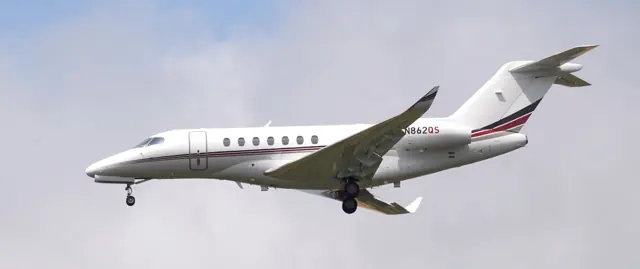
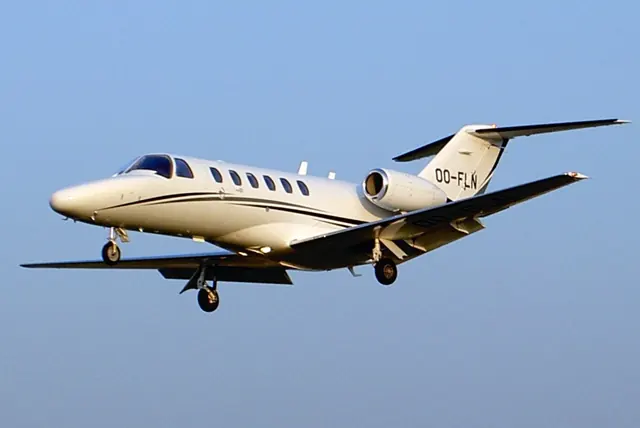
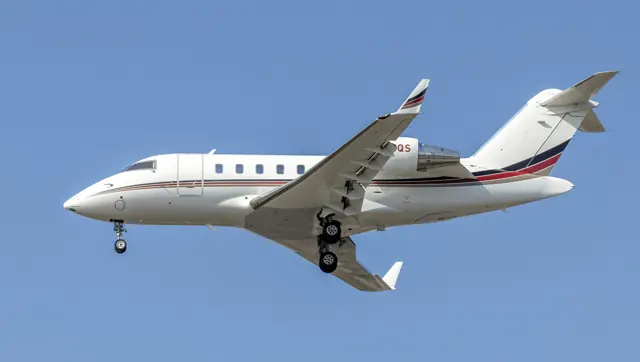
The CitationJet programme began with the Model 525, first flown in 1991, and developed through a series of larger and more capable CJ aircraft. The CJ4 is the Model 525C, a later branch of that family with a different wing and a stretched cabin. Its cockpit should not be confused with that of an early CitationJet or M2.
Aircraft background
Wikipedia contributors · Read more ↗Getting acquainted with the largest CJ
Horne found the CJ4’s engine starts straightforward, helped by the electronic engine controls, but the acceleration on departure still caught his attention. With four people aboard and a light load, the aircraft climbed energetically. Working through the demonstration with Unruh gave him a chance to explore stalls and the practical feel of the larger Citation.
AOPA Pilot · December 2010. Familiarisation from Wichita with Alex Unruh, four people aboard and a relatively light aircraft.
AOPA Pilot · Read more ↗Following a path still leaves speed to the pilot
The guide explicitly states that VNAV does not move the throttles. The pilot manages speed while the flight guidance follows the descent path. VNAV provides flight guidance without automatic thrust control.
Citation CJ4 · Microsoft Flight Simulator · MSFS 2024 / MSFS 2020
Microsoft / aircraft developers · Read more ↗Into the cockpit
 YouTube
Jump N · 36 min ·
Preflight to Landing | Cessna Citation CJ4
A Citation CJ4 journey from preflight preparation through landing.
Real aircraft · Cessna Citation CJ4
Watch on YouTube ↗Preview images are served by AirframeDB. Videos open on YouTube only when you choose to watch.
Meet Cessna Citation CJ4
The CitationJet programme began with the Model 525, first flown in 1991, and developed through a series of larger and more capable CJ aircraft. The CJ4 is the Model 525C, a later branch of that family with a different wing and a stretched cabin.
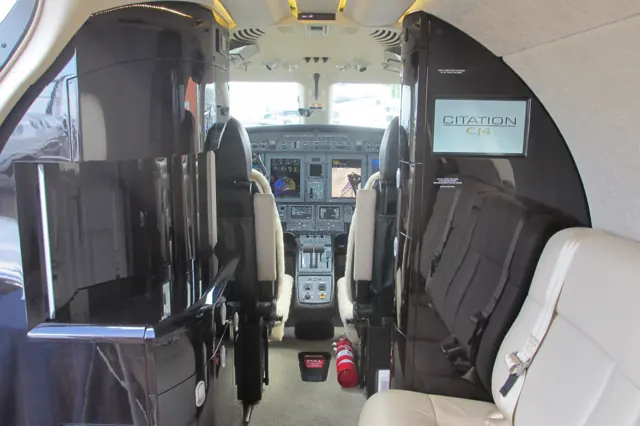
Working Title documents the simulated CJ4's avionics, flight guidance and equipment. Its flight deck differs from the earlier CitationJet and M2.
Cessna Citation
Aircraft type designators
Use the code for the model you are flying. The linked authority lists the applicable aircraft.
History & design
The CJ4 prototype takes flight
The CJ4 prototype first flew on 5 May 2008 from McConnell Air Force Base in Wichita, with Dan Morris and Dave Bonifield. Its initial flight covered stability, control and systems checks before landing at Cessna’s Mid-Continent facility. The design introduced a moderately swept wing and four-screen Pro Line 21 cockpit to this extension of the CJ series.
Cessna press release, preserved by Airframer · First flight successful for Cessna’s Citation CJ4 ↗Cessna press release · 5 May 2008 · prototype, not the original CitationJet
Development milestones
Earlier CitationJet family: the original Model 525 first flew on 29 April 1991, received FAA certification in October 1992 and began deliveries in March 1993. These dates describe the original CitationJet generation. The CJ4 prototype’s own first flight is recorded separately above.
Wikipedia contributors · Cessna CitationJet/M2 ↗Wikipedia revision 1361933577 · original Model 525 family background; CJ4 date supplied by Cessna’s prototype announcement
Pilot accounts
Getting acquainted with the largest CJ
Horne found the CJ4’s engine starts straightforward, helped by the electronic engine controls, but the acceleration on departure still caught his attention. With four people aboard and a light load, the aircraft climbed energetically. Working through the demonstration with Unruh gave him a chance to explore stalls and the practical feel of the larger Citation.
Simulated engine-failure takeoffs showed another side of the workload. Rudder assistance helped, but coordinating the aircraft still involved the pilot, and the landing practice brought its own adjustments to the reference speeds and sight picture. Horne’s account mixes appreciation of the automation with the familiar work of learning a new aeroplane. The demonstration was flown at relatively light loading.
AOPA Pilot · December 2010. Familiarisation from Wichita with Alex Unruh, four people aboard and a relatively light aircraft.
Read the full account · AOPA Pilot ↗A cross-country ferry reveals the cockpit’s habits
Erdos’s chance to try the CJ4 was a useful journey: taking a demonstrator to the Canadian Business Aviation Association convention. Having flown the CJ1, he recognised the family layout while noticing the larger aircraft’s improved fittings and cockpit environment. Air traffic control shaped the climb, so he was careful about treating the trip as a formal performance test.
The flight also exposed small preferences that a specification sheet would miss. Both pilots found the electronic checklist cumbersome enough to return to paper, while the weather displayed on the multifunction screen thoroughly won Erdos over. Approaching Calgary, he liked the control response and the help available from the speedbrakes, though the glareshield affected his view.
Skies · September 2011. July 2011 ferry from Hamilton to Calgary in factory demonstrator N424CJ with Cessna captain Gary Read and four passengers.
Read the full account · Skies ↗Familiar flying, with changes around the cabin
Pickett came to the Gen2 with experience across the Citation 525 series. The revised entry and cabin lighting caught his attention, along with storage details that mattered to someone using the flight deck regularly. Once airborne, he enjoyed hand-flying the climb and found the aircraft comfortable in the turbulence encountered during the demonstration.
A simulated single-engine missed approach required substantial rudder effort despite the assistance available. The exercise added some physical work to an otherwise polished experience. Pickett also appreciated the electronic checklists and the ability to use the speedbrakes progressively during a descent with a strong tailwind. His report joins the small conveniences of the updated interior to the handling of the jet, with the demonstration conditions and demonstration pilot’s presence remaining part of the account.
Twin & Turbine · July 2021. CJ4 Gen2 demonstration from Santa Fe with David Bodlak, three aboard; the flight included a simulated single-engine RNAV approach and missed approach.
Read the full account · Twin & Turbine ↗In your simulator
Systems, equipment and documentation for each developer’s aircraft.
Compare simulator versions →MSFS 2024Citation CJ4
Microsoft Flight Simulator · Released
Citation CJ4
Microsoft Flight Simulator · Released
MSFS 2020Cessna Citation CJ4
Microsoft Flight Simulator · Released
Cessna Citation CJ4
Microsoft Flight Simulator · Released
Manuals & resources
Find your next read
Choose a topic for a short introduction and a link to the original source. Simulator references identify the developer and edition they cover.
Simulator documentation
Following a path still leaves speed to the pilotCitation CJ4 · Microsoft Flight Simulator · MSFS 2024 / MSFS 2020
The guide explicitly states that VNAV does not move the throttles. The pilot manages speed while the flight guidance follows the descent path. VNAV provides flight guidance without automatic thrust control.
CJ4 Operator’s Guide v1 · PDF p.56; exact release applicability unresolved
Microsoft / aircraft developers · Read the source ↗Flight guidance and yaw damping are separate controlsCitation CJ4 · Microsoft Flight Simulator · MSFS 2024 / MSFS 2020
The CJ4 guide documents a flight-guidance panel with flight-level-change, heading and navigation functions. It treats yaw-damper engagement separately from autopilot use and includes pilot-managed pitch trim.
CJ4 user guide v1; exact release applicability unresolved · PDF pp.8,10; climb and AP operation
Microsoft / aircraft developers · Read the source ↗How this guide describes vertical navigationCitation CJ4 · Microsoft Flight Simulator · MSFS 2024 / MSFS 2020
The FMC displays loaded or manually entered altitude restrictions without filling in predicted crossing altitudes at every waypoint. In climb, VNAV works with the pilot’s selected VS or FLC mode and the programmed restrictions. Descent uses calculated path segments, which can include level-offs and more than one top-of-descent marker.
CJ4 Operator’s Guide v1 · PDF pp.55–56; exact release applicability unresolved
Microsoft / aircraft developers · Read the source ↗Pilot account
Getting acquainted with the largest CJAOPA Pilot · December 2010. Familiarisation from Wichita with Alex Unruh, four people aboard and a relatively light aircraft.
Horne found the CJ4’s engine starts straightforward, helped by the electronic engine controls, but the acceleration on departure still caught his attention. With four people aboard and a light load, the aircraft climbed energetically. Working through the demonstration with Unruh gave him a chance to explore stalls and the practical feel of the larger Citation. Simulated engine-failure takeoffs showed another side of the workload.
Thomas A. Horne
AOPA Pilot · Read the source ↗A cross-country ferry reveals the cockpit’s habitsSkies · September 2011. July 2011 ferry from Hamilton to Calgary in factory demonstrator N424CJ with Cessna captain Gary Read and four passengers.
Erdos’s chance to try the CJ4 was a useful journey: taking a demonstrator to the Canadian Business Aviation Association convention. Having flown the CJ1, he recognised the family layout while noticing the larger aircraft’s improved fittings and cockpit environment. Air traffic control shaped the climb, so he was careful about treating the trip as a formal performance test. The flight also exposed small preferences that a specification sheet would miss.
Robert Erdos
Skies · Read the source ↗Read the original documentation from the people who created it. Manuals open on their publisher’s website.
Manual
Cessna Citation CJ4 User Guide v1Microsoft / aircraft developers Microsoft Flight Simulator aircraft manualsMicrosoft / aircraft developersAircraft background
Cessna CitationJet/M2Wikipedia contributors · Research background · Wikipedia revision 1361933577 · retrieved 2026-09-12 First flight successful for Cessna’s Citation CJ4Cessna press release, preserved by Airframer · 5 May 2008 · prototype flightResource
MSFS 2024 FAQ and edition aircraft inventoryMicrosoft MSFS 2020 FAQ and edition aircraft inventoryMicrosoftType designator
ICAO Doc 8643 — aircraft type designatorsInternational Civil Aviation Organization · Public search data retrieved 2026-09-14; authority update 2026-09-03Built-in force-feedback profiles
Read the documentary basis, editable starting settings and remaining questions for the aircraft you fly. Each explanation refers to the exact profile revision shown.
Catalogue programme-20261022-v1 · 1 profile choice
Cessna Citation CJ4
Free and Pro · Revision 2 · Partial review
MSFS 2024 · MSFS 2020
Cessna Citation CJ4: The selected CJ4 yoke law supplies nominal control resistance; the guide's operating limits do not calibrate a cockpit-force curve.
Discuss this aircraft (0)
Questions, observations and useful sources from the community.
No published discussions yet. Bring a question or share a useful source.
Open aircraft discussions →Content expanded · What’s new
Something missing or a source that needs attention?
Suggest a correction ↗