


Start here
A few places to begin, from the aircraft’s story to the people who fly it.
Meet the aircraft
The Challenger began with a Bill Lear concept taken forward by Canadair in the 1970s. Its broad cabin and supercritical wing were central parts of the design. Later ownership and development under Bombardier produced a long sequence of engine, avionics and cabin updates. The Challenger 650 belongs to a much later generation than the original 600. Hot Start's simulator product represents that specific aircraft and its systems environment.
Aircraft background
Wikipedia contributors · Read more ↗Bringing home a new ambulance jet
Nagel had brought Rega’s first Challenger 650 to Switzerland when he explained why the organisation had stayed with a familiar aircraft family. Outwardly, the new jet looked much like its predecessor. Inside, improved patient beds, loading equipment and cockpit technology reflected the detailed requirements of an air-ambulance operator. Reliability mattered personally to the crew sent to collect someone far from home.
Rega interview · May 2018. Chief pilot who flew the first Challenger 650 to Switzerland, comparing the new aircraft with Rega’s preceding CL-604 fleet.
Swiss Air-Rescue Rega · Read more ↗Electrical demand reaches back to the engines
Hot Start describes an electrical model in which consumers draw power from generators, which in turn impose load on the engines. Study windows expose component behaviour, offering a way to explore what lies behind an indication.
Challenger 650 · X-Plane 11 · X-Plane 12
Hot Start / X-Aviation · Read more ↗Into the cockpit
 YouTube
Reflected Reality Simulations
Hot Start Challenger 650 - 1 - Preparation and Power Up
The first part of a preparation and power-up walkthrough.
Hot Start Challenger 650; X-Plane; 2022 tutorial
Watch on YouTube ↗Preview images are served by AirframeDB. Videos open on YouTube only when you choose to watch.
Meet Bombardier Challenger 650
The Challenger began with a Bill Lear concept taken forward by Canadair in the 1970s. Its broad cabin and supercritical wing were central parts of the design. Later ownership and development under Bombardier produced a long sequence of engine, avionics and cabin updates.
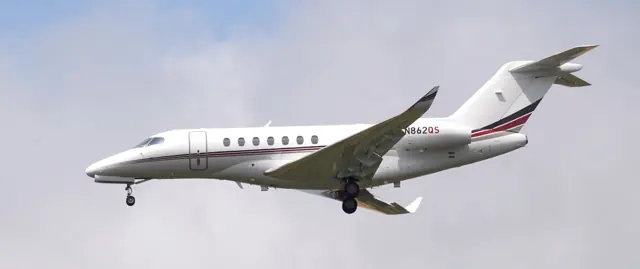
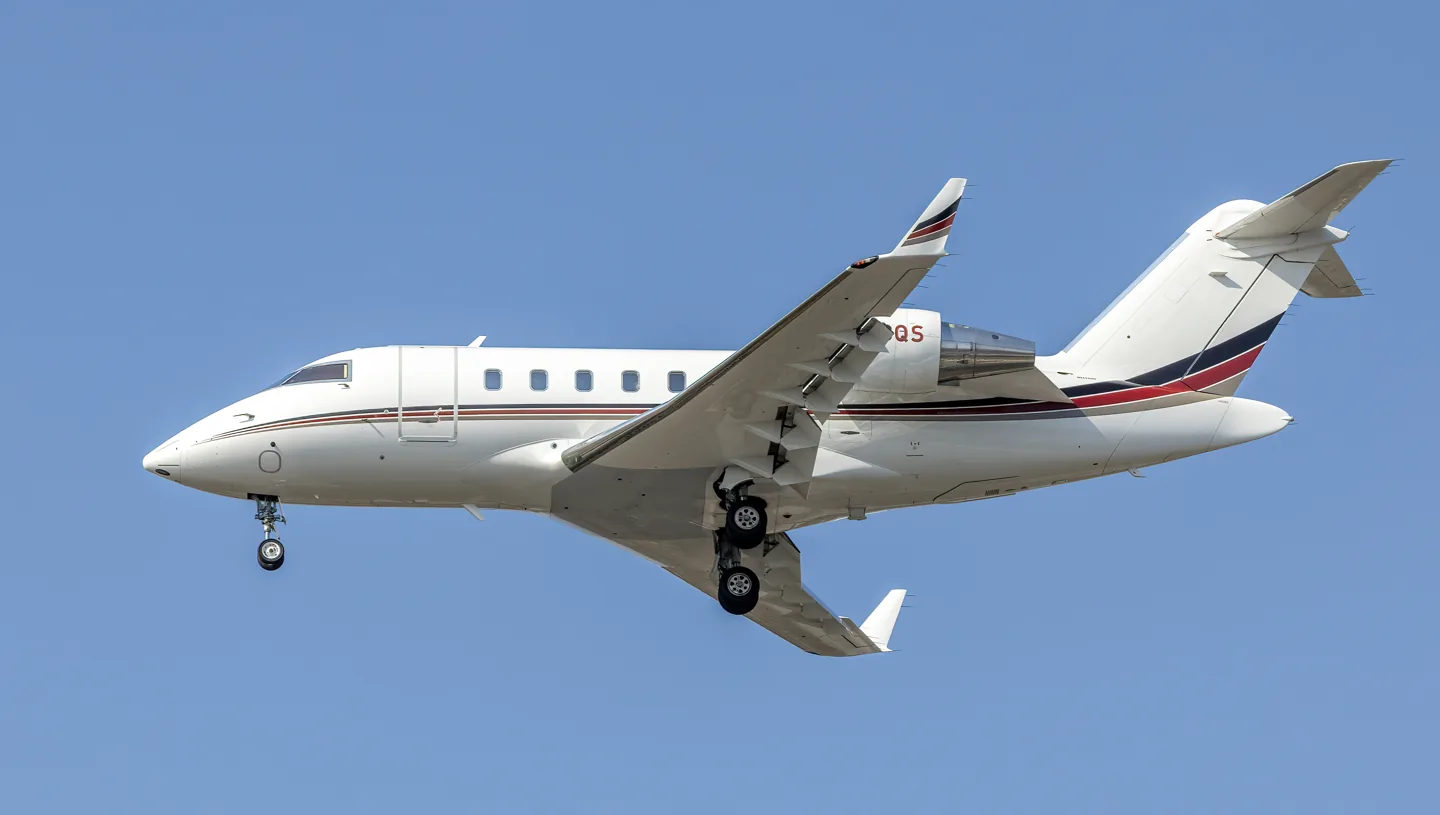
The Challenger 650 belongs to a much later generation than the original 600. Hot Start's simulator product represents that specific aircraft and its systems environment. The family photograph depicts a 604, whose equipment differs from the 650.
Bombardier Challenger 650
Bombardier → · Explore the family →
Bombardier Challenger 650
Wikipedia contributors · Bombardier Challenger 600 series ↗Hot Start · X-Plane 11 · X-Plane 12 →Aircraft type designators
Use the code for the model you are flying. The linked authority lists the applicable aircraft.
History & design
A familiar airframe adapted around its patients
Rega’s 2018 renewal replaced its CL-604s with three Challenger 650 ambulance jets. The selection preserved useful commonality while allowing investment in medical equipment, cabin lighting, soundproofing and patient loading. The organisation’s requirements extended well beyond the cockpit or the appearance of a business-jet cabin.
Swiss Air-Rescue Rega · The reliability of our ambulance jets is decisive for us ↗Rega fleet-renewal interview · May 2018; historical configuration
Development milestones
First flight: 8 November 1978
Wikipedia contributors · Bombardier Challenger 600 series ↗Bombardier Challenger 600 series · family/variant named by the source · Wikipedia revision 1367047086
Systems & details
Documented detail
Developer release notes list stabilizer-dependent pitch feel and an elevator-control gain mechanism. They do not establish an externally documented force curve or dataref.
Documented detail
Release notes add gRPC, address early DataRefTool reads and correct AFCS/FDR labels. The API schema and exact feel signals were not obtained.
Pilot accounts
Bringing home a new ambulance jet
Nagel had brought Rega’s first Challenger 650 to Switzerland when he explained why the organisation had stayed with a familiar aircraft family. Outwardly, the new jet looked much like its predecessor. Inside, improved patient beds, loading equipment and cockpit technology reflected the detailed requirements of an air-ambulance operator.
Reliability mattered personally to the crew sent to collect someone far from home. Nagel pointed out that a medical flight could not simply transfer its passenger to another service if the aircraft became unavailable. Familiar equipment also eased training and spare-parts demands. He looked forward to using the new radar and communications equipment on everyday missions, with more direct journeys offering practical benefits for the people being brought back.
Rega interview · May 2018. Chief pilot who flew the first Challenger 650 to Switzerland, comparing the new aircraft with Rega’s preceding CL-604 fleet.
Read the full account · Swiss Air-Rescue Rega ↗The first Challenger 650 arrival in Lugano
Flückiger and Nagel knew Lugano-Agno, but this arrival carried a new distinction: it was the first visit by Rega’s Challenger 650. Their flight from Vienna brought a patient home to Ticino. The short runway required careful preparation, while the cabin team readied their patient for landing.
As the jet descended between the hills, Nagel used the head-up display to keep flight information in view. HB-JWA touched down gently and stopped with runway remaining. The pilots’ work continued on the ground: Flückiger opened the exit and lowered the steps, then helped Nagel install the loading ramp. An ambulance arrived to complete the transfer, making the flight one part of a coordinated journey from one hospital to another.
Rega’s reported crew account by Harald Schreiber · November 2018, PDF pp.24–27. Flückiger was copilot and Nagel captain of HB-JWA; this is reporting about their mission, not a first-person interview.
Read the full account · Swiss Air-Rescue Rega ↗Questioning an inherited way of doing the job
Albright had less than a year on the Challenger 604 when he was asked to test its air-driven generator. Colleagues found reasons to be elsewhere, and the pilot accompanying him agreed only if Albright would both command and fly the aircraft. That nervous reception encouraged him to examine the manufacturer’s procedure for himself.
He took time over the flight and found the actual test uneventful. Afterwards, he learned that his department had been doing it quickly in the traffic pattern. The contrast stayed with him. In his later essay, the experience became an example of how a familiar local practice could escape questioning simply because people had inherited it from those who came before.
Code 7700 · updated June 2020. Earlier Challenger 604 experience, included as family context; it is not a Challenger 650 test or an operating procedure.
Read the full account · Code 7700 ↗In your simulator
Systems, equipment and documentation for each developer’s aircraft.
X-Plane 11 · X-Plane 12Challenger 650
Hot Start · Released
Challenger 650
Hot Start · Released
Aircraft specifications
Published figures for the named real-aircraft variant. Simulator equipment and performance can differ.
| Specification | Published value |
|---|---|
| Length | 20.85 m (68 ft 5 in) |
| Wingspan | 19.61 m (64 ft 4 in) |
| Height | 6.30 m (20 ft 8 in) |
| Wing area | 45.4 m² (489 sq ft) |
| Empty weight | 12,315 kg (27,150 lb) |
| Max takeoff weight | 21,863 kg (48,200 lb) |
| Powerplant | 2 × General Electric CF34 -3B turbofans , 41.0 kN (9,220 lbf) thrust each |
| Maximum speed | Mach 0.85 |
| Range | 7,400 km (4,600 mi, 4,000 nmi) |
| Service ceiling | 12,000 m (41,000 ft) |
Manuals & resources
Find your next read
Choose a topic for a short introduction and a link to the original source. Simulator references identify the developer and edition they cover.
Simulator documentation
A business-jet simulation that begins before the cockpitChallenger 650 · Hot Start · X-Plane 11 · X-Plane 12
Hot Start's Challenger includes an FBO environment with fuel orders, de-icing and passenger coordination, alongside a quicker simulator mode. Its Pro Line 21 Advanced avionics are modelled as separate computers exchanging information over simulated data buses. The developer also provides system-study windows, allowing a simmer to inspect the electrical and physical models behind the cockpit indications.
Hot Start Challenger 650 · Product description; Experience, Architecture and Avionics; checked 2026-09-12
Hot Start / X-Aviation · Read the source ↗Electrical demand reaches back to the enginesChallenger 650 · Hot Start · X-Plane 11 · X-Plane 12
Hot Start describes an electrical model in which consumers draw power from generators, which in turn impose load on the engines. Study windows expose component behaviour, offering a way to explore what lies behind an indication.
Developer architecture and physics description · archived September 2026
Hot Start / X-Aviation · Read the source ↗Instrument information travels between simulated computersChallenger 650 · Hot Start · X-Plane 11 · X-Plane 12
The developer’s example follows pressure altitude from the air-data computers through concentrators to the transponders. Redundant inputs and source selection are part of that model, helping explain why an instrument depends on equipment elsewhere in the aircraft.
Developer architecture description; software design claim, not runtime qualification
Hot Start / X-Aviation · Read the source ↗Pilot account
Bringing home a new ambulance jetRega interview · May 2018. Chief pilot who flew the first Challenger 650 to Switzerland, comparing the new aircraft with Rega’s preceding CL-604 fleet.
Nagel had brought Rega’s first Challenger 650 to Switzerland when he explained why the organisation had stayed with a familiar aircraft family. Outwardly, the new jet looked much like its predecessor. Inside, improved patient beds, loading equipment and cockpit technology reflected the detailed requirements of an air-ambulance operator. Reliability mattered personally to the crew sent to collect someone far from home.
Urs Nagel
Swiss Air-Rescue Rega · Read the source ↗The first Challenger 650 arrival in LuganoRega’s reported crew account by Harald Schreiber · November 2018, PDF pp.24–27. Flückiger was copilot and Nagel captain of HB-JWA; this is reporting about their mission, not a first-person interview.
Flückiger and Nagel knew Lugano-Agno, but this arrival carried a new distinction: it was the first visit by Rega’s Challenger 650. Their flight from Vienna brought a patient home to Ticino. The short runway required careful preparation, while the cabin team readied their patient for landing. As the jet descended between the hills, Nagel used the head-up display to keep flight information in view. HB-JWA touched down gently and stopped with runway remaining.
Nadine Flückiger and Urs Nagel
Swiss Air-Rescue Rega · Read the source ↗Read the original documentation from the people who created it. Manuals open on their publisher’s website.
Manual
Challenger 650 aircraft manualsX-Pilot community library X-Plane aircraft and avionics manualsLaminar ResearchAircraft background
Bombardier Challenger 600 seriesWikipedia contributors · Research background · Wikipedia revision 1367047086 · retrieved 2026-09-12Resource
Challenger 650 productHot Start / X-Aviation Challenger 650 v1.6.1 change logHot Start / X-Aviation Challenger 650 v1.9 release notesHot Start / X-AviationType designator
ICAO Doc 8643 — aircraft type designatorsInternational Civil Aviation Organization · Public search data retrieved 2026-09-14; authority update 2026-09-03Built-in force-feedback profiles
Read the documentary basis, editable starting settings and remaining questions for the aircraft you fly. Each explanation refers to the exact profile revision shown.
Catalogue programme-20261022-v1 · 2 profile choices
Hot Start Challenger 650
Hot Start · Free and Pro · Revision 3 · Inherited starting point
X-Plane 12
Hot Start Challenger 650: The configured spring supplies hardware feel independently of Hot Start's optional input-feel transformation; the developer provides no calibrated force curve.
Bombardier Challenger 650
Free and Pro · Revision 2 · Inherited starting point
X-Plane 12 · X-Plane 11
Bombardier Challenger 650: The configured spring supplies hardware feel independently of Hot Start's optional input-feel transformation; the developer provides no calibrated force curve.
Discuss this aircraft (0)
Questions, observations and useful sources from the community.
No published discussions yet. Bring a question or share a useful source.
Open aircraft discussions →Content expanded · What’s new
Something missing or a source that needs attention?
Suggest a correction ↗