

Start here
A few places to begin, from the aircraft’s story to the people who fly it.
Meet the aircraft
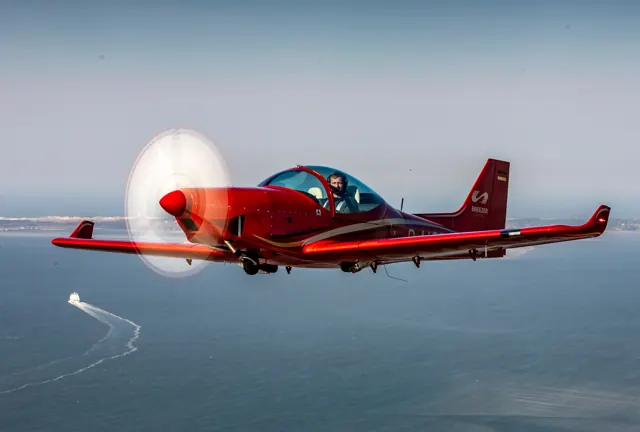
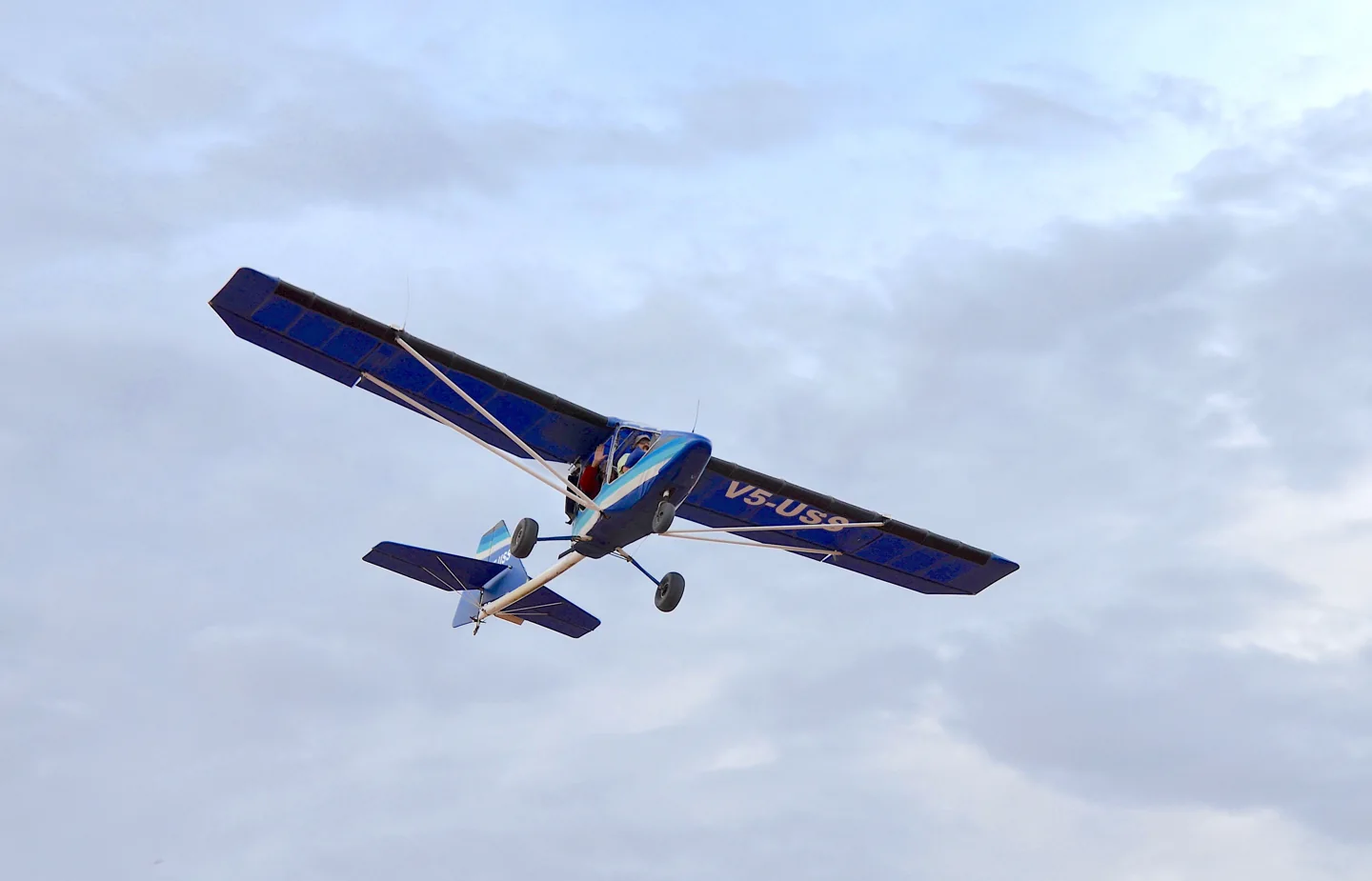
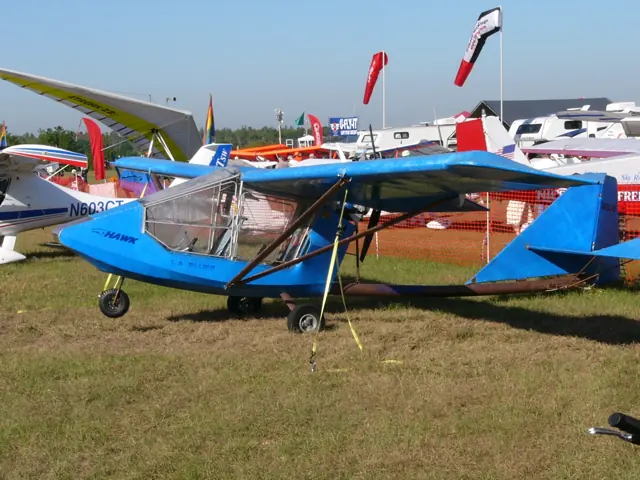
Chuck Slusarczyk developed the Hawk from his experience with hang gliders and early powered ultralights. The engine and propeller sit behind the cabin, leaving the view ahead unobstructed. The family includes both single-seat and tandem two-seat aircraft. The Arrow II in MSFS is the two-seat development described by its own manual. Its cockpit includes stick-mounted trim controls and separate hand-operated brake levers.
Aircraft background
Wikipedia contributors · Read more ↗A windy Florida flight includes a very public landing
Wischmeyer’s flight with Steve Bensinger began on a bumpy grass strip and climbed into smoother air over the Lakeland area. The light controls and yaw string gave the Hawk something of a sailplane’s character, while the wide view made the changing landscape below part of the pleasure. Strong winds shaped the exercise despite the smooth air.
KITPLANES · October 2010. Steve Bensinger’s two-seat Hawk with Rotax 582 and extended wings; not the stock MSFS 2024 Arrow II STOL Pack with Rotax 912 ULS.
KITPLANES · Read more ↗A G3X sits beside straightforward cockpit controls
The cockpit illustration identifies a Garmin G3X Touch, separate radio and transponder, trim buttons and a two-position flap switch.
Hawk Arrow II · Microsoft Flight Simulator · MSFS 2024
Microsoft / aircraft developers · Read more ↗Into the cockpit
 YouTube
Dynodon64 · 5 min ·
CGS Hawk Arrow II
An owner walks around his newly recovered Hawk Arrow II.
Real aircraft · CGS Hawk Arrow II
Watch on YouTube ↗Preview images are served by AirframeDB. Videos open on YouTube only when you choose to watch.
Meet CGS Hawk Arrow II
Chuck Slusarczyk developed the Hawk from his experience with hang gliders and early powered ultralights. The engine and propeller sit behind the cabin, leaving the view ahead unobstructed. The family includes both single-seat and tandem two-seat aircraft.
The Arrow II in MSFS is the two-seat development described by its own manual. Its cockpit includes stick-mounted trim controls and separate hand-operated brake levers. The family photograph depicts a single-seat Hawk.
CGS Hawk Arrow II
CGS Hawk Arrow II
Wikipedia contributors · CGS Hawk ↗Microsoft Flight Simulator · MSFS 2024 →Aircraft type designators
A model-specific ICAO or FAA designator has not been confirmed in the references reviewed for this aircraft.
History & design
Development milestones
Designer: Chuck Slusarczyk
First flight: January 1982
Wikipedia contributors · CGS Hawk ↗CGS Hawk · family/variant named by the source · Wikipedia revision 1325534337
Pilot accounts
A windy Florida flight includes a very public landing
Wischmeyer’s flight with Steve Bensinger began on a bumpy grass strip and climbed into smoother air over the Lakeland area. The light controls and yaw string gave the Hawk something of a sailplane’s character, while the wide view made the changing landscape below part of the pleasure. Strong winds shaped the exercise despite the smooth air.
After Bensinger demonstrated a landing, Wischmeyer tried his own and found the aircraft manageable through a thermal and wind shear. Returning to the fly-in brought spectators and a crosswind into the picture. He ballooned during the flare, then recovered to a gentle touchdown.
KITPLANES · October 2010. Steve Bensinger’s two-seat Hawk with Rotax 582 and extended wings; not the stock MSFS 2024 Arrow II STOL Pack with Rotax 912 ULS.
Read the full account · KITPLANES ↗An instructor renewal becomes a memorable outing
Martin’s memories of the Hawk included a flight with its designer, Chuck Slusarczyk, in gusty conditions near Cleveland. The outing had a practical purpose as well as the pleasure of flying together: Slusarczyk needed his student-pilot solo endorsement renewed, and Martin could provide the instruction. The weather gave them a useful chance to see the aeroplane at work.
The approach and landing left Martin impressed with what Slusarczyk and the little two-seater could do in those conditions. His recollection retains the humour of the exchange surrounding the endorsement, placing the designer’s personality alongside the aircraft’s handling. It is a glimpse of the people behind an established design, remembered within a wider account of inexpensive sport flying.
KITPLANES · March 2008 retrospective. Earlier two-seat Hawk II flight with designer Chuck Slusarczyk near Cleveland; no claim that this was the later Arrow II configuration.
Read the full account · KITPLANES ↗An owner would gladly have his old Hawk back
The owner posting as Wagondriver remembered building a Hawk Arrow 2 and flying it for 234 hours before a move prompted its sale. He had operated from a high-country hayfield and adapted the aircraft for the kind of flying he enjoyed, including using skis. Years later, he said he would like to have it back.
His answer to a maintenance question mixed affection with practical experience. Routine ownership had seemed manageable to him, but storage mattered: reflected sunlight damaged fabric enough to require replacement wing sails. His modifications and local flying conditions concern that individual aircraft.
Pilots of America · August 2025. Public forum handles; self-reported ownership of a Hawk Arrow 2 with Rotax 582. Individual modifications and operating experience are not general specifications.
Read the full account · Pilots of America ↗In your simulator
Systems, equipment and documentation for each developer’s aircraft.
MSFS 2024Hawk Arrow II
Microsoft Flight Simulator · Released
Hawk Arrow II
Microsoft Flight Simulator · Released
Aircraft specifications
Published figures for the named real-aircraft variant. Simulator equipment and performance can differ.
| Specification | Published value |
|---|---|
| Length | 20 ft 7 in (6.27 m) |
| Wingspan | 28 ft 10 in (8.79 m) |
| Height | 4 ft 6 in (1.37 m) |
| Wing area | 135 sq ft (12.5 m² ) |
| Empty weight | 310 lb (141 kg) |
| Gross weight | 600 lb (272 kg) |
| Powerplant | 1 × Rotax 447 two-stroke twin-cylinder aircraft engine , 40 hp (30 kW) |
| Cruise speed | 75 mph (121 km/h, 65 kn) |
| Stall speed | 35 mph (56 km/h, 30 kn) |
| Range | 170 mi (280 km, 150 nmi) |
| Service ceiling | 12,500 ft (3,800 m) |
| Rate of climb | 800 ft/min (4.1 m/s) |
Manuals & resources
Find your next read
Choose a topic for a short introduction and a link to the original source. Simulator references identify the developer and edition they cover.
Simulator documentation
A G3X sits beside straightforward cockpit controlsHawk Arrow II · Microsoft Flight Simulator · MSFS 2024
The cockpit illustration identifies a Garmin G3X Touch, separate radio and transponder, trim buttons and a two-position flap switch.
Manual PDF page 5
Microsoft / aircraft developers · Read the source ↗Find the brakes and lighting switchesHawk Arrow II · Microsoft Flight Simulator · MSFS 2024
The panel guide labels left and right brake levers, throttle and choke, separate ignition switches, and navigation, strobe and wigwag lighting controls.
Manual PDF page 5; labels do not establish external bindings
Microsoft / aircraft developers · Read the source ↗Trim on the stick, brakes by handHawk Arrow II · Microsoft Flight Simulator · MSFS 2024
The Arrow II manual's cockpit diagram identifies trim buttons on the control stick and separate hand-operated left and right brake levers. Those details distinguish its controls from the pedal-brake arrangement familiar in many larger light aircraft.
Archived simulator manual; installed package revision not observed · PDF p.5
Microsoft / aircraft developers · Read the source ↗The simulated configuration has a four-stroke RotaxHawk Arrow II · Microsoft Flight Simulator · MSFS 2024
The guide labels the aircraft Arrow II STOL Pack and describes a Rotax 912 ULS. Earlier two-stroke Hawks in the accounts differ from this configuration.
Official MSFS 2024 manual · PDF pages 4 and 6
Microsoft / aircraft developers · Read the source ↗Pilot account
A windy Florida flight includes a very public landingKITPLANES · October 2010. Steve Bensinger’s two-seat Hawk with Rotax 582 and extended wings; not the stock MSFS 2024 Arrow II STOL Pack with Rotax 912 ULS.
Wischmeyer’s flight with Steve Bensinger began on a bumpy grass strip and climbed into smoother air over the Lakeland area. The light controls and yaw string gave the Hawk something of a sailplane’s character, while the wide view made the changing landscape below part of the pleasure. Strong winds shaped the exercise despite the smooth air. After Bensinger demonstrated a landing, Wischmeyer tried his own and found the aircraft manageable through a thermal and wind shear.
Ed Wischmeyer
KITPLANES · Read the source ↗An instructor renewal becomes a memorable outingKITPLANES · March 2008 retrospective. Earlier two-seat Hawk II flight with designer Chuck Slusarczyk near Cleveland; no claim that this was the later Arrow II configuration.
Martin’s memories of the Hawk included a flight with its designer, Chuck Slusarczyk, in gusty conditions near Cleveland. The outing had a practical purpose as well as the pleasure of flying together: Slusarczyk needed his student-pilot solo endorsement renewed, and Martin could provide the instruction. The weather gave them a useful chance to see the aeroplane at work. The approach and landing left Martin impressed with what Slusarczyk and the little two-seater could do in those conditions.
Dave Martin
KITPLANES · Read the source ↗Read the original documentation from the people who created it. Manuals open on their publisher’s website.
Manual
CGS Hawk Arrow IIMicrosoft / aircraft developers Microsoft Flight Simulator aircraft manualsMicrosoft / aircraft developersAircraft background
CGS HawkWikipedia contributors · Research background · Wikipedia revision 1325534337 · retrieved 2026-09-12Resource
MSFS 2024 FAQ and edition aircraft inventoryMicrosoftBuilt-in force-feedback profiles
Read the documentary basis, editable starting settings and remaining questions for the aircraft you fly. Each explanation refers to the exact profile revision shown.
Catalogue programme-20261022-v1 · 1 profile choice
CGS Hawk Arrow II
Free and Pro · Revision 2 · Partial review
MSFS 2024
CGS Hawk Arrow II: The selected stick resistance is nominal reversible loading for the two-seat pusher, independent of gear-layout and engine cues.
Discuss this aircraft (0)
Questions, observations and useful sources from the community.
No published discussions yet. Bring a question or share a useful source.
Open aircraft discussions →Content expanded · What’s new
Something missing or a source that needs attention?
Suggest a correction ↗