
Start here
A few places to begin, from the aircraft’s story to the people who fly it.
Meet the aircraft
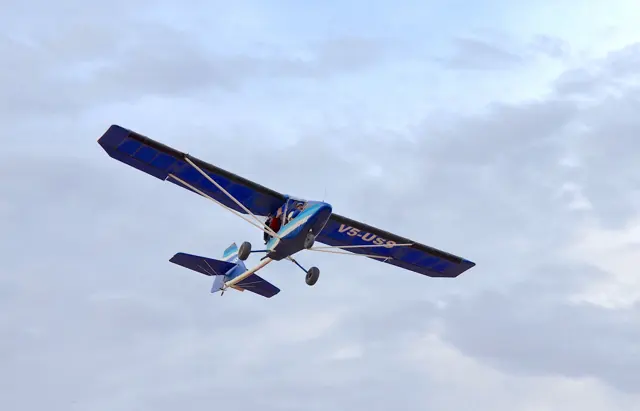
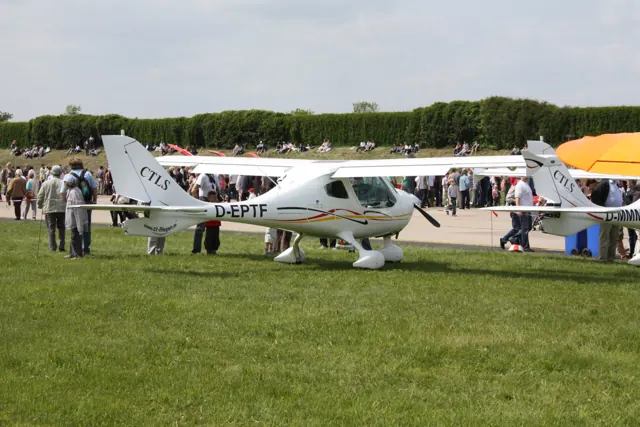
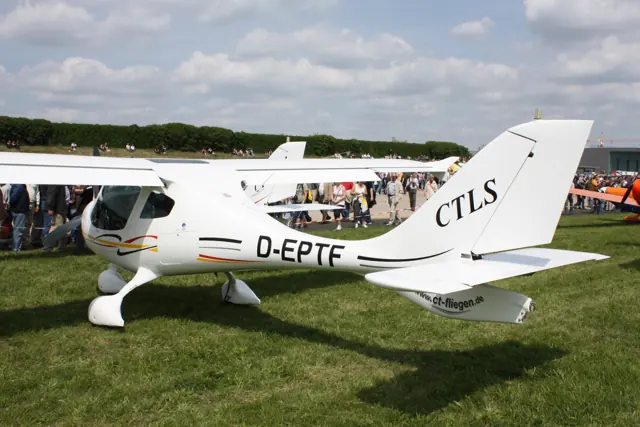
Flight Design developed the CT series in Germany around lightweight recreational and touring use. Fixed tricycle landing gear and a high wing make the basic configuration straightforward, while the rounded composite fuselage gives it a distinctive appearance. CT2K, CTSW, CTLS and CTSL refer to developments within the family. Their dimensions and equipment are not interchangeable.
Aircraft background
Wikipedia contributors · Read more ↗A larger-aircraft pilot learns a smaller cockpit’s sight picture
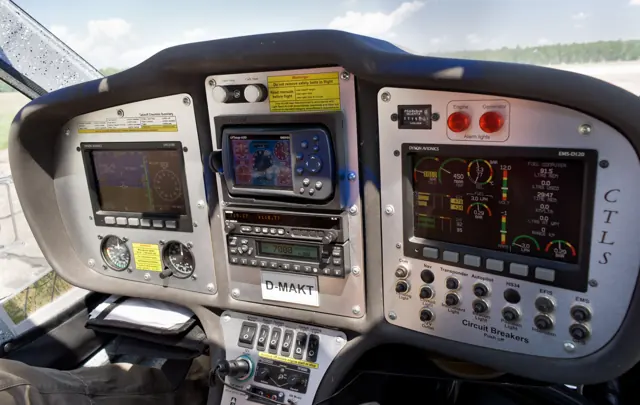
Horne found more equipment inside the small CT than its size had led him to expect. On a hot day at Ellington, he and importer Tom Peghiny flew with full fuel, giving him an introduction to an aircraft that combined a compact shape with an ambitious instrument panel. The controls needed a sensitive touch and attention to coordination. Landings revealed how much his habits came from larger singles.
AOPA · October 2005. Early U.S. Flight Design CT demonstration at Ellington, Connecticut, with importer Tom Peghiny. Related CT-family experience; not a CTSL flight test.
AOPA · Read more ↗Into the cockpit
 YouTube
Retz13 · 11 min ·
Flight Design CTSL Startup Tutorial w/ Checklists [MSFS2020]
A startup guide to the Flight Design CTSL in MSFS 2020.
Simulator · Flight Design CTSL · MSFS 2020
Watch on YouTube ↗Preview images are served by AirframeDB. Videos open on YouTube only when you choose to watch.
Meet Flight Design CTSL
Flight Design developed the CT series in Germany around lightweight recreational and touring use. Fixed tricycle landing gear and a high wing make the basic configuration straightforward, while the rounded composite fuselage gives it a distinctive appearance.
CT2K, CTSW, CTLS and CTSL refer to developments within the family. Their dimensions and equipment are not interchangeable. The MSFS aircraft represents the CTSL, with its package features described separately from the broader CT-family history.
Flight Design CT family
Aircraft type designators
Use the code for the model you are flying. The linked authority lists the applicable aircraft.
History & design
The CT family changes through successive versions
Wolter’s historical introduction traces the CT from its 1997 debut through the CT2K and the shorter-wing CTSW. The accounts selected here concern early CT, CTSW and CTLS aircraft. They provide family background; none is presented as a direct flight test of the simulator’s CTSL.
fliegermagazin · UL-Pilot-Report: Flight Design CTSW (2006) ↗Variant boundaries retained from the source material
Development milestones
Designer: Matthias Betsch
First flight: March 1996
Wikipedia contributors · Flight Design CT ↗Flight Design CT · family/variant named by the source · Wikipedia revision 1366088830
Pilot accounts
A larger-aircraft pilot learns a smaller cockpit’s sight picture
Horne found more equipment inside the small CT than its size had led him to expect. On a hot day at Ellington, he and importer Tom Peghiny flew with full fuel, giving him an introduction to an aircraft that combined a compact shape with an ambitious instrument panel. The controls needed a sensitive touch and attention to coordination.
Landings revealed how much his habits came from larger singles. The CT’s view and its reluctance to slow down left him adjusting his familiar approach picture, with some smooth touchdowns and some less graceful ones. The experience belongs to an early CT, providing family context for the later CTSL listed on this page.
AOPA · October 2005. Early U.S. Flight Design CT demonstration at Ellington, Connecticut, with importer Tom Peghiny. Related CT-family experience; not a CTSL flight test.
Read the full account · AOPA ↗A capable aircraft does not quite win the writer’s heart
Wolter’s encounter with the CTSW began with unfamiliar glass displays and a joke from Uwe Post about how much electronics the aircraft contained. The wide seating area and generous view soon made a better impression than the initial need to learn the panel. In flight, Wolter found an agile aircraft that felt less nervous than he had expected.
The landing brought another adjustment: he began the flare too early, although the undercarriage softened the arrival. His overall judgement remained more complicated than simple enthusiasm. He recognised the aircraft’s technical qualities and useful handling, but its appearance did little for him emotionally.
fliegermagazin · October 2006. CTSW 2006 flight with German distributor Uwe Post at Kamen; English summary. Related family variant, not a CTSL evaluation.
Read the full account · fliegermagazin ↗Finding a comfortable seat in a light aircraft
Godlewski was pleased to discover that the CTLS could accommodate her shorter stature without an extra cushion. Seat adjustment, cabin comfort and the quiet surroundings helped her settle in before the demonstration with Ken Godin. The externally accessed baggage area was another detail that made her think about how the aircraft would work on a trip.
Once airborne, she needed a few minutes to learn what level flight looked like over the curved panel. The clear view became particularly useful around busy Sebring, where other aircraft made looking outside an immediate priority. Turns and coordination exercises helped her become familiar with the controls.
General Aviation News · December 2009. CTLS demonstration at the U.S. Sport Aviation Expo in Sebring with Ken Godin. CTLS experience, not a CTSL-specific report.
Read the full account · General Aviation News ↗In your simulator
Systems, equipment and documentation for each developer’s aircraft.
Compare simulator versions →MSFS 2024Flight Design CTSL
Microsoft Flight Simulator · Released
Flight Design CTSL
Microsoft Flight Simulator · Released
MSFS 2020Flight Design CTSL
Microsoft Flight Simulator · Released
Flight Design CTSL
Microsoft Flight Simulator · Released
Aircraft specifications
Published figures for the named real-aircraft variant. Simulator equipment and performance can differ.
| Specification | Published value |
|---|---|
| Length | 6.22 m (20 ft 5 in) |
| Wingspan | 8.50 m (27 ft 11 in) |
| Height | 2.15 m (7 ft 1 in) |
| Wing area | 9.94 m² (107.0 sq ft) |
| Empty weight | 318 kg (701 lb) |
| Gross weight | 472.5 kg (1,042 lb) |
| Max takeoff weight | 600 kg (1,323 lb) |
| Powerplant | 1 × Rotax 912S 4-cylinder, 4-stroke liquid/air-cooled engine, 75 kW (101 hp) |
| Maximum speed | 230 km/h (140 mph, 120 kn) |
| Cruise speed | 207 km/h (129 mph, 112 kn) |
| Stall speed | 65 km/h (40 mph, 35 kn) |
| Range | 2,000 km (1,200 mi, 1,100 nmi) |
| Service ceiling | 7,620 m (25,000 ft) planned increase to 9,140 m (30,000 ft) |
| Rate of climb | 4.9 m/s (960 ft/min) |
Manuals & resources
Find your next read
Choose a topic for a short introduction and a link to the original source. Simulator references identify the developer and edition they cover.
Pilot account
A larger-aircraft pilot learns a smaller cockpit’s sight pictureAOPA · October 2005. Early U.S. Flight Design CT demonstration at Ellington, Connecticut, with importer Tom Peghiny. Related CT-family experience; not a CTSL flight test.
Horne found more equipment inside the small CT than its size had led him to expect. On a hot day at Ellington, he and importer Tom Peghiny flew with full fuel, giving him an introduction to an aircraft that combined a compact shape with an ambitious instrument panel. The controls needed a sensitive touch and attention to coordination. Landings revealed how much his habits came from larger singles.
Thomas A. Horne
AOPA · Read the source ↗A capable aircraft does not quite win the writer’s heartfliegermagazin · October 2006. CTSW 2006 flight with German distributor Uwe Post at Kamen; English summary. Related family variant, not a CTSL evaluation.
Wolter’s encounter with the CTSW began with unfamiliar glass displays and a joke from Uwe Post about how much electronics the aircraft contained. The wide seating area and generous view soon made a better impression than the initial need to learn the panel. In flight, Wolter found an agile aircraft that felt less nervous than he had expected. The landing brought another adjustment: he began the flare too early, although the undercarriage softened the arrival.
Peter Wolter
fliegermagazin · Read the source ↗Read the original documentation from the people who created it. Manuals open on their publisher’s website.
Manual
Microsoft Flight Simulator aircraft manualsMicrosoft / aircraft developersAircraft background
Flight Design CTWikipedia contributors · Research background · Wikipedia revision 1366088830 · retrieved 2026-09-12Resource
MSFS 2024 FAQ and edition aircraft inventoryMicrosoft MSFS 2020 FAQ and edition aircraft inventoryMicrosoftType designator
ICAO Doc 8643 — aircraft type designatorsInternational Civil Aviation Organization · Public search data retrieved 2026-09-14; authority update 2026-09-03Built-in force-feedback profiles
Read the documentary basis, editable starting settings and remaining questions for the aircraft you fly. Each explanation refers to the exact profile revision shown.
Catalogue programme-20261022-v1 · 1 profile choice
Flight Design CTSL
Free and Pro · Revision 2 · Partial review
MSFS 2024 · MSFS 2020
Flight Design CTSL: The selected spring and airspeed loading accompany the light-aircraft controls.
Discuss this aircraft (0)
Questions, observations and useful sources from the community.
No published discussions yet. Bring a question or share a useful source.
Open aircraft discussions →Content expanded · What’s new
Something missing or a source that needs attention?
Suggest a correction ↗