

Start here
A few places to begin, from the aircraft’s story to the people who fly it.
Meet the aircraft
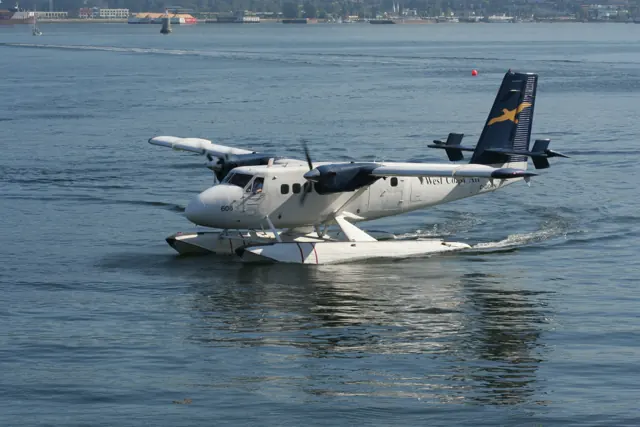
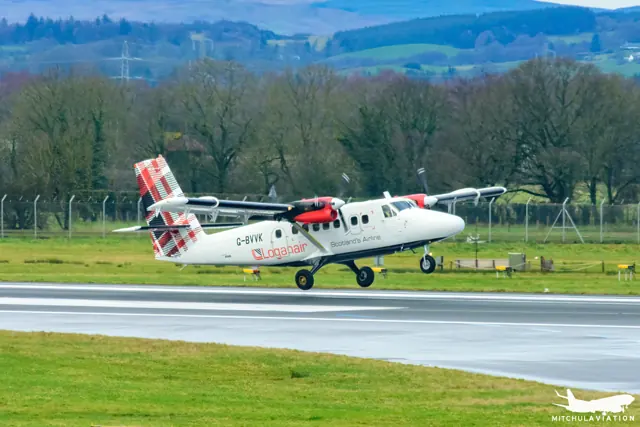
The Twin Otter was developed in the 1960s around short-field utility work. Two turboprops, a high wing and a substantial cabin support passenger and freight operations. Its fixed gear can be replaced or supplemented by specialist wheel, ski and float configurations. Production resumed under Viking before the programme returned to the De Havilland Canada name.
Aircraft background
Wikipedia contributors · Read more ↗A winter rescue at the South Pole
Loutitt’s Twin Otter work took him far beyond ordinary airport schedules. When an Antarctic station needed a medical evacuation in winter, his crew loaded fuel and equipment and headed south. This was already his second such rescue, following a previous mission to collect the station doctor. His earlier bush flying had included unprepared strips and frozen lakes.
AOPA Pilot interview by Phil Scott · February 2005. Kenn Borek Air rescue flight with copilot Brian Crocker and flight engineer Kevin Riehl; the article also recalls Loutitt’s earlier 2001 mission.
AOPA Pilot · Read more ↗Fuel controls include documented simulation limits
The guide describes main-tank boost pumps, standby pumps and wing-tank transfer controls. It explicitly marks the boost-pump TEST position as not simulated. It also says the intake deflectors move visually while their further effects are not modelled, as described for this version.
DHC-6 Twin Otter · Microsoft Flight Simulator · MSFS 2024
Microsoft / aircraft developers · Read more ↗Into the cockpit
 YouTube
 AeroProductions. · 12 min ·
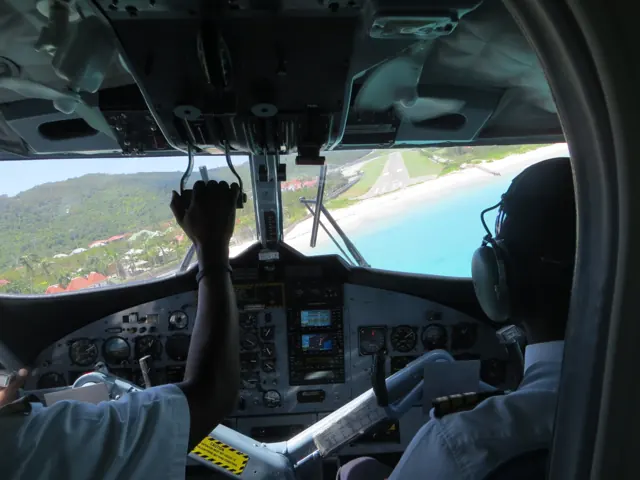
Flying in a "Twin Otter" De Havilland Canada DHC-6-300 over the see • COCKPIT VIEW • Isles of Scilly
An Isles of Scilly Twin Otter flight, seen from the cockpit.
Real aircraft · DHC-6-300
Watch on YouTube ↗Preview images are served by AirframeDB. Videos open on YouTube only when you choose to watch.
Meet De Havilland Canada DHC-6 Twin Otter
The Twin Otter was developed in the 1960s around short-field utility work. Two turboprops, a high wing and a substantial cabin support passenger and freight operations. Its fixed gear can be replaced or supplemented by specialist wheel, ski and float configurations.
Production resumed under Viking before the programme returned to the De Havilland Canada name. Different series and later developments have their own engines and avionics. The simulator packages identify their series and cockpit generation.
De Havilland Canada DHC-6 Twin Otter
De Havilland Canada → · Explore the family →
De Havilland Canada DHC-6 Twin Otter
Wikipedia contributors · De Havilland Canada DHC-6 Twin Otter ↗Microsoft Flight Simulator · MSFS 2024 →Aircraft type designators
Use the code for the model you are flying. The linked authority lists the applicable aircraft.
De Havilland Canada DHC-6 Twin Otter
ICAO Doc 8643 — aircraft type designators ↗Checked 2026-09-14History & design
An airframe adapted to many different jobs
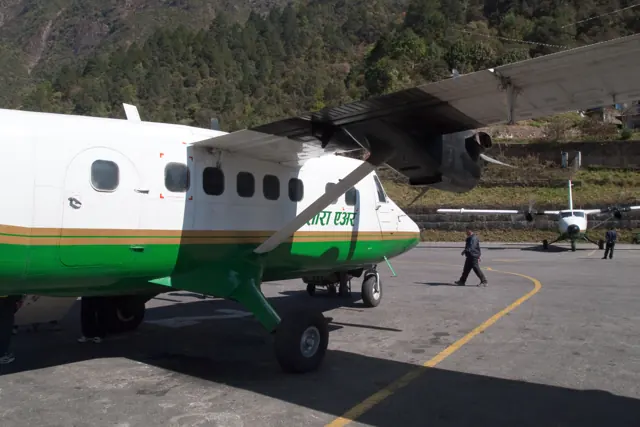
De Havilland Canada’s Series 400 description offers interiors for passenger services, cargo, medical evacuation and special missions. Reconfigurable cabins and a choice of landing equipment allow the same family to serve island communities, remote bases and conventional airports. The role can change substantially with the operator and equipment.
De Havilland Canada · Twin Otter Series 400 ↗Manufacturer’s Series 400 description
Cockpit generation matters alongside the familiar shape
The Series 400 product description specifies Honeywell Apex avionics, illustrating a later cockpit within the Twin Otter family. Its Guardian derivative adds mission-specific configurations. Those aircraft should be distinguished from earlier Series 300 machines when comparing pilot accounts and the particular model represented by an add-on.
De Havilland Canada · Twin Otter Series 400 ↗Manufacturer’s Series 400 and Guardian descriptions; no claim that this page describes every current Twin Otter version
Development milestones
First flight: 20 May 1965
Developed from: de Havilland Canada DHC-3 Otter
Wikipedia contributors · De Havilland Canada DHC-6 Twin Otter ↗De Havilland Canada DHC-6 Twin Otter · family/variant named by the source · Wikipedia revision 1369791029
Pilot accounts
A winter rescue at the South Pole
Loutitt’s Twin Otter work took him far beyond ordinary airport schedules. When an Antarctic station needed a medical evacuation in winter, his crew loaded fuel and equipment and headed south. This was already his second such rescue, following a previous mission to collect the station doctor. His earlier bush flying had included unprepared strips and frozen lakes.
The polar leg depended on a heavily fuelled aircraft and offered little room to divert. He eventually picked out the drums burning beside the snow runway and landed. After rest and refuelling, the crew departed with their patient, staged through the northern Antarctic region and continued to Chile for medical care. The interview describes the aircraft as part of a carefully organised crew effort across an exceptionally isolated route.
AOPA Pilot interview by Phil Scott · February 2005. Kenn Borek Air rescue flight with copilot Brian Crocker and flight engineer Kevin Riehl; the article also recalls Loutitt’s earlier 2001 mission.
Read the full account · AOPA Pilot ↗Investigating ice from the research cockpit
Ranaudo describes a programme that progressed from measuring icing clouds to understanding what ice did to aircraft performance and control. The Twin Otter carried additional protection, cameras and instruments so the researchers could connect the conditions outside with the aircraft’s response. Later work used artificial ice shapes and a gradual series of increasingly demanding tests.
One test he recounts produced pulsing elevator forces, pitch oscillations and then an abrupt nose-down motion that briefly made the crew weightless. Recovery followed rapidly, but the episode captured how physically demanding the problem could become. His account emphasises the preparation and incremental testing behind that moment. These observations belong to a specially configured research aircraft and its test programme; they do not establish how a desktop simulator models icing.
Flight Safety Foundation · February 2017. Retrospective by NASA’s former lead icing research pilot, describing the team’s modified Twin Otter and controlled flight-test programme.
Read the full account · Flight Safety Foundation / AeroSafety World ↗Flying the science mission includes digging out the fuel
Below describes Twin Otter flying as one part of a much larger field operation. Pilots work closely with scientists to deploy teams, supply their camps and bring them home. Some assignments mean living in tents on the ice alongside the people they support. The aircraft’s retractable skis connect Rothera’s gravel runway with remote snowfields.
Keeping those flights possible also means maintaining a scattered network of fuel depots. Drums may move with the ice beneath them and become buried by winter snowfall, leaving a marker to guide the search. Digging them out becomes a pilot’s task as well. Below finds the combination of demanding flying, unfamiliar landing areas and practical support work deeply satisfying because it contributes directly to scientific understanding of the continent.
Royal Air Force Charitable Trust · April 2024. British Antarctic Survey DHC-6-300 operations from Rothera during the austral summer.
Read the full account · Royal Air Force Charitable Trust ↗In your simulator
Systems, equipment and documentation for each developer’s aircraft.
Compare simulator versions →MSFS 2024DHC-6 Twin Otter
Microsoft Flight Simulator · Released
DHC-6 Twin Otter
Microsoft Flight Simulator · Released
X-Plane 12DHC-6 Twin Otter 300 Series v2
RWDesigns · Released
DHC-6 Twin Otter 300 Series v2
RWDesigns · Released
Manuals & resources
Find your next read
Choose a topic for a short introduction and a link to the original source. Simulator references identify the developer and edition they cover.
Simulator documentation
Fuel controls include documented simulation limitsDHC-6 Twin Otter · Microsoft Flight Simulator · MSFS 2024
The guide describes main-tank boost pumps, standby pumps and wing-tank transfer controls. It explicitly marks the boost-pump TEST position as not simulated. It also says the intake deflectors move visually while their further effects are not modelled, as described for this version.
Archived MSFS 2024 AOM · PDF pp.22–25
Microsoft / aircraft developers · Read the source ↗Navigation assistance still leaves speed with the pilotDHC-6 Twin Otter · Microsoft Flight Simulator · MSFS 2024
The documented autopilot offers heading, navigation, approach, altitude and vertical-speed modes, including capture of a selected altitude. Approach mode follows the localiser and glideslope; the guide expressly distinguishes this from autoland and provides no automatic throttle or speed control.
Archived MSFS 2024 AOM · PDF pp.35–36
Microsoft / aircraft developers · Read the source ↗The Twin Otter's working cockpitDHC-6 Twin Otter · Microsoft Flight Simulator · MSFS 2024
The aircraft operating manual identifies the armrest-mounted autopilot controls, trim and flap indications, and hydraulic-pressure instrumentation.
Archived simulator manual; installed package revision not observed · PDF pp.7,11,21
Microsoft / aircraft developers · Read the source ↗Wheels, skis and amphibious floatsDHC-6 Twin Otter · Microsoft Flight Simulator · MSFS 2024
The MSFS 2024 manual identifies a Series 300 package with wheeled, ski and amphibious versions. The amphibian adds a panel gear lever and individual wheel-position lights: green for lowered wheels and blue for raised wheels. Its loading and centre-of-gravity limits are treated separately in the guide.
Archived MSFS 2024 AOM · PDF pp.4,37; installed package revision not observed
Microsoft / aircraft developers · Read the source ↗Pilot account
A winter rescue at the South PoleAOPA Pilot interview by Phil Scott · February 2005. Kenn Borek Air rescue flight with copilot Brian Crocker and flight engineer Kevin Riehl; the article also recalls Loutitt’s earlier 2001 mission.
Loutitt’s Twin Otter work took him far beyond ordinary airport schedules. When an Antarctic station needed a medical evacuation in winter, his crew loaded fuel and equipment and headed south. This was already his second such rescue, following a previous mission to collect the station doctor. His earlier bush flying had included unprepared strips and frozen lakes. The polar leg depended on a heavily fuelled aircraft and offered little room to divert.
Sean Loutitt
AOPA Pilot · Read the source ↗Investigating ice from the research cockpitFlight Safety Foundation · February 2017. Retrospective by NASA’s former lead icing research pilot, describing the team’s modified Twin Otter and controlled flight-test programme.
Ranaudo describes a programme that progressed from measuring icing clouds to understanding what ice did to aircraft performance and control. The Twin Otter carried additional protection, cameras and instruments so the researchers could connect the conditions outside with the aircraft’s response. Later work used artificial ice shapes and a gradual series of increasingly demanding tests.
Richard J. Ranaudo
Flight Safety Foundation / AeroSafety World · Read the source ↗Developer documentation
DHC-6 Twin Otter 300 Series v2 — product listingDHC-6 Twin Otter 300 Series v2 · X-Plane 12
Product listing captured 2026-09-24; edition scope from the reviewed catalogue
RWDesigns · Read the source ↗Read the original documentation from the people who created it. Manuals open on their publisher’s website.
Manual
DH-6 Twin Otter AOMMicrosoft / aircraft developers Microsoft Flight Simulator aircraft manualsMicrosoft / aircraft developersAircraft background
De Havilland Canada DHC-6 Twin OtterWikipedia contributors · Research background · Wikipedia revision 1369791029 · retrieved 2026-09-12 Twin Otter Series 400De Havilland Canada · Manufacturer’s Series 400 product description · retrieved September 2026Resource
MSFS 2024 FAQ and edition aircraft inventoryMicrosoftType designator
ICAO Doc 8643 — aircraft type designatorsInternational Civil Aviation Organization · Public search data retrieved 2026-09-14; authority update 2026-09-03Product
DHC-6 Twin Otter 300 Series v2RWDesigns · Product listing captured 2026-09-24; edition scope from the reviewed catalogueBuilt-in force-feedback profiles
Read the documentary basis, editable starting settings and remaining questions for the aircraft you fly. Each explanation refers to the exact profile revision shown.
Catalogue programme-20261022-v1 · 7 profile choices
RWDesigns DHC-6-300 Floats (community XP12 patch)
RWDesigns · Free and Pro · Revision 3 · Inherited starting point
X-Plane 12
RWDesigns DHC-6-300 Floats (community XP12 patch): The selected yoke resistance accompanies the particular Twin Otter configuration.
RWDesigns DHC-6-300 Skis (community XP12 patch)
RWDesigns · Free and Pro · Revision 3 · Inherited starting point
X-Plane 12
RWDesigns DHC-6-300 Skis (community XP12 patch): The selected yoke resistance accompanies the particular Twin Otter configuration.
RWDesigns DHC-6-300 Tundra (community XP12 patch)
RWDesigns · Free and Pro · Revision 3 · Inherited starting point
X-Plane 12
RWDesigns DHC-6-300 Tundra (community XP12 patch): The selected yoke resistance accompanies the particular Twin Otter configuration.
RWDesigns DHC-6-300 Wheels (community XP12 patch)
RWDesigns · Free and Pro · Revision 3 · Inherited starting point
X-Plane 12
RWDesigns DHC-6-300 Wheels (community XP12 patch): The selected yoke resistance accompanies the particular Twin Otter configuration.
De Havilland DHC-6-300 Twin Otter (wheels)
Free and Pro · Revision 3 · Partial review
MSFS 2024
De Havilland DHC-6-300 Twin Otter (wheels): The selected yoke resistance accompanies the particular Twin Otter configuration.
De Havilland DHC-6-300 Twin Otter (floats)
Free and Pro · Revision 1 · Partial review
MSFS 2024
De Havilland DHC-6-300 Twin Otter (floats): The selected yoke resistance accompanies the particular Twin Otter configuration.
De Havilland DHC-6-300 Twin Otter (skis)
Free and Pro · Revision 1 · Partial review
MSFS 2024
De Havilland DHC-6-300 Twin Otter (skis): The selected yoke resistance accompanies the particular Twin Otter configuration.
Discuss this aircraft (0)
Questions, observations and useful sources from the community.
No published discussions yet. Bring a question or share a useful source.
Open aircraft discussions →Content expanded · What’s new
Something missing or a source that needs attention?
Suggest a correction ↗