
Start here
A few places to begin, from the aircraft’s story to the people who fly it.
Meet the aircraft
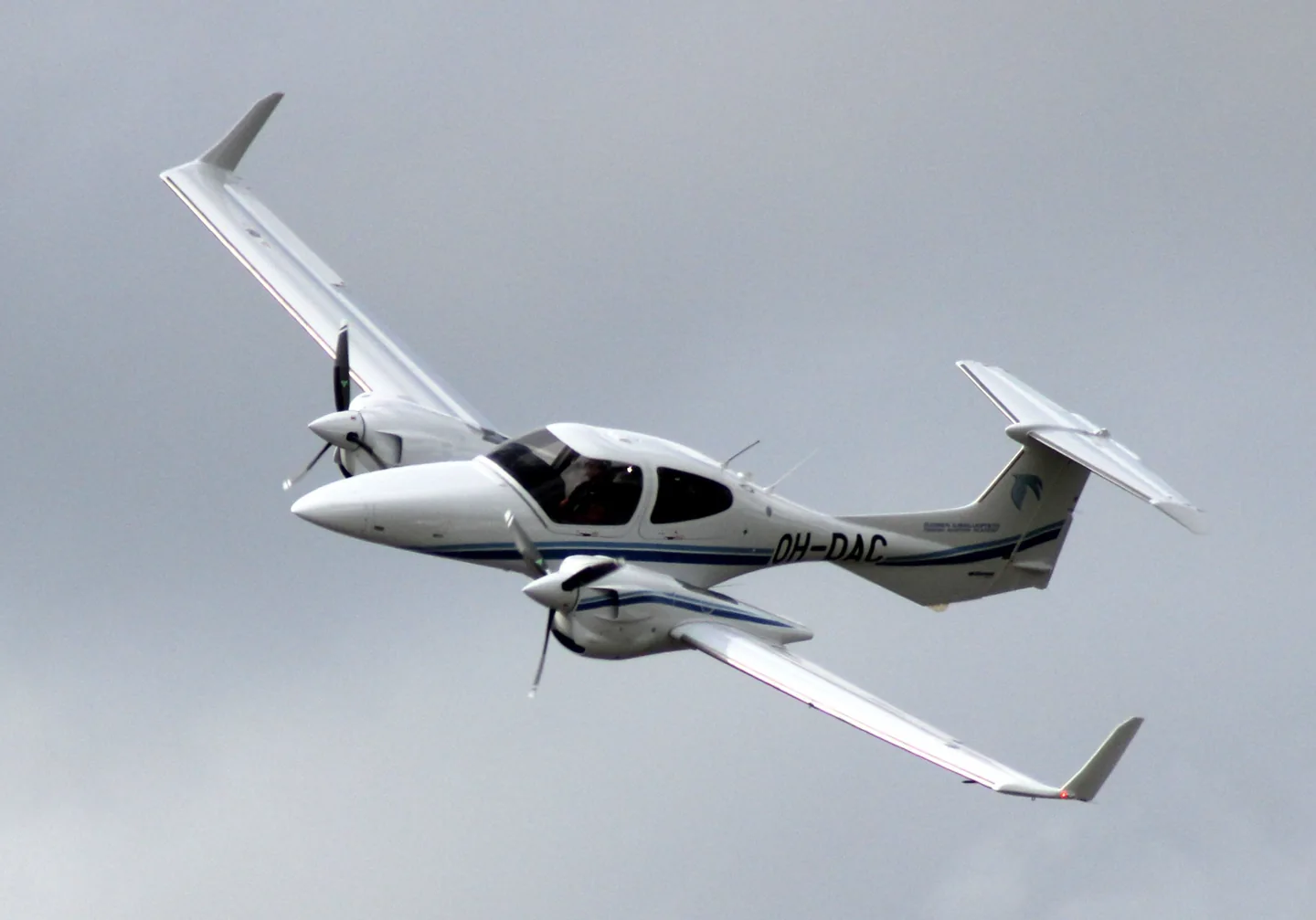
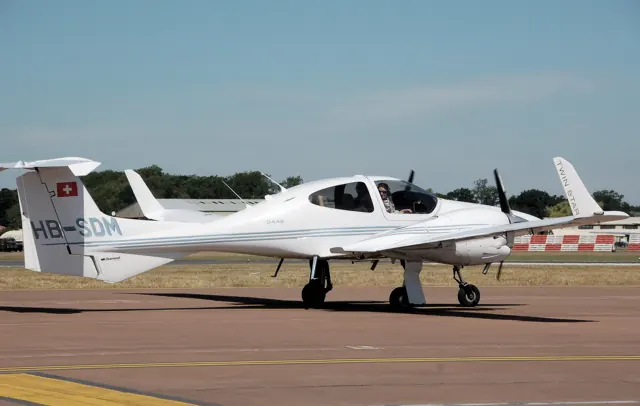
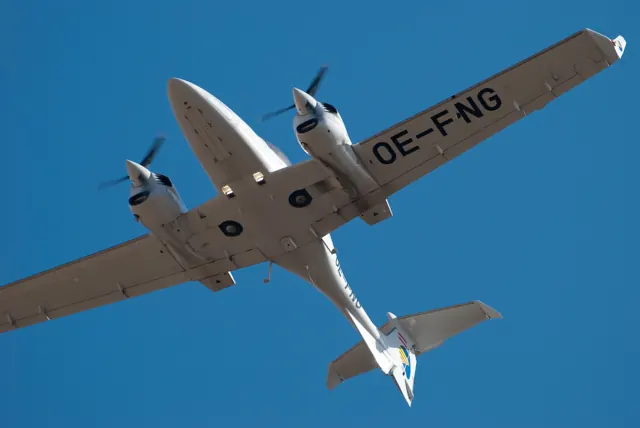
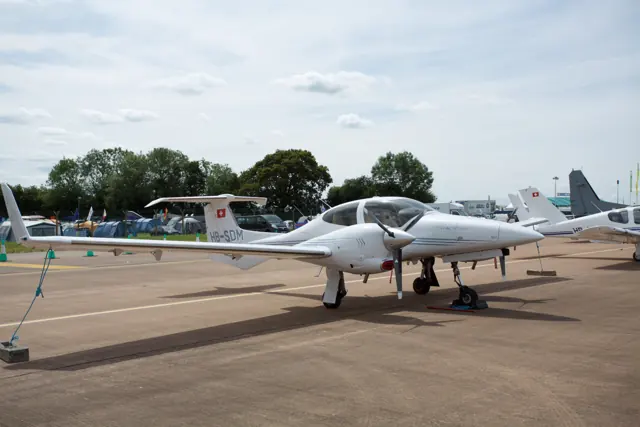
The DA42 was Diamond's first twin-engine aircraft design. It introduced a new European light twin to a class that had seen few new designs for decades. A diesel-powered example crossed the North Atlantic without a stop in 2004. Engine and avionics configurations vary; the specification table identifies its model.
Aircraft background
Wikipedia contributors · Read more ↗Still comfortable after a long day west to east
Ells spent a long day crossing from Paso Robles to Wichita and still felt ready for a photography flight afterwards. He credited the comfortable seats, broad view and smooth engine installation for the unexpectedly low fatigue. During the formation work, the engines responded readily, and the unusual centre stick soon became familiar in his hand. The first landings required more adjustment.
AOPA Pilot · November 2006. Thielert Centurion 1.7-powered N240TS, flown from California towards Oshkosh.
AOPA Pilot · Read more ↗Systems to explore beyond the main displays
Documented features include FADEC/ECU tests, oxygen and ice-protection systems, working circuit breakers with configurable reliability, and parameters saved between flights. Passengers can be configured, while the FMOD sound environment has an in-game volume control. These are the developer’s stated features, separate from the real-aircraft pilot reports.
Diamond DA42 Twin Star · Aerobask · X-Plane 12
Aerobask · Read more ↗Into the cockpit
 YouTube
Flying with Rich · 18 min ·
2023 DA42 Twin Star Flight
A pilot discusses a 2023 DA42's performance and avionics during a flight.
Real aircraft · Diamond DA42 Twin Star
Watch on YouTube ↗Preview images are served by AirframeDB. Videos open on YouTube only when you choose to watch.
Meet Diamond DA42 Twin Star
The DA42 was Diamond's first twin-engine aircraft design. It introduced a new European light twin to a class that had seen few new designs for decades. A diesel-powered example crossed the North Atlantic without a stop in 2004. Engine and avionics configurations vary; the specification table identifies its model.
Diamond DA42 Twin Star
Diamond Aircraft → · Explore the family →
Diamond DA42 Twin Star
Wikipedia contributors · Diamond DA42 Twin Star ↗Aerobask · X-Plane 12 →Aircraft type designators
Use the code for the model you are flying. The linked authority lists the applicable aircraft.
History & design
Diamond adds a twin
The DA42 received EASA certification in 2004. Diamond’s timeline then records the establishment of Austro Engine in 2007 and certification of the AE300 in 2009, marking the development of the powerplant associated with the DA42 NG.
Diamond Aircraft · History: Unwavering Commitment to Innovation ↗Manufacturer’s DA42 and Austro chronology
Engine choices changed the cockpit workload
Horne’s contemporary report distinguishes the original Thielert aircraft, the Austro-powered NG and the Lycoming-powered L360. The latter used conventional separate engine controls, making its training environment different from the single-lever diesel versions.
AOPA Pilot · Diamond DA42 do-over ↗AOPA · February 2010 comparison; historical configurations
Development milestones
First flight: 9 December 2002
Wikipedia contributors · Diamond DA42 Twin Star ↗Diamond DA42 Twin Star · family/variant named by the source · Wikipedia revision 1369946321
Pilot accounts
Still comfortable after a long day west to east
Ells spent a long day crossing from Paso Robles to Wichita and still felt ready for a photography flight afterwards. He credited the comfortable seats, broad view and smooth engine installation for the unexpectedly low fatigue. During the formation work, the engines responded readily, and the unusual centre stick soon became familiar in his hand.
The first landings required more adjustment. He initially overshot the turn to final and found that the low nose changed his normal sight picture. The next circuit was better aligned as he learned the aircraft. On the longer legs, he appreciated selecting power through two levers and letting the engine controls handle the rest.
AOPA Pilot · November 2006. Thielert Centurion 1.7-powered N240TS, flown from California towards Oshkosh.
Read the full account · AOPA Pilot ↗Trying two different answers to the engine question
Horne’s DA42 NG experience included a cross-country from Wiener Neustadt to Fürstenfeldbruck. Once power was set, he found the engine management straightforward; threading through the different airspace along the route occupied more attention. During manoeuvres he noticed little trim change with gear or flap movement, although the short pedals sometimes led him to apply brakes unintentionally while steering on the ground.
The L360 offered a different cockpit task. Its conventional throttle, propeller and mixture levers replaced the diesel model’s two power levers. Horne liked its lively departure on a hot day and concentrated on its behaviour during training demonstrations. He found those exercises conventional in the conditions flown. The two flights show how substantially the operating experience can change beneath the same recognisable DA42 shape.
AOPA Pilot · February 2010. DA42 NG flight with Soeren Pedersen in Europe and a separate Lycoming-powered L360 flight with Rob Johnson in Ontario.
Read the full account · AOPA Pilot ↗Two friends take their touring twin to South Africa
Kautz and Warmerdam chose a jet-fuelled DA42-VI after earlier travels had made finding avgas a recurring difficulty. Their South African journey required extensive preparation, then last-minute changes to the route and permissions. The flying brought snowy Alps, long desert stretches and the satisfaction of watching the navigation display count down to the equator before counting upward again.
The memorable moments were often on the ground: wildlife trips, local hospitality and an unexpected gathering when they reached Stellenbosch. There were also paperwork delays, changing fuel arrangements and tiring legs into headwinds. They praised the aircraft’s economy while acknowledging that cabin width, loading and short-runway performance imposed limits. Their enthusiasm belongs to this particular journey, rather than a promise that every destination or routing would be practical.
Owner account hosted by Diamond Aircraft · February 2020. DA42-VI journey from Germany during November–December 2019; one joint account.
Read the full account · Diamond Aircraft / DiamondDiary ↗In your simulator
Systems, equipment and documentation for each developer’s aircraft.
Compare simulator versions →X-Plane 12Diamond DA42 Twin Star
Aerobask · Released
Diamond DA42 Twin Star
Aerobask · Released
MSFS 2020 · MSFS 2024COWS DA42 Series
COWS · Released
COWS DA42 Series
COWS · Released
Aircraft specifications
Published figures for the named real-aircraft variant. Simulator equipment and performance can differ.
| Specification | Published value |
|---|---|
| Length | 8.56 m (28 ft 1 in) |
| Wingspan | 13.55 m (44 ft 5 in) |
| Height | 2.49 m (8 ft 2 in) |
| Wing area | 16.29 m² (175.3 sq ft) |
| Empty weight | 1,420 kg (3,131 lb) |
| Gross weight | 1,999 kg (4,407 lb) |
| Powerplant | 2 × Austro Engine E4 turbocharged diesel engine , 125 kW (168 hp) each |
| Maximum speed | 365 km/h (227 mph, 197 kn) |
| Cruise speed | 326 km/h (203 mph, 176 kn) |
| Range | 2,250 km (1,400 mi, 1,210 nmi) |
| Service ceiling | 5,486 m (18,000 ft) |
| Rate of climb | 7.9 m/s (1,280 ft/min) |
Manuals & resources
Find your next read
Choose a topic for a short introduction and a link to the original source. Simulator references identify the developer and edition they cover.
Simulator documentation
Systems to explore beyond the main displaysDiamond DA42 Twin Star · Aerobask · X-Plane 12
Documented features include FADEC/ECU tests, oxygen and ice-protection systems, working circuit breakers with configurable reliability, and parameters saved between flights. Passengers can be configured, while the FMOD sound environment has an in-game volume control. These are the developer’s stated features, separate from the real-aircraft pilot reports.
Aerobask’s implementation description
Aerobask · Read the source ↗An NG with customised engine and avionics displaysDiamond DA42 Twin Star · Aerobask · X-Plane 12
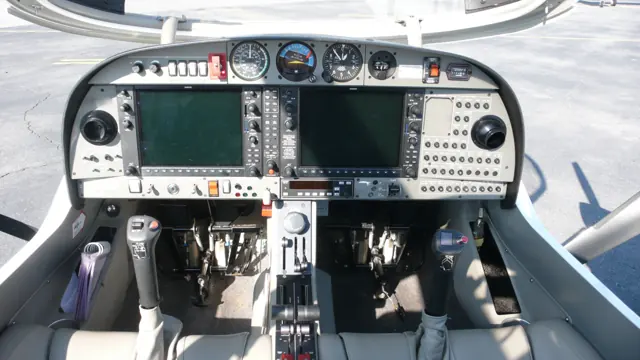
Aerobask identifies its DA42 as the Austro-powered NG for X-Plane 12. The package enhances Laminar’s G1000 with engine indications, annunciations, touchscreen functions and OscarPilote’s synthetic vision. It also includes a custom MD302 standby attitude module.
Gathered Aerobask DA42 page · package revision not stated
Aerobask · Read the source ↗Pilot account
Still comfortable after a long day west to eastAOPA Pilot · November 2006. Thielert Centurion 1.7-powered N240TS, flown from California towards Oshkosh.
Ells spent a long day crossing from Paso Robles to Wichita and still felt ready for a photography flight afterwards. He credited the comfortable seats, broad view and smooth engine installation for the unexpectedly low fatigue. During the formation work, the engines responded readily, and the unusual centre stick soon became familiar in his hand. The first landings required more adjustment. He initially overshot the turn to final and found that the low nose changed his normal sight picture.
Steven W. Ells
AOPA Pilot · Read the source ↗Trying two different answers to the engine questionAOPA Pilot · February 2010. DA42 NG flight with Soeren Pedersen in Europe and a separate Lycoming-powered L360 flight with Rob Johnson in Ontario.
Horne’s DA42 NG experience included a cross-country from Wiener Neustadt to Fürstenfeldbruck. Once power was set, he found the engine management straightforward; threading through the different airspace along the route occupied more attention. During manoeuvres he noticed little trim change with gear or flap movement, although the short pedals sometimes led him to apply brakes unintentionally while steering on the ground. The L360 offered a different cockpit task.
Thomas A. Horne
AOPA Pilot · Read the source ↗Developer documentation
COWS DA42 Series — product listingCOWS DA42 Series · MSFS 2020 · MSFS 2024
Product listing captured 2026-09-30; edition scope from the reviewed catalogue
www.cows.studio · Read the source ↗Read the original documentation from the people who created it. Manuals open on their publisher’s website.
Aircraft background
Diamond DA42 Twin StarWikipedia contributors · Research background · retrieved 2026-09-12 History: Unwavering Commitment to InnovationDiamond Aircraft · Manufacturer’s historical timeline · retrieved September 2026Product
DA42Aerobask · Official developer / designated store catalogue · checked 2026-09-12 COWS | DA42 Serieswww.cows.studio · Product listing captured 2026-09-30; edition scope from the reviewed catalogueType designator
ICAO Doc 8643 — aircraft type designatorsInternational Civil Aviation Organization · Public search data retrieved 2026-09-14; authority update 2026-09-03Built-in force-feedback profiles
Read the documentary basis, editable starting settings and remaining questions for the aircraft you fly. Each explanation refers to the exact profile revision shown.
Catalogue programme-20261022-v1 · 4 profile choices
Aerobask DA42 NG
Aerobask · Free and Pro · Revision 3 · Inherited starting point
X-Plane 12
Aerobask DA42 NG: The selected resistance accompanies the piston-twin control configuration.
COWS DA42 VI
COWS · Free and Pro · Revision 4 · Inherited starting point
MSFS 2020 · MSFS 2024
COWS DA42 VI: The selected resistance accompanies the piston-twin control configuration.
COWS DA42 TDI
COWS · Free and Pro · Revision 3 · Inherited starting point
MSFS 2020 · MSFS 2024
COWS DA42 TDI: The selected resistance accompanies the piston-twin control configuration.
Diamond DA42 Twin Star
Free and Pro · Revision 2 · Partial review
X-Plane 12
Diamond DA42 Twin Star: The selected resistance accompanies the piston-twin control configuration.
Aerobask DA42 NG
Aerobask DA42 NG: The selected resistance accompanies the piston-twin control configuration.
Aircraft and simulator scope
- Aerobask DA42 NG · Aerobask · X-Plane 12 · Add-on starting point
The simulator model and controls
The DA42 was Diamond's first twin-engine aircraft design. It introduced a new European light twin to a class that had seen few new designs for decades. A diesel-powered example crossed the North Atlantic without a stop in 2004. Engine and avionics configurations vary; the specification table identifies its model.
This profile selects Aerobask DA42 NG for X-Plane 12.
How this profile feels
The selected resistance accompanies the piston-twin control configuration. Spring resistance builds with the selected airspeed response. A separate aerodynamic term adds speed-dependent control load.
Trim response uses the profile’s current pitch/roll authorities rather than animation alone. Pitch-trim relief is off. Autopilot following is off.
Controls and trim
Aerobask’s DA42 NG pairs two AE300 diesel piston engines with retractable wheels, FADEC controls and an enhanced G1000 cockpit. COWS separately documents VI/TDI fits and yaw-damper behaviour. Diesel propulsion, avionics and control animations each have their own implementation scope.
The selected implementation
Aerobask’s NG uses two AE300 diesel piston engines, custom EIS/annunciations and a FADEC test in its enhanced G1000.
About the values
The gains are normalized profile settings. They describe the chosen effect balance; hand force depends on the device and its output limits. IAS references are tuning values rather than operating limits. Physical acceptance of this revision remains pending.
Documentary review and sources
These decisions describe the documentary basis and remaining gaps for this revision. Aircraft documentation and a starting setting describe different kinds of evidence.
Aircraft and variant
InheritedThis profile selects Aerobask DA42 NG for X-Plane 12.
Flight controls
InheritedAerobask’s DA42 NG pairs two AE300 diesel piston engines with retractable wheels, FADEC controls and an enhanced G1000 cockpit. COWS separately documents VI/TDI fits and yaw-damper behaviour. Diesel propulsion, avionics and control animations each have their own implementation scope.
Trim
InheritedTrim response uses the profile’s current pitch/roll authorities rather than animation alone. Pitch relief is off, with stored authority 0; roll authority is 0.
Autopilot and stability
InheritedAutopilot following is off; the configured spring and load retain the hardware feel.
Equipment
InheritedAerobask’s NG uses two AE300 diesel piston engines, custom EIS/annunciations and a FADEC test in its enhanced G1000.
Speeds and limits
InheritedThe indicated-speed references set the profile response scale; they are separate from aircraft operating limits.
Simulator integration
InheritedThe profile targets xplane12. Add-on-specific controls use only the supported references configured by this profile.
Force-feedback settings
InheritedThe settings define the profile’s effect balance. Device output limits affect physical hand force.
Starting settings and their rationale
These configured values are starting estimates. The explanations describe what each setting controls; physical validation appears separately below.
| Setting | Starting value | What it controls and why |
|---|---|---|
| Spring strength | Starting value0.74 | What it controls and whyThe selected resistance accompanies the piston-twin control configuration. The baseline spring is 0.74. Its low-speed blend reaches baseline strength at 65 KIAS. |
| Master force gain | Starting value0.85 | What it controls and whyScales overall profile strength while preserving effect balance, subject to device and output limits. |
| Profile force gain | Starting value0.8 | What it controls and whyThe aerodynamic-load gain is 0.8 with an indicated-speed reference of 140 KIAS. This supplies speed-dependent loading alongside the spring. |
| Force tuning speed/reference | Starting value140 kt | What it controls and whySets the IAS reference for aerodynamic loading. It is an estimate, not published cruise TAS or a flight limit. |
| Spring response reference speed | Starting value65 kt | What it controls and whySets the IAS where the low-speed blend reaches baseline strength; high-speed stiffening also uses it. |
| Aileron force scale | Starting value0.72 | What it controls and whyRoll and pitch aerodynamic scales are 0.72 and 1, respectively. They set the aerodynamic axis balance. No custom spring-travel curve is enabled. |
| Elevator force scale | Starting value1 | What it controls and whyScales pitch aerodynamic loading; pitch spring travel and trim responses are separate settings. |
| Trim feel | Starting valueDisabled | What it controls and whyRetained for compatibility and group membership. Trim relief, rather than this flag, controls centre movement. |
| Trim relief | Starting valueDisabled | What it controls and whyAllows trim relief with supported control law and valid telemetry. Axis authorities set its amount. |
| Autopilot follow | Starting valueDisabled | What it controls and whyAutopilot following is off; the configured spring and load retain the hardware feel. |
| Autopilot neutral hold | Starting valueDisabled | What it controls and whyPermits centering hold during a supported AP state, separate from following a moving target. |
| Output force limit | Starting value0.55 | What it controls and whyCaps directed-force output. Native spring effects and device limits remain separate. |
All 44 starting settings and their rationale
The settings define the profile’s effect balance. Device output limits affect physical hand force.
| Setting | Starting value | What it controls and why |
|---|---|---|
| Spring strength | Starting value0.74 | What it controls and whyThe selected resistance accompanies the piston-twin control configuration. The baseline spring is 0.74. Its low-speed blend reaches baseline strength at 65 KIAS. |
| Spring deadband | Starting value0.045 | What it controls and whySets travel around the centre before the baseline spring resists. Smaller values engage it sooner. |
| Profile force gain | Starting value0.8 | What it controls and whyThe aerodynamic-load gain is 0.8 with an indicated-speed reference of 140 KIAS. This supplies speed-dependent loading alongside the spring. |
| Master force gain | Starting value0.85 | What it controls and whyScales overall profile strength while preserving effect balance, subject to device and output limits. |
| QBlend Enabled | Starting valueEnabled | What it controls and whyAllows baseline spring strength to rise with indicated airspeed where the control law permits it. |
| QSpring Minimum Factor | Starting value0.5 | What it controls and whySets low-speed spring strength as a fraction of baseline when blending is enabled. One keeps full strength. |
| QSpring Start Knots | Starting value8 kt | What it controls and whySets the IAS where the low-speed spring blend starts rising. This is a feel threshold, not a flight limit. |
| Spring response reference speed | Starting value65 kt | What it controls and whySets the IAS where the low-speed blend reaches baseline strength; high-speed stiffening also uses it. |
| Force tuning speed/reference | Starting value140 kt | What it controls and whySets the IAS reference for aerodynamic loading. It is an estimate, not published cruise TAS or a flight limit. |
| Airspeed spring stiffening gain | Starting value0.15 | What it controls and whyThe high-speed spring-stiffening gain is 0.15. It strengthens the permitted spring response above 65 KIAS, with the squared-speed ratio capped at 5. |
| Airspeed spring stiffening limit | Starting value5 | What it controls and whyLimits the squared airspeed ratio used for high-speed spring stiffening; it is not a device-force cap. |
| Aileron force scale | Starting value0.72 | What it controls and whyRoll and pitch aerodynamic scales are 0.72 and 1, respectively. They set the aerodynamic axis balance. No custom spring-travel curve is enabled. |
| Elevator force scale | Starting value1 | What it controls and whyScales pitch aerodynamic loading; pitch spring travel and trim responses are separate settings. |
| Output force limit | Starting value0.55 | What it controls and whyCaps directed-force output. Native spring effects and device limits remain separate. |
| Trim feel | Starting valueDisabled | What it controls and whyRetained for compatibility and group membership. Trim relief, rather than this flag, controls centre movement. |
| Trim relief | Starting valueDisabled | What it controls and whyAllows trim relief with supported control law and valid telemetry. Axis authorities set its amount. |
| Elevator Authority | Starting value0 | What it controls and whyTrim response uses the profile’s current pitch/roll authorities rather than animation alone. Pitch relief is off, with stored authority 0; roll authority is 0. |
| Aileron Authority | Starting value0 | What it controls and whyScales supported roll-trim relief and permitted centre movement. Zero removes roll response. |
| Force Trim Enabled | Starting valueDisabled | What it controls and whyEnables local force trim, separate from aircraft-owned trim and add-on integration qualification. |
| GLoad Enabled | Starting valueEnabled | What it controls and whyAllows load-factor changes to modify permitted spring laws. Passive fly-by-wire feel can suppress it. |
| Rate Damping Enabled | Starting valueEnabled | What it controls and whyEnables rate damping with the configured coefficients and control law. |
| Autopilot follow | Starting valueDisabled | What it controls and whyAutopilot following is off; the configured spring and load retain the hardware feel. |
| Autopilot follow authority | Starting value0.1 | What it controls and whySets admitted AP-follow gain, not a percentage of travel. Runtime ownership and input limits still apply. |
| Autopilot neutral hold | Starting valueDisabled | What it controls and whyPermits centering hold during a supported AP state, separate from following a moving target. |
| Autopilot neutral hold strength | Starting value0.6 | What it controls and whySets admitted AP neutral-hold strength; inactive while neutral hold is disabled. |
| Enabled | Starting valueEnabled | What it controls and whyEnables aerodynamic cues; each still needs nonzero strength and its simulator conditions. |
| Gain | Starting value0.35 | What it controls and whySets stall-buffet strength. Zero removes the cue without changing simulator stalls or warnings. |
| Gain | Starting value0 | What it controls and whySets high-Mach buffet strength; onset and full-strength thresholds are separate. |
| Gain | Starting value0 | What it controls and whySets flap buffet at the configured position and speed gates. Flap movement texture is separate. |
| Maximum flap index | Starting value2 | What it controls and whySets the final flap index for detent normalization. UP plus three detents uses maximum index3. |
| Minimum flap index | Starting value2 | What it controls and whySets the first flap detent that admits buffet; this is a handle index, not degrees. |
| Gain | Starting value0 | What it controls and whySets gear aerodynamic buffet; movement and ground-contact cues are separate. |
| Shaker Enabled | Starting valueDisabled | What it controls and whyPermits shaker at supported warning conditions; the switch does not establish aircraft equipment. |
| Stick shaker amplitude | Starting value0.5 | What it controls and whySets triggered shaker strength; inactive while the shaker feature is disabled. |
| Enabled | Starting valueEnabled | What it controls and whyEnables ground effects; each still needs its own strength and contact or motion telemetry. |
| Gain | Starting value0.4 | What it controls and whySets rolling texture strength, modified by speed, surface and undercarriage configuration. |
| Gain | Starting value0.25 | What it controls and whySets gear-bump texture during ground motion, separate from touchdown impact. |
| Gain | Starting value0.65 | What it controls and whySets landing-impact strength; landing telemetry and response shape determine the pulse. |
| Gain | Starting value0 | What it controls and whySets reverse-thrust vibration with valid reverser and engine conditions. Zero removes the cue. |
| Enabled | Starting valueEnabled | What it controls and whyEnables engine cues with nonzero settings and valid running-engine telemetry. |
| Gain | Starting value0.12 | What it controls and whySets estimated engine vibration using configured telemetry and response, not measured cockpit vibration. |
| Enabled | Starting valueEnabled | What it controls and whyEnables accessory cues with configured strengths and observed accessory movement. |
| Gain | Starting value0.12 | What it controls and whySets texture from observed flap movement; a command without movement does not establish the cue. |
| Gain | Starting value0.12 | What it controls and whySets texture from observed gear movement, separate from aerodynamic and touchdown effects. |
Limits and open questions
- Aerobask DA42 NG; xplane12. Previously observed titles and implementation identifiers are retained; installed matching remains deferred.
- This profile uses a conventional manual-control engineering approximation. Published product features establish configuration, but do not supply a measured linkage/force curve; FADEC and avionics are not evidence of FBW.
- Published product source does not specify the complete add-on trim-to-inceptor relationship. Automatic neutral shift is disabled pending that relationship; no false roll tab or cross-developer trim coefficient is added.
- Enhanced Laminar G1000 with custom EIS/annunciations and FADEC test procedure. AP servo-follow and neutral hold remain disabled; engagement indicators are not force-demand signals.
- DA42 NG with twin AE300 diesel pistons, retractable wheels and flaps.
- 140 KIAS is an estimated feel reference, not cruise TAS or a certified limit. No invented Mach, VNE or weight scheduling.
- Read-only native telemetry for aircraft motion and accessory positions. Custom switches, display animations and mode lamps are not calibrated servo targets. No unverified LVars/datarefs or simulator writes.
- Spring 0.74; lateral scale 0.72; trim authorities 0/0; per-axis output cap 0.55. Editable engineering estimates, not measured hand forces. No body-rate torque, surface following or fabricated hydraulic-failure loads.
- New physical and installed-product checks deferred by owner. Existing separately recorded acceptance retains its original device, simulator, add-on and version limits. Source review does not broaden custom telemetry acceptance.
- Only actual accessory position changes drive movement texture; static drag and command-triggered kicks are disabled. Select and save an aircraft default when telemetry lacks a discriminating developer/configuration identity.
Physical validation
No physical force validation is recorded in this public catalogue for this revision. Documentary review and software checks do not establish how a particular device feels.
Discuss this aircraft (0)
Questions, observations and useful sources from the community.
No published discussions yet. Bring a question or share a useful source.
Open aircraft discussions →Content expanded · What’s new
Something missing or a source that needs attention?
Suggest a correction ↗