

Start here
A few places to begin, from the aircraft’s story to the people who fly it.
Meet the aircraft
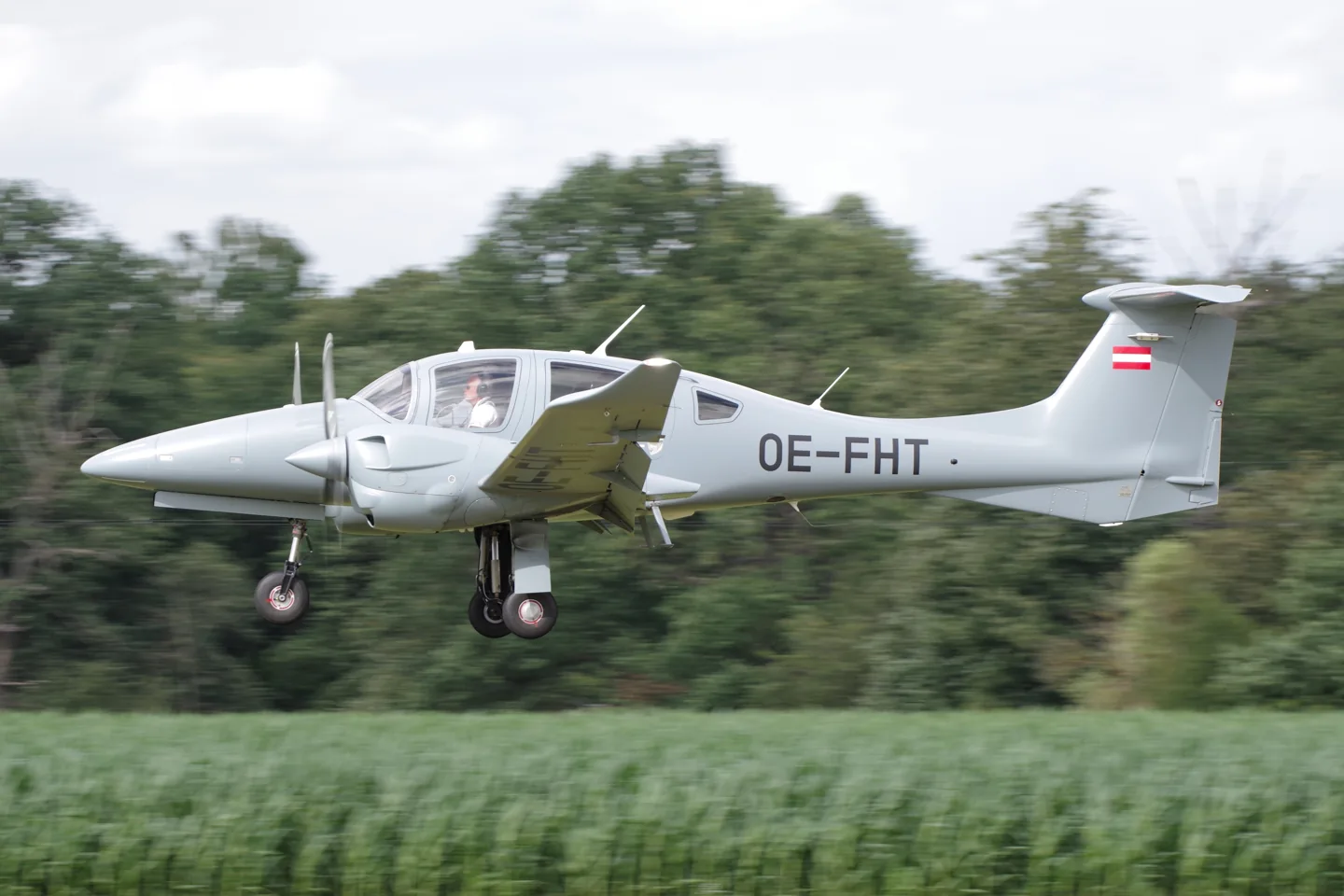
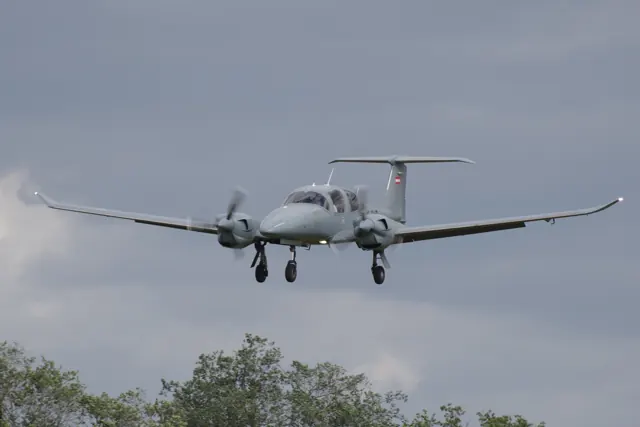
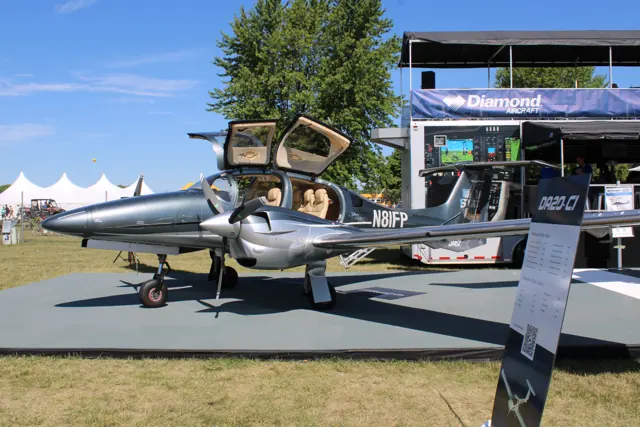
The DA62 expanded Diamond's touring-aircraft range with a larger twin-engine cabin. Its long wing, slim engine nacelles and retractable landing gear follow the company's composite-airframe design language. Cabin seating depends on configuration, with arrangements extending beyond a conventional four-seat light aircraft. Engine management and integrated avionics are central to the type's identity.
Aircraft background
Wikipedia contributors · Read more ↗A former Baron owner considers a return to twins
Snow brought experience owning a Seneca and Barons to a DA62 demonstration at Plant City, Florida, during the 2016 Sun 'n Fun period. His family business had subsequently moved to large singles because of fuel costs, making the Diamond's diesel engines especially interesting to him. With sales manager Brent Eddington alongside, he enjoyed the stick controls and found the cockpit comfortable.
General Aviation News, 13 November 2016. Two-person DA62 sales demonstration with Brent Eddington; published operating costs and tax advice are not reproduced.
General Aviation News · Read more ↗Into the cockpit
 YouTube
AVweb · 10 min ·
Diamond DA62 Flight Trial
AVweb's flight trial of the Diamond DA62 twin.
Real aircraft · Diamond DA62
Watch on YouTube ↗Preview images are served by AirframeDB. Videos open on YouTube only when you choose to watch.
Meet Diamond DA62
The DA62 expanded Diamond's touring-aircraft range with a larger twin-engine cabin. Its long wing, slim engine nacelles and retractable landing gear follow the company's composite-airframe design language. Cabin seating depends on configuration, with arrangements extending beyond a conventional four-seat light aircraft.
Engine management and integrated avionics are central to the type's identity. The simulator products describe their own engine controls and cockpit functions.
Diamond DA62
Aircraft type designators
Use the code for the model you are flying. The linked authority lists the applicable aircraft.
History & design
Development milestones
First flight: 3 April 2012
Developed from: Diamond DA50
Wikipedia contributors · Diamond DA62 ↗Diamond DA62 · family/variant named by the source · Wikipedia revision 1357077196
Pilot accounts
A former Baron owner considers a return to twins
Snow brought experience owning a Seneca and Barons to a DA62 demonstration at Plant City, Florida, during the 2016 Sun 'n Fun period. His family business had subsequently moved to large singles because of fuel costs, making the Diamond's diesel engines especially interesting to him. With sales manager Brent Eddington alongside, he enjoyed the stick controls and found the cockpit comfortable. Two people aboard gave the aircraft lively acceleration, although he explicitly had not tried a maximum-weight departure.
During nearly an hour aloft, he experienced the envelope-protection system and watched an engine-out demonstration that he found easy to manage. Back at Plant City, a touch-and-go followed by a full-stop landing left him increasingly comfortable despite a lack of recent twin flying. He could picture the aircraft serving both business trips and family outings, including carrying his six grandchildren. His reaction combined a pilot's enjoyment of the flight with an owner's interest in how the aeroplane might fit everyday use.
General Aviation News, 13 November 2016. Two-person DA62 sales demonstration with Brent Eddington; published operating costs and tax advice are not reproduced.
Read the full account · General Aviation News ↗Quiet power and a cockpit that gets out of the way
Erdos flew DA62 N628DC from Diamond's London, Ontario factory with chief pilot Bill Scott. He first noticed how quickly the automated engine checks were completed and how little noise accompanied the acceleration. The aeroplane carried two people, equipment and roughly two-thirds fuel, making his performance observations specific to that loading. At altitude, the small number of engine controls stood out: the usual collection of propeller and mixture levers had given way to a much simpler arrangement.
He liked the conventional sticks and found the hand-flying response pleasant, with firm rudder forces and some adverse yaw at low speed. The stalls he explored were progressive and manageable in the tested condition. A practice engine shutdown brought prompt feathering, while sufficient trim authority helped with the remaining pedal load. He also deliberately let the bank increase to experience the electronic protection's corrective nudge. Returning to London, he enjoyed the flight enough to want another circuit before the trailing-link gear settled onto the runway.
Skies, 20 July 2017. Factory evaluation with Bill Scott in N628DC; handling observations retain the flight’s loading context.
Read the full account · Skies ↗A gusty Texas flight recalls earlier Diamond training
Goyer's DA62 flight with Trevor Mustard at San Marcos took place in strong, gusty wind. Having earned a multi-engine rating in an early DA42, Goyer could compare the new aircraft with a familiar Diamond twin. The larger cabin and gull-wing doors made boarding straightforward, while the cockpit's visibility and simple engine controls eased the start of the flight. Light loading and a substantial headwind helped produce a short departure and an energetic climb.
Steep turns, slow flight and stalls left an impression of an aircraft that felt lighter and better balanced than its size suggested. Goyer particularly wanted to explore single-engine handling, remembering the substantial pedal effort of DA42 training. With Mustard supervising a shutdown, the automatic feathering and available climb were welcome features. A pair of satisfactory landings followed despite the gusts and the years since Goyer had last landed a Diamond twin. The report's enthusiasm comes from that direct comparison, with the wind and light loading essential context for its performance impressions.
Plane + Pilot, 8 August 2016. Demonstration with Trevor Mustard at San Marcos; gusty weather and light loading, compared with earlier DA42 training.
Read the full account · Plane + Pilot ↗In your simulator
Systems, equipment and documentation for each developer’s aircraft.
Compare simulator versions →MSFS 2020DA62
Microsoft Flight Simulator · Released
DA62
Microsoft Flight Simulator · Released
MSFS 2024Diamond DA62
Microsoft Flight Simulator · Released
Diamond DA62
Microsoft Flight Simulator · Released
X-Plane 12Diamond DA62
Aerobask · Released
Diamond DA62
Aerobask · Released
Aircraft specifications
Published figures for the named real-aircraft variant. Simulator equipment and performance can differ.
| Specification | Published value |
|---|---|
| Length | 9.19 m (30 ft 2 in) |
| Wingspan | 14.55 m (47 ft 9 in) |
| Height | 2.82 m (9 ft 3 in) |
| Wing area | 17.10 m² (184.1 sq ft) |
| Empty weight | 1,570 kg (3,461 lb) |
| Max takeoff weight | 2,300 kg (5,071 lb) |
| Powerplant | 2 × Austro AE330 turbocharged 2.0 liter diesel aircraft engines , 134 kW (180 hp) each |
| Propellers | 3-bladed MT propeller MTV-6-R-C-F/CF 194-80 |
| Maximum speed | 356 km/h (221 mph, 192 kn) True Air Speed (TAS) at Maximum Continuous Power (MCP) at 14,000 ft (4,267 m). |
| Cruise speed | 317 km/h (197 mph, 171 kn) (TAS) at 75% power |
| Stall speed | 125 km/h (78 mph, 67 kn) |
| Range | 2,380 km (1,480 mi, 1,290 nmi) |
| Service ceiling | 6,096 m (20,000 ft) |
| Rate of climb | 5.2 m/s (1,029 ft/min) |
Manuals & resources
Find your next read
Choose a topic for a short introduction and a link to the original source. Simulator references identify the developer and edition they cover.
Pilot account
A former Baron owner considers a return to twinsGeneral Aviation News, 13 November 2016. Two-person DA62 sales demonstration with Brent Eddington; published operating costs and tax advice are not reproduced.
Snow brought experience owning a Seneca and Barons to a DA62 demonstration at Plant City, Florida, during the 2016 Sun 'n Fun period. His family business had subsequently moved to large singles because of fuel costs, making the Diamond's diesel engines especially interesting to him. With sales manager Brent Eddington alongside, he enjoyed the stick controls and found the cockpit comfortable.
Tom Snow
General Aviation News · Read the source ↗Quiet power and a cockpit that gets out of the waySkies, 20 July 2017. Factory evaluation with Bill Scott in N628DC; handling observations retain the flight’s loading context.
Erdos flew DA62 N628DC from Diamond's London, Ontario factory with chief pilot Bill Scott. He first noticed how quickly the automated engine checks were completed and how little noise accompanied the acceleration. The aeroplane carried two people, equipment and roughly two-thirds fuel, making his performance observations specific to that loading.
Robert Erdos
Skies · Read the source ↗Read the original documentation from the people who created it. Manuals open on their publisher’s website.
Manual
Microsoft Flight Simulator aircraft manualsMicrosoft / aircraft developersAircraft background
Diamond DA62Wikipedia contributors · Research background · Wikipedia revision 1357077196 · retrieved 2026-09-12Resource
MSFS 2020 FAQ and edition aircraft inventoryMicrosoft Sim Update 3MicrosoftProduct
DA62Aerobask · Official developer / designated store catalogue · checked 2026-09-12Type designator
ICAO Doc 8643 — aircraft type designatorsInternational Civil Aviation Organization · Public search data retrieved 2026-09-14; authority update 2026-09-03Built-in force-feedback profiles
Read the documentary basis, editable starting settings and remaining questions for the aircraft you fly. Each explanation refers to the exact profile revision shown.
Catalogue programme-20261022-v1 · 2 profile choices
Aerobask DA62
Aerobask · Free and Pro · Revision 3 · Inherited starting point
X-Plane 12
Aerobask DA62: The mechanical elevator linkage motivates sustained aerodynamic resistance.
Diamond DA62
Free and Pro · Revision 2 · Partial review
MSFS 2020 · MSFS 2024 · X-Plane 12
Diamond DA62: The mechanical elevator linkage motivates sustained aerodynamic resistance.
Discuss this aircraft (0)
Questions, observations and useful sources from the community.
No published discussions yet. Bring a question or share a useful source.
Open aircraft discussions →Content expanded · What’s new
Something missing or a source that needs attention?
Suggest a correction ↗