

Start here
A few places to begin, from the aircraft’s story to the people who fly it.
Meet the aircraft
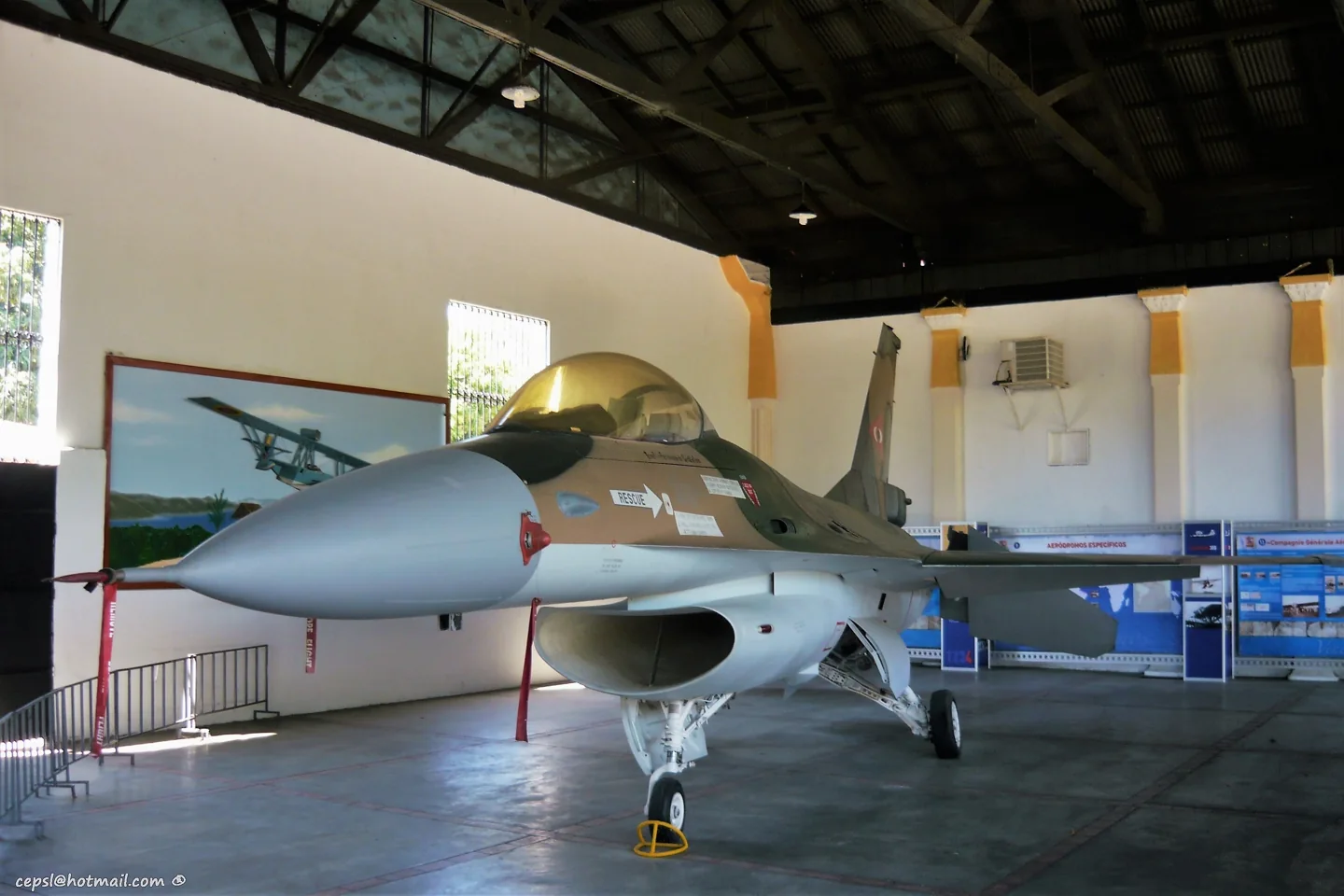
General Dynamics developed the F-16 around agility and a lightweight fighter brief. Its blended wing-body, fly-by-wire controls, side stick and bubble canopy were distinctive features of the design. Later versions took on a wider range of missions. The SC Designs product includes several modeled variants.
F-16 Fighting Falcon
Lockheed Martin · Read more ↗Meet F-16 Fighting Falcon
General Dynamics developed the F-16 around agility and a lightweight fighter brief. Its blended wing-body, fly-by-wire controls, side stick and bubble canopy were distinctive features of the design. Later versions took on a wider range of missions. The SC Designs product includes several modeled variants.
F-16 Fighting Falcon
General Dynamics → · Explore the family →
F-16 Fighting Falcon
Lockheed Martin · F-16 Fighting Falcon History ↗Aircraft type designators
No type designator selected for this reference.
History & design
The lightweight-fighter idea
The F-16 emerged from an early-1970s effort to favour speed and manoeuvrability over increasing fighter weight. General Dynamics developed the aircraft at Fort Worth; Lockheed acquired that business in 1993.
Lockheed Martin · F-16 development history ↗Manufacturer history
A broader mission set
During the 1980s, additional weapons and targeting systems expanded the Falcon’s role into strike and close air support. The family’s development explains why a model name alone does not identify its equipment standard.
Lockheed Martin · F-16 development history ↗Historical role development
Systems & details
The cockpit and control system were designed together
Lockheed describes a blended wing-body, fly-by-wire stability control, a reclined seat, side-mounted stick and bubble canopy. These features jointly support pilot visibility and control; the side-stick is not simply a relocated conventional control column.
Vertical modes in the SC Designs model
The SC Designs manual describes altitude hold, vertical-speed hold and flight-level-change modes in its simulator autopilot. Vertical-speed mode captures a selected altitude, while flight-level change varies climb or descent rate to maintain speed. In TRACK mode, the vertical-speed control becomes a flight-path-angle selection. These are the controls and interactions documented for this add-on; they should be read separately from the real F-16’s side-stick and flight-control-system characteristics.
In your simulator
Systems, equipment and documentation for each developer’s aircraft.
MSFS 2020 · MSFS 2024F-16 C, D and I Fighting Falcon
SC Designs · Released
F-16 C, D and I Fighting Falcon
SC Designs · Released
Manuals & resources
Find your next read
Choose a topic for a short introduction and a link to the original source. Simulator references identify the developer and edition they cover.
Developer documentation
SC Designs F-16 C, D and IF-16 C, D and I Fighting Falcon · MSFS 2020 · MSFS 2024
SC Designs lists F-16 C, D and I variants for MSFS 2020 and MSFS 2024.
Product listing captured 28 September 2026; MSFS 2020 and 2024
SC Designs / Just Flight · Read the source ↗Manual
SC Designs F-16 Fighting Falcons manualF-16 C, D and I Fighting Falcon · MSFS 2020 · MSFS 2024
SC Designs documents fly-by-wire envelope limiting and automatic trim above 185 knots, with manual landing trim.
Manual captured 28 September 2026; flight controls and trim
SC Designs / Just Flight · Read the source ↗Read the original documentation from the people who created it. Manuals open on their publisher’s website.
Manual
SC Designs F-16 Fighting Falcons manualSC Designs / Just Flight · Manual captured 28 September 2026; flight controls and trimManufacturer aircraft history
F-16 Fighting Falcon HistoryLockheed Martin · Manufacturer history captured 29 September 2026; General Dynamics design, fly-by-wire and multirole evolutionDeveloper documentation
SC Designs F-16 C, D and ISC Designs / Just Flight · Product listing captured 28 September 2026; MSFS 2020 and 2024Aircraft reference
F-16 Fighting Falcon fact sheetUS Air Force · USAF F-16C/D summary dated September 2021; block-specific limits varyBuilt-in force-feedback profiles
Read the documentary basis, editable starting settings and remaining questions for the aircraft you fly. Each explanation refers to the exact profile revision shown.
Catalogue programme-20261022-v1 · 3 profile choices
DeltaWing Simulations F-16C Block 52+
DeltaWing Simulations · Free and Pro · Revision 1 · Inherited starting point
X-Plane 12
A General Dynamics lightweight-fighter design that evolved into a multirole aircraft.
DeltaWing Simulations F-16D Block 52+
DeltaWing Simulations · Free and Pro · Revision 1 · Inherited starting point
X-Plane 12
A General Dynamics lightweight-fighter design that evolved into a multirole aircraft.
SC Designs F-16 C / D / I Fighting Falcon
SC Designs · Free and Pro · Revision 1 · Inherited starting point
MSFS 2020 · MSFS 2024
A General Dynamics lightweight-fighter design that evolved into a multirole aircraft.
SC Designs F-16 C / D / I Fighting Falcon
A General Dynamics lightweight-fighter design that evolved into a multirole aircraft.
Aircraft and simulator scope
- SC Designs F-16 C / D / I Fighting Falcon · SC Designs · MSFS 2020 · Add-on starting point
- SC Designs F-16 C / D / I Fighting Falcon · SC Designs · MSFS 2024 · Add-on starting point
The simulator model and controls
SC Designs F-16 C / D / I Fighting Falcon is the selected SC Designs configuration.
How this profile feels
The spring stays independent of airspeed. Directed aerodynamic loading is omitted.
Pitch-trim relief is off. Autopilot following is off.
Aircraft and configuration
General Dynamics developed the F-16 around agility and a lightweight fighter brief. Its blended wing-body, fly-by-wire controls, side stick and bubble canopy were distinctive features of the design. Later versions took on a wider range of missions. The SC Designs product includes several modeled variants.
About the values
Strengths are normalized hardware-feel settings. They set the effect balance; hand force depends on the device and its limits. The IAS reference is a tuning value.
Documentary review and sources
These decisions describe the documentary basis and remaining gaps for this revision. Aircraft documentation and a starting setting describe different kinds of evidence.
Aircraft and variant
InheritedSC Designs F-16 C / D / I Fighting Falcon is the selected SC Designs configuration.
Flight controls
InheritedA General Dynamics lightweight-fighter design that evolved into a multirole aircraft.
Trim
InheritedThe profile uses the trim behaviour configured below. Pitch relief is off, with stored authority 0; roll authority is 0.
Autopilot and stability
InheritedAutopilot following is off; the configured spring and load retain the hardware feel.
Equipment
InheritedGeneral Dynamics developed the F-16 around agility and a lightweight fighter brief. Its blended wing-body, fly-by-wire controls, side stick and bubble canopy were distinctive features of the design. Later versions took on a wider range of missions. The SC Designs product includes several modeled variants.
Speeds and limits
InheritedThe indicated-speed references set the profile response scale; they are separate from aircraft operating limits.
Simulator integration
InheritedThe profile targets msfs2020, msfs2024. Add-on-specific controls use only the supported references configured by this profile.
Force-feedback settings
InheritedThe settings define the profile’s effect balance. Device output limits affect physical hand force.
Starting settings and their rationale
These configured values are starting estimates. The explanations describe what each setting controls; physical validation appears separately below.
| Setting | Starting value | What it controls and why |
|---|---|---|
| Spring strength | Starting value0.56 | What it controls and whyThis profile uses electronic-control centering for F-16 Fighting Falcon. The baseline spring is 0.56. Low-speed spring blending is off. |
| Master force gain | Starting value0.8 | What it controls and whyScales overall profile strength while preserving effect balance, subject to device and output limits. |
| Profile force gain | Starting value0 | What it controls and whyThe stored 0 aerodynamic-load gain is inactive under the fixed-centre control law. |
| Force tuning speed/reference | Starting value250 kt | What it controls and whySets the IAS reference for aerodynamic loading. It is an estimate, not published cruise TAS or a flight limit. |
| Spring response reference speed | Starting value65 kt | What it controls and whySets the IAS where the low-speed blend reaches baseline strength; high-speed stiffening also uses it. |
| Aileron force scale | Starting value0.7 | What it controls and whyRoll and pitch aerodynamic scales are 0.7 and 0.86, respectively. These stored weights do not create directed aerodynamic loading while that term is inactive. No custom spring-travel curve is enabled. |
| Elevator force scale | Starting value0.86 | What it controls and whyScales pitch aerodynamic loading; pitch spring travel and trim responses are separate settings. |
| Trim feel | Starting valueDisabled | What it controls and whyRetained for compatibility and group membership. Trim relief, rather than this flag, controls centre movement. |
| Trim relief | Starting valueDisabled | What it controls and whyAllows trim relief with supported control law and valid telemetry. Axis authorities set its amount. |
| Autopilot follow | Starting valueDisabled | What it controls and whyAutopilot following is off; the configured spring and load retain the hardware feel. |
| Autopilot neutral hold | Starting valueDisabled | What it controls and whyPermits centering hold during a supported AP state, separate from following a moving target. |
| Output force limit | Starting value0.55 | What it controls and whyCaps directed-force output. Native spring effects and device limits remain separate. |
All 44 starting settings and their rationale
The settings define the profile’s effect balance. Device output limits affect physical hand force.
| Setting | Starting value | What it controls and why |
|---|---|---|
| Spring strength | Starting value0.56 | What it controls and whyThis profile uses electronic-control centering for F-16 Fighting Falcon. The baseline spring is 0.56. Low-speed spring blending is off. |
| Spring deadband | Starting value0.04 | What it controls and whySets travel around the centre before the baseline spring resists. Smaller values engage it sooner. |
| Profile force gain | Starting value0 | What it controls and whyThe stored 0 aerodynamic-load gain is inactive under the fixed-centre control law. |
| Master force gain | Starting value0.8 | What it controls and whyScales overall profile strength while preserving effect balance, subject to device and output limits. |
| QBlend Enabled | Starting valueDisabled | What it controls and whyAllows baseline spring strength to rise with indicated airspeed where the control law permits it. |
| QSpring Minimum Factor | Starting value0.55 | What it controls and whySets low-speed spring strength as a fraction of baseline when blending is enabled. One keeps full strength. |
| QSpring Start Knots | Starting value8 kt | What it controls and whySets the IAS where the low-speed spring blend starts rising. This is a feel threshold, not a flight limit. |
| Spring response reference speed | Starting value65 kt | What it controls and whySets the IAS where the low-speed blend reaches baseline strength; high-speed stiffening also uses it. |
| Force tuning speed/reference | Starting value250 kt | What it controls and whySets the IAS reference for aerodynamic loading. It is an estimate, not published cruise TAS or a flight limit. |
| Airspeed spring stiffening gain | Starting value0 | What it controls and whyAdds permitted spring resistance above the full-blend speed. Zero removes this high-speed increase. |
| Airspeed spring stiffening limit | Starting value2 | What it controls and whyLimits the squared airspeed ratio used for high-speed spring stiffening; it is not a device-force cap. |
| Aileron force scale | Starting value0.7 | What it controls and whyRoll and pitch aerodynamic scales are 0.7 and 0.86, respectively. These stored weights do not create directed aerodynamic loading while that term is inactive. No custom spring-travel curve is enabled. |
| Elevator force scale | Starting value0.86 | What it controls and whyScales pitch aerodynamic loading; pitch spring travel and trim responses are separate settings. |
| Output force limit | Starting value0.55 | What it controls and whyCaps directed-force output. Native spring effects and device limits remain separate. |
| Trim feel | Starting valueDisabled | What it controls and whyRetained for compatibility and group membership. Trim relief, rather than this flag, controls centre movement. |
| Trim relief | Starting valueDisabled | What it controls and whyAllows trim relief with supported control law and valid telemetry. Axis authorities set its amount. |
| Elevator Authority | Starting value0 | What it controls and whyThe profile uses the trim behaviour configured below. Pitch relief is off, with stored authority 0; roll authority is 0. |
| Aileron Authority | Starting value0 | What it controls and whyScales supported roll-trim relief and permitted centre movement. Zero removes roll response. |
| Force Trim Enabled | Starting valueDisabled | What it controls and whyEnables local force trim, separate from aircraft-owned trim and add-on integration qualification. |
| GLoad Enabled | Starting valueDisabled | What it controls and whyAllows load-factor changes to modify permitted spring laws. Passive fly-by-wire feel can suppress it. |
| Rate Damping Enabled | Starting valueDisabled | What it controls and whyEnables rate damping with the configured coefficients and control law. |
| Autopilot follow | Starting valueDisabled | What it controls and whyAutopilot following is off; the configured spring and load retain the hardware feel. |
| Autopilot follow authority | Starting value0.1 | What it controls and whySets admitted AP-follow gain, not a percentage of travel. Runtime ownership and input limits still apply. |
| Autopilot neutral hold | Starting valueDisabled | What it controls and whyPermits centering hold during a supported AP state, separate from following a moving target. |
| Autopilot neutral hold strength | Starting value0.6 | What it controls and whySets admitted AP neutral-hold strength; inactive while neutral hold is disabled. |
| Enabled | Starting valueEnabled | What it controls and whyEnables aerodynamic cues; each still needs nonzero strength and its simulator conditions. |
| Gain | Starting value0 | What it controls and whySets stall-buffet strength. Zero removes the cue without changing simulator stalls or warnings. |
| Gain | Starting value0 | What it controls and whySets high-Mach buffet strength; onset and full-strength thresholds are separate. |
| Gain | Starting value0 | What it controls and whySets flap buffet at the configured position and speed gates. Flap movement texture is separate. |
| Maximum flap index | Starting value3 | What it controls and whySets the final flap index for detent normalization. UP plus three detents uses maximum index3. |
| Minimum flap index | Starting value2 | What it controls and whySets the first flap detent that admits buffet; this is a handle index, not degrees. |
| Gain | Starting value0 | What it controls and whySets gear aerodynamic buffet; movement and ground-contact cues are separate. |
| Shaker Enabled | Starting valueDisabled | What it controls and whyPermits shaker at supported warning conditions; the switch does not establish aircraft equipment. |
| Stick shaker amplitude | Starting value0.5 | What it controls and whySets triggered shaker strength; inactive while the shaker feature is disabled. |
| Enabled | Starting valueEnabled | What it controls and whyEnables ground effects; each still needs its own strength and contact or motion telemetry. |
| Gain | Starting value0.24 | What it controls and whySets rolling texture strength, modified by speed, surface and undercarriage configuration. |
| Gain | Starting value0.18 | What it controls and whySets gear-bump texture during ground motion, separate from touchdown impact. |
| Gain | Starting value0.32 | What it controls and whySets landing-impact strength; landing telemetry and response shape determine the pulse. |
| Gain | Starting value0 | What it controls and whySets reverse-thrust vibration with valid reverser and engine conditions. Zero removes the cue. |
| Enabled | Starting valueDisabled | What it controls and whyEnables engine cues with nonzero settings and valid running-engine telemetry. |
| Gain | Starting value0 | What it controls and whySets estimated engine vibration using configured telemetry and response, not measured cockpit vibration. |
| Enabled | Starting valueEnabled | What it controls and whyEnables accessory cues with configured strengths and observed accessory movement. |
| Gain | Starting value0 | What it controls and whySets texture from observed flap movement; a command without movement does not establish the cue. |
| Gain | Starting value0.025 | What it controls and whySets texture from observed gear movement, separate from aerodynamic and touchdown effects. |
Limits and open questions
- Documentary starting point; installed-title capture and physical force acceptance are pending.
- Force amplitudes and tuning references are engineering estimates, not measured hand forces.
- No verified add-on servo-target or hydraulic-failure interface; autopilot following and hydraulic-loss forces remain off.
- Manufacturer/developer-qualified title matching is proposed from product identity; unidentified titles do not claim this edition.
- The legacy manual contains an F-16A cockpit label while the current store identifies C/D/I; current model identity follows the store, not that label.
- No force-sensing input or automatic control-law limit recreation is supplied.
Physical validation
No physical force validation is recorded in this public catalogue for this revision. Documentary review and software checks do not establish how a particular device feels.
Discuss this aircraft (0)
Questions, observations and useful sources from the community.
No published discussions yet. Bring a question or share a useful source.
Open aircraft discussions →Content expanded · What’s new
Something missing or a source that needs attention?
Suggest a correction ↗