
Start here
A few places to begin, from the aircraft’s story to the people who fly it.
Meet the aircraft
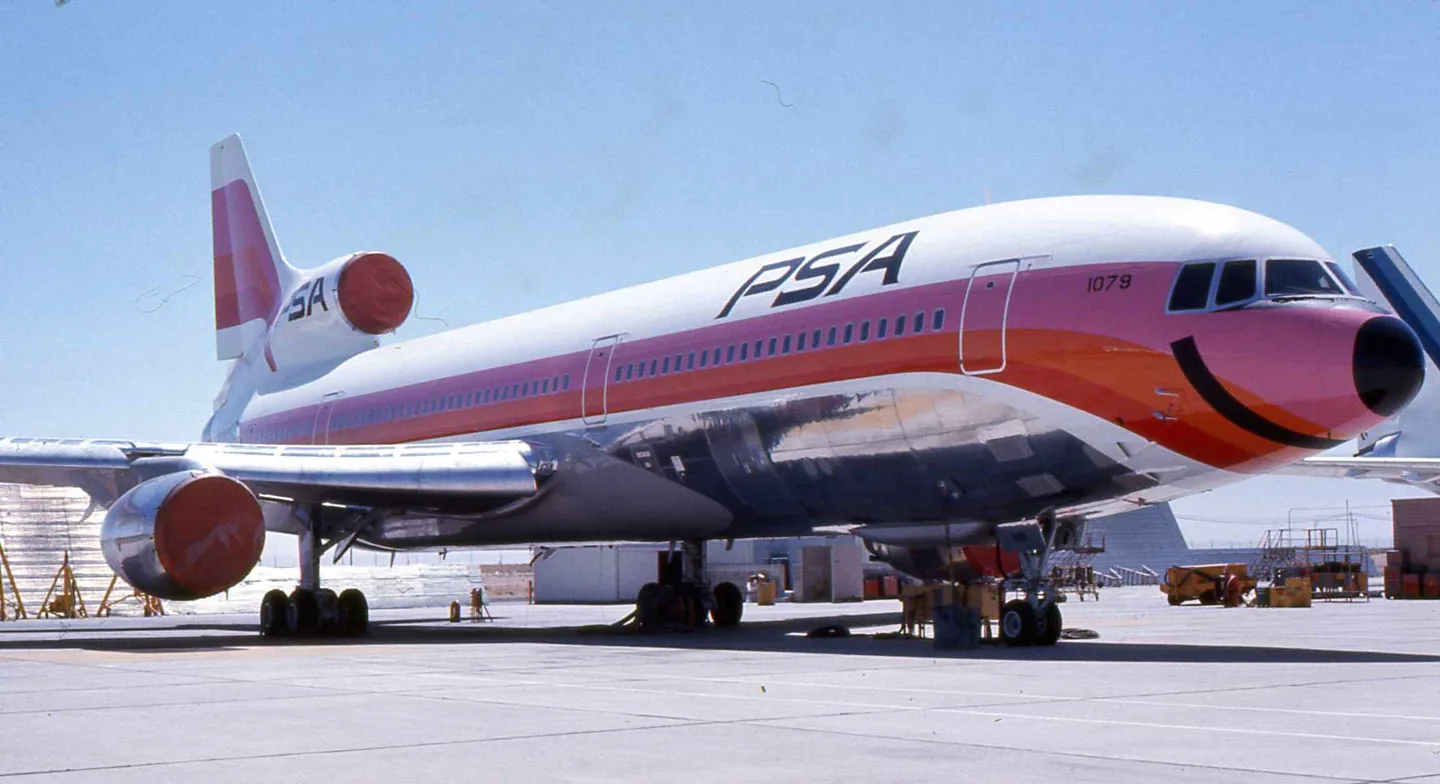
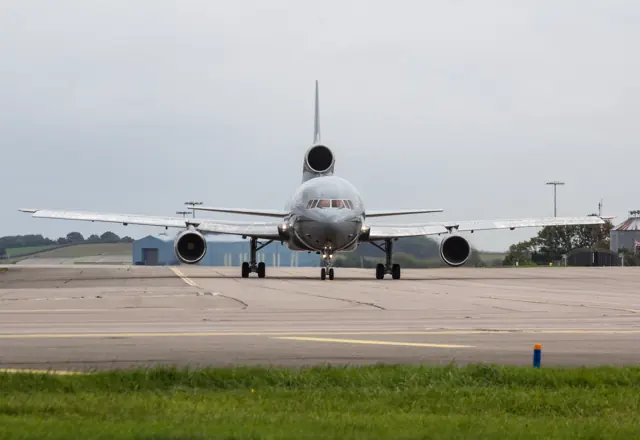
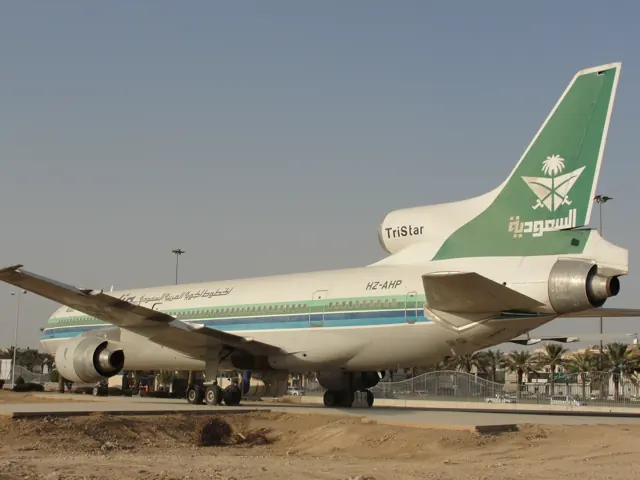
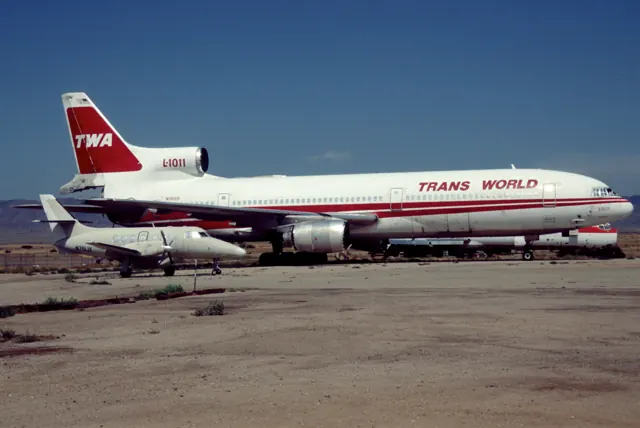
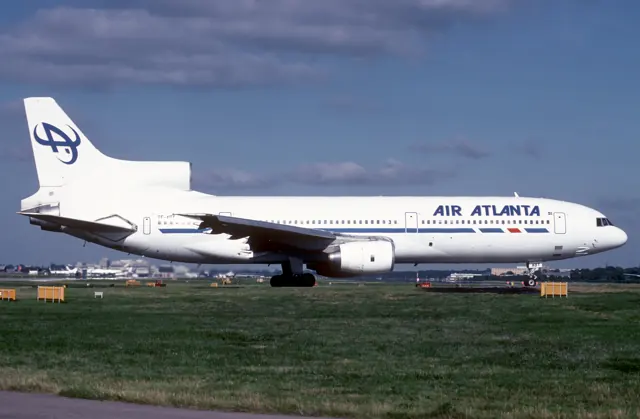
The L-1011 TriStar followed the Boeing 747 and DC-10 into the wide-body airliner market. Three Rolls-Royce RB211 engines power it, with the centre engine fed through an S-shaped intake above the rear fuselage. The design included automatic landing and descent-control capability. Cabin layouts and range vary by TriStar version.
Aircraft background
Wikipedia contributors · Read more ↗Letters to Lockheed begin a lifelong attachment
As a teenager, Barnard watched airliners at the airport and wrote to Lockheed about the TriStar. A secretary’s replies and the drawings she sent gave that fascination a personal connection with the manufacturer. The aircraft became something he hoped to fly, long before a cockpit job was within reach. Years later, an American Trans Air interview produced the unexpected offer of an L-1011 copilot position.
World Airline Historical Society · April 2022. Personal retrospective covering childhood fascination and later American Trans Air L-1011 employment.
World Airline Historical Society · Read more ↗The virtual engineer can complete a flow or one system
In the Paper Flight Bag, AUTOCOMPLETE finishes the full flow; COMPLETE configures only the selected system. Expanded lists show red or green setup status.
TriStar Airliner · iniBuilds · MSFS 2024
iniBuilds · Read more ↗Into the cockpit
 YouTube
Just Planes · 10 min ·
Cockpit LOCKHEED L1011-500 Tristar (2001)
A 2001 cockpit film from transatlantic flights in a YES Air L-1011-500.
Real aircraft · Lockheed L-1011 TriStar
Watch on YouTube ↗Preview images are served by AirframeDB. Videos open on YouTube only when you choose to watch.
Meet Lockheed L-1011 TriStar
The L-1011 TriStar followed the Boeing 747 and DC-10 into the wide-body airliner market. Three Rolls-Royce RB211 engines power it, with the centre engine fed through an S-shaped intake above the rear fuselage. The design included automatic landing and descent-control capability. Cabin layouts and range vary by TriStar version.
Lockheed L-1011 TriStar
Lockheed → · Explore the family →
Lockheed L-1011 TriStar
Wikipedia contributors · Lockheed L-1011 TriStar ↗L-1011-500
iniBuilds · iniBuilds Aircraft Development Update - December 2025 - iniBuilds Announcements - iniBuilds Forum ↗iniBuilds · MSFS 2024 →TriStar POD configuration
iniBuilds · iniBuilds Aircraft Development Update - December 2025 - iniBuilds Announcements - iniBuilds Forum ↗iniBuilds · MSFS 2024 →Aircraft type designators
Use the code for the model you are flying. The linked authority lists the applicable aircraft.
History & design
The final production airframe has its own farewell
Barnard identifies N389LS as TriStar production serial 250, formerly used by the Saudi royal flight. He recalls ferrying it from Riyadh to Ras Al Khaimah on 15 December 2009, a later chapter in that particular aircraft’s life.
World Airline Historical Society · TriStar and Me ↗Pilot retrospective; this was not the final flight of the type worldwide
Development milestones
First flight: November 16, 1970
Wikipedia contributors · Lockheed L-1011 TriStar ↗Lockheed L-1011 TriStar · family/variant named by the source · Wikipedia revision 1374067098
Pilot accounts
Letters to Lockheed begin a lifelong attachment
As a teenager, Barnard watched airliners at the airport and wrote to Lockheed about the TriStar. A secretary’s replies and the drawings she sent gave that fascination a personal connection with the manufacturer. The aircraft became something he hoped to fly, long before a cockpit job was within reach.
Years later, an American Trans Air interview produced the unexpected offer of an L-1011 copilot position. He had anticipated a different assignment, making the news especially powerful. Calling his mother brought the achievement back to the family who had known the ambition; his father had already died.
World Airline Historical Society · April 2022. Personal retrospective covering childhood fascination and later American Trans Air L-1011 employment.
Read the full account · World Airline Historical Society ↗A difficult course gives way to delight in the real aircraft
Dater found TriStar captain training deeply unsettling. Paper cockpit panels and explanations of switches and lights left him struggling to assemble a clear picture of the aircraft, while the pressure of the course added to his doubts. He eventually passed the oral and simulator work, but confidence did not arrive with every item checked off.
Flying the real aircraft changed his view within minutes of departure. On the Miami-to-San Juan training trip, he found the TriStar far more approachable than its classroom presentation had suggested. His later account remembers the relief and pleasure of that transition.
Clipper Pioneers newsletter · September 2015. Recollection of Pan Am L-1011 captain training around 1981, after eight years as a 747 copilot.
Read the full account · Clipper Pioneers newsletter ↗A base closure leads to an aircraft worth remembering
After a decade on the 727 in Chicago, Hill faced a base closure and a commute to New York. His new seniority position brought the chance to move to the L-1011, whose automation became a source of lasting enthusiasm. He particularly enjoyed showing colleagues what the automatic landing system could do during good-weather demonstrations.
One working day stood out for a different reason: the journey from New York through Frankfurt to Munich required two very low-visibility approaches. At Munich, the fog left only the tip of a nearby 747’s tail visible above it.
Air Facts Journal · June 2023. TWA pilot’s retrospective; selected first-person material read in the primary article’s indexed text after direct retrieval failed.
Read the full account · Air Facts Journal ↗In your simulator
Systems, equipment and documentation for each developer’s aircraft.
MSFS 2024TriStar Airliner
iniBuilds · Released
TriStar Airliner
iniBuilds · Released
Manuals & resources
Find your next read
Choose a topic for a short introduction and a link to the original source. Simulator references identify the developer and edition they cover.
Simulator documentation
The virtual engineer can complete a flow or one systemTriStar Airliner · iniBuilds · MSFS 2024
In the Paper Flight Bag, AUTOCOMPLETE finishes the full flow; COMPLETE configures only the selected system. Expanded lists show red or green setup status.
iniBuilds MSFS 2024 manual v1.0 · 23 March 2026, PDF p.15
iniBuilds · Read the source ↗The loadsheet separates people, cargo and fuelTriStar Airliner · iniBuilds · MSFS 2024
The PFB loadsheet accepts SimBrief weights and provides passenger, cargo-compartment and individual fuel-tank loading controls.
Manual v1.0, PDF p.21
iniBuilds · Read the source ↗Checklist depth is a user choiceTriStar Airliner · iniBuilds · MSFS 2024
Standard checklists cover essential operation while omitting system tests. Expert checklists retain the more complete checks.
Manual v1.0, PDF p.6
iniBuilds · Read the source ↗Released product and variantsTriStar Airliner · iniBuilds · MSFS 2024
The released TriStar models the L-1011-500 with a full flight-engineer station, triple inertial navigation, Performance Management System and Direct Lift Control. The package includes a POD variant. Its optional lower-deck lounge is an imagined retrofit to the -500, as the developer explains.
Official developer / designated-store reference · checked 2026-09-14
iniBuilds · Read the source ↗Throttle calibration starts with the right axis assignmentTriStar Airliner · iniBuilds · MSFS 2024
Select the number of throttle axes in the PFB calibration page. The manual warns against MSFS throttle assignments labelled “(0 to 100%)”.
Manual v1.0, PDF p.18; controller setup described by the developer
iniBuilds · Read the source ↗Parking-brake behaviour is selectableTriStar Airliner · iniBuilds · MSFS 2024
Realistic mode requires brake pressure before engaging the lever and pedal pressure to release. With that option disabled, the lever toggles the brake directly.
Manual v1.0, PDF p.17
iniBuilds · Read the source ↗Pilot account
Letters to Lockheed begin a lifelong attachmentWorld Airline Historical Society · April 2022. Personal retrospective covering childhood fascination and later American Trans Air L-1011 employment.
As a teenager, Barnard watched airliners at the airport and wrote to Lockheed about the TriStar. A secretary’s replies and the drawings she sent gave that fascination a personal connection with the manufacturer. The aircraft became something he hoped to fly, long before a cockpit job was within reach. Years later, an American Trans Air interview produced the unexpected offer of an L-1011 copilot position. He had anticipated a different assignment, making the news especially powerful.
Mark Barnard
World Airline Historical Society · Read the source ↗A difficult course gives way to delight in the real aircraftClipper Pioneers newsletter · September 2015. Recollection of Pan Am L-1011 captain training around 1981, after eight years as a 747 copilot.
Dater found TriStar captain training deeply unsettling. Paper cockpit panels and explanations of switches and lights left him struggling to assemble a clear picture of the aircraft, while the pressure of the course added to his doubts. He eventually passed the oral and simulator work, but confidence did not arrive with every item checked off. Flying the real aircraft changed his view within minutes of departure.
Michael “Mike” Dater
Clipper Pioneers newsletter · Read the source ↗Read the original documentation from the people who created it. Manuals open on their publisher’s website.
Aircraft background
Lockheed L-1011 TriStarWikipedia contributors · Research background · retrieved 2026-09-12Product
TriStar Airliner for MSFS-2024iniBuilds · Official developer / designated store catalogue · checked 2026-09-12Developer documentation
L-1011 TriStar ManualiniBuilds · MSFS 2024 · version 1.0, 23 March 2026; public developer attachment iniBuilds Aircraft Development Update - December 2025 - iniBuilds Announcements - iniBuilds ForuminiBuilds · Official developer / designated-store reference · checked 2026-09-14Type designator
ICAO Doc 8643 — aircraft type designatorsInternational Civil Aviation Organization · Public search data retrieved 2026-09-14; authority update 2026-09-03Built-in force-feedback profiles
Read the documentary basis, editable starting settings and remaining questions for the aircraft you fly. Each explanation refers to the exact profile revision shown.
Catalogue programme-20261022-v1 · 3 profile choices
iniBuilds L-1011 TriStar
iniBuilds · Free and Pro · Revision 2 · Inherited starting point
MSFS 2024
iniBuilds L-1011 TriStar: Mach feel motivates a powered-control resistance approximation.
iniBuilds L-1011 TriStar POD
iniBuilds · Free and Pro · Revision 2 · Inherited starting point
MSFS 2024
iniBuilds L-1011 TriStar POD: Mach feel motivates a powered-control resistance approximation.
Lockheed L-1011 TriStar
Free and Pro · Revision 1 · Partial review
MSFS 2024
Lockheed L-1011 TriStar: Mach feel motivates a powered-control resistance approximation.
iniBuilds L-1011 TriStar POD
iniBuilds L-1011 TriStar POD: Mach feel motivates a powered-control resistance approximation.
Aircraft and simulator scope
- iniBuilds L-1011 TriStar POD · iniBuilds · MSFS 2024 · Add-on starting point
The simulator model and controls
The L-1011 TriStar followed the Boeing 747 and DC-10 into the wide-body airliner market. Three Rolls-Royce RB211 engines power it, with the centre engine fed through an S-shaped intake above the rear fuselage. The design included automatic landing and descent-control capability. Cabin layouts and range vary by TriStar version.
This profile selects iniBuilds L-1011 TriStar POD for MSFS 2024.
How this profile feels
Mach feel motivates a powered-control resistance approximation. Spring resistance builds with the selected airspeed response. A separate aerodynamic term adds speed-dependent control load.
Autotrim and CWS alter aircraft state independently of mode-button labels. Pitch-trim relief is off. Autopilot following is off.
Controls and trim
The TriStar column commands a hydraulic stabilizer, with elevators cable-linked to its movement. Mach feel supplies artificial force. CWS holds attitude with autotrim, while CMD tracks selected modes; a CMD disconnect can return to CWS. DLC changes spoiler lift at landing configuration.
The selected implementation
The POD changes weight/aerodynamics and has separate reduced-thrust, approach and autoland restrictions.
About the values
The gains are normalized profile settings. They describe the chosen effect balance; hand force depends on the device and its output limits. IAS references are tuning values rather than operating limits. Physical acceptance of this revision remains pending.
Documentary review and sources
These decisions describe the documentary basis and remaining gaps for this revision. Aircraft documentation and a starting setting describe different kinds of evidence.
Aircraft and variant
InheritedThis profile selects iniBuilds L-1011 TriStar POD for MSFS 2024.
Flight controls
InheritedThe TriStar column commands a hydraulic stabilizer, with elevators cable-linked to its movement. Mach feel supplies artificial force. CWS holds attitude with autotrim, while CMD tracks selected modes; a CMD disconnect can return to CWS. DLC changes spoiler lift at landing configuration.
Trim
InheritedAutotrim and CWS alter aircraft state independently of mode-button labels. Pitch relief is off, with stored authority 0; roll authority is 0.
Autopilot and stability
InheritedAutopilot following is off; the configured spring and load retain the hardware feel.
Equipment
InheritedThe POD changes weight/aerodynamics and has separate reduced-thrust, approach and autoland restrictions.
Speeds and limits
InheritedThe indicated-speed references set the profile response scale; they are separate from aircraft operating limits.
Simulator integration
InheritedThe profile targets msfs2024. Add-on-specific controls use only the supported references configured by this profile.
Force-feedback settings
InheritedThe settings define the profile’s effect balance. Device output limits affect physical hand force.
Starting settings and their rationale
These configured values are starting estimates. The explanations describe what each setting controls; physical validation appears separately below.
| Setting | Starting value | What it controls and why |
|---|---|---|
| Spring strength | Starting value0.8 | What it controls and whyMach feel motivates a powered-control resistance approximation. The baseline spring is 0.8. Its low-speed blend reaches baseline strength at 110 KIAS. |
| Master force gain | Starting value0.85 | What it controls and whyScales overall profile strength while preserving effect balance, subject to device and output limits. |
| Profile force gain | Starting value0.25 | What it controls and whyThe aerodynamic-load gain is 0.25 with an indicated-speed reference of 250 KIAS. The hydraulic-load factor of 0.35 scales that modeled term; it is a selected artificial-feel approximation. |
| Force tuning speed/reference | Starting value250 kt | What it controls and whySets the IAS reference for aerodynamic loading. It is an estimate, not published cruise TAS or a flight limit. |
| Spring response reference speed | Starting value110 kt | What it controls and whySets the IAS where the low-speed blend reaches baseline strength; high-speed stiffening also uses it. |
| Aileron force scale | Starting value0.72 | What it controls and whyRoll and pitch aerodynamic scales are 0.72 and 0.85, respectively. They set the aerodynamic axis balance. No custom spring-travel curve is enabled. |
| Elevator force scale | Starting value0.85 | What it controls and whyScales pitch aerodynamic loading; pitch spring travel and trim responses are separate settings. |
| Trim feel | Starting valueDisabled | What it controls and whyRetained for compatibility and group membership. Trim relief, rather than this flag, controls centre movement. |
| Trim relief | Starting valueDisabled | What it controls and whyAllows trim relief with supported control law and valid telemetry. Axis authorities set its amount. |
| Autopilot follow | Starting valueDisabled | What it controls and whyAutopilot following is off; the configured spring and load retain the hardware feel. |
| Autopilot neutral hold | Starting valueDisabled | What it controls and whyPermits centering hold during a supported AP state, separate from following a moving target. |
| Output force limit | Starting value0.55 | What it controls and whyCaps directed-force output. Native spring effects and device limits remain separate. |
All 44 starting settings and their rationale
The settings define the profile’s effect balance. Device output limits affect physical hand force.
| Setting | Starting value | What it controls and why |
|---|---|---|
| Spring strength | Starting value0.8 | What it controls and whyMach feel motivates a powered-control resistance approximation. The baseline spring is 0.8. Its low-speed blend reaches baseline strength at 110 KIAS. |
| Spring deadband | Starting value0.04 | What it controls and whySets travel around the centre before the baseline spring resists. Smaller values engage it sooner. |
| Profile force gain | Starting value0.25 | What it controls and whyThe aerodynamic-load gain is 0.25 with an indicated-speed reference of 250 KIAS. The hydraulic-load factor of 0.35 scales that modeled term; it is a selected artificial-feel approximation. |
| Master force gain | Starting value0.85 | What it controls and whyScales overall profile strength while preserving effect balance, subject to device and output limits. |
| QBlend Enabled | Starting valueEnabled | What it controls and whyAllows baseline spring strength to rise with indicated airspeed where the control law permits it. |
| QSpring Minimum Factor | Starting value0.55 | What it controls and whySets low-speed spring strength as a fraction of baseline when blending is enabled. One keeps full strength. |
| QSpring Start Knots | Starting value35 kt | What it controls and whySets the IAS where the low-speed spring blend starts rising. This is a feel threshold, not a flight limit. |
| Spring response reference speed | Starting value110 kt | What it controls and whySets the IAS where the low-speed blend reaches baseline strength; high-speed stiffening also uses it. |
| Force tuning speed/reference | Starting value250 kt | What it controls and whySets the IAS reference for aerodynamic loading. It is an estimate, not published cruise TAS or a flight limit. |
| Airspeed spring stiffening gain | Starting value0 | What it controls and whyThe high-speed spring-stiffening gain is 0. No additional speed-driven stiffening is added; this does not disable independent aerodynamic loading. |
| Airspeed spring stiffening limit | Starting value5 | What it controls and whyLimits the squared airspeed ratio used for high-speed spring stiffening; it is not a device-force cap. |
| Aileron force scale | Starting value0.72 | What it controls and whyRoll and pitch aerodynamic scales are 0.72 and 0.85, respectively. They set the aerodynamic axis balance. No custom spring-travel curve is enabled. |
| Elevator force scale | Starting value0.85 | What it controls and whyScales pitch aerodynamic loading; pitch spring travel and trim responses are separate settings. |
| Output force limit | Starting value0.55 | What it controls and whyCaps directed-force output. Native spring effects and device limits remain separate. |
| Trim feel | Starting valueDisabled | What it controls and whyRetained for compatibility and group membership. Trim relief, rather than this flag, controls centre movement. |
| Trim relief | Starting valueDisabled | What it controls and whyAllows trim relief with supported control law and valid telemetry. Axis authorities set its amount. |
| Elevator Authority | Starting value0 | What it controls and whyAutotrim and CWS alter aircraft state independently of mode-button labels. Pitch relief is off, with stored authority 0; roll authority is 0. |
| Aileron Authority | Starting value0 | What it controls and whyScales supported roll-trim relief and permitted centre movement. Zero removes roll response. |
| Force Trim Enabled | Starting valueDisabled | What it controls and whyEnables local force trim, separate from aircraft-owned trim and add-on integration qualification. |
| GLoad Enabled | Starting valueEnabled | What it controls and whyAllows load-factor changes to modify permitted spring laws. Passive fly-by-wire feel can suppress it. |
| Rate Damping Enabled | Starting valueEnabled | What it controls and whyEnables rate damping with the configured coefficients and control law. |
| Autopilot follow | Starting valueDisabled | What it controls and whyAutopilot following is off; the configured spring and load retain the hardware feel. |
| Autopilot follow authority | Starting value0.1 | What it controls and whySets admitted AP-follow gain, not a percentage of travel. Runtime ownership and input limits still apply. |
| Autopilot neutral hold | Starting valueDisabled | What it controls and whyPermits centering hold during a supported AP state, separate from following a moving target. |
| Autopilot neutral hold strength | Starting value0.6 | What it controls and whySets admitted AP neutral-hold strength; inactive while neutral hold is disabled. |
| Enabled | Starting valueEnabled | What it controls and whyEnables aerodynamic cues; each still needs nonzero strength and its simulator conditions. |
| Gain | Starting value0.3 | What it controls and whySets stall-buffet strength. Zero removes the cue without changing simulator stalls or warnings. |
| Gain | Starting value0 | What it controls and whySets high-Mach buffet strength; onset and full-strength thresholds are separate. |
| Gain | Starting value0 | What it controls and whySets flap buffet at the configured position and speed gates. Flap movement texture is separate. |
| Maximum flap index | Starting value5 | What it controls and whySets the final flap index for detent normalization. UP plus three detents uses maximum index3. |
| Minimum flap index | Starting value2 | What it controls and whySets the first flap detent that admits buffet; this is a handle index, not degrees. |
| Gain | Starting value0 | What it controls and whySets gear aerodynamic buffet; movement and ground-contact cues are separate. |
| Shaker Enabled | Starting valueDisabled | What it controls and whyPermits shaker at supported warning conditions; the switch does not establish aircraft equipment. |
| Stick shaker amplitude | Starting value0.9 | What it controls and whySets triggered shaker strength; inactive while the shaker feature is disabled. |
| Enabled | Starting valueEnabled | What it controls and whyEnables ground effects; each still needs its own strength and contact or motion telemetry. |
| Gain | Starting value0.4 | What it controls and whySets rolling texture strength, modified by speed, surface and undercarriage configuration. |
| Gain | Starting value0.32 | What it controls and whySets gear-bump texture during ground motion, separate from touchdown impact. |
| Gain | Starting value0.9 | What it controls and whySets landing-impact strength; landing telemetry and response shape determine the pulse. |
| Gain | Starting value0.5 | What it controls and whySets reverse-thrust vibration with valid reverser and engine conditions. Zero removes the cue. |
| Enabled | Starting valueEnabled | What it controls and whyEnables engine cues with nonzero settings and valid running-engine telemetry. |
| Gain | Starting value0.06 | What it controls and whySets estimated engine vibration using configured telemetry and response, not measured cockpit vibration. |
| Enabled | Starting valueEnabled | What it controls and whyEnables accessory cues with configured strengths and observed accessory movement. |
| Gain | Starting value0.12 | What it controls and whySets texture from observed flap movement; a command without movement does not establish the cue. |
| Gain | Starting value0.12 | What it controls and whySets texture from observed gear movement, separate from aerodynamic and touchdown effects. |
Limits and open questions
- Force amplitudes, curves and speed references are engineering estimates. Installed-product and physical acceptance remain deferred.
- Exact Mach-feel, powered trim neutral, shaker and AP servo interfaces remain unqualified; no CWS/ACS/DLC surface following.
- POD changes the simulator flight model and limits, but no evidence establishes a different hand-force law. Standard/POD share force settings.
- Operations Pack is an announced product, not a released or covered variant.
Physical validation
No physical force validation is recorded in this public catalogue for this revision. Documentary review and software checks do not establish how a particular device feels.
Discuss this aircraft (0)
Questions, observations and useful sources from the community.
No published discussions yet. Bring a question or share a useful source.
Open aircraft discussions →Content expanded · What’s new
Something missing or a source that needs attention?
Suggest a correction ↗