


Start here
A few places to begin, from the aircraft’s story to the people who fly it.
Meet the aircraft
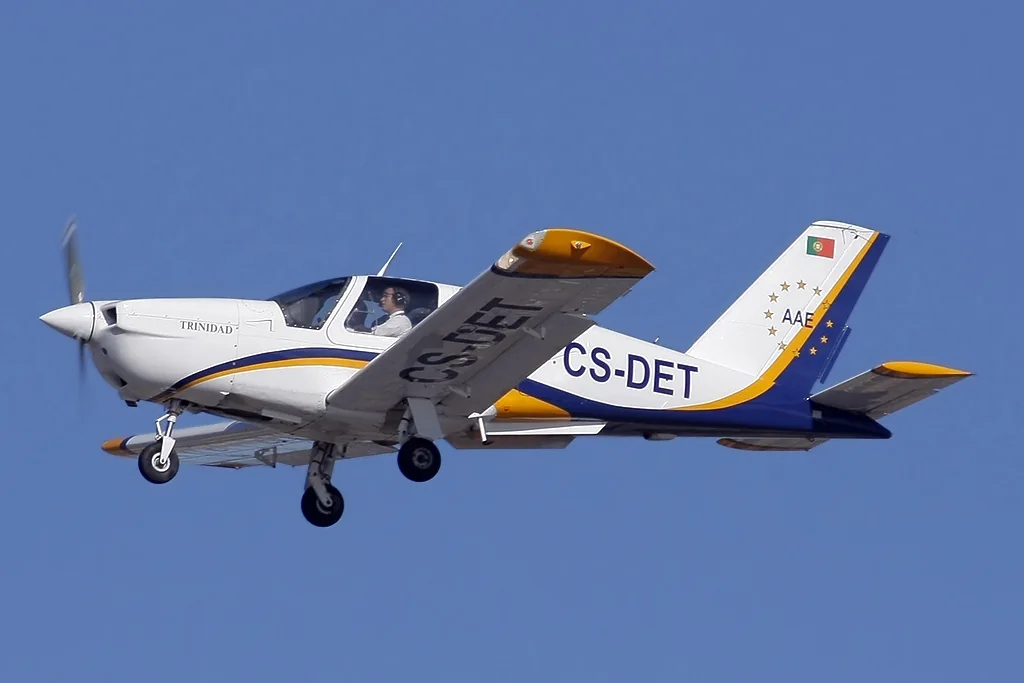
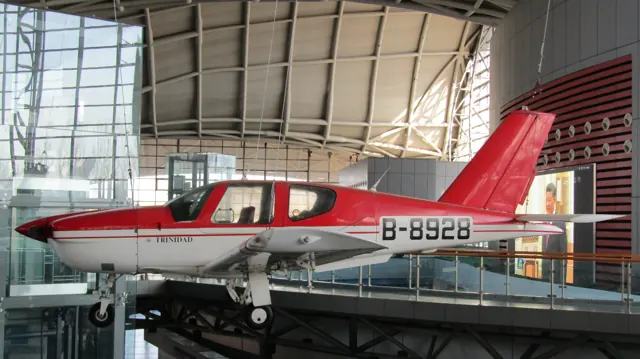
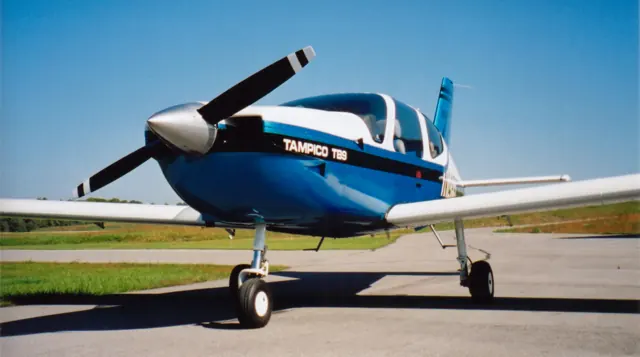
SOCATA's TB family took its designation from Tarbes, the French city associated with production. Models received Caribbean island names, including Tobago and Trinidad. Landing gear and equipment differ across the family; the simulator package includes the TB10 and TB20, and the specification tables identify their model scope.
Aircraft background
Wikipedia contributors · Read more ↗Learning to fly becomes a way to see Europe
The owner began flying lessons with a clear purpose: travelling around Europe and seeing it from the air. After obtaining a licence, the TB20GT became the aircraft in which that ambition developed. Moving from training aircraft required time to learn the new cockpit and the faster rhythm of preparing for descents and arrivals. The journeys gradually reached farther afield.
First-person ownership account covering operation since 2002. The public site name is retained; no fuller author identity has been inferred.
peter2000.co.uk · Read more ↗Circuit breakers connect to X-Plane failures
The custom electrical system links circuit breakers to X-Plane’s failure logic. The developer describes a breaker opening when its associated electrical component fails.
SOCATA TB10 Tobago / TB20 Trinidad · Just Flight · X-Plane 11
Just Flight · Read more ↗Into the cockpit
 YouTube
Andrey Borisevich About Aviation · 29 min ·
4. Socata Trinidad TB-20 Flight Review: great for IFR training and cross-country
A flight review explores the Socata Trinidad TB-20.
Real aircraft · SOCATA TB10 Tobago / TB20 Trinidad
Watch on YouTube ↗Preview images are served by AirframeDB. Videos open on YouTube only when you choose to watch.
Meet SOCATA TB10 Tobago / TB20 Trinidad
SOCATA's TB family took its designation from Tarbes, the French city associated with production. Models received Caribbean island names, including Tobago and Trinidad. Landing gear and equipment differ across the family; the simulator package includes the TB10 and TB20, and the specification tables identify their model scope.
SOCATA TB10 Tobago / TB20 Trinidad
SOCATA → · Explore the family →
SOCATA TB10 Tobago
Wikipedia contributors · SOCATA TB family ↗Just Flight · X-Plane 11 →TB20 Trinidad
Wikipedia contributors · SOCATA TB family ↗Just Flight · X-Plane 11 →Aircraft type designators
Use the code for the model you are flying. The linked authority lists the applicable aircraft.
History & design
Cabin access is part of the Trinidad’s identity
Cox’s Trinidad GT review draws attention to the wide cabin and upward-opening doors. These features help explain the TB family’s appeal as touring aircraft, alongside the distinction between the fixed-gear Tobago and the retractable Trinidad.
Plane & Pilot · Socata Trinidad GT ↗Cabin-design context from the 2004 TB20GT review
Pilot accounts
Learning to fly becomes a way to see Europe
The owner began flying lessons with a clear purpose: travelling around Europe and seeing it from the air. After obtaining a licence, the TB20GT became the aircraft in which that ambition developed. Moving from training aircraft required time to learn the new cockpit and the faster rhythm of preparing for descents and arrivals.
The journeys gradually reached farther afield. France and Spain were followed by a trip to Crete, initially through visual flying before later instrument-qualified travel opened up more options. The long-running account combines practical ownership observations with the satisfaction of reaching places that had motivated the original flying lessons.
First-person ownership account covering operation since 2002. The public site name is retained; no fuller author identity has been inferred.
Read the full account · peter2000.co.uk ↗A refurbished Tobago earns a satisfying final landing
Unwin set off from Earls Colne with Steve Allen on a warm summer day, following a Cessna camera aircraft. Heading towards France in a French-built tourer felt appropriate. The Tobago gave him enough confidence to hold a steady position for the photographs, after which he explored its handling away from the camera ship.
Back at the airfield, repeated circuits made him increasingly comfortable. The forward centre of gravity contributed to the effort he felt through the yoke, particularly during the flare. None of the landings disappointed him, but one especially gentle touchdown provided a natural moment to stop.
Pilot · November 2016. Flight in a refurbished 1983 TB10 from Earls Colne with Cavendish Aviation’s Steve Allen; this is the fixed-gear Tobago.
Read the full account · Pilot ↗An airshow departure offers room to enjoy the Trinidad
Cox took the Trinidad GT away from Lakeland on the third morning of Sun ’n Fun, clearing the stream of traffic arriving for the show. The cabin was a major part of its appeal: generous width and the gullwing doors made the aircraft feel welcoming before its handling entered the discussion. In flight, he appreciated the combination of stability and useful control authority.
His curiosity extended to the handbook, where information about antenna drag caught his attention. That connected with his own Turbo Mooney, which an avionics technician had nicknamed for its collection of antennas.
Plane & Pilot · August 2004. Flight in TB20GT N203AB during Sun ’n Fun at Lakeland; the retractable Trinidad differs from the TB10 Tobago.
Read the full account · Plane & Pilot ↗In your simulator
Systems, equipment and documentation for each developer’s aircraft.
Compare simulator versions →X-Plane 11SOCATA TB10 Tobago / TB20 Trinidad
Just Flight · Released
SOCATA TB10 Tobago / TB20 Trinidad
Just Flight · Released
X-Plane 12TB-10 Tobago / TB-20 Trinidad XP12
Just Flight / Thranda · Released
TB-10 Tobago / TB-20 Trinidad XP12
Just Flight / Thranda · Released
MSFS 2020Trinidad TB21 GT
Lionheart Creations · Released
Trinidad TB21 GT
Lionheart Creations · Released
Aircraft specifications
Published figures for the named real-aircraft variant. Simulator equipment and performance can differ.
| Specification | Published value |
|---|---|
| Length | 7.75 m (25 ft 5 in) |
| Wingspan | 9.85 m (32 ft 4 in) |
| Height | 2.85 m (9 ft 4 in) |
| Empty weight | 911 kg (2,008 lb) EFIS and MTV 9 propeller |
| Max takeoff weight | 1,400 kg (3,086 lb) |
| Powerplant | 1 × LYCOMING TIO-540-AB1AD Six-cylinder, horizontally opposed, direct drive, air-cooled and fitted with an automatically regulated turbocharger, 190 kW (250 hp) |
| Propellers | 2-bladed Hartzell (option for 3 bladed MT-propeller) |
| Cruise speed | 280 km/h (170 mph, 150 kn) |
| Stall speed | 109 km/h (68 mph, 59 kn) Full flaps |
| Range | 2,060 km (1,280 mi, 1,110 nmi) At 65% power at 25000 feet, with reserve |
| Service ceiling | 7,600 m (25,000 ft) |
| Rate of climb | 5.6 m/s (1,100 ft/min) |
| Specification | Published value |
|---|---|
| Length | 7.63 m (25 ft 0 in) |
| Wingspan | 9.76 m (32 ft 0 in) |
| Height | 3.2 m (10 ft 6 in) |
| Wing area | 11.9 m² (128 sq ft) |
| Empty weight | 670 kg (1,477 lb) |
| Max takeoff weight | 1,150 kg (2,535 lb) |
| Powerplant | 1 × Lycoming O-360-A1AD 4-cylinder air-cooled horizontally-opposed piston engine, 134 kW (180 hp) |
| Propellers | 2-bladed Hartzell constant-speed propeller, 1.88 m (6 ft 2 in) diameter |
| Maximum speed | 247 km/h (153 mph, 133 kn) |
| Cruise speed | 235 km/h (146 mph, 127 kn) max |
| Stall speed | 112 km/h (70 mph, 60 kn) flaps up |
| Range | 1,210 km (750 mi, 650 nmi) max standard fuel t/o, climb, descent, 45 minutes reserve |
| Service ceiling | 3,960 m (12,990 ft) |
| Rate of climb | 4 m/s (790 ft/min) at sea level |
Manuals & resources
Find your next read
Choose a topic for a short introduction and a link to the original source. Simulator references identify the developer and edition they cover.
Simulator documentation
Circuit breakers connect to X-Plane failuresSOCATA TB10 Tobago / TB20 Trinidad · Just Flight · X-Plane 11
The custom electrical system links circuit breakers to X-Plane’s failure logic. The developer describes a breaker opening when its associated electrical component fails.
Just Flight X-Plane 11 product documentation
Just Flight · Read the source ↗Automatic tank switching is an optional convenienceSOCATA TB10 Tobago / TB20 Trinidad · Just Flight · X-Plane 11
The custom fuel system offers automatic tank switching for longer flights and remembers that choice. It is a simulator option that can be selected for the flight.
Just Flight X-Plane 11 product documentation
Just Flight · Read the source ↗Interactive checklists respond to the simulatorSOCATA TB10 Tobago / TB20 Trinidad · Just Flight · X-Plane 11
The engine-start checklist responds to user inputs and simulator variables. Ground configuration offers cold-and-dark or ready-for-takeoff states while the aircraft is stationary.
Just Flight X-Plane 11 product documentation
Just Flight · Read the source ↗A diagnostic window explains engine and fuel conditionsSOCATA TB10 Tobago / TB20 Trinidad · Just Flight · X-Plane 11
The engine popup shows fuel weights and imbalance, pressures, temperatures, battery charge, spark-plug fouling and vapour lock. A quick-charge option is included.
Just Flight X-Plane 11 product documentation
Just Flight · Read the source ↗Pilot account
Learning to fly becomes a way to see EuropeFirst-person ownership account covering operation since 2002. The public site name is retained; no fuller author identity has been inferred.
The owner began flying lessons with a clear purpose: travelling around Europe and seeing it from the air. After obtaining a licence, the TB20GT became the aircraft in which that ambition developed. Moving from training aircraft required time to learn the new cockpit and the faster rhythm of preparing for descents and arrivals. The journeys gradually reached farther afield.
TB20GT owner at peter2000.co.uk
peter2000.co.uk · Read the source ↗A refurbished Tobago earns a satisfying final landingPilot · November 2016. Flight in a refurbished 1983 TB10 from Earls Colne with Cavendish Aviation’s Steve Allen; this is the fixed-gear Tobago.
Unwin set off from Earls Colne with Steve Allen on a warm summer day, following a Cessna camera aircraft. Heading towards France in a French-built tourer felt appropriate. The Tobago gave him enough confidence to hold a steady position for the photographs, after which he explored its handling away from the camera ship. Back at the airfield, repeated circuits made him increasingly comfortable.
Dave Unwin
Pilot · Read the source ↗Developer documentation
TB-10 Tobago / TB-20 Trinidad XP12 — product listingTB-10 Tobago / TB-20 Trinidad XP12 · X-Plane 12
Product listing captured 2026-09-24; edition scope from the reviewed catalogue
X-Plane.org authorized store · Read the source ↗Trinidad TB21 GT — product listingTrinidad TB21 GT · MSFS 2020
Product listing captured 2026-09-30; edition scope from the reviewed catalogue
www.lionheartsimulations.com · Read the source ↗Read the original documentation from the people who created it. Manuals open on their publisher’s website.
Aircraft background
SOCATA TB familyWikipedia contributors · Research background · retrieved 2026-09-12Product
TB-10 Tobago & TB-20 Trinidad (X-Plane 11)Just Flight · Official developer / designated store catalogue · checked 2026-09-12 TB-10 TOBAGO & TB-20 TRINIDAD exact product classificationX-Plane.org authorized store · Product listing captured 2026-09-24; edition scope from the reviewed catalogue Trinidad TB21 GT Turbowww.lionheartsimulations.com · Product listing captured 2026-09-30; edition scope from the reviewed catalogueType designator
ICAO Doc 8643 — aircraft type designatorsInternational Civil Aviation Organization · Public search data retrieved 2026-09-14; authority update 2026-09-03Built-in force-feedback profiles
Read the documentary basis, editable starting settings and remaining questions for the aircraft you fly. Each explanation refers to the exact profile revision shown.
Catalogue programme-20261022-v1 · 6 profile choices
Just Flight / Thranda Socata TB-10
Just Flight / Thranda · Free and Pro · Revision 3 · Inherited starting point
X-Plane 12
Just Flight / Thranda Socata TB-10: The chosen resistance accompanies the selected touring-aircraft model.
Just Flight / Thranda Socata TB-20
Just Flight / Thranda · Free and Pro · Revision 3 · Inherited starting point
X-Plane 12
Just Flight / Thranda Socata TB-20: The chosen resistance accompanies the selected touring-aircraft model.
Lionheart SOCATA Trinidad TB21 GT
Lionheart Creations · Free and Pro · Revision 3 · Inherited starting point
MSFS 2020
Lionheart SOCATA Trinidad TB21 GT: The chosen resistance accompanies the selected touring-aircraft model.
SOCATA TB20 Trinidad (retractable gear)
Free and Pro · Revision 1 · Partial review
X-Plane 11
SOCATA TB20 Trinidad (retractable gear): The chosen resistance accompanies the selected touring-aircraft model.
SOCATA TB10 Tobago (fixed gear)
Free and Pro · Revision 1 · Partial review
X-Plane 11
SOCATA TB10 Tobago (fixed gear): The chosen resistance accompanies the selected touring-aircraft model.
SOCATA TB21 Trinidad GT
Free and Pro · Revision 1 · Partial review
MSFS 2020 · MSFS 2024 · X-Plane 12
SOCATA's touring-aircraft family, including the Tobago and Trinidad.
SOCATA TB21 Trinidad GT
SOCATA's touring-aircraft family, including the Tobago and Trinidad.
Aircraft and simulator scope
- SOCATA TB21 Trinidad GT · MSFS 2020 · Variant starting point
- SOCATA TB21 Trinidad GT · MSFS 2024 · Variant starting point
- SOCATA TB21 Trinidad GT · X-Plane 12 · Variant starting point
Universal named airframe/configuration; intended MSFS2020/MSFS2024/XP12 starting point, not add-on or edition acceptance. · Physical facts and prior documentary review are reused from their archived dated sources; new market availability is not inferred.
The simulator model and controls
SOCATA's touring-aircraft family, including the Tobago and Trinidad.
How this profile feels
Spring resistance builds with the selected airspeed response. A separate aerodynamic term adds speed-dependent control load.
Pitch-trim relief is off. Autopilot following is off.
Aircraft and configuration
Turbocharged piston with retractable wheels and flaps; Asobo avionics and AP, distinct from TB20 and TB10.
About the values
Strengths are normalized hardware-feel settings. They set the effect balance; hand force depends on the device and its limits. The IAS reference is a tuning value.
What the documentation establishes
SOCATA TB21 Trinidad GT: Turbocharged piston with retractable wheels and flaps; Asobo avionics and AP, distinct from TB20 and TB10.
Documentary review and sources
These decisions describe the documentary basis and remaining gaps for this revision. Aircraft documentation and a starting setting describe different kinds of evidence.
Aircraft and variant
ReviewedSOCATA's touring-aircraft family, including the Tobago and Trinidad.
Flight controls
InheritedSOCATA's touring-aircraft family, including the Tobago and Trinidad.
Trim
InheritedThe profile uses the trim behaviour configured below. Pitch relief is off, with stored authority 0; roll authority is 0.
Autopilot and stability
ReviewedAutopilot following is off; the configured spring and load retain the hardware feel.
Equipment
InheritedTurbocharged piston with retractable wheels and flaps; Asobo avionics and AP, distinct from TB20 and TB10.
Speeds and limits
InheritedThe indicated-speed references set the profile response scale; they are separate from aircraft operating limits.
Simulator integration
ReviewedThe profile targets msfs2020, msfs2024, xplane12. Add-on-specific controls use only the supported references configured by this profile.
Force-feedback settings
InheritedThe settings define the profile’s effect balance. Device output limits affect physical hand force.
Starting settings and their rationale
These configured values are starting estimates. The explanations describe what each setting controls; physical validation appears separately below.
| Setting | Starting value | What it controls and why |
|---|---|---|
| Spring strength | Starting value0.74 | What it controls and whyThis profile uses reversible-control loading for SOCATA TB10 Tobago / TB20 Trinidad. The baseline spring is 0.74. Its low-speed blend reaches baseline strength at 65 KIAS. |
| Master force gain | Starting value0.85 | What it controls and whyScales overall profile strength while preserving effect balance, subject to device and output limits. |
| Profile force gain | Starting value0.8 | What it controls and whyThe aerodynamic-load gain is 0.8 with an indicated-speed reference of 145 KIAS. This supplies speed-dependent loading alongside the spring. |
| Force tuning speed/reference | Starting value145.0 kt | What it controls and whySets the IAS reference for aerodynamic loading. It is an estimate, not published cruise TAS or a flight limit. |
| Spring response reference speed | Starting value65 kt | What it controls and whySets the IAS where the low-speed blend reaches baseline strength; high-speed stiffening also uses it. |
| Aileron force scale | Starting value0.72 | What it controls and whyRoll and pitch aerodynamic scales are 0.72 and 1, respectively. They set the aerodynamic axis balance. No custom spring-travel curve is enabled. |
| Elevator force scale | Starting value1 | What it controls and whyScales pitch aerodynamic loading; pitch spring travel and trim responses are separate settings. |
| Trim feel | Starting valueDisabled | What it controls and whyRetained for compatibility and group membership. Trim relief, rather than this flag, controls centre movement. |
| Trim relief | Starting valueDisabled | What it controls and whyAllows trim relief with supported control law and valid telemetry. Axis authorities set its amount. |
| Autopilot follow | Starting valueDisabled | What it controls and whyAutopilot following is off; the configured spring and load retain the hardware feel. |
| Autopilot neutral hold | Starting valueDisabled | What it controls and whyPermits centering hold during a supported AP state, separate from following a moving target. |
| Output force limit | Starting value0.55 | What it controls and whyCaps directed-force output. Native spring effects and device limits remain separate. |
All 44 starting settings and their rationale
The settings define the profile’s effect balance. Device output limits affect physical hand force.
| Setting | Starting value | What it controls and why |
|---|---|---|
| Spring strength | Starting value0.74 | What it controls and whyThis profile uses reversible-control loading for SOCATA TB10 Tobago / TB20 Trinidad. The baseline spring is 0.74. Its low-speed blend reaches baseline strength at 65 KIAS. |
| Profile force gain | Starting value0.8 | What it controls and whyThe aerodynamic-load gain is 0.8 with an indicated-speed reference of 145 KIAS. This supplies speed-dependent loading alongside the spring. |
| Elevator force scale | Starting value1 | What it controls and whyScales pitch aerodynamic loading; pitch spring travel and trim responses are separate settings. |
| Aileron force scale | Starting value0.72 | What it controls and whyRoll and pitch aerodynamic scales are 0.72 and 1, respectively. They set the aerodynamic axis balance. No custom spring-travel curve is enabled. |
| Output force limit | Starting value0.55 | What it controls and whyCaps directed-force output. Native spring effects and device limits remain separate. |
SOCATA TB21 Trinidad GT: Exact trim-to-inceptor relationship is not established by the available product source; automatic neutral shift remains disabled, with no inherited trim coefficient. Estimated pitch/roll trim authorities 0/0; exact add-on sign, travel, units and build-specific neutral remain unqualified. Rudder trim never substitutes for roll trim.
| Setting | Starting value | What it controls and why |
|---|---|---|
| Elevator Authority | Starting value0 | What it controls and whyThe profile uses the trim behaviour configured below. Pitch relief is off, with stored authority 0; roll authority is 0. |
| Aileron Authority | Starting value0 | What it controls and whyScales supported roll-trim relief and permitted centre movement. Zero removes roll response. |
SOCATA TB21 Trinidad GT: 145.0 KIAS is the retained estimated tuning reference. It is not published cruise TAS, VNE, a new flight limit or a measured force threshold. Source-specific operating quantities remain attached to their original configuration and conditions.
| Setting | Starting value | What it controls and why |
|---|---|---|
| Force tuning speed/reference | Starting value145.0 kt | What it controls and whySets the IAS reference for aerodynamic loading. It is an estimate, not published cruise TAS or a flight limit. |
Exact configured values with software explanations. Force magnitudes remain editable estimates; disabled features retain inactive values.
| Setting | Starting value | What it controls and why |
|---|---|---|
| Spring deadband | Starting value0.04 | What it controls and whySets travel around the centre before the baseline spring resists. Smaller values engage it sooner. |
| Master force gain | Starting value0.85 | What it controls and whyScales overall profile strength while preserving effect balance, subject to device and output limits. |
| QBlend Enabled | Starting valueEnabled | What it controls and whyAllows baseline spring strength to rise with indicated airspeed where the control law permits it. |
| QSpring Minimum Factor | Starting value0.55 | What it controls and whySets low-speed spring strength as a fraction of baseline when blending is enabled. One keeps full strength. |
| QSpring Start Knots | Starting value8 kt | What it controls and whySets the IAS where the low-speed spring blend starts rising. This is a feel threshold, not a flight limit. |
| Spring response reference speed | Starting value65 kt | What it controls and whySets the IAS where the low-speed blend reaches baseline strength; high-speed stiffening also uses it. |
| Airspeed spring stiffening gain | Starting value0.15 | What it controls and whyThe high-speed spring-stiffening gain is 0.15. It strengthens the permitted spring response above 65 KIAS, with the squared-speed ratio capped at 5. |
| Airspeed spring stiffening limit | Starting value5 | What it controls and whyLimits the squared airspeed ratio used for high-speed spring stiffening; it is not a device-force cap. |
| Trim feel | Starting valueDisabled | What it controls and whyRetained for compatibility and group membership. Trim relief, rather than this flag, controls centre movement. |
| Trim relief | Starting valueDisabled | What it controls and whyAllows trim relief with supported control law and valid telemetry. Axis authorities set its amount. |
| Force Trim Enabled | Starting valueDisabled | What it controls and whyEnables local force trim, separate from aircraft-owned trim and add-on integration qualification. |
| GLoad Enabled | Starting valueEnabled | What it controls and whyAllows load-factor changes to modify permitted spring laws. Passive fly-by-wire feel can suppress it. |
| Rate Damping Enabled | Starting valueEnabled | What it controls and whyEnables rate damping with the configured coefficients and control law. |
| Autopilot follow | Starting valueDisabled | What it controls and whyAutopilot following is off; the configured spring and load retain the hardware feel. |
| Autopilot follow authority | Starting value0.1 | What it controls and whySets admitted AP-follow gain, not a percentage of travel. Runtime ownership and input limits still apply. |
| Autopilot neutral hold | Starting valueDisabled | What it controls and whyPermits centering hold during a supported AP state, separate from following a moving target. |
| Autopilot neutral hold strength | Starting value0.6 | What it controls and whySets admitted AP neutral-hold strength; inactive while neutral hold is disabled. |
| Enabled | Starting valueEnabled | What it controls and whyEnables aerodynamic cues; each still needs nonzero strength and its simulator conditions. |
| Gain | Starting value0.35 | What it controls and whySets stall-buffet strength. Zero removes the cue without changing simulator stalls or warnings. |
| Gain | Starting value0 | What it controls and whySets high-Mach buffet strength; onset and full-strength thresholds are separate. |
| Gain | Starting value0 | What it controls and whySets flap buffet at the configured position and speed gates. Flap movement texture is separate. |
| Maximum flap index | Starting value2 | What it controls and whySets the final flap index for detent normalization. UP plus three detents uses maximum index3. |
| Minimum flap index | Starting value2 | What it controls and whySets the first flap detent that admits buffet; this is a handle index, not degrees. |
| Gain | Starting value0 | What it controls and whySets gear aerodynamic buffet; movement and ground-contact cues are separate. |
| Shaker Enabled | Starting valueDisabled | What it controls and whyPermits shaker at supported warning conditions; the switch does not establish aircraft equipment. |
| Stick shaker amplitude | Starting value0.5 | What it controls and whySets triggered shaker strength; inactive while the shaker feature is disabled. |
| Enabled | Starting valueEnabled | What it controls and whyEnables ground effects; each still needs its own strength and contact or motion telemetry. |
| Gain | Starting value0.4 | What it controls and whySets rolling texture strength, modified by speed, surface and undercarriage configuration. |
| Gain | Starting value0.25 | What it controls and whySets gear-bump texture during ground motion, separate from touchdown impact. |
| Gain | Starting value0.65 | What it controls and whySets landing-impact strength; landing telemetry and response shape determine the pulse. |
| Gain | Starting value0 | What it controls and whySets reverse-thrust vibration with valid reverser and engine conditions. Zero removes the cue. |
| Enabled | Starting valueEnabled | What it controls and whyEnables engine cues with nonzero settings and valid running-engine telemetry. |
| Gain | Starting value0.12 | What it controls and whySets estimated engine vibration using configured telemetry and response, not measured cockpit vibration. |
| Enabled | Starting valueEnabled | What it controls and whyEnables accessory cues with configured strengths and observed accessory movement. |
| Gain | Starting value0.12 | What it controls and whySets texture from observed flap movement; a command without movement does not establish the cue. |
| Gain | Starting value0.12 | What it controls and whySets texture from observed gear movement, separate from aerodynamic and touchdown effects. |
Limits and open questions
- SOCATA TB21 Trinidad GT is a universal starting point; exact add-on matching, edition operation and physical hand-force calibration remain unqualified.
- Autopilot movement and unknown custom trim, failure or force-input signals are disabled. Confirm the selected equipment fit and trim direction for the implementation in use.
- Force magnitudes and speed tuning are editable inherited estimates. Owner physical and installed-aircraft acceptance remain pending.
Physical validation
No physical force validation is recorded in this public catalogue for this revision. Documentary review and software checks do not establish how a particular device feels.
Discuss this aircraft (0)
Questions, observations and useful sources from the community.
No published discussions yet. Bring a question or share a useful source.
Open aircraft discussions →Content expanded · What’s new
Something missing or a source that needs attention?
Suggest a correction ↗