
Start here
A few places to begin, from the aircraft’s story to the people who fly it.
Meet the aircraft
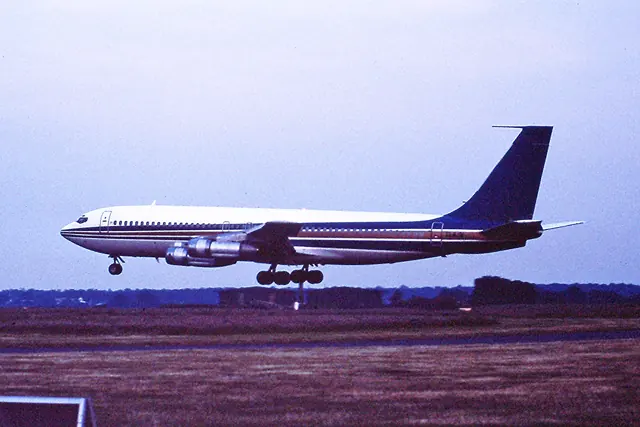
The 707 developed from Boeing's 367-80 demonstrator and entered airline service in 1958. Its swept wing carried four podded engines, while the cabin used a six-abreast cross-section that influenced later Boeing narrow-bodies. Several fuselage, wing and engine developments followed. The -320C in this catalogue is a convertible passenger-and-cargo version.
Aircraft background
Wikipedia contributors · Read more ↗Returning to the 707 when an airline career disappeared
De la Torre recalls the shock of losing an established airline job and returning to the 707 after several years away from it. A cargo position offered a way back into flying, but the unfamiliar avionics and an uncomfortable first approach reminded him how much had to be relearned. Ground school and simulator work restored some confidence, while the new operation took him across the Americas and the Atlantic.
OldJets · retrospective of 1990s cargo flying. Mixed 707 family experience, including convertible freighters; publication date not established.
OldJets · Read more ↗Control tabs and hydraulic assistance share the aircraft
The manual describes tab-assisted elevator and aileron controls, hydraulic roll spoilers and a boosted rudder. Outboard ailerons are inactive with flaps up. Stabiliser trim has interlinked manual wheels, electric control, a motion light and electrical cutouts.
707-320C · Microsoft Flight Simulator · MSFS 2024
Microsoft / aircraft developers · Read more ↗Into the cockpit
 YouTube
TiJayFLY · 8 min ·
MSFS Boeing 707-320C Tutorial | Full Flight
A simulator flight guide that also discusses navigation and approach-mode issues in the featured release.
Simulator · Aeroplane Heaven/Microsoft 707 · MSFS
Watch on YouTube ↗Preview images are served by AirframeDB. Videos open on YouTube only when you choose to watch.
Meet Boeing 707-320C
The 707 developed from Boeing's 367-80 demonstrator and entered airline service in 1958. Its swept wing carried four podded engines, while the cabin used a six-abreast cross-section that influenced later Boeing narrow-bodies. Several fuselage, wing and engine developments followed.
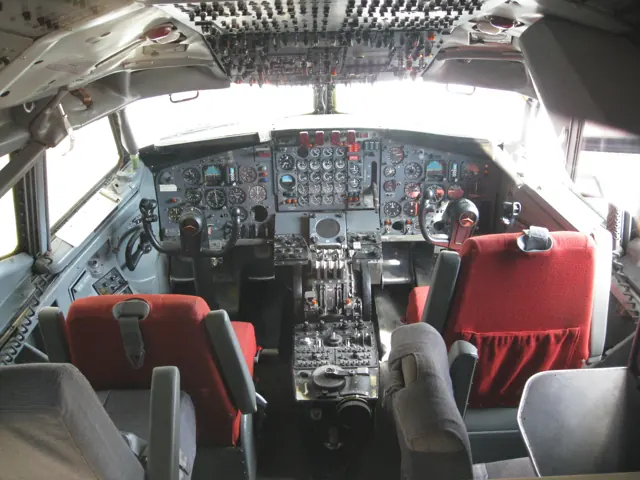
The -320C in this catalogue is a convertible passenger-and-cargo version. Its flight deck includes a flight engineer position and systems from an earlier jet age. The Working Title manual identifies the specific simulated layout, including cargo configuration, navigation and flight-control details.
Boeing 707-320C
Aircraft type designators
Use the code for the model you are flying. The linked authority lists the applicable aircraft.
History & design
Development milestones
First flight: December 20, 1957 ( 1957-12-20 )
Developed from: Boeing 367-80
Wikipedia contributors · Boeing 707 ↗Boeing 707 · family/variant named by the source · Wikipedia revision 1373928556
Pilot accounts
Returning to the 707 when an airline career disappeared
De la Torre recalls the shock of losing an established airline job and returning to the 707 after several years away from it. A cargo position offered a way back into flying, but the unfamiliar avionics and an uncomfortable first approach reminded him how much had to be relearned. Ground school and simulator work restored some confidence, while the new operation took him across the Americas and the Atlantic.
One memorable assignment carried cattle from Germany to Brazil, turning the freighter into a very distinctive workplace. The work could also stretch far beyond the trip he had packed for: he remembers leaving home for five days and returning three months later. Eventually his growing concern about operating conditions outweighed the attraction of the pay. He describes leaving the 707 in December 1996 for an A320 first-officer position and a lower salary.
OldJets · retrospective of 1990s cargo flying. Mixed 707 family experience, including convertible freighters; publication date not established.
Read the full account · OldJets ↗Learning an airline cockpit from the seat behind the captain
On his first transcontinental 707 flight, Schiff sat behind the captain, working out groundspeed with a circular flight computer. The headwind seemed extraordinary to someone arriving from general aviation, and he thought he should report it. The captain’s dismissive response became a lasting memory of how humbling the junior seat could be in that era.
Schiff balances that story with appreciation for the many captains who shared the flying and helped first officers develop. What impressed him most was the airline’s training: two pilots who had never met could enter the cockpit already knowing their respective duties and work smoothly together. His retrospective is as much about learning when and how to speak as it is about learning an aircraft, and about the influence senior crewmembers have on those following them.
AOPA Pilot · January 2008. Early TWA second-officer experience on a 707, followed by reflections on crew relationships; variant unspecified.
Read the full account · AOPA Pilot ↗What an emergency taught him about the cabin crew
Hutchinson joined BOAC’s 707 fleet in 1966 after military and corporate flying. In his later interview, he recalls an otherwise settled early airline career interrupted by the April 1968 fire shortly after departure from Heathrow. With a route check taking place, he was in a rear cockpit seat. He remembers the urgency of compressing the normal phases of a flight and the emergency work into the few minutes before landing.
The evacuation left an especially strong impression. Hutchinson describes guarding an unusable exit and watching the cabin crew work under extreme pressure. The experience reinforced his understanding of their central role in protecting passengers. His recollection is not accompanied by an independent accident investigation.
General Aviation · Paul Smiddy’s October 2012 interview. BOAC 707 experience and the April 1968 Heathrow fire; Hutchinson occupied a rear cockpit seat during a route check. Family context, not a -320C-specific flight.
Read the full account · General Aviation / AOPA UK ↗In your simulator
Systems, equipment and documentation for each developer’s aircraft.
Compare simulator versions →MSFS 2024707-320C
Microsoft Flight Simulator · Released
707-320C
Microsoft Flight Simulator · Released
MSFS 2020707-320C
Microsoft Flight Simulator · Released
707-320C
Microsoft Flight Simulator · Released
Aircraft specifications
Published figures for the named real-aircraft variant. Simulator equipment and performance can differ.
| Specification | Published value |
|---|---|
| Length | 152 ft 11 in (46.61 m) |
| Wingspan | 145 ft 9 in (44.42 m) |
| Height | 42 ft 0 in (12.80 m) |
| Wing area | 3,050 sq ft (283 m² ) |
| Empty weight | 148,300 lb (67,268 kg) (all cargo configuration) |
| Gross weight | 283,000 lb (128,367 kg) |
| Max takeoff weight | 333,600 lb (151,318 kg) |
| Powerplant | 4 × Pratt & Whitney JT3D-7 turbofan engine, 19,000 lbf (85 kN) thrust each |
| Maximum speed | 454 mph (731 km/h, 394 kn) at 23,000 ft (7,000 m) |
| Maximum speed | Mach 0.887 |
| Range | 3,300 mi (5,400 km, 2,900 nmi) with 13 pallets and 17,000 lb (7.7 t) lower deck cargo |
| Service ceiling | 42,000 ft (13,000 m) |
Manuals & resources
Find your next read
Choose a topic for a short introduction and a link to the original source. Simulator references identify the developer and edition they cover.
Simulator documentation
Control tabs and hydraulic assistance share the aircraft707-320C · Microsoft Flight Simulator · MSFS 2024
The manual describes tab-assisted elevator and aileron controls, hydraulic roll spoilers and a boosted rudder. Outboard ailerons are inactive with flaps up. Stabiliser trim has interlinked manual wheels, electric control, a motion light and electrical cutouts.
Working Title / iniBuilds · MSFS 2024 manual v4.1, 11 August 2026 · physical PDF pp.100–105; §§14.1–14.6
Microsoft / aircraft developers · Read the source ↗Three navigation fits in the same combi airframe707-320C · Microsoft Flight Simulator · MSFS 2024
The three cockpit choices pair the combi airframe with a Carousel IV-A INS, Universal UNS-1Lw or Garmin GNS 530W. The manual says the navigation fit is independent of livery, with separate chapters explaining each interface.
MSFS 2024 manual v4.1 · physical PDF pp.12–13; chapter 2
Microsoft / aircraft developers · Read the source ↗A companion app for the virtual flight engineer707-320C · Microsoft Flight Simulator · MSFS 2024
The 707’s EFB app groups flight-engineer flows, door controls, performance data cards and preferences. Its CIVA tab appears for the INS variant. The flight-engineer page also controls continuous automations, giving the single simmer help with a multi-person cockpit.
MSFS 2024 manual v4.1 · physical PDF p.14; §3.1
Microsoft / aircraft developers · Read the source ↗The original MSFS 2020 release707-320C · Microsoft Flight Simulator · MSFS 2020
The September 2024 Famous Flyer 10 release offers the convertible 707-320C through the MSFS 2020 Marketplace. The announcement lists six liveries, including Boeing Delivery and Pan Am.
2024-09-24 · release and package scope
Microsoft Flight Simulator Team · Read the source ↗Pilot account
Returning to the 707 when an airline career disappearedOldJets · retrospective of 1990s cargo flying. Mixed 707 family experience, including convertible freighters; publication date not established.
De la Torre recalls the shock of losing an established airline job and returning to the 707 after several years away from it. A cargo position offered a way back into flying, but the unfamiliar avionics and an uncomfortable first approach reminded him how much had to be relearned. Ground school and simulator work restored some confidence, while the new operation took him across the Americas and the Atlantic.
Fernando de la Torre Bekdach
OldJets · Read the source ↗Learning an airline cockpit from the seat behind the captainAOPA Pilot · January 2008. Early TWA second-officer experience on a 707, followed by reflections on crew relationships; variant unspecified.
On his first transcontinental 707 flight, Schiff sat behind the captain, working out groundspeed with a circular flight computer. The headwind seemed extraordinary to someone arriving from general aviation, and he thought he should report it. The captain’s dismissive response became a lasting memory of how humbling the junior seat could be in that era. Schiff balances that story with appreciation for the many captains who shared the flying and helped first officers develop.
Barry Schiff
AOPA Pilot · Read the source ↗Read the original documentation from the people who created it. Manuals open on their publisher’s website.
Manual
Boeing 707-320C ManualMicrosoft / aircraft developers Microsoft Flight Simulator aircraft manualsMicrosoft / aircraft developersAircraft background
Boeing 707Wikipedia contributors · Research background · Wikipedia revision 1373928556 · retrieved 2026-09-12Resource
MSFS 2024 FAQ and edition aircraft inventoryMicrosoftDeveloper documentation
Microsoft Flight Simulator Releases Famous Flyer 10: The Boeing 707-320CMicrosoft Flight Simulator Team · 2024-09-24 · release and package scopeType designator
ICAO Doc 8643 — aircraft type designatorsInternational Civil Aviation Organization · Public search data retrieved 2026-09-14; authority update 2026-09-03Built-in force-feedback profiles
Read the documentary basis, editable starting settings and remaining questions for the aircraft you fly. Each explanation refers to the exact profile revision shown.
Catalogue programme-20261022-v1 · 1 profile choice
Boeing 707-320C
Free and Pro · Revision 2 · Partial review
MSFS 2024 · MSFS 2020
Boeing 707-320C: The profile supplies selected powered-transport yoke resistance.
Boeing 707-320C
Boeing 707-320C: The profile supplies selected powered-transport yoke resistance.
Aircraft and simulator scope
- Boeing 707-320C · MSFS 2024 · family starting point
- Boeing 707-320C · MSFS 2020 · family starting point
Boeing 707-320C · Family sources identify only the variants and product versions described above.
The simulator model and controls
The 707 developed from Boeing's 367-80 demonstrator and entered airline service in 1958. Its swept wing carried four podded engines, while the cabin used a six-abreast cross-section that influenced later Boeing narrow-bodies. Several fuselage, wing and engine developments followed.
This starting point selects Boeing 707-320C. Its aircraft-level settings do not select a particular developer’s custom systems.
How this profile feels
The profile supplies selected powered-transport yoke resistance. Spring resistance builds with the selected airspeed response. A separate aerodynamic term adds speed-dependent control load.
Pitch trim response is separate from cargo configuration and engineer duties. Valid trim provides the configured pressure relief. Autopilot following is enabled for supported control references.
Controls and trim
The 707 developed from the 367-80 demonstrator and entered airline service in 1958. The convertible -320C retains a flight-engineer station, passenger/cargo equipment and an early jet-transport cockpit around its swept-wing airframe.
About the values
The gains are normalized profile settings. They describe the chosen effect balance; hand force depends on the device and its output limits. IAS references are tuning values rather than operating limits. Physical acceptance of this revision remains pending.
What the documentation establishes
Working Title manual v4.1 identifies 707-320C MSFS2024.
Manual Sections 14.1 and 14.2 describes cable-driven aileron/elevator control tabs, hydraulic roll spoilers and boosted rudder only.
Manual Section 14.6 identifies movable horizontal-stabilizer trim; relief strengths remain estimates.
Outboard ailerons lock out with flaps up; spoiler/tab physics remains simulator owned.
Documentary review and sources
These decisions describe the documentary basis and remaining gaps for this revision. Aircraft documentation and a starting setting describe different kinds of evidence.
Aircraft and variant
ReviewedThis starting point selects Boeing 707-320C. Its aircraft-level settings do not select a particular developer’s custom systems.
Flight controls
ReviewedThe 707 developed from the 367-80 demonstrator and entered airline service in 1958. The convertible -320C retains a flight-engineer station, passenger/cargo equipment and an early jet-transport cockpit around its swept-wing airframe.
Trim
ReviewedPitch trim response is separate from cargo configuration and engineer duties. Pitch authority 0.3 provides load relief and permitted centre movement; roll authority is 0.09.
Autopilot and stability
Not yet reviewedFollowing is on at 0.1 authority when a supported, valid autopilot control reference is available.
Equipment
ReviewedGear, flap and ground cues follow the selected settings and available simulator-reported states.
Speeds and limits
Not yet reviewedThe indicated-speed references set the profile response scale; they are separate from aircraft operating limits.
Simulator integration
Not yet reviewedThe profile targets msfs2024, msfs2020. Add-on-specific controls use only the supported references configured by this profile.
Force-feedback settings
Not yet reviewedThe settings define the profile’s effect balance. Device output limits affect physical hand force.
Starting settings and their rationale
These configured values are starting estimates. The explanations describe what each setting controls; physical validation appears separately below.
| Setting | Starting value | What it controls and why |
|---|---|---|
| Spring strength | Starting value0.7 | What it controls and whyThe profile supplies selected powered-transport yoke resistance. The baseline spring is 0.7. Its low-speed blend reaches baseline strength at 90 KIAS. |
| Master force gain | Starting value0.85 | What it controls and whyScales overall profile strength while preserving effect balance, subject to device and output limits. |
| Profile force gain | Starting value0.25 | What it controls and whyThe aerodynamic-load gain is 0.25 with an indicated-speed reference of 265 KIAS. This supplies speed-dependent loading alongside the spring. |
| Force tuning speed/reference | Starting value265.0 kt | What it controls and whySets the IAS reference for aerodynamic loading. It is an estimate, not published cruise TAS or a flight limit. |
| Spring response reference speed | Starting value90 kt | What it controls and whySets the IAS where the low-speed blend reaches baseline strength; high-speed stiffening also uses it. |
| Aileron force scale | Starting value0.55 | What it controls and whyRoll and pitch aerodynamic scales are 0.55 and 0.6, respectively. They set the aerodynamic axis balance. No custom spring-travel curve is enabled. |
| Elevator force scale | Starting value0.6 | What it controls and whyScales pitch aerodynamic loading; pitch spring travel and trim responses are separate settings. |
| Trim feel | Starting valueEnabled | What it controls and whyRetained for compatibility and group membership. Trim relief, rather than this flag, controls centre movement. |
| Trim relief | Starting valueEnabled | What it controls and whyAllows trim relief with supported control law and valid telemetry. Axis authorities set its amount. |
| Autopilot follow | Starting valueEnabled | What it controls and whyFollowing is on at 0.1 authority when a supported, valid autopilot control reference is available. |
| Autopilot neutral hold | Starting valueDisabled | What it controls and whyPermits centering hold during a supported AP state, separate from following a moving target. |
| Output force limit | Starting value0.55 | What it controls and whyCaps directed-force output. Native spring effects and device limits remain separate. |
All 44 starting settings and their rationale
The settings define the profile’s effect balance. Device output limits affect physical hand force.
| Setting | Starting value | What it controls and why |
|---|---|---|
| Spring strength | Starting value0.7 | What it controls and whyThe profile supplies selected powered-transport yoke resistance. The baseline spring is 0.7. Its low-speed blend reaches baseline strength at 90 KIAS. |
| Spring deadband | Starting value0.035 | What it controls and whySets travel around the centre before the baseline spring resists. Smaller values engage it sooner. |
| Profile force gain | Starting value0.25 | What it controls and whyThe aerodynamic-load gain is 0.25 with an indicated-speed reference of 265 KIAS. This supplies speed-dependent loading alongside the spring. |
| Master force gain | Starting value0.85 | What it controls and whyScales overall profile strength while preserving effect balance, subject to device and output limits. |
| QBlend Enabled | Starting valueEnabled | What it controls and whyAllows baseline spring strength to rise with indicated airspeed where the control law permits it. |
| QSpring Minimum Factor | Starting value0.55 | What it controls and whySets low-speed spring strength as a fraction of baseline when blending is enabled. One keeps full strength. |
| QSpring Start Knots | Starting value20 kt | What it controls and whySets the IAS where the low-speed spring blend starts rising. This is a feel threshold, not a flight limit. |
| Spring response reference speed | Starting value90 kt | What it controls and whySets the IAS where the low-speed blend reaches baseline strength; high-speed stiffening also uses it. |
| Force tuning speed/reference | Starting value265.0 kt | What it controls and whySets the IAS reference for aerodynamic loading. It is an estimate, not published cruise TAS or a flight limit. |
| Airspeed spring stiffening gain | Starting value0 | What it controls and whyThe high-speed spring-stiffening gain is 0. No additional speed-driven stiffening is added; this does not disable independent aerodynamic loading. |
| Airspeed spring stiffening limit | Starting value5 | What it controls and whyLimits the squared airspeed ratio used for high-speed spring stiffening; it is not a device-force cap. |
| Aileron force scale | Starting value0.55 | What it controls and whyRoll and pitch aerodynamic scales are 0.55 and 0.6, respectively. They set the aerodynamic axis balance. No custom spring-travel curve is enabled. |
| Elevator force scale | Starting value0.6 | What it controls and whyScales pitch aerodynamic loading; pitch spring travel and trim responses are separate settings. |
| Output force limit | Starting value0.55 | What it controls and whyCaps directed-force output. Native spring effects and device limits remain separate. |
| Trim feel | Starting valueEnabled | What it controls and whyRetained for compatibility and group membership. Trim relief, rather than this flag, controls centre movement. |
| Trim relief | Starting valueEnabled | What it controls and whyAllows trim relief with supported control law and valid telemetry. Axis authorities set its amount. |
| Elevator Authority | Starting value0.3 | What it controls and whyPitch trim response is separate from cargo configuration and engineer duties. Pitch authority 0.3 provides load relief and permitted centre movement; roll authority is 0.09. |
| Aileron Authority | Starting value0.09 | What it controls and whyScales supported roll-trim relief and permitted centre movement. Zero removes roll response. |
| Force Trim Enabled | Starting valueDisabled | What it controls and whyEnables local force trim, separate from aircraft-owned trim and add-on integration qualification. |
| GLoad Enabled | Starting valueEnabled | What it controls and whyAllows load-factor changes to modify permitted spring laws. Passive fly-by-wire feel can suppress it. |
| Rate Damping Enabled | Starting valueEnabled | What it controls and whyEnables rate damping with the configured coefficients and control law. |
| Autopilot follow | Starting valueEnabled | What it controls and whyFollowing is on at 0.1 authority when a supported, valid autopilot control reference is available. |
| Autopilot follow authority | Starting value0.1 | What it controls and whySets admitted AP-follow gain, not a percentage of travel. Runtime ownership and input limits still apply. |
| Autopilot neutral hold | Starting valueDisabled | What it controls and whyPermits centering hold during a supported AP state, separate from following a moving target. |
| Autopilot neutral hold strength | Starting value0.6 | What it controls and whySets admitted AP neutral-hold strength; inactive while neutral hold is disabled. |
| Enabled | Starting valueEnabled | What it controls and whyEnables aerodynamic cues; each still needs nonzero strength and its simulator conditions. |
| Gain | Starting value0.3 | What it controls and whySets stall-buffet strength. Zero removes the cue without changing simulator stalls or warnings. |
| Gain | Starting value0.22 | What it controls and whySets high-Mach buffet strength; onset and full-strength thresholds are separate. |
| Gain | Starting value0.14 | What it controls and whySets flap buffet at the configured position and speed gates. Flap movement texture is separate. |
| Maximum flap index | Starting value6 | What it controls and whySets the final flap index for detent normalization. UP plus three detents uses maximum index3. |
| Minimum flap index | Starting value2 | What it controls and whySets the first flap detent that admits buffet; this is a handle index, not degrees. |
| Gain | Starting value0.1 | What it controls and whySets gear aerodynamic buffet; movement and ground-contact cues are separate. |
| Shaker Enabled | Starting valueEnabled | What it controls and whyPermits shaker at supported warning conditions; the switch does not establish aircraft equipment. |
| Stick shaker amplitude | Starting value0.9 | What it controls and whySets triggered shaker strength; inactive while the shaker feature is disabled. |
| Enabled | Starting valueEnabled | What it controls and whyEnables ground effects; each still needs its own strength and contact or motion telemetry. |
| Gain | Starting value0.4 | What it controls and whySets rolling texture strength, modified by speed, surface and undercarriage configuration. |
| Gain | Starting value0.32 | What it controls and whySets gear-bump texture during ground motion, separate from touchdown impact. |
| Gain | Starting value0.9 | What it controls and whySets landing-impact strength; landing telemetry and response shape determine the pulse. |
| Gain | Starting value0.5 | What it controls and whySets reverse-thrust vibration with valid reverser and engine conditions. Zero removes the cue. |
| Enabled | Starting valueEnabled | What it controls and whyEnables engine cues with nonzero settings and valid running-engine telemetry. |
| Gain | Starting value0.06 | What it controls and whySets estimated engine vibration using configured telemetry and response, not measured cockpit vibration. |
| Enabled | Starting valueEnabled | What it controls and whyEnables accessory cues with configured strengths and observed accessory movement. |
| Gain | Starting value0.12 | What it controls and whySets texture from observed flap movement; a command without movement does not establish the cue. |
| Gain | Starting value0.12 | What it controls and whySets texture from observed gear movement, separate from aerodynamic and touchdown effects. |
Limits and open questions
- Documented Autopilot controls do not establish valid demand or servo forces.
- No 707 wheel-force versus indicated-airspeed schedule was derived.
- Manual is product/version-specific; installed signal population remains unverified.
- Mixed tabs/spoilers must not be called wholly powered pitch; force strengths remain estimates.
Physical validation
No physical force validation is recorded in this public catalogue for this revision. Documentary review and software checks do not establish how a particular device feels.
Discuss this aircraft (0)
Questions, observations and useful sources from the community.
No published discussions yet. Bring a question or share a useful source.
Open aircraft discussions →Content expanded · What’s new
Something missing or a source that needs attention?
Suggest a correction ↗