

Start here
A few places to begin, from the aircraft’s story to the people who fly it.
Meet the aircraft
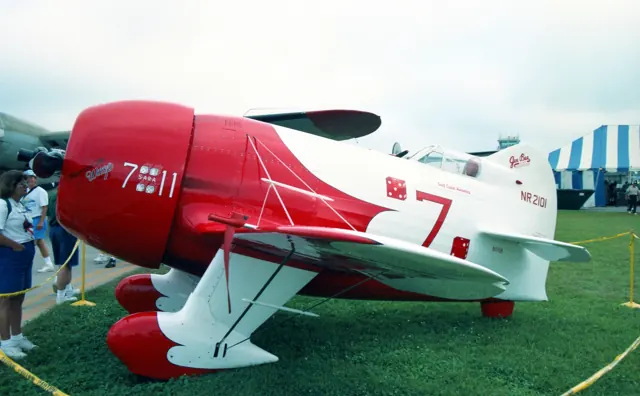
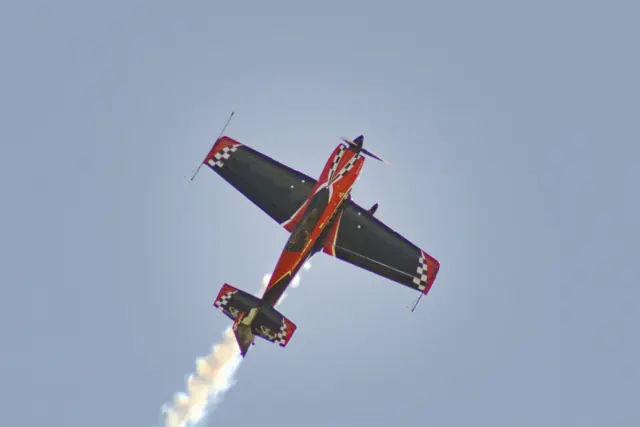
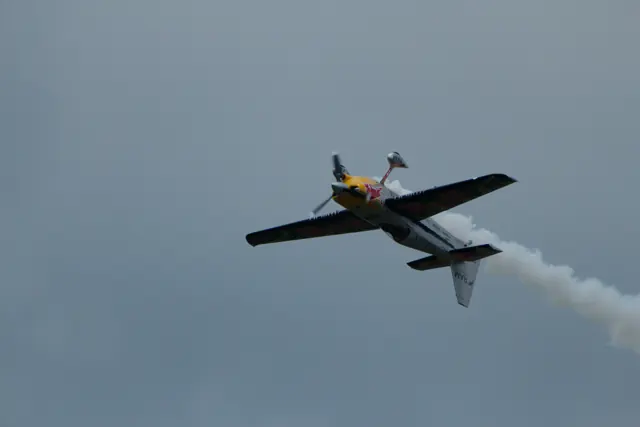
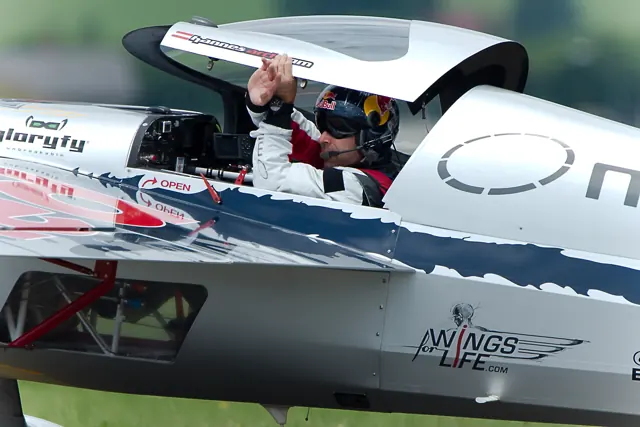
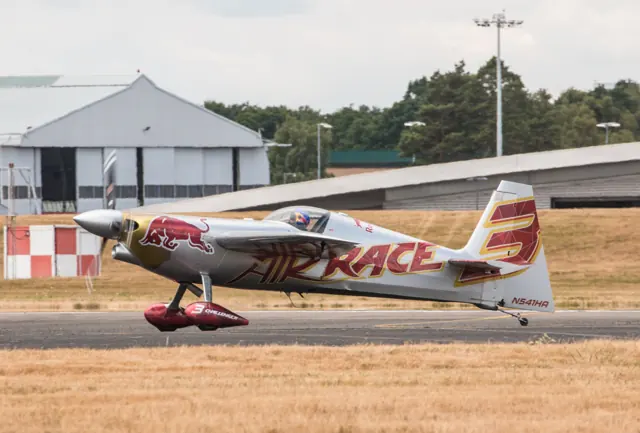
Zivko's Edge 540 combines a compact low-wing airframe with a powerful piston engine for competition aerobatics. It later became closely associated with the Red Bull Air Race. The Edge 540T is a tandem-seat development.
Aircraft background
Wikipedia contributors · Read more ↗The right aircraft supports a display shared with her husband
Pemberton chose the Edge after reaching the point where her Pitts was limiting the aerobatics she wanted to develop. Its American manufacture had practical appeal, and she valued an aircraft that a smaller pilot could move around and maintain. Returning home from training in Germany renewed her appreciation of her own Edge’s power. Airshows also offered a way to share flying with other people, despite having only one seat.
EvanFly interview · July 2009. Single-seat Edge 540 airshow flying; the aircraft she used during a separate training visit to Germany was a different type.
EvanFly.com · Read more ↗Into the cockpit
 YouTube
Alexander Coats · 5 min ·
Why We Fly - Zivko Edge 540
An Edge 540 pilot shares an aerobatic flight and reflects on why he enjoys it.
Real aircraft · Zivko Edge 540
Watch on YouTube ↗Preview images are served by AirframeDB. Videos open on YouTube only when you choose to watch.
Meet Zivko Edge 540
Zivko's Edge 540 combines a compact low-wing airframe with a powerful piston engine for competition aerobatics. It later became closely associated with the Red Bull Air Race. The Edge 540T is a tandem-seat development.
Race modifications and competition setups can differ between individual aircraft; the simulator product identifies its represented version and equipment.
Zivko Edge 540
Aircraft type designators
Use the code for the model you are flying. The linked authority lists the applicable aircraft.
History & design
Development milestones
First flight: 1996
Wikipedia contributors · Zivko Edge 540 ↗Zivko Edge 540 · family/variant named by the source · Wikipedia revision 1305158510
Pilot accounts
The right aircraft supports a display shared with her husband
Pemberton chose the Edge after reaching the point where her Pitts was limiting the aerobatics she wanted to develop. Its American manufacture had practical appeal, and she valued an aircraft that a smaller pilot could move around and maintain. Returning home from training in Germany renewed her appreciation of her own Edge’s power.
Airshows also offered a way to share flying with other people, despite having only one seat. In a developing display with her husband Rex, he flew his wingsuit while she circled behind in the aircraft. She described the appeal of bringing those two activities together for the audience. Her enthusiasm for the Edge belonged to both the flying itself and the performance they could create around it.
EvanFly interview · July 2009. Single-seat Edge 540 airshow flying; the aircraft she used during a separate training visit to Germany was a different type.
Read the full account · EvanFly.com ↗A close finish feels as exciting as the first win
Hall’s win at Cannes came after a closely fought final round in front of a large crowd on the French Riviera. He praised his Edge 540 and described the result as his strongest performance in it so far. The setting and the competition made the occasion feel as exciting as his first victory.
His comments also gave the other finalists their due. Matthias Dolderer finished very close behind, with Michael Goulian joining them on the podium, and Hall stressed that any of them could have won. The report captures the satisfaction of bringing a race together while recognising how little separated the successful run from another result. It records one particular weekend in the 2018 season.
David Tulis, AOPA · April 2018, relaying Hall’s post-race Red Bull interview. Cannes race in an Edge 540; this is separate from his earlier MXS-R career.
Read the full account · AOPA ↗A promising run ends with a call from race control
Goulian’s Budapest run was looking exceptionally quick when race control called him off the course. The instrument panel explained the interruption: a brief peak had exceeded the competition’s G limit. A flight that had seemed capable of a very strong result instead ended in disqualification.
He explained the difficulty through the vertical turn. A gentler pull gave away time, while too much effort could end the run altogether; increasing speed made the margin harder to manage. The team’s report preserved that frustration without disguising the result. They left Budapest looking towards the next round in Kazan, still trying to combine the aggression needed for a fast lap with the precision needed to finish it.
Goulian Aerosports · July 2017. Team 99 Edge 540 at Budapest; the reported race G-limit and penalty belong to that historical event, not general operating guidance.
Read the full account · Goulian Aerosports ↗In your simulator
Systems, equipment and documentation for each developer’s aircraft.
Compare simulator versions →MSFS 2024Edge 540
Microsoft Flight Simulator · Released
Edge 540
Microsoft Flight Simulator · Released
MSFS 2020Zivko Edge540
LivToAir · Released
Zivko Edge540
LivToAir · Released
Aircraft specifications
Published figures for the named real-aircraft variant. Simulator equipment and performance can differ.
| Specification | Published value |
|---|---|
| Length | 20 ft 7 in (6.27 m) |
| Wingspan | 24 ft 4 in (7.42 m) |
| Height | 7 ft 9 in (2.36 m) |
| Wing area | 98 sq ft (9.1 m² ) |
| Empty weight | 1,170 lb (531 kg) |
| Max takeoff weight | 1,800 lb (816 kg) |
| Powerplant | 1 × Lycoming AEIO-540-EXP (modified) 6-cylinder air-cooled horizontally-opposed piston engine, 310 hp (230 kW) at 2700 rpm - rated power |
| Propellers | 3-bladed Hartzell HC-C3YR-4AX composite constant-speed propeller |
| Stall speed | 51 kn (59 mph, 94 km/h) (V SO ) at 1,550 lb (703 kg) |
| Rate of climb | 3,700 ft/min (19 m/s) |
Manuals & resources
Find your next read
Choose a topic for a short introduction and a link to the original source. Simulator references identify the developer and edition they cover.
Pilot account
The right aircraft supports a display shared with her husbandEvanFly interview · July 2009. Single-seat Edge 540 airshow flying; the aircraft she used during a separate training visit to Germany was a different type.
Pemberton chose the Edge after reaching the point where her Pitts was limiting the aerobatics she wanted to develop. Its American manufacture had practical appeal, and she valued an aircraft that a smaller pilot could move around and maintain. Returning home from training in Germany renewed her appreciation of her own Edge’s power. Airshows also offered a way to share flying with other people, despite having only one seat.
Melissa Pemberton
EvanFly.com · Read the source ↗A close finish feels as exciting as the first winDavid Tulis, AOPA · April 2018, relaying Hall’s post-race Red Bull interview. Cannes race in an Edge 540; this is separate from his earlier MXS-R career.
Hall’s win at Cannes came after a closely fought final round in front of a large crowd on the French Riviera. He praised his Edge 540 and described the result as his strongest performance in it so far. The setting and the competition made the occasion feel as exciting as his first victory. His comments also gave the other finalists their due. Matthias Dolderer finished very close behind, with Michael Goulian joining them on the podium, and Hall stressed that any of them could have won.
Matt Hall
AOPA · Read the source ↗Developer documentation
Zivko Edge540 — product listingZivko Edge540 · MSFS 2020
Product listing captured 2026-09-30; edition scope from the reviewed catalogue
iniBuilds Store · Read the source ↗Read the original documentation from the people who created it. Manuals open on their publisher’s website.
Manual
Microsoft Flight Simulator aircraft manualsMicrosoft / aircraft developersAircraft background
Zivko Edge 540Wikipedia contributors · Research background · Wikipedia revision 1305158510 · retrieved 2026-09-12Resource
MSFS 2024 FAQ and edition aircraft inventoryMicrosoftType designator
ICAO Doc 8643 — aircraft type designatorsInternational Civil Aviation Organization · Public search data retrieved 2026-09-14; authority update 2026-09-03Product
LivToAir Zivko Edge540 for MSFS – iniBuilds StoreiniBuilds Store · Product listing captured 2026-09-30; edition scope from the reviewed catalogueBuilt-in force-feedback profiles
Read the documentary basis, editable starting settings and remaining questions for the aircraft you fly. Each explanation refers to the exact profile revision shown.
Catalogue programme-20261022-v1 · 2 profile choices
LivToAir Zivko Edge 540
LivToAir · Free and Pro · Revision 3 · Inherited starting point
MSFS 2020
LivToAir Zivko Edge 540: The chosen response supplies the aerobatic aircraft’s axis balance.
Zivko Edge 540
Free and Pro · Revision 1 · Partial review
MSFS 2024
Zivko Edge 540: The chosen response supplies the aerobatic aircraft’s axis balance.
Zivko Edge 540
Zivko Edge 540: The chosen response supplies the aerobatic aircraft’s axis balance.
Aircraft and simulator scope
- Zivko Edge 540 · MSFS 2024 · family starting point
Zivko Edge 540 · Family sources identify only the variants and product versions described above.
The simulator model and controls
Zivko's Edge 540 combines a compact low-wing airframe with a powerful piston engine for competition aerobatics. It later became closely associated with the Red Bull Air Race. The Edge 540T is a tandem-seat development.
This starting point selects Zivko Edge 540. Its aircraft-level settings do not select a particular developer’s custom systems.
How this profile feels
The chosen response supplies the aerobatic aircraft’s axis balance. Spring resistance builds with the selected airspeed response. A separate aerodynamic term adds speed-dependent control load.
Pitch relief is separate from the published roll-rate capability. Valid trim provides the configured pressure relief. Autopilot following is off.
Controls and trim
The Edge540 is a single-seat aerobatic monoplane with fixed tailwheel gear. LivToAir’s rendition documents its high roll performance as aircraft dynamics rather than a resistance coefficient.
About the values
The gains are normalized profile settings. They describe the chosen effect balance; hand force depends on the device and its output limits. IAS references are tuning values rather than operating limits. Physical acceptance of this revision remains pending.
What the documentation establishes
Zivko's manufacturer history identifies the Edge 540 lineage; race builds vary.
Documentary review and sources
These decisions describe the documentary basis and remaining gaps for this revision. Aircraft documentation and a starting setting describe different kinds of evidence.
Aircraft and variant
ReviewedThis starting point selects Zivko Edge 540. Its aircraft-level settings do not select a particular developer’s custom systems.
Flight controls
Not yet reviewedThe Edge540 is a single-seat aerobatic monoplane with fixed tailwheel gear. LivToAir’s rendition documents its high roll performance as aircraft dynamics rather than a resistance coefficient.
Trim
Not yet reviewedPitch relief is separate from the published roll-rate capability. Pitch authority 0.3 provides load relief and permitted centre movement; roll authority is 0.
Autopilot and stability
Not yet reviewedAutopilot following is off; the configured spring and load retain the hardware feel.
Equipment
Not yet reviewedGear, flap and ground cues follow the selected settings and available simulator-reported states.
Speeds and limits
Not yet reviewedThe indicated-speed references set the profile response scale; they are separate from aircraft operating limits.
Simulator integration
Not yet reviewedThe profile targets msfs2024. Add-on-specific controls use only the supported references configured by this profile.
Force-feedback settings
Not yet reviewedThe settings define the profile’s effect balance. Device output limits affect physical hand force.
Starting settings and their rationale
These configured values are starting estimates. The explanations describe what each setting controls; physical validation appears separately below.
| Setting | Starting value | What it controls and why |
|---|---|---|
| Spring strength | Starting value0.74 | What it controls and whyThe chosen response supplies the aerobatic aircraft’s axis balance. The baseline spring is 0.74. Its low-speed blend reaches baseline strength at 82.5 KIAS. |
| Master force gain | Starting value0.85 | What it controls and whyScales overall profile strength while preserving effect balance, subject to device and output limits. |
| Profile force gain | Starting value0.4 | What it controls and whyThe aerodynamic-load gain is 0.4 with an indicated-speed reference of 165 KIAS. This supplies speed-dependent loading alongside the spring. |
| Force tuning speed/reference | Starting value165.0 kt | What it controls and whySets the IAS reference for aerodynamic loading. It is an estimate, not published cruise TAS or a flight limit. |
| Spring response reference speed | Starting value82.5 kt | What it controls and whySets the IAS where the low-speed blend reaches baseline strength; high-speed stiffening also uses it. |
| Aileron force scale | Starting value0.72 | What it controls and whyRoll and pitch aerodynamic scales are 0.72 and 1, respectively. They set the aerodynamic axis balance. No custom spring-travel curve is enabled. |
| Elevator force scale | Starting value1.0 | What it controls and whyScales pitch aerodynamic loading; pitch spring travel and trim responses are separate settings. |
| Trim feel | Starting valueEnabled | What it controls and whyRetained for compatibility and group membership. Trim relief, rather than this flag, controls centre movement. |
| Trim relief | Starting valueEnabled | What it controls and whyAllows trim relief with supported control law and valid telemetry. Axis authorities set its amount. |
| Autopilot follow | Starting valueDisabled | What it controls and whyAutopilot following is off; the configured spring and load retain the hardware feel. |
| Autopilot neutral hold | Starting valueDisabled | What it controls and whyPermits centering hold during a supported AP state, separate from following a moving target. |
| Output force limit | Starting value0.55 | What it controls and whyCaps directed-force output. Native spring effects and device limits remain separate. |
All 44 starting settings and their rationale
The settings define the profile’s effect balance. Device output limits affect physical hand force.
| Setting | Starting value | What it controls and why |
|---|---|---|
| Spring strength | Starting value0.74 | What it controls and whyThe chosen response supplies the aerobatic aircraft’s axis balance. The baseline spring is 0.74. Its low-speed blend reaches baseline strength at 82.5 KIAS. |
| Spring deadband | Starting value0.03 | What it controls and whySets travel around the centre before the baseline spring resists. Smaller values engage it sooner. |
| Profile force gain | Starting value0.4 | What it controls and whyThe aerodynamic-load gain is 0.4 with an indicated-speed reference of 165 KIAS. This supplies speed-dependent loading alongside the spring. |
| Master force gain | Starting value0.85 | What it controls and whyScales overall profile strength while preserving effect balance, subject to device and output limits. |
| QBlend Enabled | Starting valueEnabled | What it controls and whyAllows baseline spring strength to rise with indicated airspeed where the control law permits it. |
| QSpring Minimum Factor | Starting value0.5 | What it controls and whySets low-speed spring strength as a fraction of baseline when blending is enabled. One keeps full strength. |
| QSpring Start Knots | Starting value20 kt | What it controls and whySets the IAS where the low-speed spring blend starts rising. This is a feel threshold, not a flight limit. |
| Spring response reference speed | Starting value82.5 kt | What it controls and whySets the IAS where the low-speed blend reaches baseline strength; high-speed stiffening also uses it. |
| Force tuning speed/reference | Starting value165.0 kt | What it controls and whySets the IAS reference for aerodynamic loading. It is an estimate, not published cruise TAS or a flight limit. |
| Airspeed spring stiffening gain | Starting value0 | What it controls and whyThe high-speed spring-stiffening gain is 0. No additional speed-driven stiffening is added; this does not disable independent aerodynamic loading. |
| Airspeed spring stiffening limit | Starting value5 | What it controls and whyLimits the squared airspeed ratio used for high-speed spring stiffening; it is not a device-force cap. |
| Aileron force scale | Starting value0.72 | What it controls and whyRoll and pitch aerodynamic scales are 0.72 and 1, respectively. They set the aerodynamic axis balance. No custom spring-travel curve is enabled. |
| Elevator force scale | Starting value1.0 | What it controls and whyScales pitch aerodynamic loading; pitch spring travel and trim responses are separate settings. |
| Output force limit | Starting value0.55 | What it controls and whyCaps directed-force output. Native spring effects and device limits remain separate. |
| Trim feel | Starting valueEnabled | What it controls and whyRetained for compatibility and group membership. Trim relief, rather than this flag, controls centre movement. |
| Trim relief | Starting valueEnabled | What it controls and whyAllows trim relief with supported control law and valid telemetry. Axis authorities set its amount. |
| Elevator Authority | Starting value0.3 | What it controls and whyPitch relief is separate from the published roll-rate capability. Pitch authority 0.3 provides load relief and permitted centre movement; roll authority is 0. |
| Aileron Authority | Starting value0 | What it controls and whyScales supported roll-trim relief and permitted centre movement. Zero removes roll response. |
| Force Trim Enabled | Starting valueDisabled | What it controls and whyEnables local force trim, separate from aircraft-owned trim and add-on integration qualification. |
| GLoad Enabled | Starting valueEnabled | What it controls and whyAllows load-factor changes to modify permitted spring laws. Passive fly-by-wire feel can suppress it. |
| Rate Damping Enabled | Starting valueEnabled | What it controls and whyEnables rate damping with the configured coefficients and control law. |
| Autopilot follow | Starting valueDisabled | What it controls and whyAutopilot following is off; the configured spring and load retain the hardware feel. |
| Autopilot follow authority | Starting value0.05 | What it controls and whySets admitted AP-follow gain, not a percentage of travel. Runtime ownership and input limits still apply. |
| Autopilot neutral hold | Starting valueDisabled | What it controls and whyPermits centering hold during a supported AP state, separate from following a moving target. |
| Autopilot neutral hold strength | Starting value0.6 | What it controls and whySets admitted AP neutral-hold strength; inactive while neutral hold is disabled. |
| Enabled | Starting valueEnabled | What it controls and whyEnables aerodynamic cues; each still needs nonzero strength and its simulator conditions. |
| Gain | Starting value0.3 | What it controls and whySets stall-buffet strength. Zero removes the cue without changing simulator stalls or warnings. |
| Gain | Starting value0 | What it controls and whySets high-Mach buffet strength; onset and full-strength thresholds are separate. |
| Gain | Starting value0 | What it controls and whySets flap buffet at the configured position and speed gates. Flap movement texture is separate. |
| Maximum flap index | Starting value1 | What it controls and whySets the final flap index for detent normalization. UP plus three detents uses maximum index3. |
| Minimum flap index | Starting value1 | What it controls and whySets the first flap detent that admits buffet; this is a handle index, not degrees. |
| Gain | Starting value0 | What it controls and whySets gear aerodynamic buffet; movement and ground-contact cues are separate. |
| Shaker Enabled | Starting valueDisabled | What it controls and whyPermits shaker at supported warning conditions; the switch does not establish aircraft equipment. |
| Stick shaker amplitude | Starting value0.5 | What it controls and whySets triggered shaker strength; inactive while the shaker feature is disabled. |
| Enabled | Starting valueEnabled | What it controls and whyEnables ground effects; each still needs its own strength and contact or motion telemetry. |
| Gain | Starting value0.4 | What it controls and whySets rolling texture strength, modified by speed, surface and undercarriage configuration. |
| Gain | Starting value0.3 | What it controls and whySets gear-bump texture during ground motion, separate from touchdown impact. |
| Gain | Starting value0.6 | What it controls and whySets landing-impact strength; landing telemetry and response shape determine the pulse. |
| Gain | Starting value0 | What it controls and whySets reverse-thrust vibration with valid reverser and engine conditions. Zero removes the cue. |
| Enabled | Starting valueEnabled | What it controls and whyEnables engine cues with nonzero settings and valid running-engine telemetry. |
| Gain | Starting value0.12 | What it controls and whySets estimated engine vibration using configured telemetry and response, not measured cockpit vibration. |
| Enabled | Starting valueEnabled | What it controls and whyEnables accessory cues with configured strengths and observed accessory movement. |
| Gain | Starting value0 | What it controls and whySets texture from observed flap movement; a command without movement does not establish the cue. |
| Gain | Starting value0 | What it controls and whySets texture from observed gear movement, separate from aerodynamic and touchdown effects. |
Limits and open questions
- The company history does not establish control gearing or forces.
- Trim hardware remains variant-specific.
- Follow is off; no race installation was established.
- Flapless and fixed-tailwheel settings need matched variant equipment evidence.
- No Edge 540 indicated-airspeed force anchor was established.
- Race modifications and product signals require separate evidence.
- Aerobatic strengths do not measure individual pilot forces.
Physical validation
No physical force validation is recorded in this public catalogue for this revision. Documentary review and software checks do not establish how a particular device feels.
Discuss this aircraft (0)
Questions, observations and useful sources from the community.
No published discussions yet. Bring a question or share a useful source.
Open aircraft discussions →Content expanded · What’s new
Something missing or a source that needs attention?
Suggest a correction ↗