MSFS
Boeing 307 Stratoliner ↗
A four-engine airliner that brought pressurised-cabin travel into scheduled service.
1 implementations+ Compare
Explore the aircraft. Find your simulator. Follow the sources.
A four-engine airliner that brought pressurised-cabin travel into scheduled service.
A medium commercial helicopter designed for passenger and utility transport.
A twin-turbine Huey descendant with a four-blade main rotor.
A shorter wide-body Airbus from the transition to two-pilot, electronic-instrument cockpits.
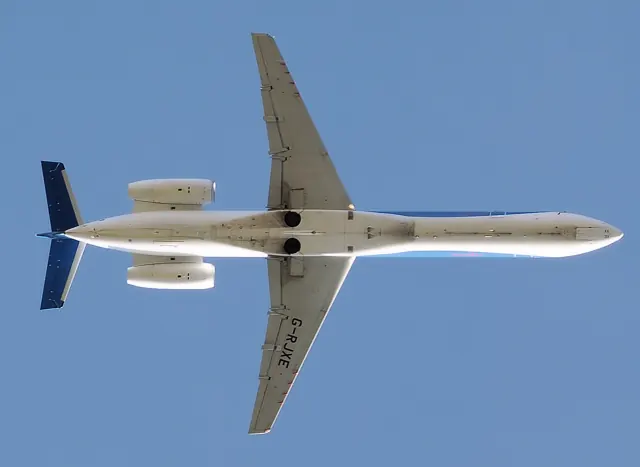
Embraer's regional-jet family, from the ERJ 135 to the longer ERJ 145.
A very large single-engine biplane designed for practical work from modest airfields.
A post-war Czech light twin with a rounded cabin and engines carried on a low wing.
A rear-engined trijet built to bring jet service to shorter routes and smaller airports.
A push-pull twin with one engine at each end of the central fuselage.
A lightweight pusher family with an enclosed cabin and a high, braced wing.
A small three-engine demonstrator created to explore technologies for a future supersonic airliner.
A lightweight short-field aircraft with a specialised wing and tall, shock-absorbing landing gear.
A low-wing agricultural Cessna with a cockpit and hopper arranged around the job.
A pressurised single turboprop with a large cargo door and a broad range of working roles.
A pioneering light helicopter whose bubble cabin and exposed structure became widely recognisable.
A DC-10-derived tanker that combined aerial refuelling with passenger and cargo transport.
A tailwheel utility single built around a high wing and a substantial working cabin.
A British utility twin built around short regional and practical transport work.
A wartime fighter developed from the earlier Curtiss P-36.
A twin-turboprop family whose smaller conventional-tail and larger T-tail branches have distinct identities.
A wooden touring-aircraft family recognisable by the upward-angled outer wing panels.
A Polish utility aircraft designed for short takeoffs and landings.
A light turbine helicopter combining an Alouette II airframe with more powerful Alouette III components.
A military transport developed from the DC-3, used for cargo, troops, parachuting and glider towing.
This is AirframeDB’s first release. More features and aircraft research are planned. Leave your email if you’d like occasional updates.