MSFS
Saab 340B ↗
A twin-turboprop regional airliner developed through Swedish and American industrial cooperation.
1 implementations+ Compare
Explore the aircraft. Find your simulator. Follow the sources.
A twin-turboprop regional airliner developed through Swedish and American industrial cooperation.
A First World War trainer that became a familiar sight in the barnstorming era.
Two related Dutch regional jets developed from the F28 lineage.
A high-wing utility turboprop designed for short-field passenger and cargo work.
A six-seat composite single turboprop with a pressurised cabin and retractable gear.
A compact Japanese twin turboprop with a high wing and pressurised cabin.
A high-wing utility aircraft known for short-field work and a broad choice of working configurations.
A four-abreast regional-jet family spanning the E170, E175, E190 and E195.
Piper's PA-31 utility twin, used in commuter, cargo and corporate transport.
An Italian light aircraft known for military training and aerobatic use.
A five-seat turbine helicopter developed from Robinson's smaller piston-helicopter line.
A two-seat training single with a high wing and fixed tricycle landing gear.
A short-field Savage with leading-edge slats and a distinct Got Friends simulator implementation.
A Canadian tandem-seat trainer developed after the Second World War.
A small three-engine demonstrator created to explore technologies for a future supersonic airliner.
A modern medium twin-engine helicopter developed as a successor to the Dauphin line.
An enclosed-cabin development of the Bell 47, shaped for passenger and executive transport.
A four-engine Airbus wide-body developed in parallel with the A330.
The CJ4 belongs to Cessna's light-jet line, with two rear-mounted engines and a T-tail.
A large twin-engine helicopter from the Super Puma line, used for offshore and public-service work.
A compact twin-engine helicopter widely used for medical, police and training work.
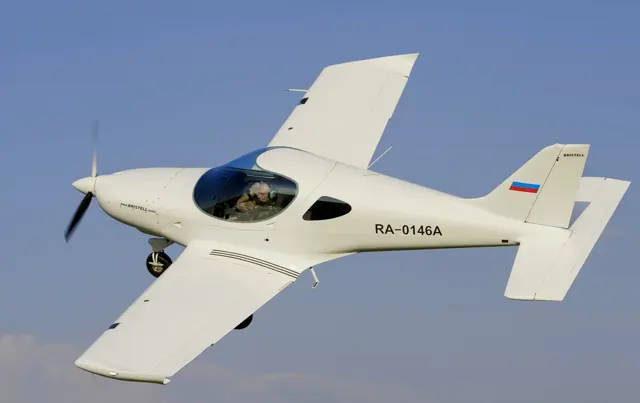
BRM Aero's two-seat B23, represented in MSFS by Airfoillabs.
A twin-turboprop family whose smaller conventional-tail and larger T-tail branches have distinct identities.
This is AirframeDB’s first release. More features and aircraft research are planned. Leave your email if you’d like occasional updates.