

Start here
A few places to begin, from the aircraft’s story to the people who fly it.
Meet the aircraft
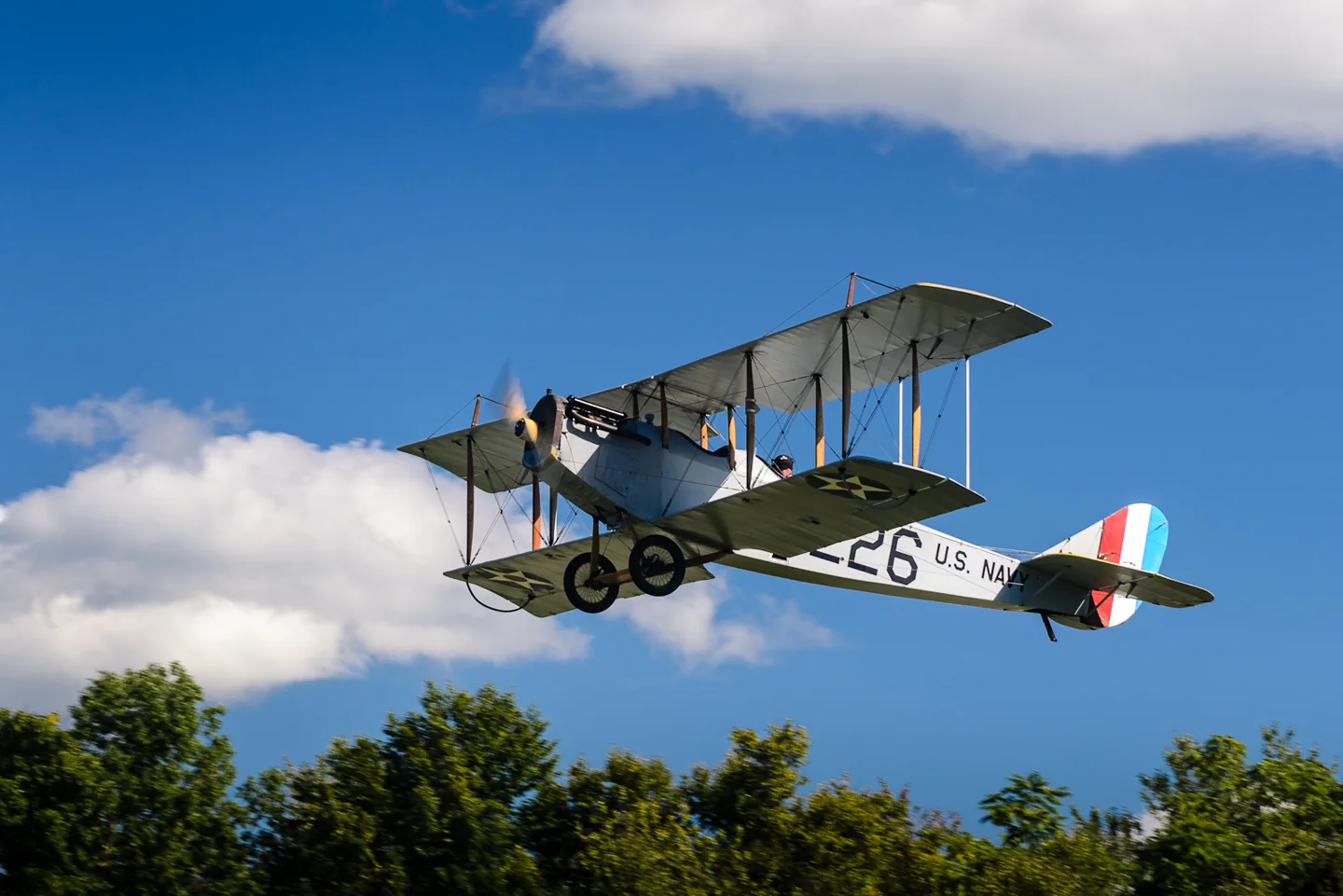
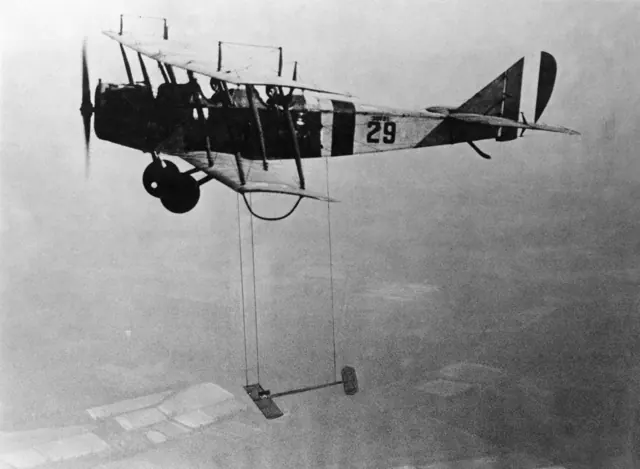
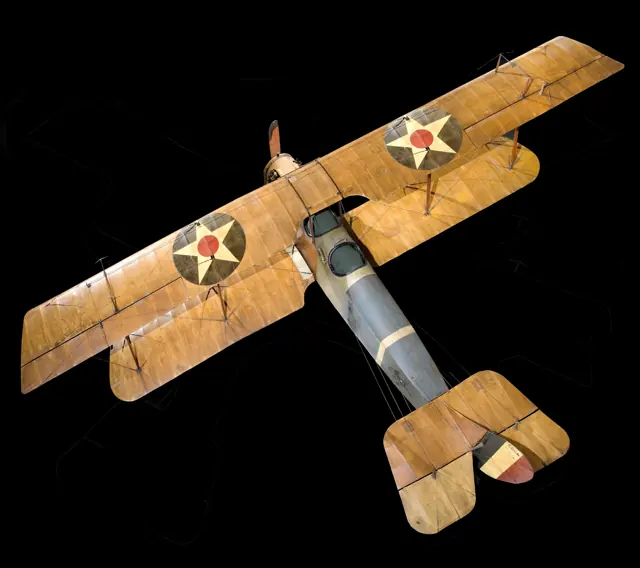
The Jenny family was developed as a military trainer, with two open cockpits, braced biplane wings and conventional landing gear. Surplus aircraft helped carry flying into civilian life after the war, appearing at displays and offering rides across North America. Its cockpit belongs to a much earlier era than the touring aircraft that followed. The MSFS documentation also identifies convenience changes to ground steering.
Aircraft background
Wikipedia contributors · Read more ↗Letters home record the work of learning to fly
Crawford entered aviation as a ground officer, with maintenance and other duties occupying his days. When flight training opened to ground officers, he applied immediately. His letters home then became detailed accounts of a demanding new skill, recording mistakes and revisiting each flight as he tried to improve. He admitted that an instructor’s presence gave him confidence during unfamiliar manoeuvres.
Letters and journal interpreted by his grandson William Crawford Woods. JN-4 training at Kelly Field in 1918; the original solo entry is partly lost to insect damage.
Air & Space / Smithsonian · Read more ↗A documented convenience change for ground handling
The MSFS 2024 guide adds rudder-controlled ground steering for playability. Toe brakes are omitted; the simulated tailskid provides drag.
JN-4 Jenny · Microsoft Flight Simulator · MSFS 2024
Microsoft / aircraft developers · Read more ↗Into the cockpit
 YouTube
Candler Field Flying Club YouTube · 8 min ·
Curtiss JN-4 Jenny Flight, March 2016
Cockpit footage from a restored 1918 Jenny flying at Peach State Aerodrome.
Real aircraft · Curtiss JN-4 Jenny
Watch on YouTube ↗Preview images are served by AirframeDB. Videos open on YouTube only when you choose to watch.
Meet Curtiss JN-4 Jenny
The Jenny family was developed as a military trainer, with two open cockpits, braced biplane wings and conventional landing gear. Surplus aircraft helped carry flying into civilian life after the war, appearing at displays and offering rides across North America.
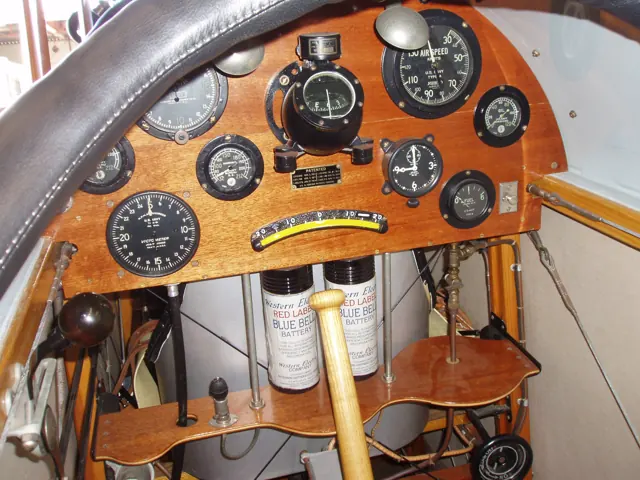
Its cockpit belongs to a much earlier era than the touring aircraft that followed. The MSFS documentation also identifies convenience changes to ground steering. Those changes are adaptations for the simulator.
Curtiss JN-4 Jenny
Aircraft type designators
A model-specific ICAO or FAA designator has not been confirmed in the references reviewed for this aircraft.
History & design
A touring replica takes shape through a community project
Collins describes how comparison with original drawings turned an intended repair into a largely new Jenny replica. Students helped build and finish it, while a modern engine, brakes, radio and pitch trim supported travel to public events.
AOPA Pilot · Flying Miss Jenny ↗Friends of Jenny project reported in 2016; not an original engine configuration
Pilot accounts
Letters home record the work of learning to fly
Crawford entered aviation as a ground officer, with maintenance and other duties occupying his days. When flight training opened to ground officers, he applied immediately. His letters home then became detailed accounts of a demanding new skill, recording mistakes and revisiting each flight as he tried to improve.
He admitted that an instructor’s presence gave him confidence during unfamiliar manoeuvres. Quiet instructors could also leave him wondering how well he was doing. By the end of October, the deadline for his first solo weighed heavily on him. Much of the following journal entry has been eaten away, but a surviving word records a celebration. Later flying brought enough confidence for him to become an instructor himself.
Letters and journal interpreted by his grandson William Crawford Woods. JN-4 training at Kelly Field in 1918; the original solo entry is partly lost to insect damage.
Read the full account · Air & Space / Smithsonian ↗Wind, wires and a surprising movement of the rudder
Tracy took the controls after Robin Reid lifted Frank Schelling’s restored Jenny from the grass at Schellville. The view of wooden struts, vibrating wires and fluttering flags made it difficult to look inside at the instruments. Wind noise and the air on his face became particularly vivid parts of the experience.
During the flight, pressure on a rudder pedal seemed to be an instructor’s demonstration. With no intercom between the cockpits, Tracy could not ask immediately. Reid later explained that he had not touched the controls: the movement had come from the aircraft itself. The short outing ended with Reid landing and the tailskid dragging through the grass. Tracy reluctantly climbed out, leaving the next visitors their turn.
Around the Pattern, February 2010. First-person flight in Frank Schelling’s restored 1918 JN-4H with Robin Reid instructing; the author publishes under the name Tracy.
Read the full account · Around the Pattern ↗Affection for the Jenny comes with respect for its limitations
After watching the owner make the first circuit, Davisson took his turn in the Jenny. Its slow climb initially made the trees ahead seem uncomfortably close. In the bumpy air, he found that keeping the aircraft where he wanted it required substantial and very unequal effort across the controls.
The approach gave him another lesson in the aircraft’s character. Hand signals from the front cockpit called for a lower nose, and he later added power to avoid arriving short. His first touchdown bounced before he settled into a better landing. The encounter left him admiring the pilots who had worked and performed in Jennies, while questioning the nostalgia that could make their aircraft’s shortcomings disappear from the story.
Author’s reprint of a mid-1970s Air Progress report. OX-5-powered JN-4D flown with its owner in Minnesota; a separate flight from the Hisso Jenny described by Tracy.
Read the full account · Budd Davisson / Airbum ↗An early departure helps a travelling history lesson reach its audience
Walker described Miss Jenny as rewarding but demanding, with the large wings making every rising current noticeable. Early departures offered calmer air as well as the pleasure of a dawn flight. A trip across Kentucky in 2015 used an intermediate fuel stop and reached the destination before the wind became stronger.
The flying depended on a team travelling with tools, spare parts and displays explaining the aircraft’s history. For Walker, arriving at an airshow was an opportunity to share that history with people who might otherwise see it only in a museum. He remembered strangers following the unusual biplane by car and visitors bringing their own family stories. Those encounters helped justify the effort of keeping the replica on the road and in the air.
Mike Collins’s 2016 interview. Friends of Jenny replica with a GMC V-8, brakes, radio and pitch trim; these modifications distinguish it from an original JN-4.
Read the full account · AOPA Pilot ↗In your simulator
Systems, equipment and documentation for each developer’s aircraft.
Compare simulator versions →MSFS 2024JN-4 Jenny
Microsoft Flight Simulator · Released
JN-4 Jenny
Microsoft Flight Simulator · Released
MSFS 2020JN-4 Jenny
Microsoft Flight Simulator · Released
JN-4 Jenny
Microsoft Flight Simulator · Released
Manuals & resources
Find your next read
Choose a topic for a short introduction and a link to the original source. Simulator references identify the developer and edition they cover.
Simulator documentation
A documented convenience change for ground handlingJN-4 Jenny · Microsoft Flight Simulator · MSFS 2024
The MSFS 2024 guide adds rudder-controlled ground steering for playability. Toe brakes are omitted; the simulated tailskid provides drag.
MSFS 2024 manual · page 11
Microsoft / aircraft developers · Read the source ↗The walkaround begins outside at a ramp positionJN-4 Jenny · Microsoft Flight Simulator · MSFS 2024
The 2024 walkaround has selectable pins for checking surfaces and tyres. The leather cockpit surround is the documented entry point.
MSFS 2024 manual · page 5
Microsoft / aircraft developers · Read the source ↗A hidden phone can still operate the radioJN-4 Jenny · Microsoft Flight Simulator · MSFS 2024
The cockpit phone provides radio controls, heading and indicated airspeed. Clicking its bracket hides it while leaving the radios working.
MSFS 2024 manual · page 7
Microsoft / aircraft developers · Read the source ↗A documented convenience change for ground handlingJN-4 Jenny · Microsoft Flight Simulator · MSFS 2020
The MSFS 2020 guide adds rudder-controlled ground steering for playability. Toe brakes are omitted; the simulated tailskid provides drag.
MSFS 2020 manual v2 · page 7
Microsoft / aircraft developers · Read the source ↗A hidden phone can still operate the radioJN-4 Jenny · Microsoft Flight Simulator · MSFS 2020
The cockpit phone provides radio controls, heading and indicated airspeed. Clicking its bracket hides it while leaving the radios working.
MSFS 2020 manual v2 · page 5
Microsoft / aircraft developers · Read the source ↗The checklist can point out a controlJN-4 Jenny · Microsoft Flight Simulator · MSFS 2020
The top-screen checklist menu includes an eye icon that moves the view to the relevant control and an option to mark an item complete.
MSFS 2020 manual v2 · page 7
Microsoft / aircraft developers · Read the source ↗Pilot account
Letters home record the work of learning to flyLetters and journal interpreted by his grandson William Crawford Woods. JN-4 training at Kelly Field in 1918; the original solo entry is partly lost to insect damage.
Crawford entered aviation as a ground officer, with maintenance and other duties occupying his days. When flight training opened to ground officers, he applied immediately. His letters home then became detailed accounts of a demanding new skill, recording mistakes and revisiting each flight as he tried to improve. He admitted that an instructor’s presence gave him confidence during unfamiliar manoeuvres. Quiet instructors could also leave him wondering how well he was doing.
Louis Crawford
Air & Space / Smithsonian · Read the source ↗Wind, wires and a surprising movement of the rudderAround the Pattern, February 2010. First-person flight in Frank Schelling’s restored 1918 JN-4H with Robin Reid instructing; the author publishes under the name Tracy.
Tracy took the controls after Robin Reid lifted Frank Schelling’s restored Jenny from the grass at Schellville. The view of wooden struts, vibrating wires and fluttering flags made it difficult to look inside at the instruments. Wind noise and the air on his face became particularly vivid parts of the experience. During the flight, pressure on a rudder pedal seemed to be an instructor’s demonstration. With no intercom between the cockpits, Tracy could not ask immediately.
Tracy
Around the Pattern · Read the source ↗Read the original documentation from the people who created it. Manuals open on their publisher’s website.
Manual
JN4_Jenny_FS24_ManualMicrosoft / aircraft developers Microsoft Flight Simulator aircraft manualsMicrosoft / aircraft developersAircraft background
Curtiss JN JennyWikipedia contributors · Research background · Wikipedia revision 1030672134 · retrieved 2026-09-12Resource
MSFS 2024 FAQ and edition aircraft inventoryMicrosoft MSFS 2020 FAQ and edition aircraft inventoryMicrosoftDeveloper documentation
JN4_Jenny_MSFS_Manual v2Microsoft / aircraft developers · Gathered developer documentationBuilt-in force-feedback profiles
Read the documentary basis, editable starting settings and remaining questions for the aircraft you fly. Each explanation refers to the exact profile revision shown.
Catalogue programme-20261022-v1 · 1 profile choice
Curtiss JN-4 Jenny
Free and Pro · Revision 2 · Partial review
MSFS 2024 · MSFS 2020
Curtiss JN-4 Jenny: The spring supplies the biplane’s selected stick resistance.
Discuss this aircraft (0)
Questions, observations and useful sources from the community.
No published discussions yet. Bring a question or share a useful source.
Open aircraft discussions →Content expanded · What’s new
Something missing or a source that needs attention?
Suggest a correction ↗

