MSFS
Westland Scout / Wasp ↗
A light turbine helicopter whose land-based Scout and naval Wasp branches served different jobs.
1 implementations+ Compare
Explore the aircraft. Find your simulator. Follow the sources.
A light turbine helicopter whose land-based Scout and naval Wasp branches served different jobs.
The second-generation Harrier, designed around vectored thrust and short-field operation.
The H130 utility helicopter, descended from the AS350 and fitted with a Fenestron.
A pioneering all-metal transport with an enclosed passenger cabin and corrugated skin.
A four-seat high-wing single that spans generations of conventional instruments and glass cockpits.
A 1920s flying boat with two engines arranged in tandem above the wing.
A small three-engine demonstrator created to explore technologies for a future supersonic airliner.
A French two-seat aerobatic trainer with side-by-side seating and a distinctive curved wing outline.
A two-seat Tecnam high-wing aircraft combining composite and metal construction.
A light turbine helicopter combining an Alouette II airframe with more powerful Alouette III components.
A large long-haul twin that introduced Boeing's first commercial fly-by-wire airliner flight controls.
A carbon-fibre aerobatic monoplane family with a dedicated air-racing branch.
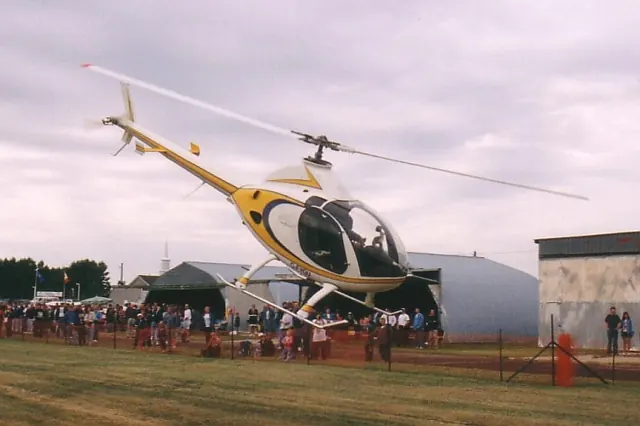
RotorWay's two-seat kit-helicopter family, with piston and turbine simulator interpretations.
A self-launching sailplane family with its engine inside the fuselage and a folding nose propeller.
A two-seat naval fighter with variable-sweep wings and a cockpit built around pilot and radar-intercept officer roles.
A streamlined light twin helicopter, with the later Bell 230 in the same family.
A composite touring single with a whole-aircraft parachute and several generations of avionics.
A large twin-engine helicopter from the Super Puma line, used for offshore and public-service work.
A carrier-capable multirole fighter, larger than the earlier Hornet from which it developed.
A Polish utility aircraft designed for short takeoffs and landings.
A pressurised touring twin whose piston and turbine-conversion versions make a particularly interesting comparison.
A utility-aircraft family whose stretched 207 branch trades compact proportions for more cabin space.
A low-wing agricultural Cessna with a cockpit and hopper arranged around the job.
A box-shaped utility twin whose cabin and rear access are central to its design.
This is AirframeDB’s first release. More features and aircraft research are planned. Leave your email if you’d like occasional updates.