

Start here
A few places to begin, from the aircraft’s story to the people who fly it.
Meet the aircraft
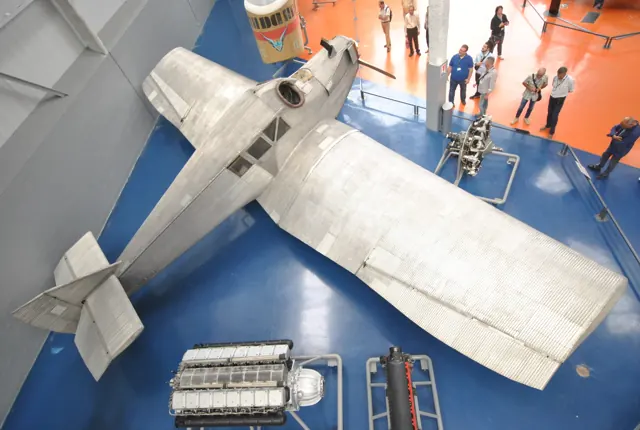
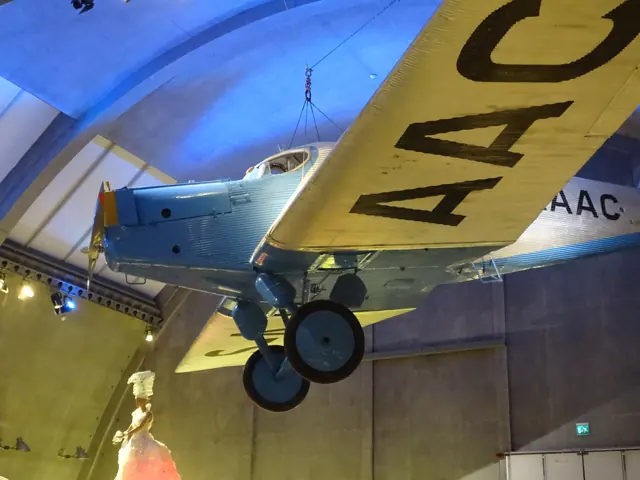
The F 13 introduced metal construction to early commercial air transport, with a cantilever low wing, corrugated skin and an enclosed passenger cabin. It served operators in several countries on wheels and floats.
Aircraft background
Wikipedia contributors · Read more ↗Old flight reports help a test pilot prepare for a new replica
Bachmann described the open cockpit as an unusually direct encounter with the aircraft: its smells, engine vibration and the surrounding air were all part of the flight. After the public demonstration at Dübendorf, he told the audience how much he had enjoyed flying the recreated F13 and how honoured he felt to have joined the project. That enjoyment followed a considerable effort to understand an old design.
Patrick Huber’s Cockpit report, November 2016. Replica demonstration at Dübendorf on 15 September 2016.
Cockpit · Read more ↗A radial engine identifies the announced recreation
Microsoft’s 2022 release identifies a Pratt & Whitney R-985-AN-14B radial with a fixed-pitch two-blade propeller. That configuration belongs to the announced simulator recreation; historical F13s also used several inline engines.
F 13 · Microsoft Flight Simulator · MSFS 2020
Microsoft Flight Simulator Team · Read more ↗Into the cockpit
 YouTube
AHTVFILM · 100 min ·
„The Return of the Junkers F13“ - F13 DOCUMENTARY 100min ENGLISH
A documentary follows the effort to bring a new-build Junkers F13 into the air.
Modern reconstruction · Junkers F13
Watch on YouTube ↗Preview images are served by AirframeDB. Videos open on YouTube only when you choose to watch.
Meet Junkers F13
The F 13 introduced metal construction to early commercial air transport, with a cantilever low wing, corrugated skin and an enclosed passenger cabin. It served operators in several countries on wheels and floats.
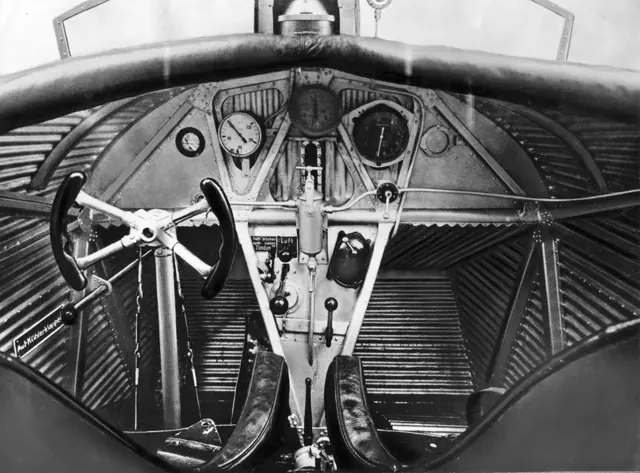
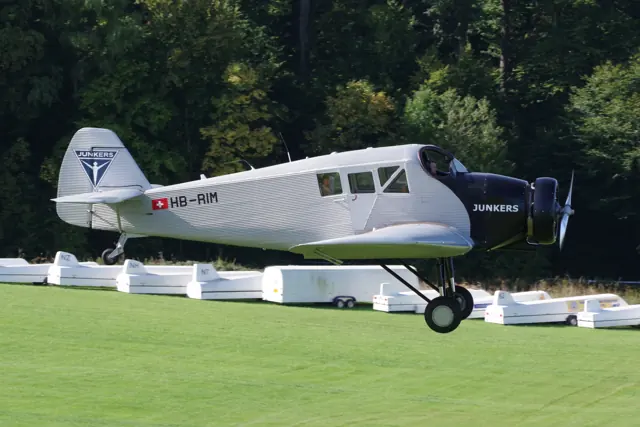
The crew flew from a cockpit separate from the enclosed passenger accommodation. Modern flying replicas also appear in the photographic record and are identified in their captions.
Junkers F13
Aircraft type designators
A model-specific ICAO or FAA designator has not been confirmed in the references reviewed for this aircraft.
History & design
Recreating the aircraft required new equipment as well as old plans
The 2016 Cockpit report describes the replica’s radial engine, modern radio, transponder and engine monitoring. These changes accompanied the recreation of the corrugated-metal airframe; certification and future passenger flights were still being discussed at the time.
Cockpit · Junkers F13: the replica takes flight ↗Historical development report; not a current certification or availability statement
Development milestones
Designer: Otto Reuter
First flight: 25 June 1919
Wikipedia contributors · Junkers F 13 ↗Junkers F 13 · family/variant named by the source · Wikipedia revision 1348811575
Pilot accounts
Old flight reports help a test pilot prepare for a new replica
Bachmann described the open cockpit as an unusually direct encounter with the aircraft: its smells, engine vibration and the surrounding air were all part of the flight. After the public demonstration at Dübendorf, he told the audience how much he had enjoyed flying the recreated F13 and how honoured he felt to have joined the project.
That enjoyment followed a considerable effort to understand an old design. The engineering team studied historical flight reports, and Bachmann found his own gliding experience useful when handling the aircraft. He described a lively machine that required active work on the rudder pedals.
Patrick Huber’s Cockpit report, November 2016. Replica demonstration at Dübendorf on 15 September 2016.
Read the full account · Cockpit ↗The open cockpit makes the weather part of every flight
Schmuck regarded the replica as fairly straightforward to fly once its tailwheel behaviour was understood. He joked that climbing into and out of the cockpit could be the more demanding task. Its apparent simplicity did not remove one persistent feature: the pilots remained outside, exposed to the weather throughout the flight.
The report followed a windy sightseeing outing along the Rhine and over Mainz. Passengers sat in the cabin behind the open cockpit, enjoying clear views while feeling the turbulence. Schmuck’s explanation of the noise and exposure gave their flight a practical context. The successful return in gusty conditions illustrates the particular outing the programme recorded; his relaxed assessment remains an experienced pilot’s impression of the replica.
17:30 Live’s published transcript, September 2026. Flying a modern F13 replica at Mainz-Finthen; passenger comments in the report are separate from the pilot’s observations.
Read the full account · 17:30 Live Rheinland-Pfalz/Hessen ↗A project initiator experiences the public debut from the cockpit
For Morszeck, sitting beside Bachmann during the F13 replica’s public debut completed a project that had occupied years of research and preparation. Afterwards, he described the experience as the fulfilment of a personal ambition. The aircraft was flying again, and he had been able to experience that moment from its cockpit.
People gathered at Dübendorf could follow cockpit images on large screens. Among the guests was Hans-Walter Bender, whose own connection to the original F13 began with a childhood sightseeing flight in 1929. That meeting of generations gave the launch a human dimension beyond the new aircraft. Morszeck’s brief reaction is a crew participant’s recollection of the event, rather than an extended handling report or an independent evaluation of his project.
Shots Magazin report, September 2016. Licensed private pilot and project initiator accompanying test pilot Oliver Bachmann as a crew member; the source does not establish that Morszeck handled the controls.
Read the full account · Shots Magazin ↗In your simulator
Systems, equipment and documentation for each developer’s aircraft.
Compare simulator versions →MSFS 2024F13
Microsoft Flight Simulator · Released
F13
Microsoft Flight Simulator · Released
MSFS 2020F 13
Microsoft Flight Simulator · Released
F 13
Microsoft Flight Simulator · Released
Aircraft specifications
Published figures for the named real-aircraft variant. Simulator equipment and performance can differ.
| Specification | Published value |
|---|---|
| Length | 9.59 m (31 ft 6 in) |
| Wingspan | 14.8 m (48 ft 7 in) |
| Height | 3.50 m (11 ft 6 in) |
| Wing area | 34.50 m² (371.4 sq ft) |
| Empty weight | 951 kg (2,097 lb) |
| Max takeoff weight | 1,640 kg (3,616 lb) |
| Powerplant | 1 × Mercedes D.IIIa six-cylinder water-cooled in-line piston engine, 118 kW (158 hp) |
| Maximum speed | 173 km/h (107 mph, 93 kn) |
| Cruise speed | 160 km/h (99 mph, 86 kn) |
| Range | 1,400 km (870 mi, 760 nmi) |
| Service ceiling | 5,000 m (16,000 ft) |
| Rate of climb | 2.40 m/s (472 ft/min) |
Manuals & resources
Find your next read
Choose a topic for a short introduction and a link to the original source. Simulator references identify the developer and edition they cover.
Simulator documentation
A radial engine identifies the announced recreationF 13 · Microsoft Flight Simulator · MSFS 2020
Microsoft’s 2022 release identifies a Pratt & Whitney R-985-AN-14B radial with a fixed-pitch two-blade propeller. That configuration belongs to the announced simulator recreation; historical F13s also used several inline engines.
Local Legend VI announcement · 25 August 2022; no dedicated operating manual established
Microsoft Flight Simulator Team · Read the source ↗The original MSFS 2020 releaseF 13 · Microsoft Flight Simulator · MSFS 2020
The August 2022 Local Legend VI release describes a radial-engined F 13 recreation and ten liveries. It identifies a particular simulated configuration within the wider F 13 family.
2022-08-25 · release and package scope
Microsoft Flight Simulator Team · Read the source ↗Pilot account
Old flight reports help a test pilot prepare for a new replicaPatrick Huber’s Cockpit report, November 2016. Replica demonstration at Dübendorf on 15 September 2016.
Bachmann described the open cockpit as an unusually direct encounter with the aircraft: its smells, engine vibration and the surrounding air were all part of the flight. After the public demonstration at Dübendorf, he told the audience how much he had enjoyed flying the recreated F13 and how honoured he felt to have joined the project. That enjoyment followed a considerable effort to understand an old design.
Oliver Bachmann
Cockpit · Read the source ↗The open cockpit makes the weather part of every flight17:30 Live’s published transcript, September 2026. Flying a modern F13 replica at Mainz-Finthen; passenger comments in the report are separate from the pilot’s observations.
Schmuck regarded the replica as fairly straightforward to fly once its tailwheel behaviour was understood. He joked that climbing into and out of the cockpit could be the more demanding task. Its apparent simplicity did not remove one persistent feature: the pilots remained outside, exposed to the weather throughout the flight. The report followed a windy sightseeing outing along the Rhine and over Mainz.
Uwe Schmuck
17:30 Live Rheinland-Pfalz/Hessen · Read the source ↗Read the original documentation from the people who created it. Manuals open on their publisher’s website.
Manual
Microsoft Flight Simulator aircraft manualsMicrosoft / aircraft developersAircraft background
Junkers F 13Wikipedia contributors · Research background · Wikipedia revision 1348811575 · retrieved 2026-09-12Resource
MSFS 2024 FAQ and edition aircraft inventoryMicrosoftDeveloper documentation
Local Legend VI: Junkers F 13Microsoft Flight Simulator Team · 2022-08-25 · release and package scopeBuilt-in force-feedback profiles
Read the documentary basis, editable starting settings and remaining questions for the aircraft you fly. Each explanation refers to the exact profile revision shown.
Catalogue programme-20261022-v1 · 1 profile choice
Junkers F13
Free and Pro · Revision 1 · Partial review
MSFS 2024 · MSFS 2020
Junkers F13: The spring supplies period-transport stick resistance.
Discuss this aircraft (0)
Questions, observations and useful sources from the community.
No published discussions yet. Bring a question or share a useful source.
Open aircraft discussions →Content expanded · What’s new
Something missing or a source that needs attention?
Suggest a correction ↗

