MSFS X-Plane
Boeing 777 ↗
A large long-haul twin that introduced Boeing's first commercial fly-by-wire airliner flight controls.
2 implementations+ Compare
Explore the aircraft. Find your simulator. Follow the sources.
A large long-haul twin that introduced Boeing's first commercial fly-by-wire airliner flight controls.
A personal jet with one engine above the rear fuselage and a distinctive V-tail.
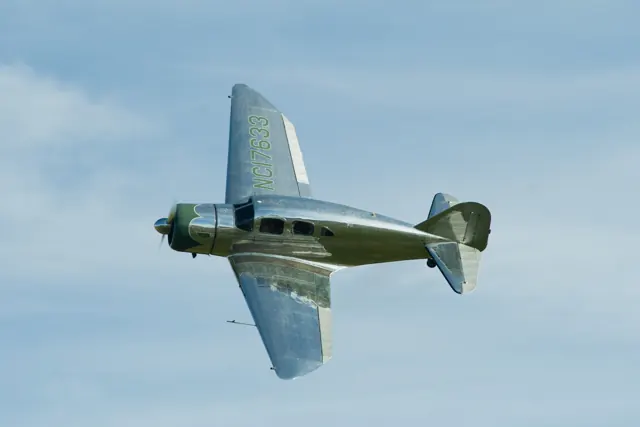
A late-1930s cabin aircraft with metal construction and retractable landing gear.
An open, single-seat ultralight with its propeller behind the pilot.
Piper's PA-31 utility twin, used in commuter, cargo and corporate transport.
A compact racing aeroplane built around a large radial engine and very short fuselage.
An open-cockpit biplane trainer that found a second life in civilian flying.
A self-launching sailplane family with its engine inside the fuselage and a folding nose propeller.
An all-metal sport and touring aircraft from Bayerische Flugzeugwerke.
A pressurised twin turboprop with a canard, composite airframe and rear-facing propellers.
A compact aerobatic biplane family with both single-seat and tandem-seat branches.
A short-field Savage with leading-edge slats and a distinct Got Friends simulator implementation.
A six-engine heavy transport created for exceptionally large external and internal loads.
A modern utility single whose family includes both tailwheel and nosewheel configurations.
A cabin biplane with the lower wing placed ahead of the upper one.
An Italian light aircraft known for military training and aerobatic use.
The H130 utility helicopter, descended from the AS350 and fitted with a Fenestron.
A modern medium twin-engine helicopter developed as a successor to the Dauphin line.
A low-wing piston family that spans simple trainers, touring aircraft and retractable-gear Arrows.
A tandem two-seat sailplane designed for instruction and broader soaring use.
A pressurised four-engine piston transport from the last major generation before the jet airliner.
Two related Dutch regional jets developed from the F28 lineage.
A push-pull twin with one engine at each end of the central fuselage.
Ted Smith's piston twin, later produced by Piper as the Aerostar.
This is AirframeDB’s first release. More features and aircraft research are planned. Leave your email if you’d like occasional updates.