
Start here
A few places to begin, from the aircraft’s story to the people who fly it.
Meet the aircraft
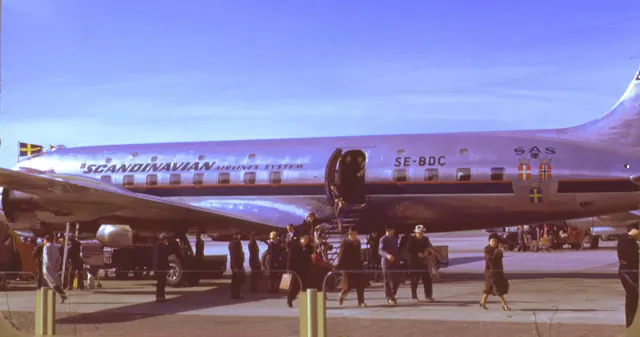
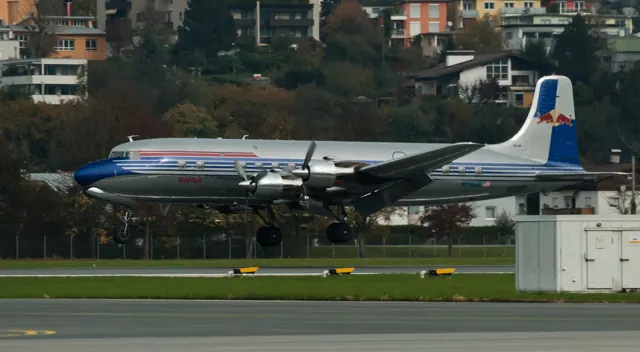
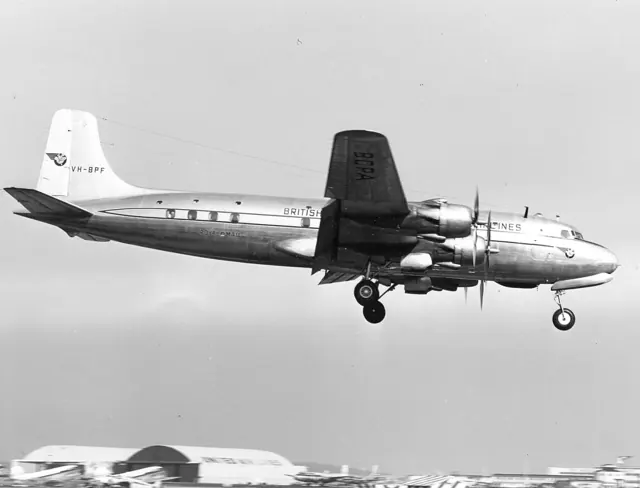
Douglas developed the DC-6 from wartime transport work into a long-range commercial competitor. Its four radial engines and pressurised cabin supported passenger and freight operations. Production ran from the 1940s into the late 1950s, with later careers extending into specialist cargo and firefighting work. The flight engineer is a major part of the aircraft's cockpit organisation.
Aircraft background
Wikipedia contributors · Read more ↗Learning a new transport through a language barrier
Fraser’s DC-6 conversion involved more than learning a new aircraft. Technical instruction in Rome had to cross a language barrier, and imperfect translation made the classroom experience memorable. Time away from training provided a more enjoyable introduction to the city, while the flight programme brought the crew closer to the work they would later undertake between Africa and Europe.
Retrospective account of Alitalia DC-6B conversion training in Rome. The published recollection is edited; dramatic incident details have no independent investigation attached.
Rhodesian Heritage · Read more ↗The tablet connects loading, servicing and aircraft condition
The documented tablet tools include fuel and loadout management, a Ramp Manager, Maintenance Manager and Engine Damage Visualizer. The Artificial Flight Engineer supplies crew assistance.
DC-6 · PMDG · MSFS 2020 · MSFS 2024
PMDG · Read more ↗Into the cockpit
 YouTube
 AeroPresentation · 30 min ·
Cockpit flight on Douglas DC-6A G-APSA
A DC-6A cockpit flight over the North Sea and back to Coventry.
Real aircraft · Douglas DC-6
Watch on YouTube ↗Preview images are served by AirframeDB. Videos open on YouTube only when you choose to watch.
Meet Douglas DC-6
Douglas developed the DC-6 from wartime transport work into a long-range commercial competitor. Its four radial engines and pressurised cabin supported passenger and freight operations. Production ran from the 1940s into the late 1950s, with later careers extending into specialist cargo and firefighting work.
The flight engineer is a major part of the aircraft's cockpit organisation. PMDG's simulation makes that role accessible through its own interface while retaining period systems such as the Sperry autopilot. The manual explains how those responsibilities are divided in the virtual aircraft.
Douglas DC-6
Douglas → · Explore the family →
Douglas DC-6
Wikipedia contributors · Douglas DC-6 ↗PMDG · MSFS 2020 · MSFS 2024 →Aircraft type designators
Use the code for the model you are flying. The linked authority lists the applicable aircraft.
History & design
Pressurisation changes the passenger experience
Delta’s museum identifies the DC-6 as the airline’s first pressurised, air-conditioned aircraft.
Delta Flight Museum · Douglas DC-6, 1948–1968 ↗Operator museum’s history of its own fleet
A cabin with a lounge and tray tables
The museum describes a rear Sky Lounge with six chairs and a cabin finished in walnut, blue and tan. It also records Delta’s first seat-back tray tables, replacing the earlier practice of balancing meal trays on pillows. These details describe Delta’s installation, not every DC-6 interior.
Delta Flight Museum · Douglas DC-6, 1948–1968 ↗Delta cabin arrangement during the type’s service
Development milestones
First flight: 15 February 1946
Developed from: Douglas DC-4
Wikipedia contributors · Douglas DC-6 ↗Douglas DC-6 · family/variant named by the source · Wikipedia revision 1367844593
Pilot accounts
Learning a new transport through a language barrier
Fraser’s DC-6 conversion involved more than learning a new aircraft. Technical instruction in Rome had to cross a language barrier, and imperfect translation made the classroom experience memorable. Time away from training provided a more enjoyable introduction to the city, while the flight programme brought the crew closer to the work they would later undertake between Africa and Europe.
His account reaches a tense point during a decompression exercise, when mist, discomfort and misunderstood commands made the final training flight frightening. He recalls returning to land after the confusion. The story carries the humour and exaggeration of a much later reminiscence, so its detailed manoeuvres are not treated as independently established events. What remains clear is Fraser’s lasting affection for flying the DC-6 despite that difficult introduction.
Retrospective account of Alitalia DC-6B conversion training in Rome. The published recollection is edited; dramatic incident details have no independent investigation attached.
Read the full account · Rhodesian Heritage ↗Freight, cold weather and sandwiches on an Alaska working day
For the visiting writer, a DC-6 trip into northern Alaska was a special opportunity. For Captain Ken Zachary, first officer Joe Holland and their colleague in the flight engineer’s seat, it was a working day carrying food, machinery and other freight. Conversation in the cockpit accompanied the view across the Brooks Range on the way to Barrow.
On the ground, the pilots also helped with the cargo in bitter cold. Holland flew the next leg, and the day continued with more unloading and the practical search for something to eat. Sandwiches and fruit supplied an ordinary meal between demanding freight tasks. The return to Fairbanks ended a memorable outing for the observer, whose report shows how much of the crew’s job happened outside the cockpit as well as in it.
Northern Air Cargo crew observed by an unnamed OldJets writer · 2 May 2000. N2907F, a converted C-118A/DC-6A, flew Fairbanks–Barrow–Deadhorse–Fairbanks.
Read the full account · OldJets ↗Keeping a familiar aircraft flying for another generation
After years flying the DC-6, Firth remained attached to the aircraft known as The Six. Its move from freight work into preservation involved sustained maintenance and a search for parts, with useful components traded and sourced across the remaining operator community. Keeping it presentable for public appearances added smaller tasks to the work of keeping it flying.
The restored British Eagle colours brought a particularly human response at Farnborough, where former airline staff saw a familiar aircraft again. Firth still enjoyed its flying qualities, but the interview gives equal space to the effort behind that pleasure. The aircraft’s survival depended on people finding parts, fixing faults and maintaining a connection with its earlier life. Future passenger trips were part of the ambition described, rather than an operation already demonstrated in the report.
Air Atlantique pilot interviewed by Kara Platoni · Air & Space, July 2009. DC-6A preservation account; proposed passenger excursions were still plans.
Read the full account · Air & Space / Smithsonian ↗In your simulator
Systems, equipment and documentation for each developer’s aircraft.
MSFS 2020 · MSFS 2024DC-6
PMDG · Released
DC-6
PMDG · Released
Manuals & resources
Find your next read
Choose a topic for a short introduction and a link to the original source. Simulator references identify the developer and edition they cover.
Simulator documentation
The tablet connects loading, servicing and aircraft conditionDC-6 · PMDG · MSFS 2020 · MSFS 2024
The documented tablet tools include fuel and loadout management, a Ramp Manager, Maintenance Manager and Engine Damage Visualizer. The Artificial Flight Engineer supplies crew assistance.
PMDG’s published product features; not a runtime verification
PMDG · Read the source ↗A cockpit based on an individual aircraftDC-6 · PMDG · MSFS 2020 · MSFS 2024
PMDG's introduction identifies V5-NCG as the aircraft surveyed for its DC-6. The team's photographs, audio and video informed the simulated interior. Different engine-gauge faces, unusual lighting labels and even misspelled placards were retained from that aircraft. Those details reproduce the surveyed V5-NCG cockpit.
PMDG DC-6 Pilot Introduction, June 2021; archived version and its documented assistant limits · PDF pp.5,12
PMDG · Read the source ↗Understanding the automated flight engineerDC-6 · PMDG · MSFS 2020 · MSFS 2024
The automated flight engineer maintains its selected phase, so it can override manual power, mixture or carburettor-air adjustments. The June 2021 guide describes Abort as the return to manual systems management. It also separates the assistant's responsibilities from the pilot's: the documented version does not operate the autopilot or start the engines. Its cruise setup is a chosen compromise among several settings in the handbook.
PMDG DC-6 Pilot Introduction, June 2021; archived version and its documented assistant limits · PDF pp.12–14
PMDG · Read the source ↗A short first trip with modern navigationDC-6 · PMDG · MSFS 2020 · MSFS 2024
PMDG's first tutorial uses a Portland-to-Seattle flight to introduce the propliner with GPS navigation. The route is explicitly a modern approximation, and the exercise uses clear weather so the pilot can concentrate on the aircraft. Its setup highlights elevator and aileron trim, flaps, and the separate gyropilot and mechanical-disconnect assignments. The guide then takes the flight through climb, cruise, approach and shutdown.
PMDG DC-6 Tutorial 1, June 2021; tutorial scenario, not a historical airline flight · PDF pp.3–6
PMDG · Read the source ↗Control tabs, trim tabs and the Sperry autopilotDC-6 · PMDG · MSFS 2020 · MSFS 2024
The DC-6 manual distinguishes spring control tabs from trim tabs. They are different mechanisms, even though both involve small surfaces attached to larger controls. The Sperry A-12 autopilot also has a trim servo that responds to sustained pitch imbalance. That period system helps explain why the DC-6 cockpit is organised differently from a modern jet's flight-guidance panel.
Archived document; installed package version not observed · PDF pp.15,57,87
PMDG · Read the source ↗One package now covers both MSFS generationsDC-6 · PMDG · MSFS 2020 · MSFS 2024
PMDG’s product page describes the May 2026 update bringing its MSFS 2020 DC-6 to MSFS 2024. The package includes both DC-6A and DC-6B models. The product's later update information supplements the older manuals.
Gathered PMDG product page · May 2026 update statement
PMDG · Read the source ↗Pilot account
Learning a new transport through a language barrierRetrospective account of Alitalia DC-6B conversion training in Rome. The published recollection is edited; dramatic incident details have no independent investigation attached.
Fraser’s DC-6 conversion involved more than learning a new aircraft. Technical instruction in Rome had to cross a language barrier, and imperfect translation made the classroom experience memorable. Time away from training provided a more enjoyable introduction to the city, while the flight programme brought the crew closer to the work they would later undertake between Africa and Europe.
Scotty Fraser
Rhodesian Heritage · Read the source ↗Freight, cold weather and sandwiches on an Alaska working dayNorthern Air Cargo crew observed by an unnamed OldJets writer · 2 May 2000. N2907F, a converted C-118A/DC-6A, flew Fairbanks–Barrow–Deadhorse–Fairbanks.
For the visiting writer, a DC-6 trip into northern Alaska was a special opportunity. For Captain Ken Zachary, first officer Joe Holland and their colleague in the flight engineer’s seat, it was a working day carrying food, machinery and other freight. Conversation in the cockpit accompanied the view across the Brooks Range on the way to Barrow. On the ground, the pilots also helped with the cargo in bitter cold.
Ken Zachary and Joe Holland
OldJets · Read the source ↗Read the original documentation from the people who created it. Manuals open on their publisher’s website.
Manual
Microsoft Flight Simulator aircraft manualsMicrosoft / aircraft developers PMDG DC-6 for MSFS - Pilot Operating Handbook(PDF)PMDG PMDG DC-6 for MSFS - Introduction (PDF)PMDG · PMDG DC-6 Pilot Introduction, June 2021; archived version and its documented assistant limits PMDG DC-6 for MSFS - Tutorial 1 (PDF)PMDG · PMDG DC-6 Tutorial 1, June 2021; tutorial scenario, not a historical airline flight PMDG DC-6 for MSFS - Tutorial 2 (PDF)PMDG · PMDG DC-6 Tutorial 2, June 2021; tutorial scenario, not a historical airline flightAircraft background
Douglas DC-6Wikipedia contributors · Research background · Wikipedia revision 1367844593 · retrieved 2026-09-12 Douglas DC-6, 1948–1968Delta Flight Museum · Operator museum historyResource
PMDG documentationPMDGProduct
DC-6 for MSFS 2020 & 2024PMDG · Official developer / designated store catalogue · checked 2026-09-12Type designator
ICAO Doc 8643 — aircraft type designatorsInternational Civil Aviation Organization · Public search data retrieved 2026-09-14; authority update 2026-09-03Built-in force-feedback profiles
Read the documentary basis, editable starting settings and remaining questions for the aircraft you fly. Each explanation refers to the exact profile revision shown.
Catalogue programme-20261022-v1 · 4 profile choices
PMDG DC-6B
PMDG · Free and Pro · Revision 4 · Inherited starting point
MSFS 2020 · MSFS 2024
PMDG DC-6B: Aerodynamic tabs assist the mechanically controlled yoke response.
PMDG DC-6A
PMDG · Free and Pro · Revision 3 · Inherited starting point
MSFS 2020 · MSFS 2024
PMDG DC-6A: Aerodynamic tabs assist the mechanically controlled yoke response.
Douglas DC-6B
Free and Pro · Revision 3 · Partial review
MSFS 2020 · MSFS 2024
Douglas DC-6B: Aerodynamic tabs assist the mechanically controlled yoke response.
Douglas DC-6A
Free and Pro · Revision 1 · Partial review
MSFS 2020 · MSFS 2024
Douglas DC-6A: Aerodynamic tabs assist the mechanically controlled yoke response.
Discuss this aircraft (0)
Questions, observations and useful sources from the community.
No published discussions yet. Bring a question or share a useful source.
Open aircraft discussions →Content expanded · What’s new
Something missing or a source that needs attention?
Suggest a correction ↗