MSFS X-Plane
Avro Vulcan ↗
Avro's delta-wing bomber, developed for Britain's postwar strategic force.
2 implementations+ Compare
Explore the aircraft. Find your simulator. Follow the sources.
Avro's delta-wing bomber, developed for Britain's postwar strategic force.
A lightweight short-field aircraft with a specialised wing and tall, shock-absorbing landing gear.
A single-seat competition sailplane offered in Standard and 18-metre configurations.
A three-engine airliner that became a mainstay of Soviet and Russian passenger transport.
A single-engine turboprop workhorse for passenger services, freight and remote-area transport.
A high-wing utility turboprop designed for short-field passenger and cargo work.
A four-seat kit-built touring aircraft that expanded the RV family beyond two-seat designs.
A composite amphibian that carries Dornier's centreline engine arrangement into the turboprop era.
A pressurised four-engine piston transport from the last major generation before the jet airliner.
A very large single-engine biplane designed for practical work from modest airfields.
A utility-aircraft family whose stretched 207 branch trades compact proportions for more cabin space.
A tandem-seat jet trainer that also found a second life in civilian display and racing.
A large amphibious flying boat built around maritime rescue and utility transport.
A 1920s transport family that developed from a single-engine airliner into a trimotor.
A twin-turboprop utility aircraft developed by Reims Aviation with Cessna.
A compact Czech touring aircraft with side-by-side seats and a streamlined low-wing airframe.
A short-haul jet family that evolved through several generations of engines, wings and flight decks.
Ted Smith's piston twin, later produced by Piper as the Aerostar.
A DC-10-derived tanker that combined aerial refuelling with passenger and cargo transport.
A modern composite twin with a roomy cabin and two wing-mounted piston engines.
Two related Dutch regional jets developed from the F28 lineage.
A long-running touring single, familiar in both V-tail and conventional-tail forms.
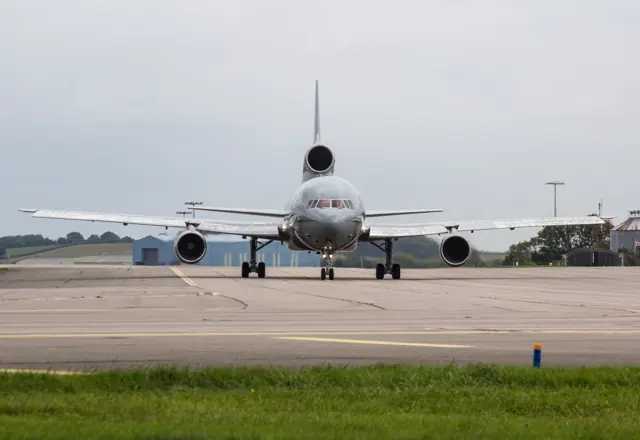
Lockheed's wide-body TriStar, with three RB211 engines and a distinctive tail intake.
The second-generation Harrier, designed around vectored thrust and short-field operation.
This is AirframeDB’s first release. More features and aircraft research are planned. Leave your email if you’d like occasional updates.